REVIEW · RIO DE JANEIRO
Rio Surf Experience!
Book on Viator →Operated by One Carioca day · Bookable on Viator
Surfboards and sea air are a great combo. This Rio Surf Experience turns a 4-hour session into more than just paddling. You meet in Barra da Tijuca, get coached on technique step by step, then you finish with a breathtaking overlook that makes the whole morning feel like a true Rio day.
What I like most is how the guide actively looks for the best conditions for your level instead of running everyone to the same spot. I also like the way the coaching starts with practical safety and warm-ups, then builds toward the pop-up with drills you can actually feel in your body. One thing to think about: you should plan to meet at the stated pickup point on time, because this is not described as a hotel pickup.
In This Review
- Why This Surf Lesson Works in Real Life
- Key Details You’ll Want Before You Go
- Where You Meet on Barra da Tijuca (and How Not to Miss It)
- How the Guide Finds Waves for Your Level
- Safety, Warm-Up, and Standing Practice: The Part You’ll Appreciate Later
- Catching Waves: What the 4 Hours Are Built Around
- Gear, Pacing, and the Benefit of a 6-Person Max
- The Photo Moment and the Post-Surf Overlook
- Price and Logistics: Is $90 Good Value?
- Who This Is Best For (and Who Should Rethink It)
- Weather and Schedule Reality in Rio
- Should You Book Rio Surf Experience?
- FAQ
- Where is the meeting point for Rio Surf Experience?
- How long is the tour?
- What is the price per person?
- Is there a limit on group size?
- Do I get surf gear?
- What happens if the weather is poor?
- What if I’m a beginner?
Why This Surf Lesson Works in Real Life

This is a beginner-friendly surf format that stays realistic about what you need to learn fast. You show up at the meeting point in Barra da Tijuca (Av. Rodolfo Amoedo, 455) and the plan is simple: check the water, match the beach to your surfing ability, and then get you on waves with focused instruction.
The structure is also easy to follow. You start on land with warm-up moves and board-body positioning, then you go into the water once you’ve practiced standing up in a controlled way. It’s a smart way to reduce that awkward, hands-flailing moment when you’re already tired and cold.
After surfing, the day doesn’t end with just sore legs. You head to a place with a strong view of Rio, which is a nice reward for putting in the effort in the ocean.
Key Details You’ll Want Before You Go
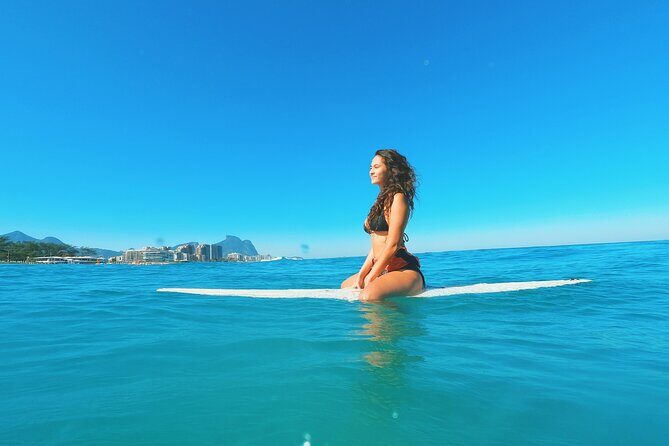
- Small group size (max 6): more attention, less waiting, and quicker feedback.
- Level-based wave hunting: the guide looks for conditions that fit your ability that day.
- Land drills first: warm-up and standing practice in the sand before the sea.
- Safety training matters: you get told what to watch for at sea before you paddle out.
- Photos can be part of the experience: some sessions include a photographer to capture your day.
- Finish with a Rio viewpoint: you get scenic downtime after the surf work.
You can also read our reviews of more tours and experiences in Rio de Janeiro.



Where You Meet on Barra da Tijuca (and How Not to Miss It)
The meeting point is at Av. Rodolfo Amoedo, 455 in Barra da Tijuca, Rio de Janeiro. The activity also ends back at the same meeting point.
This is one of those details that seems boring until you’re standing there with a cold board and no pickup van. I’d treat it like a strict appointment. Arrive a bit early, confirm you’re at the exact address, and plan your transportation accordingly.
It’s listed as being near public transportation, so you should have a straightforward option to get yourself to Barra da Tijuca. If you’re staying across town, give yourself extra time for the commute and the usual Rio street traffic.
How the Guide Finds Waves for Your Level
The promise here is that the guide will search for the spot with the best surf conditions for the day and for your level. That’s not just marketing. It changes everything.
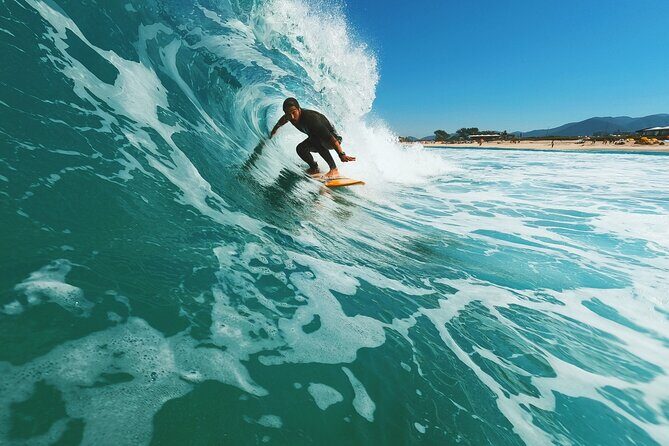
If you’re a total beginner, you want calmer water, manageable wave shape, and a beach setup where you can learn without getting pounded or tossed too far out. If you’ve surfed before, you still want waves that let you practice timing and positioning instead of constantly getting wiped out.
In real terms, this kind of approach can mean fewer crowds and better learning time. People have specifically praised the guide for finding decent waves that weren’t crowded, which matters in Barra, where popular beaches can get busy fast.
Safety, Warm-Up, and Standing Practice: The Part You’ll Appreciate Later
Before you hit the water, you get safety measures and warm-up exercises. You also train the movement of standing on the board first in the sand.
That sand drill is underrated. When you’re learning, your biggest enemy is confusion: you don’t just need strength. You need muscle memory and the right sequence of hands, feet, and balance. Practicing it on land makes the first attempts in the water less stressful, and you lose less energy fighting the basics.
Some sessions also emphasize a mindful warm-up aimed at lowering risk of injury while keeping you focused. I like that combination: it’s not just physical training, it’s attention training. Surfing is technical, and your brain has to stay calm enough to execute.
Catching Waves: What the 4 Hours Are Built Around

The main event is catching waves, but the coaching approach matters.
Once you’re in the water, you’re not left to figure it out alone. The guides help with positioning and timing and keep you in the right spot so you can actually ride rather than spend the whole lesson paddling in place. For beginners, that often means repeated attempts where each one teaches you something specific.
The pop-up technique gets broken down in simple terms. One guide named Gabriel has been praised for being very patient with beginners and for giving clear instructions in English. If you’re traveling solo, as a couple, or with family members who have different comfort levels, this is the kind of guidance that helps everyone progress at a human pace.
Also, the lesson is long enough that you don’t feel like you’re doing one lucky catch and then rushing to wrap up. Some people have reported surfing longer than expected, which is a good sign that the team prioritizes your time on the board.






Gear, Pacing, and the Benefit of a 6-Person Max
The experience provides gear. That’s a big deal in Rio, where surfboards and wetsuits aren’t always a cheap or convenient add-on if you’re bouncing between neighborhoods.
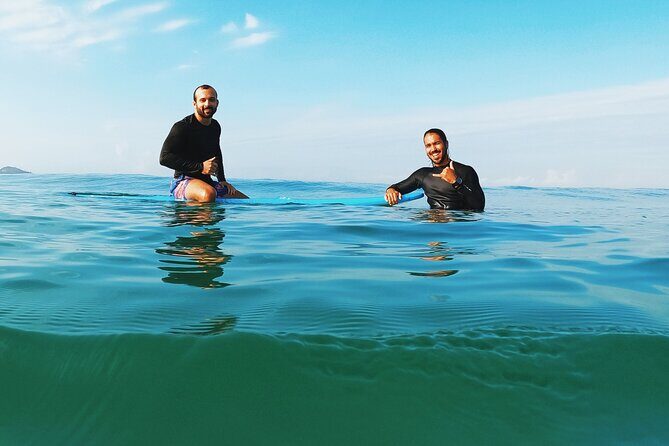
The group size cap of 6 is the other value lever. With fewer people, the guide can adjust. If one person is struggling to stand, that’s time spent where it counts. If someone is catching waves quickly, the instruction can shift to the next skill instead of restarting basics for everyone.
Pacing is also practical here. People have described the guide as helpful and friendly, and comfortable in wet weather too. Even with drizzle, the day can still feel like it works, because the team is watching conditions and adjusting.
The Photo Moment and the Post-Surf Overlook
After surfing, you head to a place of unique beauty to enjoy a breathtaking view. That stop is more than a photo opportunity. It’s your decompression window.
Surfing uses your legs, lungs, and balance. After you’ve done the hard part, sitting with a view gives you a chance to feel proud instead of immediately moving on to your next task. One person even noted that a photographer captured the essence of the experience, which is great if you’d rather remember the day through real images than through frozen phone panoramas.
If you’re the type who likes a strong end to the story of a trip day, this viewpoint piece is a meaningful part of the value.
Price and Logistics: Is $90 Good Value?
$90 per person for about 4 hours is not a “cheap” impulse purchase. But it’s also not just you renting a board and hoping for the best.
What you’re paying for is instruction that is tuned to conditions, plus gear, plus a small group setting that makes it easier to get feedback. You’re also paying for the time spent scouting for the right spot rather than running a one-size-fits-all plan.
So for value, ask yourself a simple question: would you rather pay $90 for coaching and a guided Rio day, or would you spend that time and money figuring it out alone with a bigger learning curve? For most visitors, the coaching time is what makes this feel like a bargain.
A small practical caution: communication and meeting expectations matter. There’s at least one account where a traveler felt communication wasn’t clear and missed surfing time due to confusion about where to meet. Even though most people describe the guides as helpful, you should still treat the meeting point and schedule as your responsibility. Arrive on time, and if you have questions, message early.
Who This Is Best For (and Who Should Rethink It)
This experience is best for you if:
- you want a beginner-friendly way to get up and ride
- you like small groups and hands-on coaching
- you want a surf day that also shows you Rio from a scenic viewpoint
It can also work well for mixed groups. People with teens or families have described the lesson as a highlight, and the guide’s patience helps when different people progress at different speeds.
You might rethink it if:
- you’re very dependent on hotel pickup and you can’t reliably get to the stated meeting point
- you’re expecting a surf session with no guidance or no structure (this is instruction-based)
- you can’t handle weather-dependent activities, since good conditions are required for the day to run as planned
Weather and Schedule Reality in Rio
This is a surf activity that requires good weather. If conditions aren’t right, the plan can be changed, or you might receive a different date or a full refund.
That matters because surfing is weather-led. If you’re booking late in your trip, keep flexibility. If you’re booking far ahead, good. Either way, just remember that the sea gets the final vote.
Also note: confirmation happens at booking time unless your booking is inside an 8-hour window before travel. In that case, confirmation comes as soon as possible based on availability.
Should You Book Rio Surf Experience?
If you want a structured surf lesson in Rio with a guide who looks for the right waves for your skill level, this is a solid pick. The small group size, land-based drills, and coaching focus are the reasons it tends to land well for beginners and improving surfers.
I’d say book it if you:
- can get to Av. Rodolfo Amoedo, 455 without stress
- want gear included and direct instruction
- like the idea of finishing with a scenic viewpoint, not just going home wet and tired
I’d hesitate only if your schedule is too tight to handle weather swaps, or if you strongly need door-to-door pickup. In that case, send questions early and plan around the listed meeting point so you don’t lose surf time.
FAQ
Where is the meeting point for Rio Surf Experience?
You meet at Av. Rodolfo Amoedo, 455, Barra da Tijuca, Rio de Janeiro, Brazil.
How long is the tour?
The duration is about 4 hours.
What is the price per person?
The price is $90.00 per person.
Is there a limit on group size?
Yes. The maximum group size is 6 travelers.
Do I get surf gear?
Yes. Gear is provided.
What happens if the weather is poor?
The experience requires good weather. If it’s canceled due to poor weather, you’ll be offered a different date or a full refund.
What if I’m a beginner?
Most travelers can participate, and the lesson includes warm-up exercises and practicing standing on the board first in the sand, which is especially helpful for beginners.