REVIEW · BRASILIA
Fatima Neighborhood and Church Unit Bike Tour
Book on Viator →Operated by Camelo Bike Tour · Bookable on Viator
Brasília clicks better when you pedal. This Fatima Neighborhood and Church Unit Bike Tour strings together architecture and everyday superquadra life, with stops that mix big-city icons and local routines. I love that the guide work isn’t just facts on walls, it helps you understand how the city is designed and why places like the superquadras and parks matter. I also like the practical pacing, with enough time at each stop to ask questions and take photos without feeling rushed.
One consideration: this is a good-weather ride. If the sky doesn’t cooperate, you may need to switch dates or take a refund.
At about 3 hours and $62.73 per person, it’s a focused tour for Asa Sul neighborhoods and landmark churches, built around a small group size (max 15). Many of the stops are marked free for admission tickets, which makes the value easier to swallow.
In This Review
- Key Highlights You’ll Notice Fast
- Why Fatima on a Bike Makes Sense in Brasília
- Meeting at Camelo Bike Tour and Settling into the Pace
- Torre de Televisão: Start High, Then Think Low
- Parque da Cidade Sarah Kubitschek: Big Park Energy, Planned Design
- Jardim Burle Marx: A Short Stop That Changes How You Read the City
- SQS 308 and the Superquadra Model: Where Brasília’s Design Becomes Real Life
- Cine Brasília + Renato Russo Hall: Culture Inside the City’s Civic Rhythm
- Igrejinha Nossa Senhora de Fátima: Tile Details Worth Slowing Down For
- Santuario São João Bosco: Closing the Loop with Brasília’s Patron Saint
- The Real Value: Price, Time, and What You Get for $62.73
- Who This Tour Is Best For
- Should You Book This Fatima Neighborhood and Church Unit Bike Tour?
- FAQ
- How long is the Fatima Neighborhood and Church Unit Bike Tour?
- How much does the tour cost?
- What are the main places the tour visits?
- Are admission tickets included or required?
- Where does the tour start?
- How big is the group?
- Is there any option for children?
- What happens if the weather is poor?
Key Highlights You’ll Notice Fast
- Torre de Televisão for first-glance orientation before you head into quieter residential areas
- Parque da Cidade Sarah Kubitschek and Jardim Burle Marx for park space designed by famous names
- SQS 308 model superquadra to see how Brasília’s “neighborhood unit” idea plays out on the ground
- Cine Brasília + Renato Russo Hall for a culture stop inside the city’s civic rhythm
- Igrejinha Nossa Senhora de Fátima with Athos Bulcão tile details on the outer walls
- Santuario São João Bosco tied to Brasília’s patron saint, closing the loop with meaning
Why Fatima on a Bike Makes Sense in Brasília
Brasília has a way of feeling abstract until you move through it. On a bike, the scale becomes real: superquadras turn from diagrams into lived-in blocks, and parks feel less like “green space” and more like how people actually breathe between buildings.
This tour is built for that. You start with the Torre de Televisão, a natural place to get your bearings. Then you slide into parkland and garden design by Burle Marx, before you hit the residential heart of Brasília at places like SQS 308. That order matters. If you go the other way, the architecture can feel random. Here, it builds into a story: city planning first, then the cultural and religious anchors.
The ride length is also a sweet spot. It’s about 3 hours, long enough to feel like you saw the city, but not so long that you melt into “tourist mode.” And with a small max group of 15, you don’t get lost in a crowd.
You can also read our reviews of more cycling tours in Brasilia

Meeting at Camelo Bike Tour and Settling into the Pace
Your starting point is Camelo Bike Tour Brasília, SHS Quadra 06 Conjunto A, Bloco A, Loja 17, Centro Empresarial Brasil 21, in Asa Sul. The tour meets there and then returns to the same spot at the end, which is great for sanity after a bike ride.
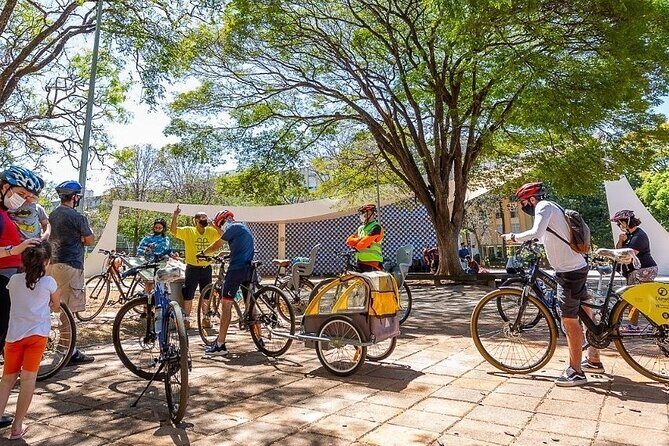
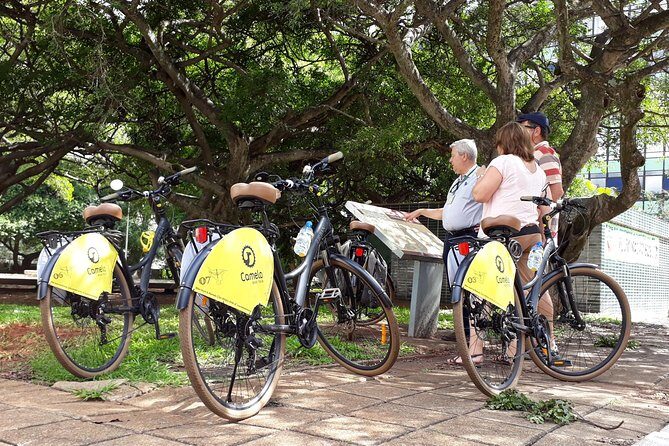
You’ll want to think of this as an explanation-led route, not a free-ride cruise. Each stop includes time for photos and a guide-led rundown of what you’re seeing. The review feedback highlights that the distances between stops feel well balanced, with a good mix of parks and residential areas rather than one long slog between landmarks.
Also, if you’re traveling with kids, there’s an option: an articulated tandem passenger trailer for children from 4 to 10/12, but you need to ask in advance. That’s a big deal for families, because Brasília is not always friendly to strollers-and-waiting logistics.
Torre de Televisão: Start High, Then Think Low
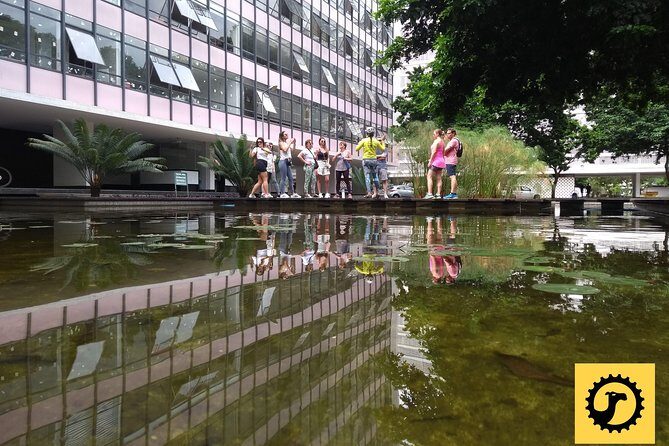
The tour begins at the Torre de Televisão. It’s a clean first stop because it gives you a visual framework before the route gets more neighborhood-level.
You’re there for around 10 minutes—free admission—and you get the first explanation and photo time. Even if you don’t memorize names in that moment, the tower helps you connect what comes next: how Brasília’s parts relate to each other and why certain streets and axes matter.
If you love photos, go in ready. The tower stop is short, and it’s the kind of place where a single good angle can make the rest of your day easier. Later, when you’re on the ground at superquadras and parks, you’ll understand what you’re looking at instead of guessing.
Parque da Cidade Sarah Kubitschek: Big Park Energy, Planned Design
Next comes Parque da Cidade Sarah Kubitschek, one of the largest urban parks in the world. This stop lasts about 25 minutes and is listed with free admission.
What makes it more than a scenic break is the design pedigree. The park was created by landscape artist Burle Marx, a name you’ll keep hearing in Brasília context. Here, the point isn’t only the views. It’s how the city uses park space as a partner to its residential planning.
Inside the park, you visit Praça Eduardo e Mônica, created in honor of the music of the same name by Legião Urbana. That’s a smart cultural touch. You’re not only seeing how the city was planned by architects and planners—you’re also seeing how local music and identity get stamped into public space.
Possible drawback: parks are great, but if the sun is blazing, your best moments can be the ones in shaded areas you spot early. Bring sunscreen and plan to take breaks when you can.
Jardim Burle Marx: A Short Stop That Changes How You Read the City
After the bigger park, you get a smaller, more focused break at Jardim Burle Marx. This is about 10 minutes, also free.
This garden stop is compact, but it’s valuable because it slows you down. In Brasília, it’s easy to treat design as something you either “get” or you don’t. A garden like this trains your eye. You start noticing how outdoor spaces are treated as intentional parts of the city, not leftover space.
In practical terms: if you’re someone who usually rushes through photos, this part can flip your mindset. Even a quick garden visit can make the later neighborhood stops more legible—because you understand that Brasília’s public spaces are not accidental.

SQS 308 and the Superquadra Model: Where Brasília’s Design Becomes Real Life
Now you hit the stop that most directly answers the question: how do people actually live in Brasília?
The tour visits SQS 308 Quadra modelo, located in Asa Sul. This superquadra was chosen as the city’s model court. Lúcio Costa designed it, Burle Marx handled urbanism and landscaping, and Banco do Brasil was involved in building it. It was inaugurated on February 19, 1962.
Translation for your brain: this isn’t just a pretty block. It’s a design template. That matters if you want your trip to go beyond photos and into understanding.
You’ll spend about 45 minutes here, and this longer time pays off because you’re not only looking. You’re learning how the “neighborhood unit” idea—Brasília’s residential scale—plays out in daily life. One review mentioned a guide taking them to a typical superquadra and also pointing out nearby elements like a shopping area, school, and cinema. Even if your exact route varies, this is the idea: you get the city planning logic plus the nearby everyday services that keep the neighborhood functioning.
Possible drawback: SQS 308 is residential. That can mean fewer dramatic “wow” sights compared with towers and sanctuaries. But if your goal is to understand the city’s urban structure, it’s also the most rewarding stop.
Cine Brasília + Renato Russo Hall: Culture Inside the City’s Civic Rhythm
From the superquadra, the tour shifts into a culture moment with Cine Brasília. It’s noted as the venue for the Brasília Film Festival, and it also hosts national film releases, foreign shows, thematic weeks, debates, book launches, and exhibitions—plus cooperation with embassies, public schools, and universities.
That sounds like a lot of programing, but the practical value for you is simple: you see how Brasília uses indoor cultural spaces to connect communities. In a planned city, these venues help create “third spaces” beyond home and work.
The tour also includes the Renato Russo Hall (named for the Brazilian musician Renato Russo, known for Legião Urbana). This ties back to the Legião Urbana reference you saw at Praça Eduardo e Mônica in Parque da Cidade. If you’re a music fan, you’ll likely feel a pleasant thread connecting the parks to cinema culture.
If you’re not a movie person, don’t worry. Even outside festival season, you’re still walking through a place that signals how Brasília organizes public life.
Igrejinha Nossa Senhora de Fátima: Tile Details Worth Slowing Down For
Then comes one of the stops you’ll remember because of the surface details: Igrejinha Nossa Senhora de Fátima.
This church was inaugurated in June 1958 and is described as the first church located in the residential sector. It was raised at the request of Dona Sarah Kubitschek, for a grace achieved in favor of the cure of her daughter. There’s meaning here, and you’ll feel it more because you’re arriving after residential-area context rather than from a museum-like entry.
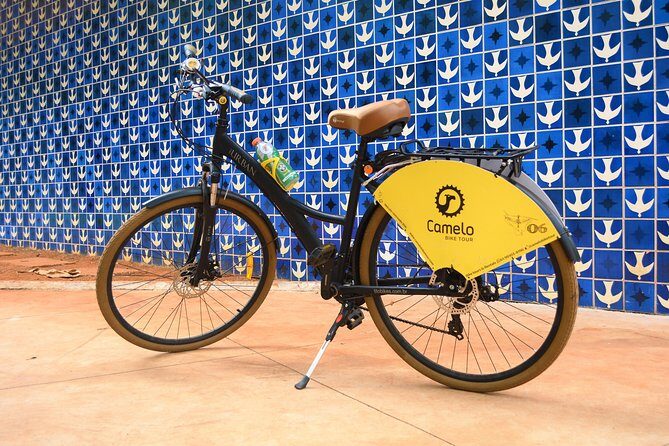
The outside walls have tiles by Athos Bulcão, featuring stylized figures of the Dove of the Divine and the Star of the Nativity. That’s the kind of detail that makes you stop walking for a second and look closer. The tour gives you about 20 minutes at this church, which is just enough time to see the overall design and then focus on tile motifs rather than sprinting past them.
Possible drawback: religious sites usually mean quieter behavior. If you’re looking for loud spectacle, this stop is quieter. But the reward is the craft and the story.
Santuario São João Bosco: Closing the Loop with Brasília’s Patron Saint
Your final major stop is the Santuario São João Bosco, built in honor of St. John Bosco, the patron saint of Brasília.
This part is short—about 10 minutes—but it works as a symbolic finish. You’ve seen the city from above, walked through planned park design, studied superquadra life, and learned how culture operates inside civic spaces. Ending at a sanctuary ties all that together through the city’s own spiritual identity.
One of the reviews specifically called out loving the Dom Bosco shrine at the end, which fits the logic of the route: you arrive here with your mental map already built. So you don’t just see the building—you understand why it belongs in the story of the city.
The Real Value: Price, Time, and What You Get for $62.73
At $62.73 per person for about 3 hours, this bike tour sits in the “serious city experience” category rather than a casual sightseeing loop. The value comes from a few concrete things:
- Guided context: You’re not just cycling between stops. The explanations are aimed at how Brasília works—urban design, residential scale, and public spaces.
- A practical mix of places: A tower for orientation, parks for breathing space, SQS 308 for residential planning, then churches and cultural venues.
- Small group size (max 15): That keeps the tour from turning into a herd.
- Many free admission stops: Several stops list free admission tickets, which reduces extra spending.
Also, this tour is booked about 41 days in advance on average, so it’s clearly in demand. If your dates are fixed, don’t wait until the last minute.
If you’re price sensitive, this still can be a good use of money because you’re buying time with a guide plus entry-free visits to multiple major sites in one loop.
Who This Tour Is Best For
I’d point you to this tour if you want Brasília in a way that feels lived-in, not just postcard views.
You’ll likely enjoy it most if you:
- Like architectural and urban planning explanations you can see with your eyes
- Want a neighborhood-feeling day in Asa Sul rather than only monument hopping
- Enjoy mixing parks, culture stops, and religious sites without changing locations all day
- Want a shorter tour (about 3 hours) that still includes multiple anchor stops
Less ideal if you hate getting in and out of the bike often, or if you want long museum-style time at indoor sites. The stops are timed. The guide helps you make them count.
Should You Book This Fatima Neighborhood and Church Unit Bike Tour?
I’d book it if your goal is to understand Brasília, not just photograph it. The standout part is the combination of superquadra life at SQS 308, park design by Burle Marx, and church details like Athos Bulcão tiles at Igreja Nossa Senhora de Fátima. Add the guide storytelling (you might even get a guide like Duda, based on past reviews), and you have a tour that feels structured and meaningful without being heavy.
Skip it only if you’re arriving with a very strict schedule that can’t handle weather-based changes, or if you dislike guided pacing. Since it needs good weather, check the forecast and keep your expectations aligned with an outdoor bike day.
FAQ
How long is the Fatima Neighborhood and Church Unit Bike Tour?
It runs for about 3 hours.
How much does the tour cost?
The price is $62.73 per person.
What are the main places the tour visits?
The tour includes Torre de Televisão, Parque da Cidade Sarah Kubitschek, Jardim Burle Marx, SQS 308 Quadra modelo, Cine Brasília, Renato Russo Hall, Igrejinha Nossa Senhora de Fátima, and Santuario São João Bosco.
Are admission tickets included or required?
For several stops, admission tickets are listed as free (including Torre de Televisão, Parque da Cidade Sarah Kubitschek, Jardim Burle Marx, SQS 308, Igrejinha Nossa Senhora de Fátima, and Santuario São João Bosco). The tour includes visits and explanations at each stop.
Where does the tour start?
It starts at Camelo Bike Tour Brasília, SHS Quadra 06 Conjunto A, Bloco A, Loja 17, Centro Empresarial Brasil 21 – Asa Sul, Brasília – DF, 70316-102, Brazil.
How big is the group?
The tour has a maximum of 15 travelers.
Is there any option for children?
Yes. There is an articulated tandem passenger trailer for children from 4 to 10/12 years old, but you need to ask in advance.
What happens if the weather is poor?
The experience requires good weather. If it’s canceled due to poor weather, you’ll be offered a different date or a full refund.