REVIEW · BALNEARIO CAMBORIU
Germanic Route – Cultural and historical in Ilhota, Blumenau and Pomerode
Book on Viator →Operated by Vipmar Turismo · Bookable on Viator
German culture in Brazil, for a full day. The Germanic Route tour connects you to the European Valley of Santa Catarina through real daily customs like beer culture, architecture, and events, and it keeps moving at a human pace. I especially like the way the day spotlights German influence without turning it into a theme park, and I love that Pomerode gives you enough time to taste local specialties and shop for handmade goods.
One consideration: the whole day runs on timing, and the route includes multiple short transfers between stops, so you’ll want to confirm pickup and be ready to stay flexible if things run late.
In This Review
- Key moments you’ll care about
- A German-leaning day in Santa Catarina, starting at 8:00
- Ilhota stop: underwear, beach energy, and a quick reset
- Blumenau: beer capital, Oktoberfest roots, and stroll-time shopping
- Pomerode: German-speaking streets, half-timbered homes, and WWII-era reminders
- Food, drinks, and souvenirs worth budgeting for
- Price and logistics: what $28 covers and what to bring
- Should you book the Germanic Route tour?
- FAQ
- What time does the tour start?
- How long is the tour?
- What does the tour cost?
- Is lunch included?
- Are admission tickets included for the stops?
- Does the tour include transportation from my accommodation?
- What’s the group size?
Key moments you’ll care about
- A tight 8-hour loop from your area with air-conditioned transport and a guide
- German culture that shows up in daily life, not just in buildings
- Blumenau’s beer-and-Oktoberfest vibe paired with practical strolling and shopping time
- Pomerode’s German-language community (90% of residents speak German)
- Food and drink breaks built into the Pomerode experience, from pies to craft beer
- Short, focused stop in Ilhota (about 20 minutes) to break up the day
A German-leaning day in Santa Catarina, starting at 8:00
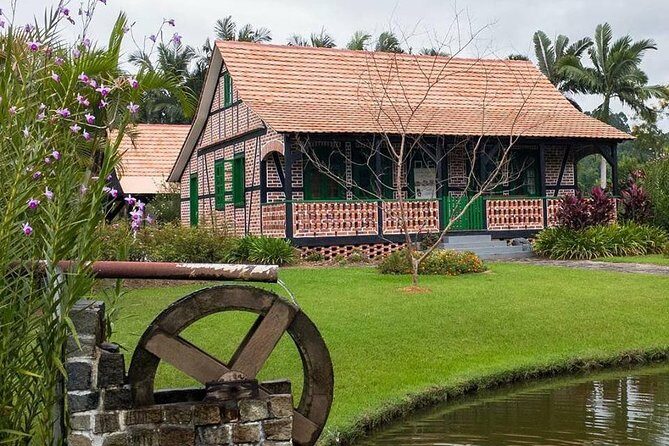
This is a full-day outing that starts at 8:00am and runs about 8 hours total. You’re not spending the day cooped up either: the stops are scheduled to give you real time in town, not just quick photo stops from the bus window.
The value is in the mix. You’re covering three places that each show a different slice of the German heritage here: a quick taste in Ilhota, a bigger city story in Blumenau, and then a quieter, more German-speaking interior feel in Pomerode. The tour also includes round-trip transfers from your accommodation and an on-board guide, so you’re not trying to stitch together transportation across towns on your own.
The group size is capped at 45 people, which matters because it usually keeps things orderly at each stop. And yes, the day includes shopping time, but the better way to think about it is this: if you like looking for local products, this is built in as part of the experience, especially in Pomerode.
Guides can make a big difference on a day like this. The tour has featured guides such as Jilson and Junior, Fabio, Rosana, and Fernando, and the common thread from firsthand impressions is how much they explain along the way and how comfortably they can switch into Spanish or Portuguese when needed.
You can also read our reviews of more tours and experiences in Balneario Camboriu.

Ilhota stop: underwear, beach energy, and a quick reset
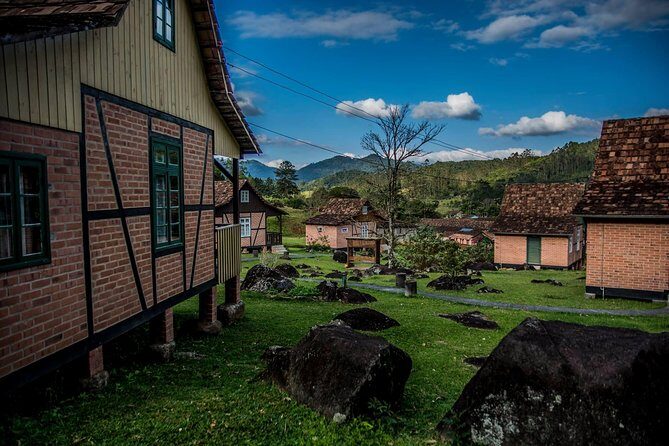
Ilhota is the warm-up stop. You get around 20 minutes there, and there’s no admission ticket listed for the visit. The idea isn’t to spend hours sightseeing; it’s more like a quick “where am I?” moment that gives you context for the region.
From the tour description, Ilhota is described as a pole of underwear, beach, and fitness. That’s a useful mix because it reminds you this “Germanic Route” isn’t only about old-world streets. It’s also about modern working life and the coastal identity of the Santa Catarina area, seen through what locals here focus on.
The drawback is obvious: 20 minutes means you won’t have time for a deep walk or a long sit-down. If you love digging into every neighborhood detail, you’ll probably treat this as a brief contrast stop. If you’re happy with quick orientation, it works nicely because it keeps momentum for the bigger culture stops that come next.
One practical tip: since this first stop is short, I’d use it to set your own pace for the day. Decide early if you’ll take photos fast or if you want slower browsing later—because once you hit Blumenau and Pomerode, you’ll likely want your energy for walking and eating.
Blumenau: beer capital, Oktoberfest roots, and stroll-time shopping
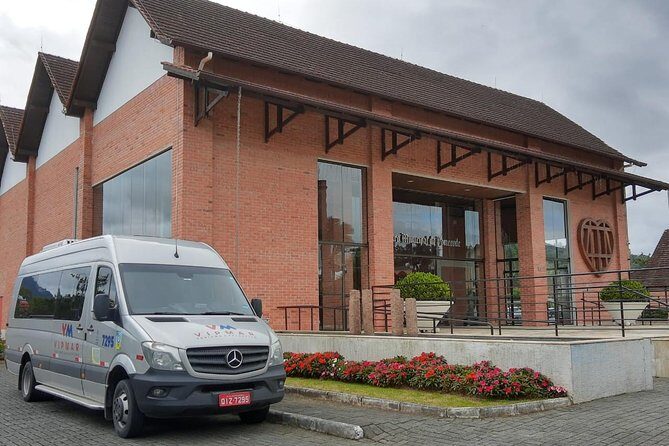
Blumenau is where the day really turns into a story you can walk through. You’ll have about 3 hours in town, and again the admission ticket is listed as free. This is the main city in the European Valley region of Santa Catarina, and it’s closely tied to Oktoberfest traditions and the idea of being the Brazilian capital of beer.
What makes Blumenau interesting is that the German influence shows up in several places at once: gastronomy, architecture, and popular events. So instead of just seeing one style of building, you can connect it to the way people eat and celebrate. That connection is what makes the whole day feel coherent.
You also get time for strolling and shopping, and that’s not just a sales stop. In towns with this kind of heritage, shopping can be your fastest way to spot what’s local—especially when you’re comparing products across different stops. Blumenau is a good place to browse casually because you’re in a larger urban setting where your route choices are more flexible.
Timing matters here. You’ll want to plan for movement on foot inside the city center area, since 3 hours is enough for a decent walk and a meal snack, but not enough to treat it like a half-day city break. The best strategy is to pick one or two priorities—like architecture and a beer-focused tasting, or architecture and a quick souvenir hunt—then let the guide steer the rest.
If you’ve got kids or you’re traveling with family, this stop can be a sweet spot. People often like it because it mixes history signals with casual street energy, and the guide time helps keep you from feeling lost.
Pomerode: German-speaking streets, half-timbered homes, and WWII-era reminders
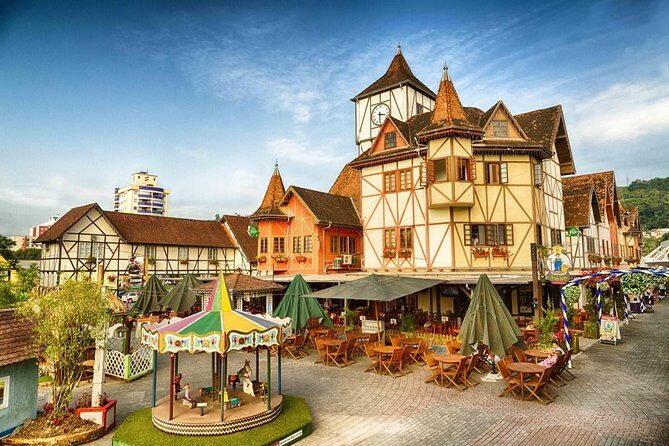
Pomerode is the reason many people book this route in the first place. You’ll spend about 2 hours there, with admission ticket also listed as free. The big headline is simple: it’s described as the most German city in Brazil, where 90% of residents speak German.
That language detail changes the feel of the experience. Even if you don’t speak German, hearing it around you makes the heritage feel less like an “attraction” and more like a living community. It also tends to make the guide’s explanations land better, because you’re not just learning from plaques—you’re watching how culture is carried day to day.
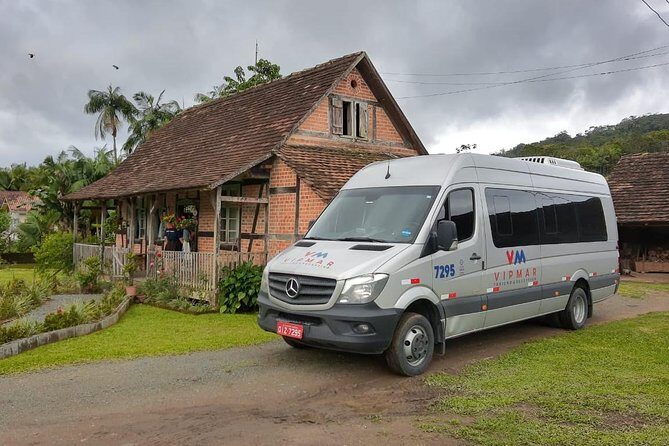
Architecturally, expect half-timbered structures and historic houses linked to the World War II era. That last point adds weight to the visit. It’s still a place to enjoy food and shopping, but it’s also a reminder that history is part of the town’s visual identity, not something sealed behind glass.
The pace in Pomerode is also described as quieter, more interior-like. That matters if you’re trying to avoid a hectic day. A slower feel plus cultural signals is a great combo for a short 2-hour window.
Now for the practical stuff: this is where you should plan to eat and drink. The tour highlights German pies, craft beers, liqueurs, and sausages. Even if you skip a full sit-down meal, try to budget for at least a small tasting moment, because that’s where the day becomes fun instead of just informative.
Shopping is another big draw. Expect handicrafts, chocolates, and drinks—plus plenty of everyday local products that feel more specific than generic tourist souvenirs.
Food, drinks, and souvenirs worth budgeting for
This tour doesn’t include lunch, so you’ll want to plan your food costs. In practice, that works in your favor because you can choose what fits your tastes at each stop. Blumenau gives you the beer culture and city strolling, while Pomerode is the place for heavier German-food cravings like pies and sausage plates.
If you like craft beer, this route is built for you. Blumenau is tied to the beer identity and Oktoberfest atmosphere, and Pomerode is positioned as a town where German food and drinks are a normal part of life. Even if you don’t drink alcohol, you can still use the food focus as your anchor—pies and local specialties are the safe bet.
Souvenirs are also more meaningful here than in typical “look at a shop then leave” tours, because the goods match what the town is known for. Handmade crafts and chocolates tend to feel connected to the community, especially when you’re pairing what you see in architecture and language with what you’re buying.
A small strategy that helps: decide on your souvenir budget before you arrive. Pomerode has a lot of temptation—handicrafts, drinks, chocolates—and a clear limit keeps you from overspending when you’re already hungry or enjoying tastings.
If you’re the kind of person who likes a snack on the go, you can structure the day so you do a light bite in Blumenau and then make Pomerode your heavier food stop. That tends to feel better than trying to eat a full meal in every town.
Price and logistics: what $28 covers and what to bring
At $28.00 per person, this is priced like a solid, value-first day tour—especially because it includes an air-conditioned vehicle and a guide, plus round-trip transfers from your accommodation. The biggest “gotcha” is that lunch isn’t included, so you should treat your final cost as ticket plus meal money.
The tour runs about 8 hours, starts at 8:00am, and includes multiple stop durations that total to a day’s worth of sightseeing. Also, the tour notes that it’s often booked about 22 days in advance, so it can be smart to lock it in early if you’re traveling at a busy time.
The group limit of 45 travelers is another practical piece. Smaller group size generally means the guide can actually keep an eye on everyone during transitions, which is important when you’re bouncing between towns.
About timing: one negative experience described a situation where pickup didn’t happen, and another mentioned that people sometimes didn’t follow time schedules, causing delays. You can’t control other people, but you can control your preparation. I’d recommend you confirm your pickup details ahead of time and be at your pickup point a few minutes early.
What to bring is straightforward: sun protection, a water bottle, and cash or card for food and shopping. Since you’ll be outdoors part of the day in each town, comfortable shoes are the real “ticket” here.
Should you book the Germanic Route tour?
I’d book it if you want a German-heritage day that’s organized, guide-led, and built around real places—Blumenau for beer-and-Oktoberfest culture, then Pomerode for German-speaking life and half-timbered charm. The short Ilhota stop also works well if you like contrast and you want the day to feel like a whole regional slice, not just one city.
I wouldn’t book it if your priority is deep time in a single town. This is a “three stops, a few hours each” format, so it’s ideal for breadth. If you want to live inside one city for a day, you’ll feel a bit compressed.
One more reason I lean positive: the guide factor. People describe guides like Jilson and Junior as making the day unforgettable, and others highlight Fabio explaining in Spanish and Portuguese when needed. You also get praise for not feeling rushed, which is exactly what you hope for on a compact day tour.
If you want a Germanic route with good pacing, strong food potential, and heritage that you can still feel in street life, this one is a very reasonable bet.
FAQ
What time does the tour start?
The tour starts at 8:00am.
How long is the tour?
It’s listed as about 8 hours.
What does the tour cost?
The price is $28.00 per person.
Is lunch included?
No. Lunch isn’t included.
Are admission tickets included for the stops?
Admission tickets are listed as free for each stop.
Does the tour include transportation from my accommodation?
Yes. The tour includes round-trip transfers from your accommodation, plus an air-conditioned vehicle.
What’s the group size?
The tour has a maximum of 45 travelers.