REVIEW · BALNEARIO CAMBORIU
Germanic Roots Tour Blumenau and Pomerode
Book on Viator →Operated by Transptur Turismo · Bookable on Viator
Germanic vibes, all in one long day. This tour connects Blumenau and Pomerode through historic streets, themed European-style areas, and family-friendly stops. It’s priced for value, runs about 10 hours from an 8:00 am start, and keeps things moving with a small group size (max 28) and a professional guide.
What I like most is the mix of “real city” and “themed German Brazil.” You get a historic walk in Blumenau (including the founder’s memorial and a very odd stop about a cat lover), then you switch to the park-and-photo atmosphere of Vila Germânica. Second, the planning is practical for families: there’s time for snacks, shopping, and kids’ activities, with optional paid attractions like the Pomerode Zoo and museums.
One heads-up: the day depends on good weather, and like any day of sightseeing, rain can slow things down and make outdoor time less fun. Also, while the vehicles are described as comfortable, one guide-driver setup issue popped up in a rain situation—so bring a light rain layer just in case.
In This Review
- Key things to know before you go
- Why Blumenau and Pomerode feel German (without the plane)
- The 8:00 am start and the smooth group setup
- Blumenau Historic Center: squares, a founder’s memorial, and half-timbered charm
- Beer Museum timing and the Rua XV de Novembro panorama
- Blumenau City Hall and the iron bridge with a locomotive story
- Vila Germânica Park: festival-style Europe, shopping, and themed moments
- Pomerode’s Portal, costumes for photos, and a chocolate stop you’ll want to linger at
- Pomerode’s historic streets: Paseo Pomerano, Handgemacht, Theater, and Schornstein Brewery
- Choosing your extra-ticket time: Vila Encantada dinosaurs and Zoo Pomerode
- Vila Encantada Parque dos Dinossauros
- Zoo Pomerode
- Classic cars and toy museums: if your group loves nostalgia
- Museu do Automóvel Pomerode
- Toy Museum (within the same area)
- Price and value: why this feels like a deal at $28.91
- Who should book Germanic Roots Tour Blumenau and Pomerode
- Should you book it?
- FAQ
- How long is the Germanic Roots Tour Blumenau and Pomerode?
- Where does the tour start and end?
- What is the price per person?
- What’s included in the tour?
- Which attractions require extra tickets?
- Are there any stops with free admission?
- What time does the tour begin?
- How many people are in the group?
- What should you do if weather is poor?
- What if I need to cancel?
Key things to know before you go
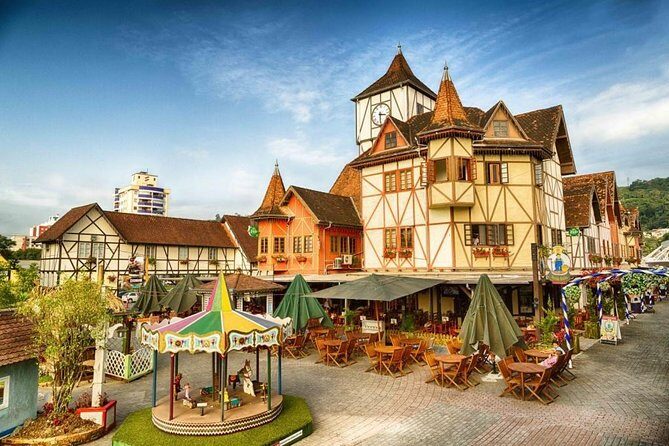
- Blumenau’s historic center includes the Mausoleum of Dr. Otto Blumenau and the Colonial Family Museum in half-timbered style.
- Cemitério Dos Gatos is short, strange, and memorable, tied to Edith Gaertner and her animal story.
- Vila Germânica Park gives you that “Oktoberfest and more” atmosphere with craft shops and festival-themed spaces.
- Pomerode’s shopping stops are built-in: photo-friendly portal, Nugali Chocolates, Handgemacht crafts, and Paseo Pomerano.
- Optional family anchors: Pomerode Zoo plus dinosaur park and classic car/toy museums are extra tickets.
- Guides with real teaching style: many guests highlight guides like Fábio and Edna for clear history and geography explanations.
Why Blumenau and Pomerode feel German (without the plane)
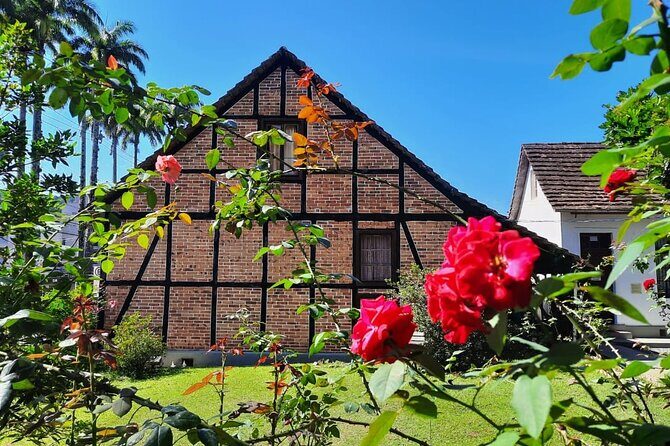
This is one of those “European Valley” style days where you don’t just see buildings. You learn why the place looks like it does. Blumenau and Pomerode grew from German immigration, and the tour builds that idea step by step: founding stories, everyday architecture, then the modern cultural events that keep the influence visible.
Blumenau gives you the serious background: squares, planned streets, and memorials that make the city’s start feel concrete. Then Pomerode shifts the tone slightly—more tidy, photo-ready, and built around crafts, chocolate, and family leisure. If your goal is to understand German roots in southern Brazil, this route makes sense.
You can also read our reviews of more tours and experiences in Balneario Camboriu.


The 8:00 am start and the smooth group setup
The day begins in Balneário Camboriú at 8:00 am, then the tour runs about 10 hours and ends back at the starting point. Expect a tour rhythm where you’re moving between areas, not sitting in one museum for hours.
The comfort details are real. You travel by van and executive minibus with air conditioning, stereo, DVD, and individual reclining seats. Group size is kept to up to 28 travelers, which usually helps the flow: enough people for fun energy, not so many that every stop becomes chaos.
One small practical note: since it’s outdoors in multiple cities, you’ll enjoy the day more with comfy shoes and a light rain plan. The tour requires good weather, and even when the itinerary runs, rain changes the experience (and you’ll want to be prepared).
Blumenau Historic Center: squares, a founder’s memorial, and half-timbered charm
This is where the tour earns its name. In the Centro Histórico, you start at Hercílio Luz Square, where you’ll get the foundation and colonization story of the city. It’s the “why this place exists” stop, and it helps later when you see the architecture and street planning style.
Next is the Mausoleum Dr. Otto Blumenau. This is not just a photo stop. You’re shown artifacts and personal objects connected to the Blumenau family, plus historical photos that make the founder feel more human than a name on a sign.
Then comes one of the tour’s most unusual stops: Cemitério Dos Gatos. You’ll learn the story of Edith Gaertner, described as an animal lover. It’s brief, but it gives the tour personality—proof that local history isn’t only about big events. It’s also about everyday devotion, in a place that turns that into a place worth visiting.
You’ll also see the Colonial Family Museum, highlighted as the first house built in half-timbered style. It’s a great way to connect German-influenced building patterns to what you’re looking at in real time.
The historic-walk feeling finishes with Alameda Duque De Caxias, described as the first planned street in Blumenau. For me, that’s the kind of detail that turns a stroll into a lesson: you start noticing how “planned” space affects how a city feels today.
Most of these parts are free admission and you’re given about 1 hour for this cluster of historic sites, which is a solid pace.
Beer Museum timing and the Rua XV de Novembro panorama
After the historic center, you shift to a topic you can taste later: beer. The Museu da Cerveja is about 30 minutes, and admission isn’t included. You learn how beer history connects to the region and how beer is made.
This is a good stop for anyone who likes cultural craft, not just architecture. It also helps you understand why festivals and beer culture keep showing up in these cities. Even if you’re not planning to drink, it’s a straightforward “process and tradition” lesson.
Then you get a panoramic ride along Rua XV de Novembro, where the Oktoberfest parade takes place. From the road you’ll spot landmarks like the São Paulo Apostle Cathedral, the Castelinho (a replica of Michelstadt’s City Hall in southern Germany), and the Carlos Gomes Theater. This part matters because it ties the city’s daily look to its event calendar. You start seeing how a parade route becomes part of identity.
Blumenau City Hall and the iron bridge with a locomotive story
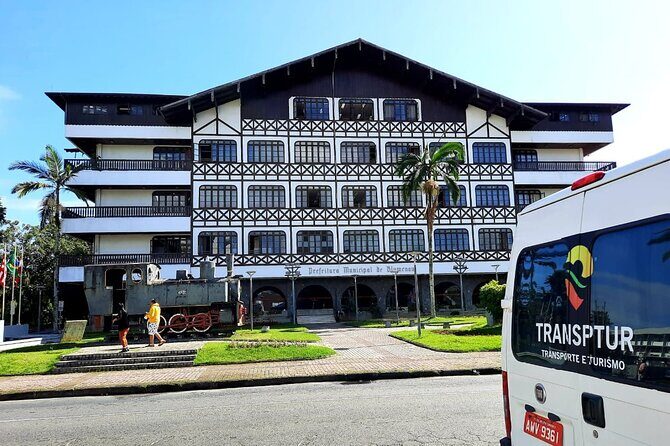
Blumenau keeps the architecture theme going with the City Hall, inspired by old houses from the Colonial period. You only have about 15 minutes here, so don’t expect a deep crawl. But it’s worth paying attention to the shapes and style cues so you can spot them again when you walk through Vila Germânica later.
Right after that, you’ll see the famous Iron Bridge of Blumenau, created to allow passage of the first locomotive purchased from Germany. This is one of those “small object, big meaning” moments. Instead of generic “industrial history,” you get a specific bridge with a specific purpose, tied to the Germany connection.
Quick warning: this is another stop where photos are easy and time feels fast. If you like slow wandering, keep your expectations realistic and let the guide’s story do the heavy lifting.
Vila Germânica Park: festival-style Europe, shopping, and themed moments
Then you shift into Parque Vila Germânica, a complex of European architecture with restaurants and souvenir shops selling regional products and typical crafts. This is where the tour becomes more atmosphere-driven and less strictly historic.
What makes Vila Germânica special is that it’s tied to annual traditions you can actually feel even outside festival season. The tour specifically calls out spaces or references to Oktoberfest, Osterdorf (Easter Village), Weihnachtsdorf (Christmas Magic), the Brazilian Beer Festival, and Festitália.
You’ll have about 1 hour here, and that hour is your “do what you want” block. If you enjoy crafts and gifts, this is the place to look closely. If you’re hungry, you can also use it as a lunch timing point before heading toward Pomerode.
Pomerode’s Portal, costumes for photos, and a chocolate stop you’ll want to linger at
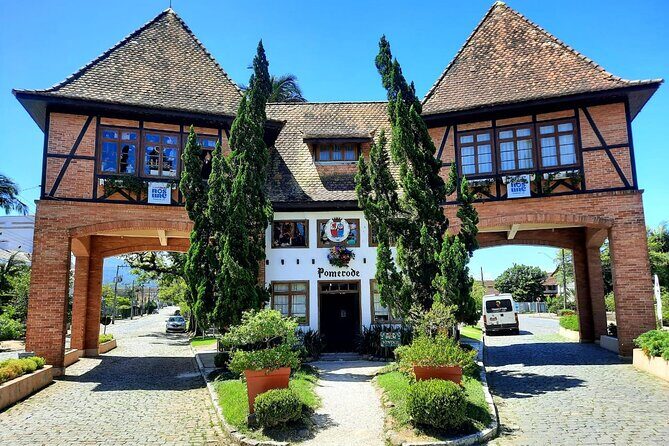
Pomerode is a quieter-feeling town, and the tour meets you with a welcome photo spot: Portal Turístico Sul. The idea is simple: you can take pictures wearing typical German costumes and learn about local handicrafts. It’s designed for tourists, but it’s still a fun, low-effort way to jump into the theme.
Next is Nugali Chocolates – Loja Centro. Admission is free, and the stop is about 15 minutes. This isn’t just “buy and go.” If you like chocolate, you’ll appreciate the time to sample and pick up something to bring home—especially because the store is noted for being among the best in Brazil, including internationally awarded items.
If you’re traveling with kids, this is also a good morale break. Adults can shop. Kids can look for something fun. Everyone wins.
Pomerode’s historic streets: Paseo Pomerano, Handgemacht, Theater, and Schornstein Brewery
The tour returns to a Centro Histórico vibe in Pomerode with a stop at the Pomerode Tourist Center. Here you can explore:
- Paseo Pomerano, a Germanic-style walkway with souvenir shops selling things like cachaça, chocolates, crystals, and confectionery.
- Handgemacht (Casa de Artesanatos), where artisans come together to produce and market their work.
- The Municipal Theater.
- Schornstein Brewery, located in a historic building (the old Mercado Weege).
The brewery stop is a standout for architecture lovers. You’ll see an old industrial building and a dramatic chimney: described as 30 meters high, made of handmade solid bricks. Next to the factory is Schornstein Kneipe, the official bar.
This part works because you see how “heritage” isn’t locked in the past. It’s turned into shops, food, and a place you can hang out. You get about 30 minutes total here, so focus on what you care about: crafts, photos, or brewery sights.
Choosing your extra-ticket time: Vila Encantada dinosaurs and Zoo Pomerode
After the Pomerode historic block, the itinerary gives you clear optional choices for families.
Vila Encantada Parque dos Dinossauros
About 30 minutes and not included. This is a kids-first stop with multiple attractions, including eight life-size dinosaur species, plus a pirate/adventure space and an interactive village theme.
Zoo Pomerode
About 50 minutes, also not included. The tour highlights that it’s the first zoo in the south of Brazil and now has more than 1,000 animals across 242 species.
Here’s how to decide between them: if your group has small kids who love movement and big visuals, Vila Encantada is usually the best use of time. If you have animal lovers (and you’re okay with walking), Zoo Pomerode gives you the bigger “wow” scale. You can’t do everything here if your schedule is tight, so choose based on who’s happiest with your plan.
Classic cars and toy museums: if your group loves nostalgia
Toward the end, you’ll have time for Pomerode’s museums, including both for classic-car fans and nostalgia collectors.
Museu do Automóvel Pomerode
About 20 minutes, and not included. You’ll see 30 models of classic cars manufactured between the 1940s and the 1970s.
Toy Museum (within the same area)
The stop also lists a Toy Museum with toys ranging from 1920 to the present day, with more than 3,000 cataloged toys and a mix of objects and rarities.
This is a great pairing because it offers different energy. The car museum is more about machines and design. The toy museum is more about childhood memory—then and now. If your group includes mixed ages, this combo can keep everyone from getting bored.
Price and value: why this feels like a deal at $28.91
At $28.91 per person, the value is mostly about what’s included beyond just transportation. You’re getting:
- A professional guide accredited by Cadastur
- Comfortable transport with A/C and reclining seats
- A full day structure that includes several free stops and historic walking areas
- Time blocks that let you snack, shop, and browse without the day feeling like one long queue
Many of the best “German roots” moments are included through free entry sites (historic centers, city hall, park areas, and several cultural/photo stops). The extra-ticket options—beer museum, zoo, dinosaur park, and museums—are there if you want them, not forced on you.
A good way to think about it: you can keep this tour mostly “included stops” for a low-spend day, or you can add 1–2 paid attractions for deeper family entertainment. That flexibility is a big part of the value.
Who should book Germanic Roots Tour Blumenau and Pomerode
This tour is a strong match if you want a structured introduction to German immigration culture in southern Brazil and you don’t want to piece together multiple day trips on your own.
You’ll especially like it if:
- You enjoy photo-friendly architecture and craft shopping
- You’re traveling with kids and want at least one or two attractions that keep them excited
- You like guided explanations that connect landmarks to the story behind them (names mentioned include Fábio and Edna)
If you’re the type who wants total freedom and long unstructured walking time, keep in mind the day is packed into a set timeline. It’s not a “wander all day” experience. It’s a guided highlights route that gives you a lot for the time.
Should you book it?
If your goal is to see Blumenau and Pomerode’s Germanic imprint in a single day, this is an easy yes. The included historic stops and the guided context make it more than just shopping and photos, and the optional zoo and museum time helps you tailor the day to your group.
Just go in prepared for a long sightseeing day and bring a rain layer. With that, you’ll get a fun mix of culture, crafts, and family-friendly breaks at a price that’s hard to beat.
FAQ
How long is the Germanic Roots Tour Blumenau and Pomerode?
It runs for about 10 hours.
Where does the tour start and end?
It starts in Balneário Camboriú, State of Santa Catarina, Brazil, and ends back at the same meeting point.
What is the price per person?
The price is $28.91 per person.
What’s included in the tour?
The included items are van and executive minibus transportation with air conditioning, stereo, DVD, and individual reclining seats, plus an accredited tourist guide by Cadastur.
Which attractions require extra tickets?
Tickets are not included for the Beer Museum, Vila Encantada Parque dos Dinossauros, Zoo Pomerode, Museu do Automóvel Pomerode, and the Toy Museum.
Are there any stops with free admission?
Yes. Several stops are listed as free, including the Historic Center cluster in Blumenau, Blumenau City Hall, Vila Germânica Park, Portal Turístico Sul, Nugali Chocolates store, and Pomerode Tourist Center attractions.
What time does the tour begin?
The start time is 8:00 am.
How many people are in the group?
The tour has a maximum of 28 travelers.
What should you do if weather is poor?
The tour requires good weather. If it’s canceled due to poor weather, you’ll be offered a different date or a full refund.
What if I need to cancel?
You can cancel up to 24 hours in advance for a full refund.