REVIEW · RIO DE JANEIRO
Jewish Tour in Rio de Janeiro
Book on Viator →Operated by Guided Tour In Rio · Bookable on Viator
Synagogues meet ocean views in one short morning. This small-group Jewish tour in Rio pairs hotel pickup with real stops tied to Jewish life and memory, from the beaches to community institutions. I liked how the guide focused on the why behind each place, not just the what.
I also loved the personal attention you get with a max group size of 14, plus the convenience of being dropped back where you started. One thing to consider: not every site is guaranteed to be fully accessible, and the big-ticket cultural stops (like the Jewish Museum and the Great Temple) have entrance fees not included.
In This Review
- Key highlights I’d circle on your map
- Why This Rio Jewish Tour Works (and Why 3 Hours Is Enough)
- Leblon to Ipanema: Synagogue + cultural center + the Jewish Community Center
- Botafogo Beach: Anne Frank school network and the ARI Progressive Jewish community
- Botafogo Bay and Morro de Pasmado: Itzhak Rabin Park viewpoints with meaning
- Jewish Museum of Rio: archives, migration research, and a smaller space than you might expect
- Grande Templo Israelita do Rio: Ashkenazi architecture and the “open when possible” factor
- Price and value: what $95 buys you in Rio’s traffic and timing
- Who should book this (and who might want a different style of tour)
- Should you book the Jewish tour in Rio?
- FAQ
- How long is the Jewish Tour in Rio de Janeiro?
- Where does the tour start, and what time does it begin?
- Is hotel pickup included?
- What’s the maximum group size?
- What is included in the price?
- Are entrance fees included?
- Which areas of Rio are visited?
- Is food or drinks included?
- What is the cancellation policy?
Key highlights I’d circle on your map
- Max 14 people so questions don’t get lost in the shuffle.
- Hotel and port pickup on a car/van route that saves you from cab math.
- Beit Lubavitch Synagogue and Midrash Cultural Center in the Leblon area.
- Anne Frank school network plus the ARI Progressive Jewish community sites in Botafogo.
- Itzhak Rabin Park viewpoint from Morro de Pasmado over Botafogo and Urca Bay.
- Jewish Museum of Rio and the Great Temple to connect community stories with architecture and archives.
Why This Rio Jewish Tour Works (and Why 3 Hours Is Enough)
Rio can feel like a lot of postcard stops stitched together. This tour is different because it keeps one thread running through everything: Jewish presence in Rio, in community spaces, not just monuments. You’ll move fast, but the guide gives you context so the places actually connect.
The price is $95 per person for about 3 hours, and it includes the parts that cost you time and energy on your own: a professional guide plus transport by car or van and pickup/drop-off (selected hotels and the port). For me, that’s the value piece. You’re not paying only for entry tickets—you’re paying to get to several specific sites without wrestling with routes and timing.
If you’re expecting a museum-depth marathon, don’t. This is a focused tour with short visits at several locations, so you’ll get orientation and meaning rather than hours of reading. It also helps to know that some sites may be limited on the day, like the Holocaust-related reference center closures that can happen.
You can also read our reviews of more tours and experiences in Rio de Janeiro.



Leblon to Ipanema: Synagogue + cultural center + the Jewish Community Center
Your morning starts at 9:00 am, meeting at the Hilton Rio de Janeiro Copacabana on Av. Atlântica, and then the van rolls out for pickup depending on where you’re staying. The first area is Praia do Leblon, one of Rio’s upscale neighborhoods where you can literally feel the city’s contrast—shoreline glamour in one direction, community history in the other.
Here, the tour highlights the Beit Lubavitch Synagogue and the Midrash Cultural Center. You’re there for about 20 minutes, and it’s the kind of stop that helps you understand how religious life and learning coexist in Rio’s neighborhoods. Even if you’re not fluent in the local religious nuances, the guide can translate what you’re seeing into real-world context.
From there, the route shifts along the beach zone where Ipanema runs between Arpoador and Leblon. You’ll spend time in the same corridor where Rio’s daily energy lives, and the tour points out the CIB Jewish Community Center. This matters because it’s not only about worship. You’re seeing how community organizations can anchor a life around the city’s rhythm.
If you’re sensitive to sun and walking, pack light. Beach areas look easy on a map, but Rio mornings can still feel like a fast warm-up. I’d bring water and plan on photos that include both the view and the nearby institutions.
Botafogo Beach: Anne Frank school network and the ARI Progressive Jewish community
Botafogo Beach is the kind of stop where Rio gives you immediate visual payoff—clean postcard angles with the city stretching out behind them. The tour spends time here on purpose, because this isn’t just scenic. It’s where you’ll meet the story of naming, education, and post-war memory.
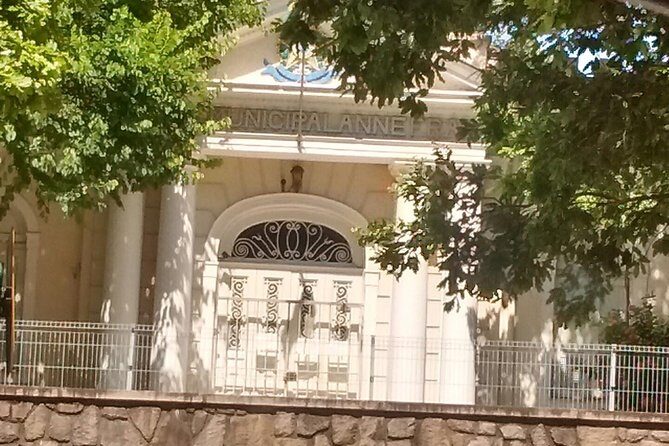
One of the key moments is the municipal school named after Anne Frank. The tour explains that it’s part of a network of schools honoring her, run through the CONIB and related organizations in Brazil. The aim is values you can recognize instantly: peace, respect for diversity, and human rights, taught through an everyday public-school setting.
In the same general area, you’ll also visit the A.R.I. Synagogue tied to Progressive Judaism in Rio. The ARI is described as founded in 1942 and affiliated with the World Union for Progressive Judaism (WUPJ). If you care about how different Jewish movements live side-by-side, this is one of the more important stops on the route.
Right around this, the tour connects to the community infrastructure built for learning and remembrance. You’ll hear about the Rabbi Henry Lemle Community Center, opened in 1997, with classrooms, a library, an auditorium, administrative offices, and a synagogue space called Henrique Peres that can hold up to 150 people. There’s also a Center for Reference and Research on the Holocaust linked to the Zinner family.
For value: this stop gives you a lot of “why this matters” for a time slot of about 30 minutes. For logistics: it’s also a practical way to see multiple institutions in one neighborhood without bouncing across the city.
Botafogo Bay and Morro de Pasmado: Itzhak Rabin Park viewpoints with meaning
Next up is Botafogo Bay, with a visit to Itzhak Rabin Park. The tour frames the park’s naming in connection with the attack and notes it was inaugurated by Leah, Rabin’s wife. That’s not trivia for trivia’s sake. It helps you understand why a public park can carry diplomatic symbolism.
The location is especially convenient for sightseeing: it’s on top of Morro de Pasmado, and the viewpoint is described as accessible. From here, you can see the bay of Botafogo and Urca Bay, which makes this stop feel like classic Rio sightline time—except with a layer of history attached.
In the middle of the park, you’ll see a bust of Itzhak Rabin, and the tour explains what it represents: the relationship of the Brazilian state with Israel. This is the kind of connection that’s easy to miss if you’re only doing beaches and viewpoints.
Tip: wear shoes you trust. Even if you’re not doing a full hike, viewpoint parks can have uneven ground and little stairs. The stop is short (about 20 minutes), so you want to be comfortable enough to enjoy it instead of rushing.
Jewish Museum of Rio: archives, migration research, and a smaller space than you might expect
The tour then moves to Museu Judaico do Rio de Janeiro, an important stop if you want more than oral explanations. The museum was founded in 1977 after a donation of a menorah, and it’s described as a dynamic cultural center with regular exhibits on Jewish community history in Rio plus Jewish traditions in religious, cultural, and historical angles.
This stop is about 30 minutes, and the museum admission is not included in the tour price. That’s a key detail for budgeting, but it’s also why I think it’s worth planning for. You’re not only seeing objects. The museum also runs activities that include academic research on migration and annual student competitions.
If you like archives, pay attention to the museum’s study and media elements. The tour describes a Study Center focused on migration and the Holocaust, a video archive with over a thousand films, and a library. That combination makes it a useful stop even if you’re not an expert.
A quick reality check: the museum can feel more compact than the phrase museum suggests. You may find the physical space less grand than you imagined, but the tour’s point is that the educational content extends beyond a simple display. If you want the most value, arrive ready to ask the guide questions about what you’re looking at.






Grande Templo Israelita do Rio: Ashkenazi architecture and the “open when possible” factor
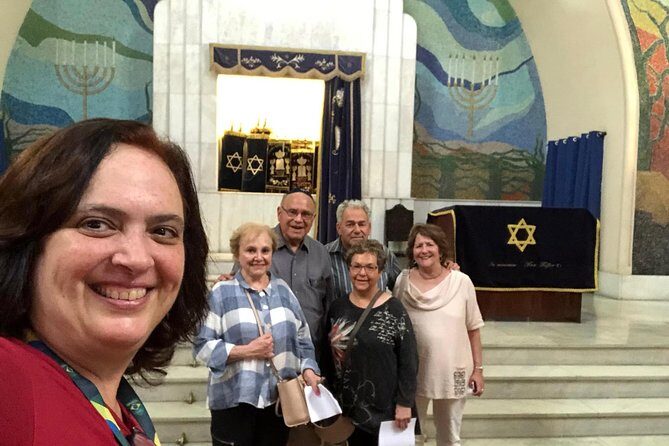
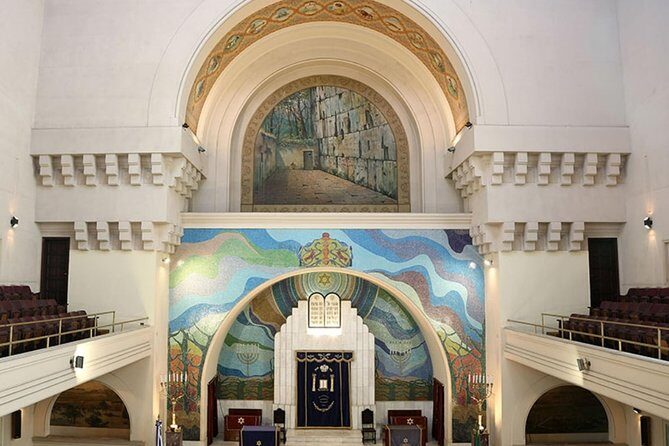
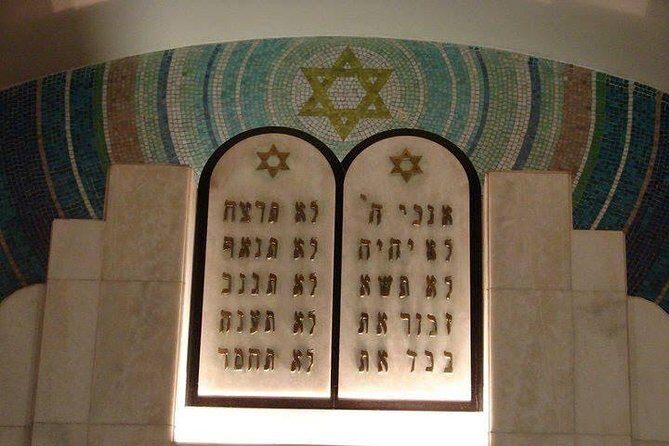
Your last major stop is the Grande Templo Israelita do Rio de Janeiro, an Ashkenazi landmark tied to the Jewish Community of Rio. The tour describes it as the community’s largest monument and part of the history of the Yishuv and the city. If you want a single visual that summarizes how community life can leave lasting architectural marks, this is it.
The building has an eclectic style with elements of Hebrew origin and classical architecture. The design is said to have been elaborated in 1919 by architect Vodred, with the temple opening in 1932. The mosaics were made in 1976 by artist Humberto Cozzo—and then came the collapse in 1987.
Here’s the practical part you should know: the tour notes it is currently open only during high holidays, special events, and tourist visits. That means on your day, you might get access to parts of the temple or a more limited viewing depending on what’s possible.
The admission is not included, so you’ll want to keep a little extra cash or card ready for this last stop. Even when access is limited, the guide’s job is to help you understand why this building matters—its design, its symbols, and what the collapse means for preservation.
Price and value: what $95 buys you in Rio’s traffic and timing
Let’s talk value in plain terms. $95 for about 3 hours is not the cheapest way to spend a morning in Rio, and the tour itself doesn’t include food or drinks. It also doesn’t include entrance fees for some stops, including the Jewish Museum and the Great Temple.
So what are you actually paying for?
You’re paying for:
- A guide who can connect community history to what you’re seeing
- Pickup and drop-off so you don’t have to coordinate cabs across several neighborhoods
- Car/van transport that keeps the route manageable
- A tight group size (max 14) that helps you ask questions during the stops, not just at the beginning
If you tried to DIY this, you’d spend time figuring out which sites are open, where they are, and how to combine them efficiently. The tour compresses those decisions into one morning. That’s worth something, especially when your time in Rio is limited.
One more practical note: the tour is often booked about 58 days in advance on average. It’s not a guarantee of high demand, but it’s a good signal to book early if you’re traveling during a busy season.
Who should book this (and who might want a different style of tour)

This works best if you want a guided, meaningful route that includes both religious sites and community institutions. If your travel style includes asking why things are located where they are and what different communities look like in real life, you’ll probably love it.
It also suits couples and small groups who want to learn without spending the day on public transit. The van and short visit format reduce the strain, and the guide’s explanations keep it from turning into a checklist.
You might choose a different tour if you need lots of unhurried museum time. The Jewish Museum and the Great Temple are important, but the stop durations are brief by design. Also, if you’re the type who likes to wander independently for long periods, you may find a group schedule slightly restrictive.
Should you book the Jewish tour in Rio?
I think you should book this if you want one morning that gives you both context and access. You’ll see multiple Jewish institutions across Leblon, Ipanema, and Botafogo, including synagogue life, education tied to Anne Frank, a museum with research archives, and the Itzhak Rabin Park viewpoint with meaning built in.
I’d hesitate only if your plan is ultra-flexible only for interiors and long museum sessions. Because the tour visits iconic sites that may have limited hours on certain days, you’ll want to accept that some parts could be more exterior or limited than you’d hope.
If you’re ready for a focused history-and-community route—plus an efficient Rio morning—this is a solid choice.
FAQ
How long is the Jewish Tour in Rio de Janeiro?
It runs for about 3 hours.
Where does the tour start, and what time does it begin?
The meeting point is Hilton Rio de Janeiro Copacabana, Av. Atlântica 1020, and it starts at 9:00 am.
Is hotel pickup included?
Yes, pickup and drop-off are included for selected hotels. Port pickup and drop-off are also included.
What’s the maximum group size?
The tour has a maximum of 14 travelers.
What is included in the price?
Included are a professional guide, hotel pickup and drop-off (selected hotels), port pickup and drop-off, and transport by car or van.
Are entrance fees included?
No. Entrance fees are not included. Some stops are listed as free with admission tickets, while the Jewish Museum and the Great Temple do not have included admission.
Which areas of Rio are visited?
The tour focuses on Leblon and the beach areas around Ipanema, plus Botafogo and Botafogo Bay.
Is food or drinks included?
No, food and drinks are not included.
What is the cancellation policy?
You can cancel for a full refund if you cancel at least 24 hours before the experience starts. If you cancel less than 24 hours before, the amount paid is not refunded.