REVIEW · RIO DE JANEIRO
Live Samba Night at Pedra do Sal
Book on Viator →Operated by Rio As A Local · Bookable on Viator
Samba starts at a carved rock staircase. Live Samba Night at Pedra do Sal turns Rio’s street-music energy into a guided evening, with context about Little Africa and why samba grew right here. You’ll get the music and the meaning in the same 2.5-hour chunk—part nightlife, part cultural orientation.
Two things I like right away: you’re not just watching, you’re learning samba steps with the people who do this for real. And you begin with a complimentary welcome drink, which keeps the night feeling social instead of rushed. It also runs with a small maximum group size (10 travelers), so it’s easier to follow your guide and actually join the dancing.
One consideration: Pedra do Sal is all about a party atmosphere near cobbles and stairs. You’ll be moving around, and the vibe can lean young-and-lively—so wear comfy shoes and don’t expect a quiet, seated show. Also, it requires good weather, so you should plan to be flexible.
In This Review
- Key things to know before you go
- Pedra do Sal: the samba spot with a real address in Rio
- Little Africa context: why salt, slaves, and dockers matter to the music
- 8:30 pm to first beats: how the evening flows
- Live samba plus step-learning: what you’ll do besides watch
- The setting: rock, stairs, and crowd energy you should plan for
- Drinks and food: what’s included and what you might buy
- Price and value: what $40.97 buys you in Rio night life
- Who should book (and who should skip it)
- When weather won’t cooperate (and how to stay flexible)
- Should you book Live Samba Night at Pedra do Sal?
- FAQ
- How much does Live Samba Night at Pedra do Sal cost, and how long is it?
- What time does the tour start, and where do I meet?
- What’s included in the experience?
- Is transportation included?
- Is there an admission ticket fee at Pedra do Sal?
- How many people are in the group?
Key things to know before you go
- Pedra do Sal is the “Little Africa” samba starting point, tied to Morro da Conceição and the carved rock area known for Carioca samba
- You’ll get guided history while the music is already happening, so the story lands faster than reading it later
- Learning samba steps is part of the experience, not an optional add-on
- Welcome drink included, and you can find extra food and drinks nearby if you want more
- Small group (max 10) means you can keep up and get attention from the guide
- Comfort matters: cobbles and stairs are part of the setting, so bring supportive footwear
Pedra do Sal: the samba spot with a real address in Rio
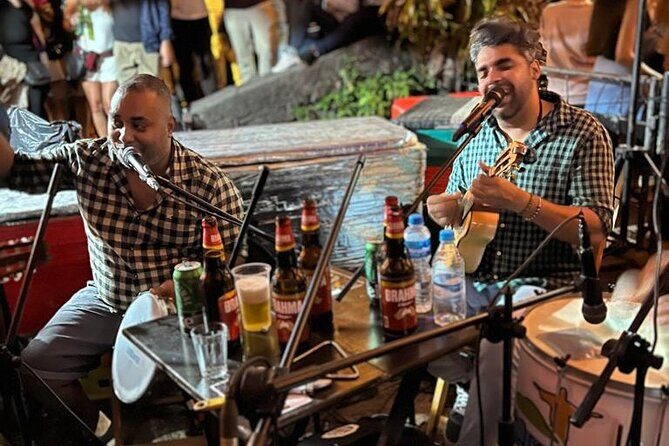
If you’ve ever wished Rio had a single “turn here” location for samba, Pedra do Sal is one of the best candidates. This is the heritage-listed rock area (listed in 1984) where the staircase leads up toward Morro da Conceição—so you’re not stuck imagining the landscape. You’re standing in it.
What makes the whole night feel grounded is that the music isn’t treated like background. The evening is built to help you understand why people gather here, and then you join the gathering. That mix—explanation first, dancing not far behind—does a lot for first-timers. It also helps repeat visitors connect the dots again, instead of just thinking, cool party.
You can also read our reviews of more evening experiences in Rio de Janeiro



Little Africa context: why salt, slaves, and dockers matter to the music
Here’s the history angle that actually changes how you experience the night. The area around Pedra do Sal is known as Little Africa, a name tied to the lives and movements of enslaved people and the sheltering of quilombos. It also connects directly to the port: ships docked, salt was unloaded, and this is part of how samba culture formed from meetings between dockworkers and sambistas.
Your guide doesn’t just throw dates at you. They connect the place to the sound you hear. That matters because samba isn’t only rhythm—it’s community. When you understand that the gathering points of the past became gathering points for the present, the whole street party starts to feel less like a tourist stop and more like a continuation.
Guides like Vitória and Lena are specifically praised for sharing these origins in an upbeat way, with enough detail to make the area click without turning the night into a lecture. Other guides—Helen and Gustavo—are noted for keeping the group oriented and making sure the celebration stays safe and fun.
8:30 pm to first beats: how the evening flows

The tour starts at 8:30 pm at R. Sacadura Cabral, 75 – Saúde, Rio de Janeiro (RJ) 20081-261, Brazil. From there, your evening is structured around one main location—Pedra do Sal—and a guided time on-site that lasts about 2 hours 30 minutes.
Even though it’s one stop, it doesn’t feel like one long blur. The flow usually goes like this:
- You arrive and get placed with context about the area and what you’re about to experience.
- You move into the party space where the music is already rolling.
- You learn steps and join in when the band and dancers invite participation.
- The group stays together long enough that you’re not constantly hunting down the right pocket of the crowd.
The “stay together” part matters more than you’d think. Samba crowds can get dense quickly, and having a guide who helps you navigate the energy makes it easier to keep your rhythm—and stay oriented.
Live samba plus step-learning: what you’ll do besides watch

This is not a sit-and-smile concert. The main event is live samba performances with talented artists, and the best part is that you get help joining the action. Expect an active night where your guide and the musicians encourage participation.
That learning piece is what turns a “cool show” into a “you were there” memory. Samba uses body language and timing more than memorizing moves from a diagram. When you’re taught in the moment—by the pros who are already driving the rhythm—it makes it feel natural fast.
Based on guide feedback from the people who’ve gone before, this experience tends to work especially well when you’re open to being a beginner. You’ll be moving, laughing, and adjusting as you go. That’s also why the small group size helps: it’s easier for the guide to check in and keep you with the group while you try steps.
The setting: rock, stairs, and crowd energy you should plan for
Pedra do Sal’s iconic rock and carved staircase are part of the show. The area is famous for the stairs that connect the rock with Morro da Conceição, and that also means the ground can be uneven and the walking is real.
A couple practical realities to plan for:
- Wear supportive shoes. Cobblestones and steps are mentioned repeatedly in feedback, and you don’t want to spend the night thinking about your ankles.
- Expect a lively crowd. This is the point of the experience. If you’re sensitive to loud music and close quarters, you may find it less comfortable than a museum-style tour.
- Go with a dance mindset. Even if you aren’t a dancer, treat it like a participation event. The guides and musicians generally aim to include you rather than keep you as a spectator.
Good news: several people specifically note they felt safe, and that guides maintained constant communication and helped the group stay together. Solo travelers also call out that they felt comfortable throughout the evening. One guide even reportedly walked a participant to their Uber—so you’re not left to fend for yourself at the finish.





Drinks and food: what’s included and what you might buy
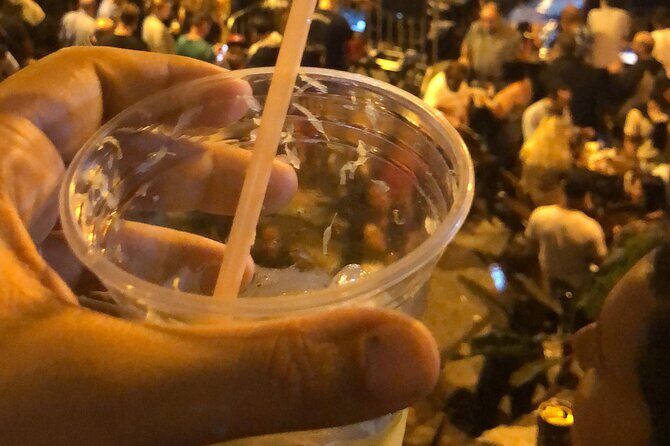
You’ll start with a welcome drink included in the price. That’s a simple but smart touch. It gives you a moment to settle in and start socializing right when the music and crowd energy are building.
Food and extra drinks are not listed as included, but you can find options nearby. Several people mention food stands and alcohol stands along the way, with the sense that you can grab something during the evening if you didn’t eat beforehand. If you’re trying to control your budget, treat anything beyond the welcome drink as extra spending.
If you’re the kind of traveler who likes to taste a bit of everything, this is one of the easiest nights to do that. You’re already at street-party pacing, so it feels natural to add a snack or drink between songs.
Price and value: what $40.97 buys you in Rio night life
At $40.97 per person for about 2 hours 30 minutes, this price makes sense for what you’re actually paying for: guidance, interpretation, and help joining the dancing—plus the included welcome drink.
It also helps that the tour is small (maximum 10 travelers). In practical terms, that means you’re more likely to keep up with the group, get attention when you’re learning steps, and feel confident in the crowd.
One more detail that affects value: the admission ticket is free (so you’re not paying a separate entry fee just to be at the location). You’re paying for the guided experience and the structure that makes the night work.
What’s not included: private transportation. So you’ll need your own ride or plan your way to the meeting point.
Who should book (and who should skip it)
This works best if you want:
- a guided samba night instead of a generic nightlife wander
- a blend of culture + dancing, not just a performance
- an experience where you can learn basic steps even if you’re new to samba
- a safer-feeling group setting in a lively public area (small group helps)
I’d consider skipping if you:
- want a quiet evening or prefer seated entertainment
- have limited mobility or you strongly dislike stairs and uneven ground
- hate crowds so much that you can’t relax into close proximity
It also suits couples and families who want something memorable and social. Solo travelers get a lot of love here too, largely because the vibe is friendly and the guides help with staying oriented.
When weather won’t cooperate (and how to stay flexible)
This experience depends on good weather. If conditions aren’t right, it may be changed to another date or refunded. For your planning, that means you should avoid booking it as your only evening in Rio. Give yourself a little wiggle room, especially if your schedule is tight.
Should you book Live Samba Night at Pedra do Sal?
I’d book it if you want a Rio night that feels both fun and meaningful. The biggest payoff is the combo: live samba plus real place-based context, taught in a way that makes you understand why the crowd gathers there in the first place. Add a welcome drink, a small group, and guides who keep things social and safe, and this becomes one of those “worth doing once in Rio” evenings.
Don’t book it if you’re looking for something ultra-comfortable and calm. The energy is part of the point, and the setting involves movement, cobbles, and stairs.
If you go in with comfy shoes and a willingness to participate, you’ll come away with more than photos. You’ll have the feeling of samba in the right place—right from the start.
FAQ
How much does Live Samba Night at Pedra do Sal cost, and how long is it?
It costs $40.97 per person and lasts about 2 hours 30 minutes.
What time does the tour start, and where do I meet?
The tour starts at 8:30 pm. The meeting point is R. Sacadura Cabral, 75 – Saúde, Rio de Janeiro (RJ) 20081-261, Brazil.
What’s included in the experience?
The experience includes one welcome drink.
Is transportation included?
No. Private transportation isn’t included, so you’ll need your own way to the meeting point.
Is there an admission ticket fee at Pedra do Sal?
The activity lists admission ticket free. The price you pay is for the guided experience.
How many people are in the group?
The tour has a maximum of 10 travelers, so it stays small.