REVIEW · FOZ DO IGUACU
Paraguay Experience
Book on Viator →Operated by Let's go iguassu travel Experience · Bookable on Viator
Paraguay starts fast from the Iguazú area. In one packed day, I like how this trip mixes big-ticket engineering at Itaipu with real-life borderland culture and a waterfall break. It is a smart way to see what feels different about Paraguay without giving up your whole schedule.
Two things I especially like: you get guided context at stops that are easy to miss on your own, and the timing is built around the border crossing so you are not spending your morning stalled out in confusion. The mix of history, nature, and people time at the market makes it feel like a day with a purpose, not a checklist.
One thing to plan for: the border queue can be long on some days, and depending on what is running, you might lose some museum time or wait more than you expect. Also, some parts at the power station are in Spanish, and while your guide translates, your listening time is partly out of your control.
In This Review
- Key highlights worth the money
- Why this Paraguay day trip works from Foz do Iguaçu
- Morning logistics: a 7:30 am start and the border reality
- Museo de la Tierra Guarani: history you can actually place on a map
- Itaipu Binacional panoramic visit: seeing one of the world’s biggest power stories
- Saltos del Monday: why the falls feel different from Iguazú
- Mercado de Abastos: Paraguay through everyday shopping and talk
- Extra viewpoints and culture add-ons you may get on the day
- Transportation, pacing, and group size: what small-group actually means
- Lunch is on you: how to plan a satisfying meal in Paraguay
- Price and value: is $120 per person a fair deal?
- Who should book, and who should maybe skip
- Final verdict: should you book this Paraguay day trip?
- FAQ
- How long is the Paraguay tour?
- What time does the tour start from Foz do Iguaçu?
- How much does it cost?
- What’s included in the price?
- Is lunch included?
- How many people are in the group?
- What physical condition do I need?
- Is the tour refundable if plans change?
- What should I expect about crossing the border?
Key highlights worth the money

- Early border-crossing strategy to reduce the time you sit in line
- Itaipu Binacional panoramic visit focused on scale and how the project works
- Salto del Monday waterfall as a distinct Paraguay stop, not just a second Iguazú
- Museo de la Tierra Guarani with history that connects the region before and after colonization
- Local flavor at Mercado de Abastos, where you see how people actually shop and live
- Small group (max 15) with an air-conditioned van and guide-led explanations
Why this Paraguay day trip works from Foz do Iguaçu

Foz do Iguaçu is built for visitors who come for the falls. This trip is for the next step: you use that same base location to cross the border and get a Paraguay perspective in about a day. If you have only one extra day, this is one of the most efficient ways to do it.
I also like the value math. For a set price, you are paying for transportation, a guide, and several admissions that are listed as free or included, with lunch left as your own choice. That matters because it keeps the day flexible instead of forcing you into one restaurant deal.
And the vibe stays practical: you ride in an air-conditioned vehicle, you have someone to handle the spoken details, and you do not spend your day trying to figure out timing across three-country border chaos.
You can also read our reviews of more tours and experiences in Foz do Iguacu.



Morning logistics: a 7:30 am start and the border reality
You start at 7:30 am, and that early start is not just a random number. It is the difference between a smooth crossing and a slow one, especially when you are going from Brazil into Paraguay.
Here is what I would expect: you may hit a line at the border, sometimes stretching longer than you want. That said, when things get slow, a good guide uses the time instead of letting it turn into boredom. In multiple experiences with guides like Bruna and Diego, the day’s story-telling and explanations helped pass the waiting time.
A practical tip: go in with a patient mindset and keep your day flexible. If you are the type who hates delays, this might feel like a grind even if the rest of the trip is strong.
Museo de la Tierra Guarani: history you can actually place on a map
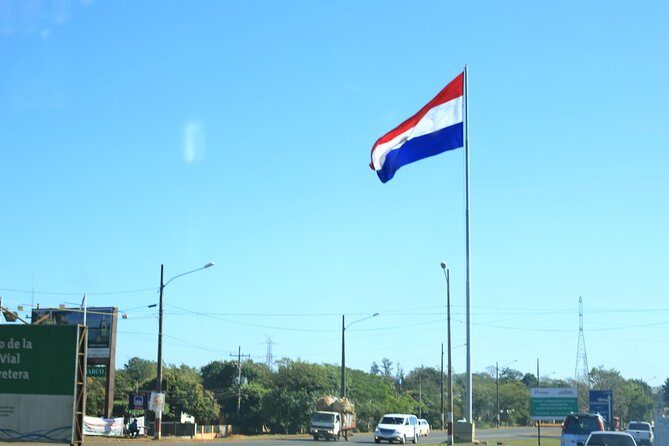
This stop is about 40 minutes and admission is free. The point is not to rush through artifacts; it is to help you understand who lived here before Europeans arrived, what colonization changed, and why the later construction of the ITAIPU project became such a turning point for the region.
What makes this stop valuable is the way it gives you context for the other stops. When you later look at the dam and the river system, you understand that it is not just a piece of tech. It sits on top of a long human story.
One more detail to watch for: on some departure days, the museum may be closed and you may be directed to an alternate attraction such as an animal sanctuary (people have mentioned Tekotopa in that role). If that happens, you still get a guided, wildlife-focused learning moment, but it is a different flavor than the museum.
Itaipu Binacional panoramic visit: seeing one of the world’s biggest power stories
The Itaipu stop is around 1 hour, and it is designed as a panoramic look at the complex, not a deep technical course. You get to appreciate the scale of the hydroelectric power plant and see why it is considered one of the largest in the world for energy production.
I like this for two reasons. First, it is visual: big projects can feel abstract until you see the real structure and workflow. Second, the guide narration helps you connect the project to the geography and the region’s development, instead of treating it like a sightseeing photo stop.
Language matters here. Some of the on-site material is in Spanish, so your guide’s translation becomes part of the experience. If you speak Spanish well you will do fine either way, but if you rely on English-only explanations, it is worth knowing that you might hear Spanish during certain guided segments.
Saltos del Monday: why the falls feel different from Iguazú
Saltos del Monday is scheduled for about 1 hour, and the admission is included. It is a true Paraguay nature stop, so you get water, birds, and a different rhythm than the Iguazú Falls day you already may have done.
It will not replace Iguazú Falls in sheer scale. But that is not the goal. I like it because it gives you variety while staying in the same general region. You get the satisfaction of seeing another set of falls in Paraguay without spending energy on long, complicated add-ons.
You should also expect a calmer feel. Compared with a giant headline attraction, this one tends to be easier to enjoy without constant crowd pressure. One nice detail from the experiences I saw: there can be butterflies around the area, which makes the walk feel a bit more alive.



Mercado de Abastos: Paraguay through everyday shopping and talk
The market stop is where the trip turns from landmark photos to real local life. You go to Mercado de Abastos to get in touch with the people and city culture, and it is usually quick enough to keep the day from dragging.
What I like about this kind of stop is simple: it is a reminder that border cities are not just about tourists. Markets show you what people buy, how they move, and what everyday routines look like, even when you are surrounded by a different language than you are used to.
A realistic caveat: the market experience may feel less like a full exploration and more like a passing look, depending on heat and timing. Some people have described short drives by rather than long shopping time, especially when weather or sun gets intense.
If you want souvenirs, treat this as your chance, but do not expect it to be the kind of shopping spree that replaces Ciudad del Este. This trip generally aims for culture, not bargain hunting.
Extra viewpoints and culture add-ons you may get on the day

Depending on the route and what runs that morning, you might also catch extra context stops around the border area. People have mentioned the Triple Frontier viewpoint from the Paraguay side (the part where you can look out over Brazil and Argentina), plus some cultural drive-bys like a mosque or cathedral.
I treat these as bonus layers, not the main point. The core payoff stays the same: Itaipu, Monday Falls, and Paraguay’s mix of history and everyday life. Still, those extra viewpoints can make the day feel more complete because you are not only seeing one side of the region.
Transportation, pacing, and group size: what small-group actually means
This is capped at 15 travelers, and that small size is part of why the day can feel smooth. You are in an air-conditioned vehicle, and you usually have both a driver and a guide involved in keeping things on track.
Pacing seems to be a key strength when the schedule works. People have mentioned that guides like Bruna kept the day full but not chaotic, with time to look around and take photos instead of rushing straight through every stop.
The drawback is that border timing can knock the schedule off. If the crossing takes longer, waiting eats into your time at later stops. On at least one day, that kind of delay can turn into a missed museum or shifted timing, so you want to be flexible.
Lunch is on you: how to plan a satisfying meal in Paraguay
Lunch is not included, which is actually a good thing. It means you can choose a restaurant that fits your tastes, dietary needs, and budget instead of being steered to one pre-selected option.
In real experiences, guides have helped people find vegetarian options and even supported specific dietary needs like gluten-free. That does not mean every lunch spot is identical, but it does mean your guide can help you avoid the guesswork.
My practical advice: bring some cash just in case, but also be ready that cashless options may vary. If you are sensitive to ingredients (allergies or strong dietary rules), ask before you order. One guide reportedly took an allergic reaction seriously and helped find nearby medication quickly, which is reassuring if you are worried about eating in an unfamiliar place.
Price and value: is $120 per person a fair deal?
At $120 per person, you are paying for a full day of guided border-crossing plus transport and several included admissions. The museum and Itaipu visit are listed as free, and Saltos del Monday is included. When you add those pieces up, the price is less about paying for attractions and more about paying for access, timing, and interpretation.
Where the tour feels like a bargain is when the schedule runs well: you get the guide’s context at each site, you avoid confusion at the border, and you do not burn hours coordinating transfers yourself.
Where it can feel expensive is when delays stack up. If you lose time to border waits and you end up with fewer stops or less time inside key places, the per-hour value drops fast. That is the trade.
Who should book, and who should maybe skip
Book this if you want a taste of Paraguay while based in the Iguazú area. It is ideal for couples, small groups, and solo travelers who like guided context and want to see more than just waterfalls.
It is also a good fit if you care about big infrastructure as a human story. Itaipu is impressive, but the best part is how your guide ties it to the region and what happened before and after.
Skip or choose carefully if:
- You hate border lines and need a guaranteed on-time day
- You want long museum time specifically (some days can shift)
- You need everything spoken only in English (some on-site material can be in Spanish)
Final verdict: should you book this Paraguay day trip?
If you have an extra day around Iguazú, I think this is a strong booking. The price hits the sweet spot when the morning goes smoothly, and the day is built around real learning: history at Museo de la Tierra Guarani, a guided look at Itaipu, and nature at Saltos del Monday followed by local culture at Mercado de Abastos.
I would only hesitate if your travel style is extremely strict about timing. Border queues are part of the border zone, and you should plan for that possibility.
If you go in prepared, this trip delivers a genuinely different side of the region than Iguazú alone.
FAQ
How long is the Paraguay tour?
It runs about 7 hours.
What time does the tour start from Foz do Iguaçu?
The tour starts at 7:30 am.
How much does it cost?
It is $120.00 per person.
What’s included in the price?
You get an air-conditioned vehicle and a guide. The museum and Itaipu admission are listed as free, and Saltos del Monday is included.
Is lunch included?
No. Lunch is not included.
How many people are in the group?
The tour has a maximum of 15 travelers.
What physical condition do I need?
You should have a moderate physical fitness level.
Is the tour refundable if plans change?
Yes. You can cancel up to 24 hours in advance for a full refund. If it is canceled because a minimum number of travelers is not met, you will be offered a different date or a full refund.
What should I expect about crossing the border?
Border lines can vary. You may encounter a longer wait at times, but the guide is there to keep the day moving and provide commentary during delays.