REVIEW · RIO DE JANEIRO
Rio de Janeiro Downtown Tour
Book on GetYourGuide →Operated by CARIOCA TROPICAL TOUR OPERATOR · Bookable on GetYourGuide
Downtown Rio moves fast, and this tour keeps up. I like how it strings together the football icon Maracanã and the Carnival stage at the Sambadrome, then pivots to art and architecture with Metropolitan Cathedral and the unforgettable Escadaria Selarón.
The trade-off is that traffic is real here. Part of your time is spent cruising in an air-conditioned minivan, so if you’re hoping for lots of long, up-close stops, you may find some sights are better viewed quickly or even from the window.
In This Review
- Key Moments Worth Planning For
- Rio’s Downtown Hits: Maracanã, Sambadrome, and Big-Rio Scale
- The Avenidas Run: Presidente Vargas and Historic Power Centers
- Tiradentes to Lapa: Arches, Lavradio Street, and the Easy-to-Find Rhythm of Lapa
- Metropolitan Cathedral: A Modern Landmark You Can Read at a Glance
- Escadaria Selarón: Street Art as a Personal Tribute
- São Bento Monastery: The Exterior Is Simple, the Interior Isn’t
- Aterro do Flamengo Return Route: Museums, a War Monument, and Sea Views
- What Makes the Guides Matter (And Why It Shows)
- Price and Value: Does $74 Make Sense for 3 Hours?
- Who This Tour Suits Best
- Should You Book This Rio Downtown Tour?
- FAQ
- How long is the Rio de Janeiro Downtown Tour?
- Is hotel pickup included?
- Where does pickup happen in Copacabana, Ipanema, and Leblon?
- What if my hotel is outside the pickup area?
- What languages is the guide available in?
- What transport is used for the tour?
- What are some of the main stops on the itinerary?
- Will I get to visit places, or is it mostly driving?
- Where does the tour end?
- Is there free cancellation?
Key Moments Worth Planning For
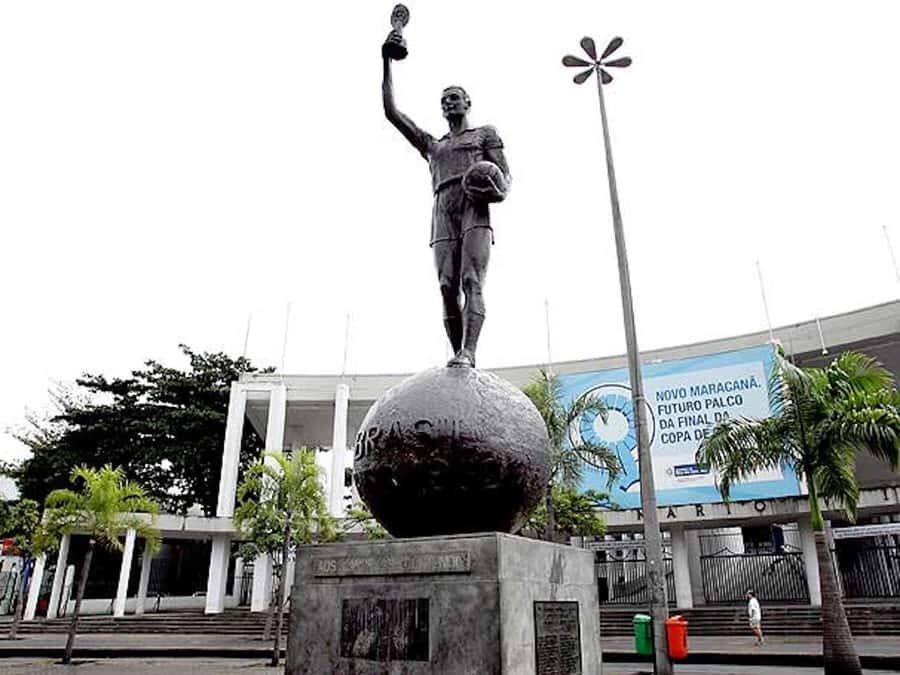
- Maracanã + Bellini’s statue: a quick look at a stadium that sits at the center of Brazilian sports culture
- Sambadrome of Rio Carnival: see where the city’s biggest parade energy is staged
- Metropolitan Cathedral: modern design with a seriously photogenic cone shape
- Escadaria Selarón: the staircase where street art becomes a personal tribute in flag colors
- São Bento Monastery interior: gilded Baroque details and Rococo-style richness beyond the simple exterior
- Flamengo bay views: Aterro do Flamengo route mixes monuments with coastline scenery
Rio’s Downtown Hits: Maracanã, Sambadrome, and Big-Rio Scale
This is a 3-hour downtown sampler, built for travelers who want the main highlights without burning a full day. After pickup in Copacabana, Ipanema, or Leblon, you roll into a part of Rio where the city’s “big moments” are close together: sports, Carnival, government, and religious architecture.
First stop is Maracanã Stadium, including Bellini’s statue. Even if you’re not a die-hard football fan, Maracanã has that worldwide-recognizable presence. It helps you understand why Rio isn’t just postcard beaches—it’s also national-stage history and local pride.
Then you head to the Sambadrome, the long, grand parade setting built for Rio’s Carnival processions. It’s one of those places that feels slightly surreal unless you’ve seen the parade in person, but that’s exactly why it’s worth a visit. You’ll get a strong sense of the scale and planning that goes into Carnival, beyond the costumes and music.
If you want a tour where the guide can point out what you’re actually seeing—like how these venues function in daily life versus during major events—this route gives you the raw material.
You can also read our reviews of more tours and experiences in Rio De Janeiro.



The Avenidas Run: Presidente Vargas and Historic Power Centers
After those major landmarks, the drive turns into a rolling “see it all” tour along Avenida Presidente Vargas. This avenue is one of Rio’s main connectors through the center, so you’ll be catching a lot of city landmarks in a short amount of time.
You’ll spot the Central Railway Station, plus the Duque de Caxias Palace and the Itamaraty Palace. These aren’t just pretty façades. They’re a clue to how the city organized power and movement—transport routes, military administration, and diplomacy—right where you’re looking.
The route also includes Campo de Santana and heads toward Tiradentes Square via Avenida Passos. This area helps you understand the center as more than one attraction. It’s a network of plazas, streets, and institutions that still shapes how people live and move around Rio.
A practical tip: keep an eye out for where you’re stopping versus where you’re passing. Some stops are quick photo moments; others are clear walking visits. If you know you want deeper time at a place, you can ask your guide to prioritize that during the ride.
Tiradentes to Lapa: Arches, Lavradio Street, and the Easy-to-Find Rhythm of Lapa
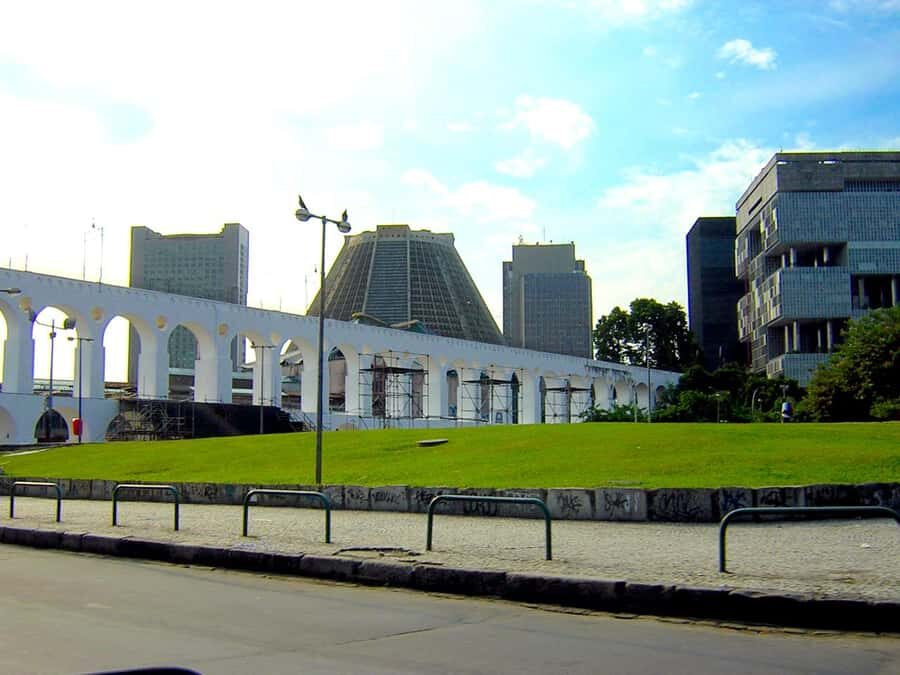
From the central streets, the tour works its way toward Lapa, a neighborhood that lives loud even when the parade is off-season. You’ll pass by Lapa Arches and along Lavradio Street and Avenida Chile, which is where the “older Rio” feel starts creeping in.
Lapa’s charm is partly visual—arches, street layout, and that layered street-life energy. It’s also social. This is one of the areas where people come to meet, eat, and enjoy the city after dark, and even during daytime sightseeing you can feel the neighborhood’s rhythm.
If your goal is to connect Rio’s famous landmarks with the places locals actually hang out, Lapa is where that connection starts to click.
Metropolitan Cathedral: A Modern Landmark You Can Read at a Glance
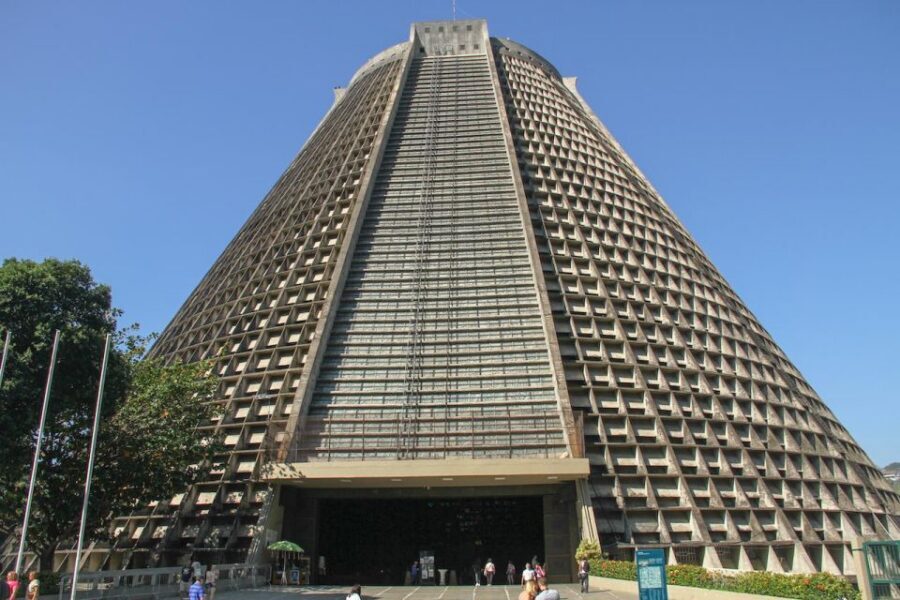
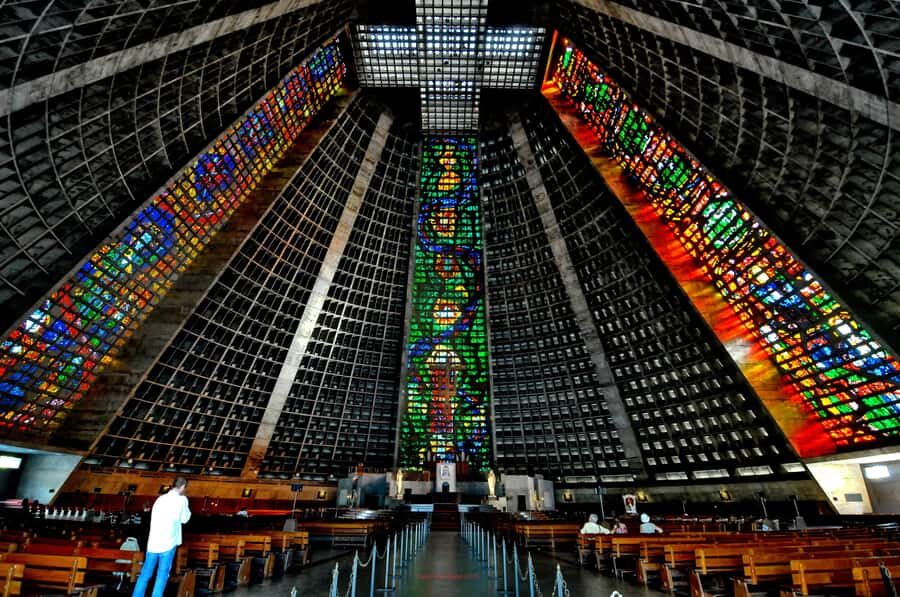
Next comes the Metropolitan Cathedral, one of Rio’s most recognizable landmarks, shaped like a cone. What I like about this stop is how quickly you can “read” it. The structure looks bold from the outside, and it’s built to stand as a symbol as much as a place of worship.
This is also a good moment to slow down. The cathedral’s scale and design are easier to enjoy when you’re not bouncing through the city in constant traffic. Take a few minutes to walk around the area and find your angles—this is one of those places where the photos get better the longer you look.
It’s modern design showing up as city identity, not just as a building.
Escadaria Selarón: Street Art as a Personal Tribute
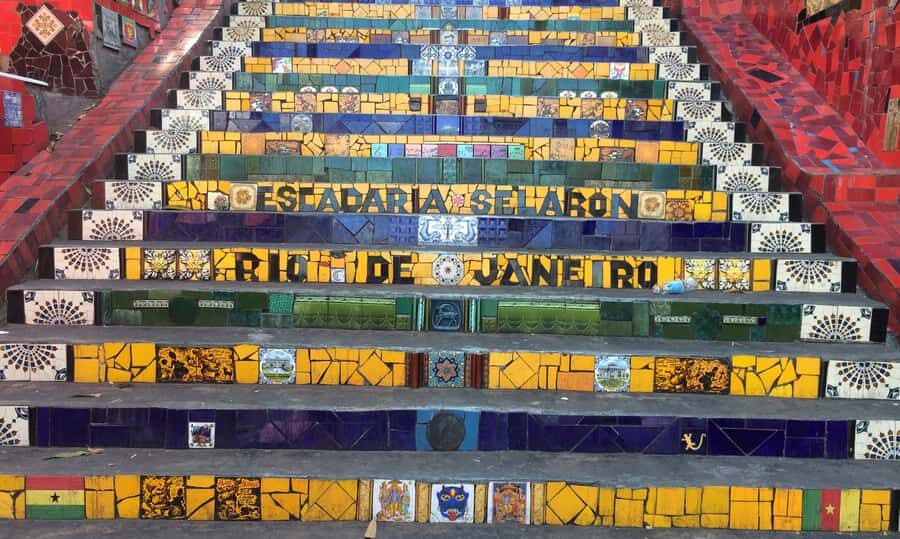
Then you land in Lapa for the star attraction for many people: the Escadaria Selarón. These stairs are one of the most original public art scenes you’ll find anywhere, and they’re surprisingly emotional once you learn what they represent.
The colors—green, yellow, and blue—echo the Brazilian flag. Your guide will explain that the artist Jorge Selarón used these colors as a personal tribute to the Brazilian people. That context matters. Without it, it’s just a dramatic staircase. With it, you start seeing the stairs like a living message.
This is also a very practical stop for your day: you can get close, walk around, and spend time soaking in details without needing tickets or complex scheduling. If you like street art, photography, or just weird-and-wonderful things that feel unmistakably Rio, this is the part that tends to stick in your memory.



São Bento Monastery: The Exterior Is Simple, the Interior Isn’t
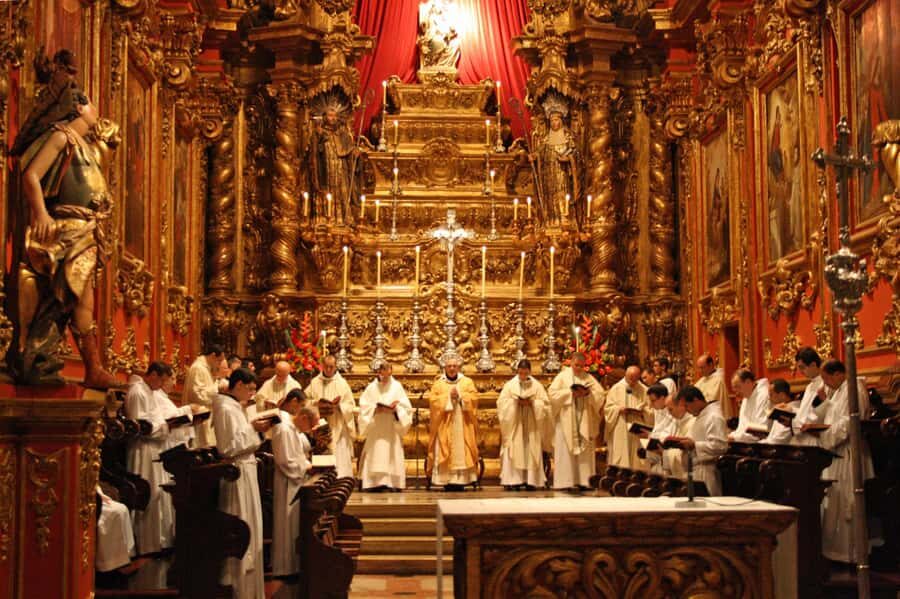
After Selarón, you visit São Bento Monastery. The monastery is often compared to a museum, and that comparison makes sense because the interior is where the real wow-factor is.
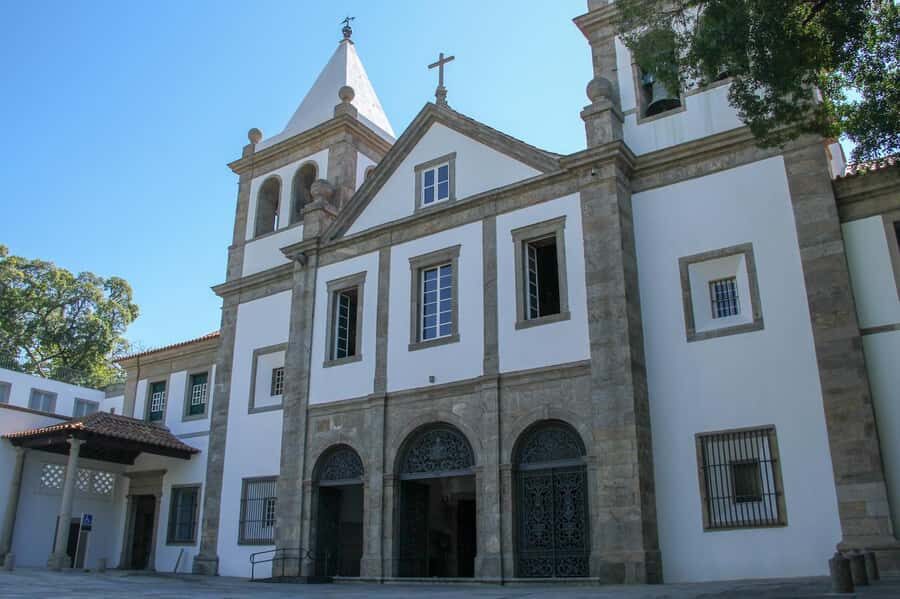
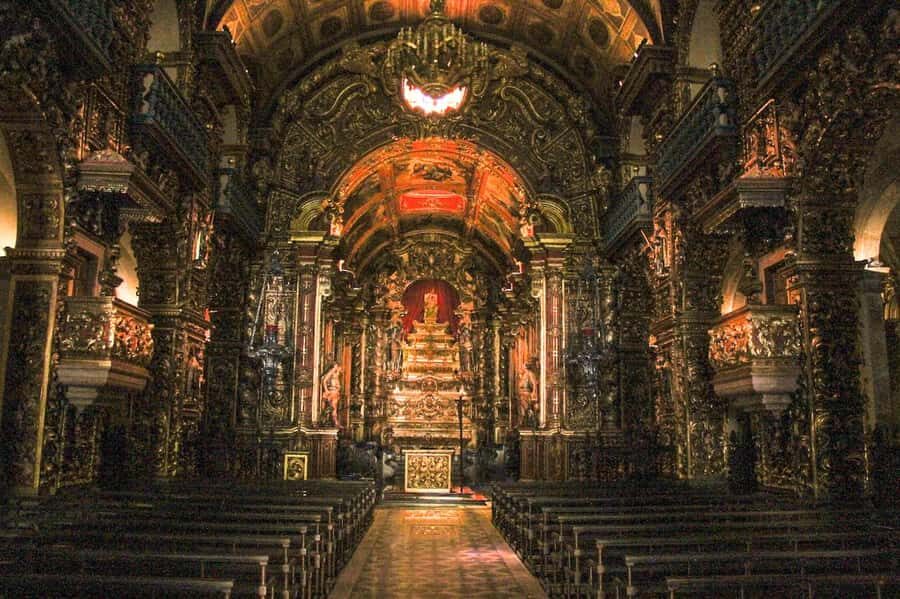
The exterior is intentionally simple. That contrast is key. You look at the outside and think it’s straightforward—then you step in and the richness hits you: gilded Baroque engravings with plant motifs, Rococo-style decoration on the high altar, and detailed chapel work, including the Santíssimo Sacramento.
This stop is valuable because it teaches you how Rio layers styles and eras into one space. It’s not a single-theme sightseeing break. It’s architecture with a story built into the materials and the design.
If you want to get the most out of this visit, slow down inside and let your eyes adjust. The details are what you’ll remember later, not just the big shapes.
Aterro do Flamengo Return Route: Museums, a War Monument, and Sea Views
On the way back, the tour follows Aterro do Flamengo. This is where the city’s layout helps you: you get scenic stretches along the water while still seeing major landmarks.
You’ll pass the Museum of Modern Art, see the Monument to the Fallen in World War II, and catch sights of the Church of the Outeiro da Glória. The drive also includes views toward Flamengo and Botafogo beaches.
This return route is a nice counterweight to the earlier urban intensity. After a packed run through major institutions and churches, the coastline views help your brain reset, and you get a sense of how the ocean shapes Rio’s everyday visual rhythm.
What Makes the Guides Matter (And Why It Shows)
The experience is only as good as the guide, and the feedback I’m seeing strongly points to that. I’ve read praise for guides like Meilin, Cabo, Monica, and Mailee—people described as prepared, kind, and genuinely good at explaining what you’re seeing. One standout detail: some guides adjust the itinerary to match what you care about, which is huge when you only have 3 hours.
So if you’re the type who wants context—why a palace matters, what a venue was built for, why a staircase means something—this tour format can work well because the guide has enough time to connect the dots.
And if you’re not chasing deep theory, a good guide still helps you see more in the same time window. That’s the real value in a short tour like this.
Price and Value: Does $74 Make Sense for 3 Hours?
At $74 per person for a 3-hour downtown hit, the value depends on what you expect.
If your goal is a “highlight checklist with context,” this price can feel fair. You get pickup and drop-off from selected hotels, a small-group setup, and air-conditioned transportation for moving through a dense area efficiently. You also cover a big mix: stadium culture, Carnival infrastructure, modern architecture, street art, and a monastery interior.
If you expected a low-traffic walking tour where every stop becomes a long, up-close visit, then the price may feel steep—especially because traffic can stretch drive time and some sights may be viewed briefly. One key consideration: this tour is designed to show you the center, not to slow down and linger at every single landmark like a self-guided day.
My advice: treat it as a fast orientation to downtown Rio. If you want depth later, you’ll know exactly what you want to return to.
Who This Tour Suits Best
This Rio de Janeiro Downtown Tour fits best if you want:
- A tight itinerary that covers many icons in one go
- A guide who can explain the mix of sports, politics, religion, and public art
- A mix of indoor architecture and outdoor photo stops
It may not be ideal if:
- You hate being in a vehicle for any portion of the day
- You want long visits at each site rather than quick, guided highlights
- You’re sensitive to traffic delays and window-view moments
Should You Book This Rio Downtown Tour?
I’d book it if you’re short on time and you want downtown Rio’s big story told in one afternoon. The pairing of Maracanã and the Sambadrome with the Metropolitan Cathedral, Escadaria Selarón, and the São Bento Monastery makes this tour feel like more than a drive-by.
I’d think twice if you know you need lots of walking time and long stop durations, because the city’s traffic can limit how much you get up close. Still, even with that trade-off, the combination of modern design, street art meaning, and monastery interior detail is a strong payoff.
If you book, do one smart thing: tell your guide what you care about most at the start. With this route, that simple conversation can shape how you experience the stops you’ll remember.
FAQ
How long is the Rio de Janeiro Downtown Tour?
The tour lasts 3 hours.
Is hotel pickup included?
Yes. Hotel pick-up and drop off are included for selected hotels.
Where does pickup happen in Copacabana, Ipanema, and Leblon?
Pickup is available from most hotels in Leblon, Ipanema, and Copacabana, with pickup scheduled between 2:00 pm and 2:30 pm.
What if my hotel is outside the pickup area?
If your hotel is outside the pick-up area, the meeting point is the Hilton Hotel Copacabana.
What languages is the guide available in?
The live tour guide speaks Spanish and English.
What transport is used for the tour?
You travel by air-conditioned minivan.
What are some of the main stops on the itinerary?
The tour includes Maracanã Stadium, the Sambadrome, the Metropolitan Cathedral, the Escadaria Selarón, and the São Bento Monastery, plus a return route along Aterro do Flamengo with several sights.
Will I get to visit places, or is it mostly driving?
It includes visits and sightseeing stops, including the Escadaria Selarón and São Bento Monastery, while other parts of the route are driven along major avenues.
Where does the tour end?
The tour ends with a return to your hotel in Copacabana, Ipanema, or Leblon.
Is there free cancellation?
Yes. You can cancel up to 24 hours in advance for a full refund.