REVIEW · RIO DE JANEIRO
Santa Teresa – Bohemia and Art
Book on GetYourGuide →Operated by Tour by Foot · Bookable on GetYourGuide
Santa Teresa feels like Rio’s other world. In this 3-hour walk, I love the yellow-tram vibe and the Empire-era architecture that turn ordinary streets into a living story. You’ll also get framed city views that make Rio feel instantly bigger, especially toward Christ the Redeemer.
One thing to keep in mind: if the tram line is long, you might not ride. The tour includes tram tickets, but when the wait tops 1 hour, you switch to taxis so you don’t lose tour time.
Parque das Ruinas in the middle of the neighborhood
You’ll reach a true “wow” viewpoint once you’re inside Parque das Ruinas.
Laurinda Santos Lobo’s rehabilitated mansion
You’ll enter a mansion abandoned for more than 50 years and see what life looked like in the Brazilian Empire.
The best snack stop in Santa Teresa
Açaí and pão de queijo are included, and it’s the kind of break you’ll actually enjoy mid-walk.
Christ the Redeemer views built into the route
You’ll get privileged sightlines while you’re still exploring the streets.
Art shows up in multiple forms
Urban art murals mix with the architectural drama, so “art” isn’t just a room you walk into.
In This Review
- Santa Teresa in 3 Hours: Bohemia, Trams, and Art-First Views
- Meeting Point at Estação de Bondes de Santa Teresa: Start Where the Trams Begin
- A Short Transport Beat, Then Cobblestones: How the Walk Gets You Oriented
- Yellow Tram Culture and Murals: Seeing Santa Teresa Like a Local
- Privileged Christ the Redeemer Views: What the Route Is Really Doing
- Snack Break That’s Actually Part of the Experience: Açaí and Pão de Queijo
- Parque das Ruinas and Laurinda Santos Lobo: Brazilian Empire Life, Up Close
- Tram Ride Reality: Included Tickets, Smart Flex, and How to Plan Photos
- Price and Value: Is $60 for 3 Hours Worth It?
- Who This Tour Fits Best (and Who Might Want to Skip)
- Should You Book Santa Teresa – Bohemia and Art?
Santa Teresa in 3 Hours: Bohemia, Trams, and Art-First Views
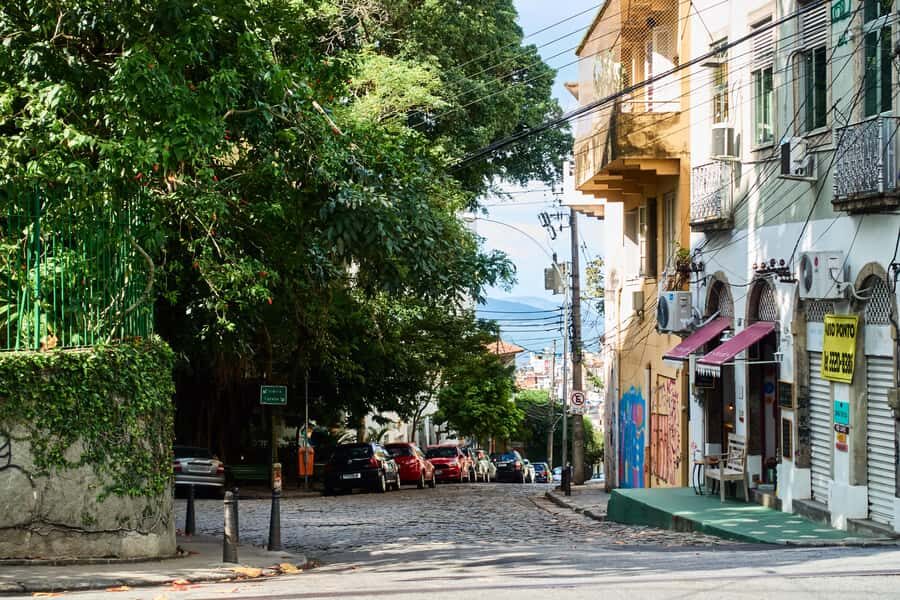
Santa Teresa is the Rio neighborhood you go to when you want texture: old mansions, working streets, and that slow, creative energy people associate with bohemia. This tour is built around that idea. You’re not just sightseeing from a distance. You move through cobblestone lanes, you look at architecture closely, and you follow the trail of yellow trams that Santa Teresa is famous for.
I like that the tour has two engines running at once: neighborhood feel and Empire-era context. The walk connects everyday streets with the bigger story of how Rio’s elite lived and designed their world. And because the route is planned with viewpoints in mind, you’re not wasting time hoping for a view later—you get it while you’re already out there.
The duration is a compact 3 hours, so it doesn’t turn into a half-day slog. You’ll cover enough ground to feel like you left the main tourist grid, but you’ll still be back with energy for dinner.
Meeting Point at Estação de Bondes de Santa Teresa: Start Where the Trams Begin
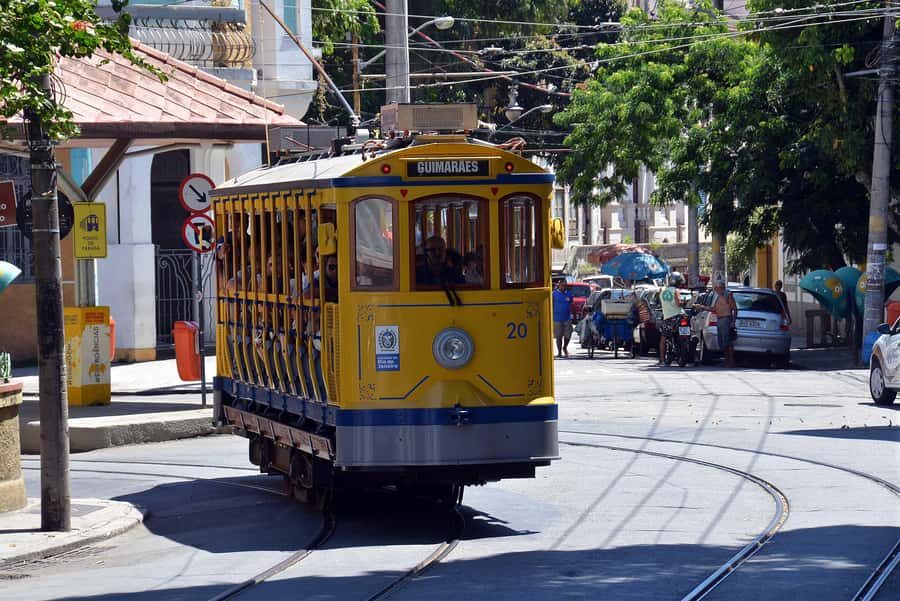
You’ll meet right where the action starts: in front of Estação de Bondes de Santa Teresa. That matters more than it sounds, because the tour is designed to flow from tram culture into pedestrian exploring.
From the start, you’ll get your bearings quickly: where the streets rise, where the architecture changes, and how the neighborhood’s identity shows up in everyday details. You’re also told the tour’s pacing so you’re not surprised by the walking. This is a walking tour, and it happens even if it’s raining, so you’ll want shoes you can trust.
Tip that will save you energy: wear comfortable shoes with good grip on cobblestones. High heels are not allowed, and big luggage won’t work here anyway. Keep it light and you’ll enjoy the walking more.
You can also read our reviews of more tours and experiences in Rio De Janeiro.



A Short Transport Beat, Then Cobblestones: How the Walk Gets You Oriented
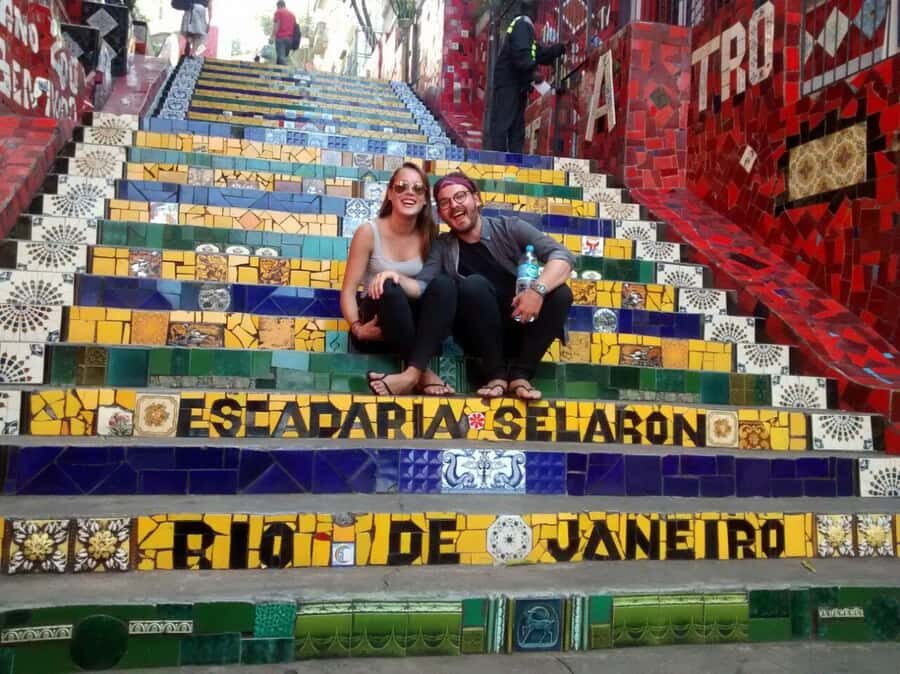
The tour begins with a journey of about 15 minutes, then you start walking through cobblestone streets. This is where you’ll feel Santa Teresa’s personality. Cobblestones slow your pace in a good way. They make you look down as you walk, and that’s where you start noticing details—doorways, walls, balconies, and how houses sit on the slopes.
As you go, your guide talks history and local context. It’s not just dates. It’s the kind of explanation that helps you understand why certain buildings look the way they do and why the neighborhood feels different from other parts of Rio. The goal is simple: when you reach the viewpoints and the big sites, you already know what you’re looking at.
One of the reasons I recommend this tour is that it’s guided in multiple languages—English, Portuguese, and Spanish—so you can choose the comfort level that helps you actually absorb the story. Guides like Rafael and Fernanda (both noted for strong guiding and lots of interesting anecdotes) are the kind of people who make you feel like you’re walking with someone who understands the neighborhood, not just someone reciting facts.
Yellow Tram Culture and Murals: Seeing Santa Teresa Like a Local

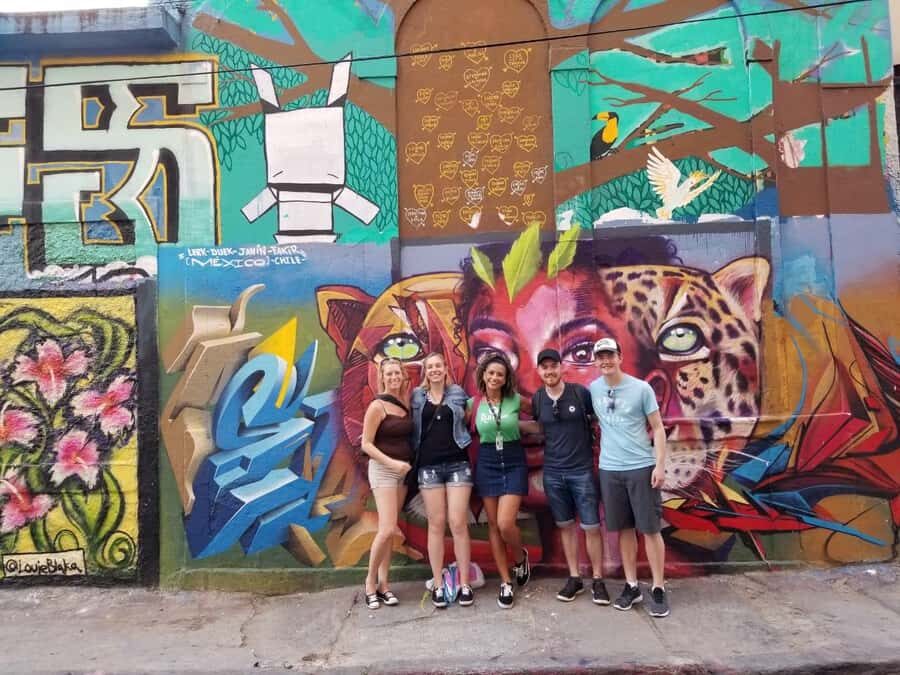
Santa Teresa’s identity shows up everywhere in this part of the experience. You’ll pass streets where yellow trams make their rounds, and you’ll also notice how art appears on walls in the form of urban art murals. Together, these details change the vibe from sightseeing to storytelling.
Here’s what this means for you: the tram isn’t the only attraction. The tour uses the tram as a symbol, then expands out into the street-level reality that makes Santa Teresa feel creative and human. A mural isn’t just decoration here—it’s part of how the neighborhood communicates today.
The “art” angle becomes more believable because you see it in place, not in isolation. You’re not bouncing from one indoor stop to another. You’re walking through a neighborhood where art lives on the street and in the architecture.
Privileged Christ the Redeemer Views: What the Route Is Really Doing
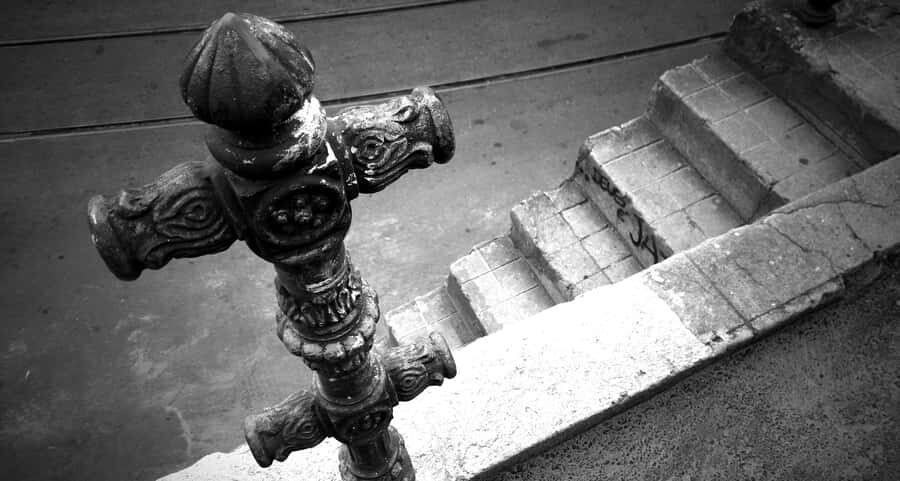
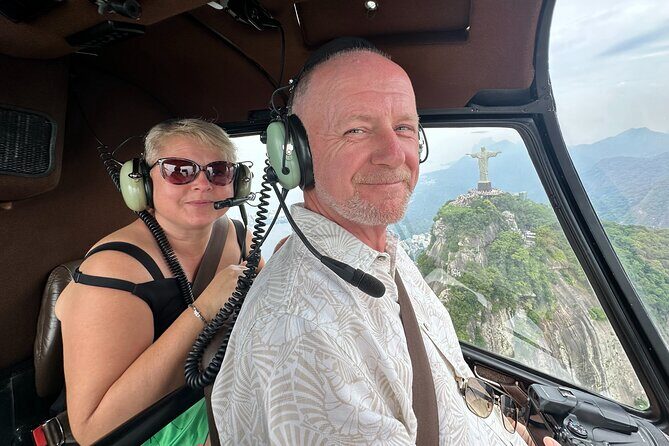
One of the tour highlights is that you’ll enjoy privileged views of Christ the Redeemer during the route. That’s valuable because these viewpoints tend to come with a trade-off in Rio: either you go to a crowded spot with limited time, or you guess where the best angles are and hope you’re lucky.
This tour solves that by building the view into the walking plan. You’ll get those sightlines while you’re already exploring. You’ll have fewer moments where you’re standing around with no context.
A practical note: those views usually require you to stop and look. If you want photos, bring your phone or camera strap setup so you can keep moving safely on uneven ground. Don’t rush. The best photo angles take a second.
Snack Break That’s Actually Part of the Experience: Açaí and Pão de Queijo
Halfway through the experience, you’ll pause for an included snack: açaí and pão de queijo. This isn’t a random add-on. In a neighborhood like Santa Teresa, food is one of the easiest ways to feel local life while you keep your energy up for the walking.
I like this break because it resets you. You’re outside, you’re looking at architecture and street art, and then you get something warm and comforting that tastes like the place you’re in. It also helps you enjoy the final stretch instead of rushing because you’re hungry.
If you’re sensitive to dairy or nuts, eat cautiously—pão de queijo and açaí preparations can vary. But for most people, this snack is a straightforward win: it’s classic, simple, and energizing.



Parque das Ruinas and Laurinda Santos Lobo: Brazilian Empire Life, Up Close

This is the heart of the tour’s “wow” factor. After you move through mansions, palaces, and tram-lined streets, you arrive at Parque das Ruinas. From there, you enter the house of Laurinda Santos Lobo.
The story attached to this building is powerful: it was abandoned for more than 50 years, and it’s been rehabilitated so you can experience it again. The space is described as representing the splendor of the Brazilian belle époque, and the tour uses the house to show what life was like during the Brazilian Empire.
What you should expect inside is less about a checklist and more about atmosphere. You’ll be seeing a physical version of a past world—architecture and layout that explain why the neighborhood’s mansions feel so dramatic. And because the mansion offers a spectacular panoramic view of Rio, the tour connects Empire-era elegance to the modern city you can see spread out below.
This stop is where the tour feels most different from generic “Santa Teresa is pretty” walks. It gives you a reason to look at the streets you just passed. When you see the building and understand its context, the neighborhood stops being just scenic. It becomes meaningful.
Tram Ride Reality: Included Tickets, Smart Flex, and How to Plan Photos
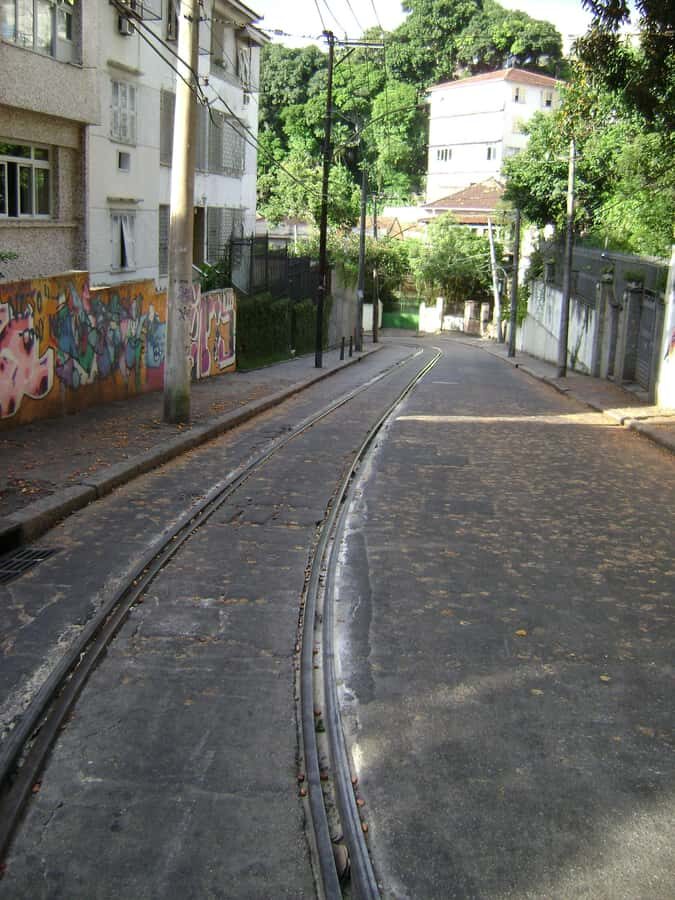
The tour includes tram tickets, and the yellow tram is part of the Santa Teresa identity. But the tour also manages a real-world issue: lines.
If the wait is too long—over 1 hour—you won’t ride the tram. Instead, taxis are used to get you to Santa Teresa so you don’t lose tour time. In practice, this means the tour is trying to protect your total experience length, even if tram time isn’t possible.
For you as a photographer or view chaser, this is the key consideration: the tram ride might not happen the way you imagine. If you’re dead set on tram photos, plan on taking more shots during street sections and at viewpoints where you’re already stopping. Don’t assume the tram ride will be the main photo moment.
Also remember the pacing shifts. A tram stop is slow and scenic; taxis are quick and efficient. If you’re the type who hates unpredictability, this is the part where you’ll feel it most. If you just want the overall tour value and story, it’s handled pretty sensibly.
Price and Value: Is $60 for 3 Hours Worth It?

At $60 per person for about 3 hours, the value comes from what’s packaged together, not just the walking.
You get:
- Tram tickets (with a line-based swap rule)
- A snack stop with açaí and pão de queijo
- A guided route focused on architecture, art, and viewpoints
- Entrance to the Laurinda Santos Lobo house experience inside Parque das Ruinas
For that cost, you’re paying for the structure: someone handles the route logic and explains what you’re seeing, instead of you wandering and trying to guess which buildings actually connect to the Empire story. In a neighborhood where the “pretty” parts are spread out, guidance is what turns pretty into understanding.
Is it a bargain? It depends on how you travel. If you love history tied to place and you want viewpoint moments without planning everything yourself, this is a reasonable spend. If you’re only after one tram ride and one scenic stop, you might decide you’d rather do a lighter self-guided day. But if you want the art-and-architecture connection, the price feels more fair.
Who This Tour Fits Best (and Who Might Want to Skip)
This tour is built for people who enjoy walking, architecture, and street-level art. You’ll be happiest if you like:
- Cobblestone streets and neighborhood exploring
- Guiding that connects buildings to bigger stories
- Panoramic viewpoints as part of the route, not just a final stop
- A short snack break that feels local and practical
It’s not suitable for people with mobility impairments, since it’s a walking tour and the neighborhood terrain isn’t set up for easy movement. It also isn’t ideal if you’re traveling with large luggage or plan to wear high heels.
If you’re coming in wet weather, it still runs in rain. Bring a light layer you can handle and expect the ground to be slick.
Should You Book Santa Teresa – Bohemia and Art?
Yes, I think you should book it if you want Santa Teresa to make sense, not just look pretty. The mix of tram culture, street art, and the Parque das Ruinas / Laurinda Santos Lobo stop gives you a strong “place story” in just 3 hours. Add the included açaí and pão de queijo, and you get a day plan that feels complete.
Before you book, decide if you’re okay with the one big variable: the tram ride can be skipped when the line is long, and the tour switches gears with taxis. If you can roll with that, you’ll enjoy the overall arc. If tram time is your top priority, you may want to plan extra time in Santa Teresa on your own too.
If you like guided routes, solid explanations, and viewpoints that are built into the neighborhood walk, this one earns its place on your Rio list.