REVIEW · FLORIANOPOLIS
Florianopolis: Walking Tour – History, Art and Gastronomy
Book on GetYourGuide →Operated by The Best of Florianopolis · Bookable on GetYourGuide
Florianopolis history tastes better on foot. This walking tour strings together major monuments and city squares while you piece together how Brazil and Florianópolis formed socially and economically. I love the way the route turns big ideas into real street corners, and I love the food-and-bar vibe that keeps things fun instead of museum-quiet.
Two things made it click for me: the guide’s clear explanations and the lived-in feel of the stops. When Isaac leads, the stories land fast and stay easy to follow, and you’ll likely end up chatting with people from all over the world as you walk and pause. One thing to plan for: food and drinks aren’t included, so you’ll want a little extra cash for pastéis, coxinhas, sugar cane juice, and local beers.
In This Review
- Key points before you go
- Starting at Café/Bar do Largo d’Álfândega: get oriented fast
- Catedral Metropolitana: turning a landmark into a story about the island
- Cruz e Sousa Palace and Praça XV: power, style, and public space
- Praça Fernando Machado and the landmarks for Black Florianópolis
- Álvarez de Carvalho Theatre: a beautiful monument with a purpose
- Avenida Hercílio Luz and Forte de Santa Bárbara: the city widens
- Bar do Noel: when the tour turns social (and snack-friendly)
- Public Market finish: a guided wander and a surprise
- Price and value: what $18 buys in 150 minutes
- Who this walking tour suits best
- Should you book Florianópolis History, Art and Gastronomy?
- FAQ
- Where does the tour start?
- How long is the tour?
- How much does it cost?
- What is included in the price?
- Are food and drinks included?
- What kinds of snacks can I look for during the tour?
- Is the tour wheelchair accessible?
- What languages is the tour offered in?
- What should I wear or bring?
- Can I cancel, and what if it rains?
Key points before you go
- Historic center route that teaches context, not just dates and names
- Isaac’s English style: organized, friendly, and easy to understand
- Cultural focus on indigenous, Portuguese colonizers, and African enslaved people
- Stops that connect monuments to everyday neighborhoods, including places important to Black history
- Public Market finish with a small surprise, plus plenty of snack opportunities
- Short, manageable walking pace for a 2-hour experience
Starting at Café/Bar do Largo d’Álfândega: get oriented fast
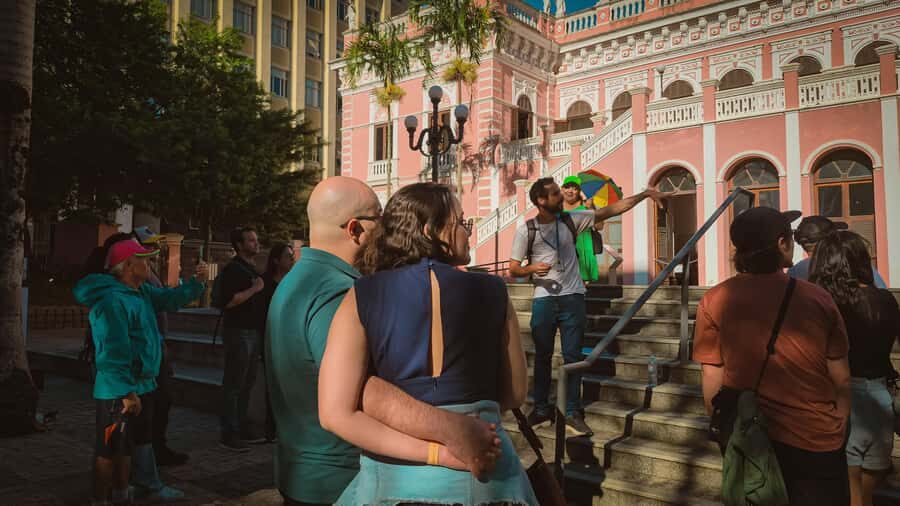
The tour begins outside Café/Bar do Largo d’Álfândega, a local coffee shop that’s great for two reasons: you can grab a coffee and use the restroom before you start, and you’ll see the group assemble without any fuss. I like the easy meeting style here because it means you don’t waste the first 10 minutes guessing where everyone is.
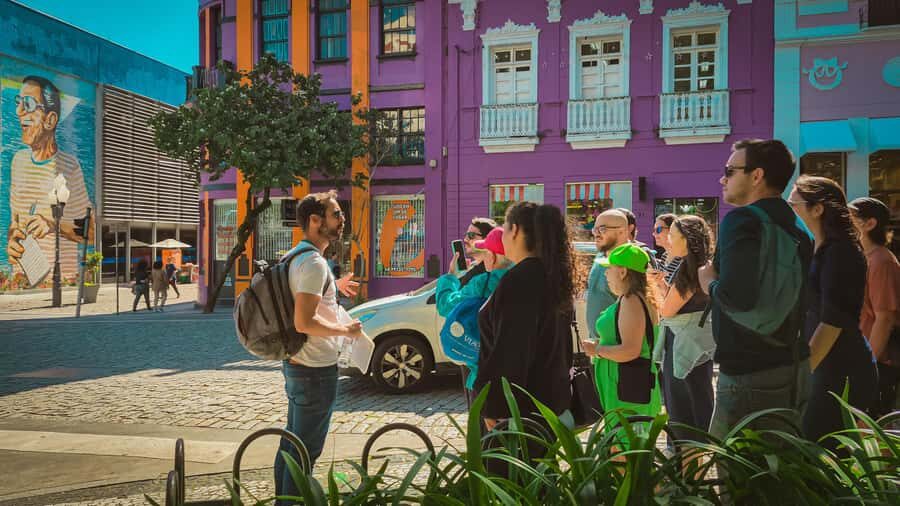
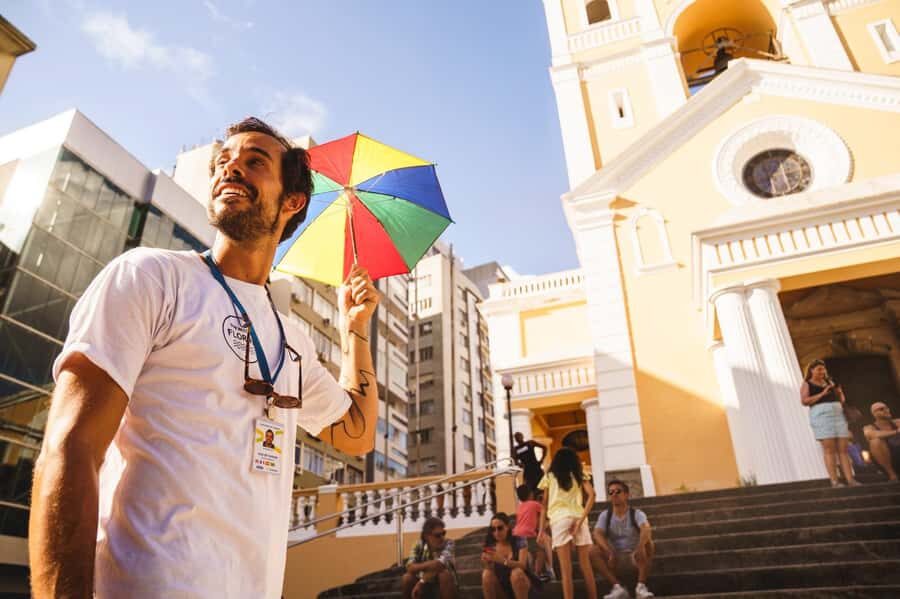
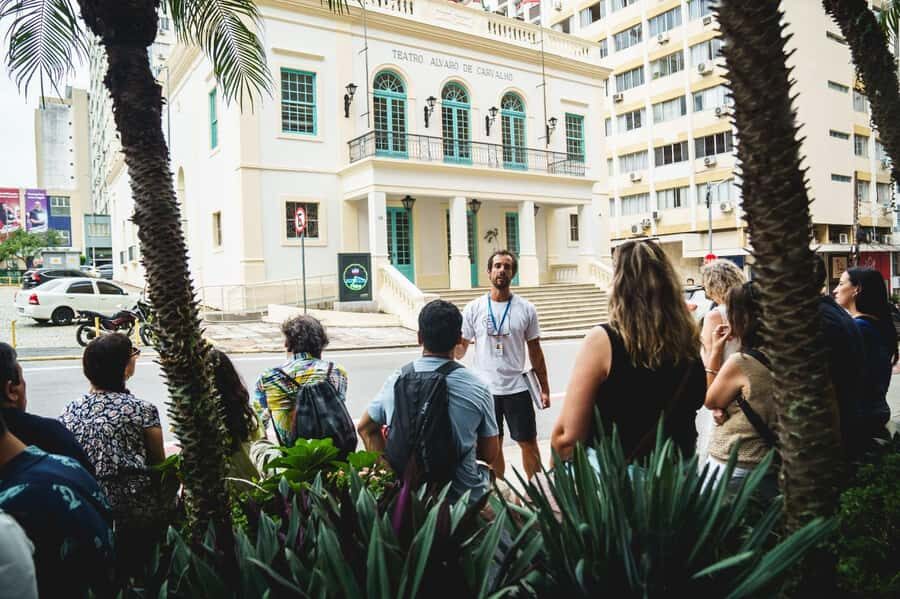
You’ll also get a quick visual cue for finding your guide. Isaac’s out there in a white T-shirt that says The Best of Florianópolis, with a tour guide credential and a small colorful umbrella. If you’ve ever joined a walking tour and spent half the time circling the wrong corner, you’ll appreciate how straightforward this is.
Expect a warm “let’s get going” feel. Once everyone’s together, the pace is set for conversation and walking, not sprinting. You’re going to be moving through the historic center for about 150 minutes, so start with comfortable clothes and shoes you can trust.
You can also read our reviews of more tours and experiences in Florianopolis.

Catedral Metropolitana: turning a landmark into a story about the island
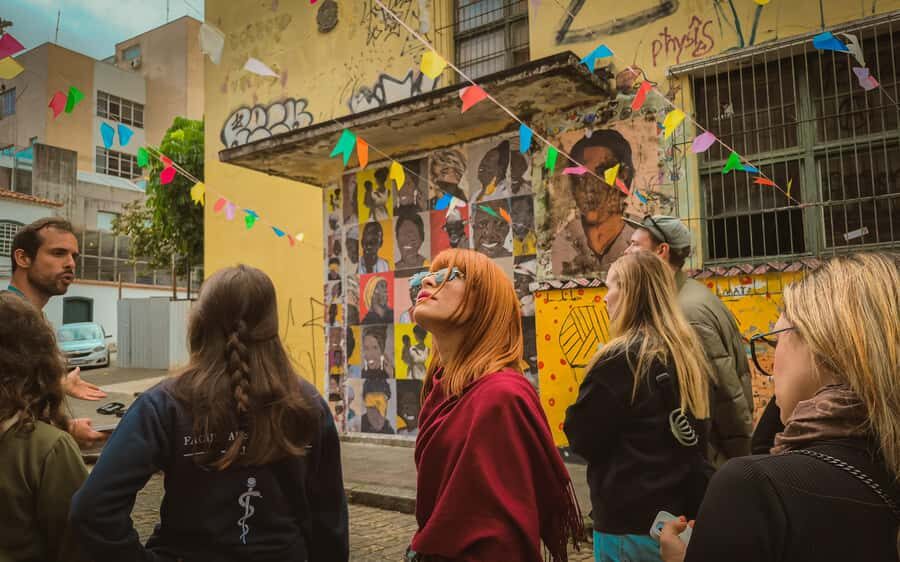
One of the first big stops is the Catedral Metropolitana de Florianópolis Nossa Senhora Do Desterro e Santa Catarina De Alexandria. You’ll get a guided segment of about 20 minutes, which is the right amount of time to look closely without feeling rushed.
What I like about starting with the cathedral is that it gives you a framework. From here, the tour moves into the island’s earlier layers—specifically the indigenous groups that occupied Santa Catarina Island—and then forward into the 17th century, marked by Portuguese colonizers and African enslaved people arriving in the region.
That sequence matters. It helps you see Florianópolis not as a single “pretty postcard,” but as a place where different populations arrived, interacted, and shaped life over time. If you’ve ever visited a historic building and wondered what it really means, this is the kind of context that makes the stone feel connected to people.
A practical note: cathedrals often have areas that feel cooler or quieter. If you’re the type who likes photos, take a moment before the guide starts speaking more broadly, so you’re not trying to shoot in the middle of the story.
Cruz e Sousa Palace and Praça XV: power, style, and public space
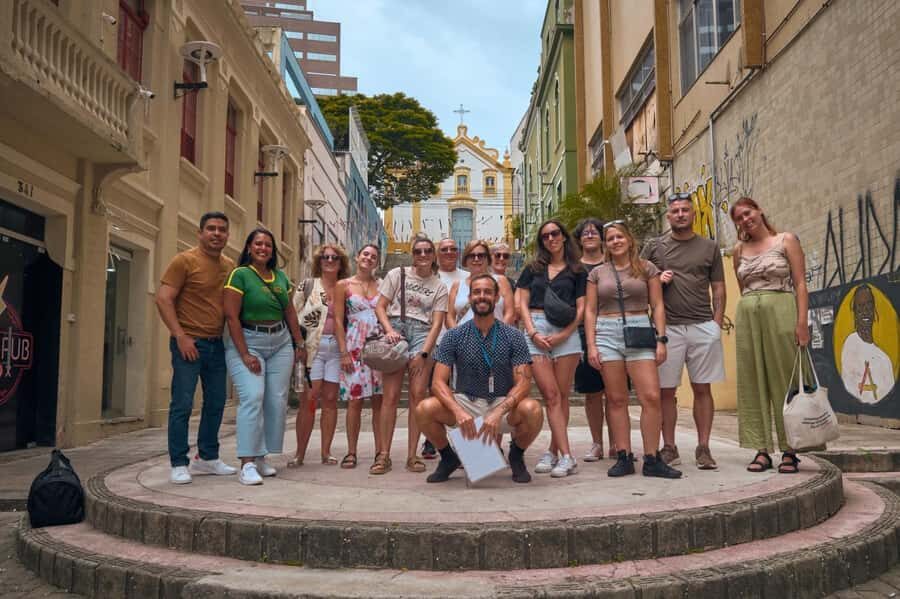
Next up is the Palacio Cruz e Sousa, followed by Praça XV de Novembro. These stops are shorter—around 10 minutes each—but they’re packed with “why this matters” explanations.
The palace stop is a good chance to train your eye. You’ll get time to look at the building itself, then connect it back to how the city’s leaders and institutions formed. Even without getting lost in technical architectural talk, you’ll come away with a sense of what local power and identity look like in physical form.
Then Praça XV de Novembro pulls you into street-level history. A plaza is where a city shows its rhythm: meetings, movement, and everyday life. You’ll learn how the tour’s big themes—social formation, economic shifts, and cultural layering—play out in the public spaces people actually use.
You’ll also hear about Florianópolis’ nickname, the Magic Island. That “nickname” detail isn’t just marketing fluff; it’s used to frame the city’s image and how locals and newcomers talk about it.
Praça Fernando Machado and the landmarks for Black Florianópolis
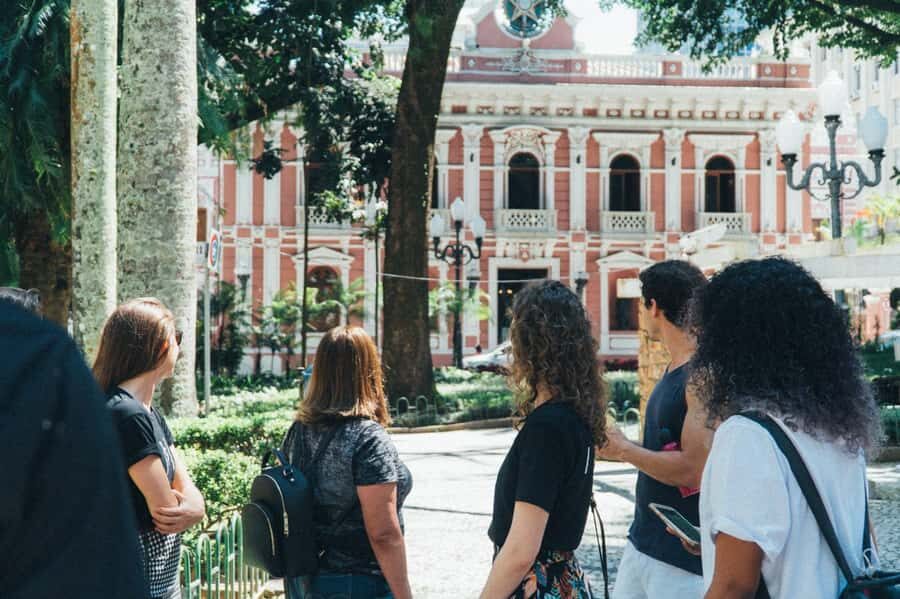
After that, you’ll pass Praça Fernando Machado for another 10-minute guided stop. Plazas can blur together when you’re tired, so I like when tours use them as checkpoints. This one uses the squares to keep the story moving and to give you a mental map of where each chapter of history lands.
Then comes an important shift: the tour explores landmarks for the Black community in Florianópolis. The guide weaves this into the broader narrative that began with indigenous peoples and then moved into Portuguese colonizers and African enslaved people. This part is valuable because it doesn’t treat Black history as a side note. It’s treated as part of the city’s foundation.
I also like that you’re not just standing and listening. You’re walking through the neighborhoods’ rhythm, so the history sits in the same places you’re visiting today. That tends to make the ideas stick.
Álvarez de Carvalho Theatre: a beautiful monument with a purpose
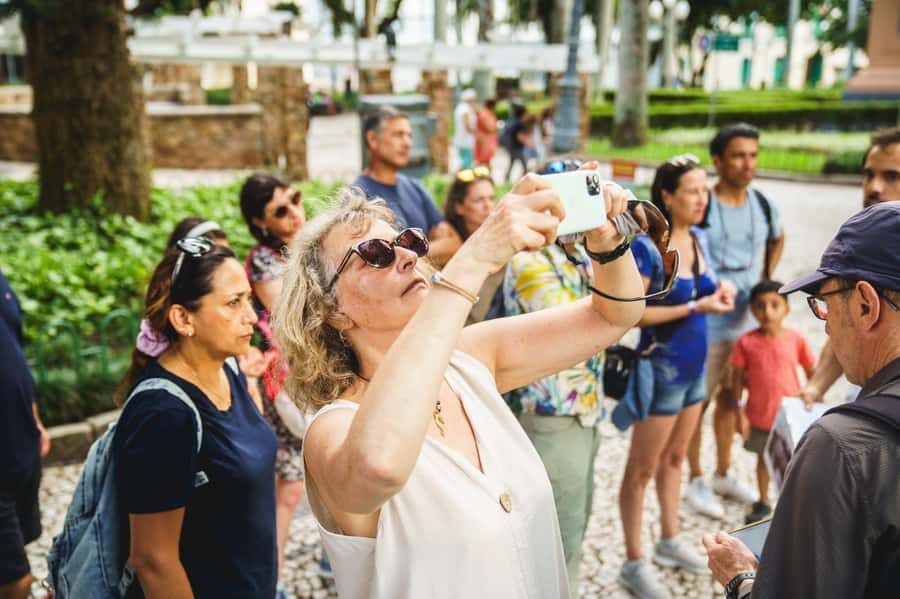
One of the more striking stops is the Álvaro de Carvalho Theatre, described as one of the city’s most beautiful monuments. You’ll get about 10 minutes here, long enough to notice details and short enough that you’re not forced to sit still while the group waits.
The key is how it’s framed. This isn’t just a pretty façade. The theatre becomes a clue to how culture, public life, and community identity express themselves in Florianópolis.
If you’re the kind of traveler who cares about “where do people gather to create meaning,” this stop fits you well. It’s also a good photo stop—just watch the timing so you don’t miss the explanation.
You can also read our reviews of more historical tours in Florianopolis

Avenida Hercílio Luz and Forte de Santa Bárbara: the city widens
As you continue, you’ll move along Avenida Hercílio Luz and then toward Forte de Santa Bárbara, each with around 10 minutes of guided time. These segments help you understand how the city’s identity isn’t only about buildings and plazas. It also connects to strategic or symbolic places—things that tell you where a city looks outward and how it organizes space.
Even when the tour doesn’t linger for long, it gives you enough direction to see those stops as part of one coherent story. In other words: don’t treat them as random “checkmarks.” They’re links in the chain.
For your comfort, keep an eye on your legs here. Forte-type stops can mean small changes in ground level, and you’re already a good chunk into the walk. Comfortable shoes aren’t optional on this one.
Bar do Noel: when the tour turns social (and snack-friendly)

This is where the pace becomes more relaxed and more human. You’ll spend about 40 minutes at Bar do Noel, which is plenty of time to slow down, chat, and get a feel for how locals hang out.
Even though the tour doesn’t include food and drinks, this is a prime time to order the kind of local snacks and drinks that define the experience: pastéis, coxinhas, sugar cane juice, and local beers. Since alcoholic beverages aren’t included, you’ll be paying separately if you want beer.
I find this part of the day useful because it turns the history lesson into something social. You’re not walking through “facts”—you’re sharing a sidewalk and a table with real people while the guide offers suggestions.
Also, one review singled out Isaac’s knack for tips on bars and food. That’s exactly what you want in the final stretch: practical ideas for what to try right after the tour.
Public Market finish: a guided wander and a surprise

You’ll end with a tour at the Mercado Público de Florianópolis, including a guided segment of about 30 minutes and a surprise at the market. The market finish works for value because it naturally groups your afternoon options. After the guided storytelling wraps up, you’re already in the place where snacks and meals are easiest.
Here’s the practical angle: once you’ve walked the historic center, your body wants something simple. The market is built for that, and you’ll also have a map with local recommendations in your kit. If you want to keep exploring on your own after the tour, this ending makes it easier.
The surprise matters less because it’s secretive and more because it signals the tour won’t feel like a dry lecture. It’s a shift from history-and-monuments to flavor-and-movement, with the guide still around long enough to point you in the right direction.
Before you say goodbye, you’ll get suggestions for what to do next. The guide may even join you at a bar, which is a nice perk if you’re traveling solo or simply like extending good company.
Price and value: what $18 buys in 150 minutes
At $18 per person for about 2 hours / 150 minutes, this is strong value if you care about more than photos. You’re paying for a guided route through the historic center, storytelling that connects multiple time periods, and enough time at key locations to make it feel organized rather than rushed.
Why the value is real:
- Time invested: 150 minutes is long enough to cover several major stops without feeling like you’re being herded.
- Quality of explanation: the guide’s style in English (and also Portuguese and Spanish) is repeatedly described as clear and structured.
- You get ideas for the rest of the day: the bar/food suggestions and the market finish keep the tour useful beyond its ending point.
The only financial wrinkle is what you can expect to pay extra. Food and drinks aren’t included, and alcoholic beverages aren’t included either. Still, you’re given a clear “snack direction,” and there’s even an average price reference for a pint (about $4). Budget for snacks and drinks and the $18 ticket starts to feel like the bargain it is.
Who this walking tour suits best
I think this tour fits best if you want:
- A guided history lesson you can walk through, tied to actual places
- A focus on indigenous roots, Portuguese arrival in the 17th century, and African enslaved people, with attention to Black landmarks
- A mix of monuments plus “how to live here” moments at bars and markets
- A group atmosphere where international visitors actually mingle, not just stand in a line
If you want a tour that’s only about architecture trivia, you might find the story component more important than the “detail catalog.” If you like context with your sightseeing, you’ll probably enjoy how the guide keeps pulling you back to the big picture.
Should you book Florianópolis History, Art and Gastronomy?
If your idea of a great day in Florianópolis is history on foot plus practical food stops, I’d book it. The structure is easy to follow, Isaac’s explanations are described as clear and friendly, and the ending at the Public Market gives you a natural place to continue eating and exploring.
Skip it only if you hate walking for about two hours, or if you prefer fully guided food tastings with everything included. Here, you’re steering your own snack and drink spending, so bring a bit of cash and go with the flow.
If you book, do one smart thing: plan your shoes and your budget, then let the tour do what it does best—turn Florianópolis’ streets into a story you can taste.
FAQ
Where does the tour start?
You meet outside Café/Bar do Largo d’Álfândega.
How long is the tour?
It lasts about 2 hours, or roughly 150 minutes.
How much does it cost?
The price is $18 per person.
What is included in the price?
Rain coats (in case of rain) and a city map with local recommendations are included.
Are food and drinks included?
No. Food and drinks are not included, and alcoholic beverages are also not included. You can expect to pay for snacks and drinks on your own.
What kinds of snacks can I look for during the tour?
The tour highlights local snacks such as pastéis, coxinhas, sugar cane juice, and local beers.
Is the tour wheelchair accessible?
Yes, it is wheelchair accessible.
What languages is the tour offered in?
The live guide speaks English, Portuguese, and Spanish.
What should I wear or bring?
Wear comfortable clothes and bring comfortable shoes, since you’ll be walking for around 2 hours.
Can I cancel, and what if it rains?
You can cancel up to 24 hours in advance for a full refund. Rain coats are included if weather turns wet.