REVIEW · SAO PAULO
Sao Paulo: Downtown-Center Walking Tour | 2 Hours – English
Book on GetYourGuide →Operated by Concrete Jungles Walking Tours · Bookable on GetYourGuide
Two hours sounds short. It is, but it’s a smart way to get oriented in São Paulo’s center. You’ll see big architectural names and smaller city details, all explained in clear English by guide Giuliano.
What I like most is the mix: iconic buildings like the Copan and the Municipal Theatre, plus the religious and immigrant-era layers that explain why this city looks like it does. The other big win is Giuliano’s willingness to answer questions and share practical local pointers, including vegetarian food ideas. One drawback to plan for: it’s a walking route in the city’s downtown, and the information you’re given notes both wheelchair accessibility and that it’s not suitable for some mobility impairments—so you’ll want to double-check if you need extra support.
Good for:
- First-time orientation in São Paulo’s center
- Getting context behind famous buildings and street-level culture
- Small group pace (limited to 10) so questions actually get answered
- English-only guidance with a pro guide who keeps things moving
- A route that ends in Liberdade, a natural next step for exploring
In This Review
- A first look at São Paulo’s center in two tight hours
- Why this downtown route makes sense for your first day
- Meeting at Edifício Itália and getting the timing right
- Copan Building: early skyline ambition and a style you can recognize
- Galeria Metrópole and Galeria do Rock: shopping arcades with real local meaning
- Municipal Theatre of São Paulo: when art and city identity meet
- Paróquia São Francisco de Assis: religion, power, and neighborhood shape
- Mosteiro de São Bento and the Bank of Brazil Cultural Center: old tradition meets modern institutions
- College Pateo and São Paulo Cathedral: big public spaces that explain the streets
- Finishing in Praça da Liberdade (Liberdade): a practical exit into another neighborhood
- English-only guidance with a small group you can actually talk to
- Price and value: what $37 gets you for a 2-hour orientation
- Weather and comfort tips for downtown sidewalks
- Who should book this São Paulo downtown walk
- Should you book the downtown walking tour?
- FAQ
- Where do I meet the tour guide?
- How long is the walking tour?
- Is the tour in English?
- How many people are in the group?
- What’s included in the price?
- Is food or drink included?
- Do I need transportation to join the tour?
- What should I bring because of the weather?
- Is the tour wheelchair accessible?
- What’s the general route and where does it end?
A first look at São Paulo’s center in two tight hours
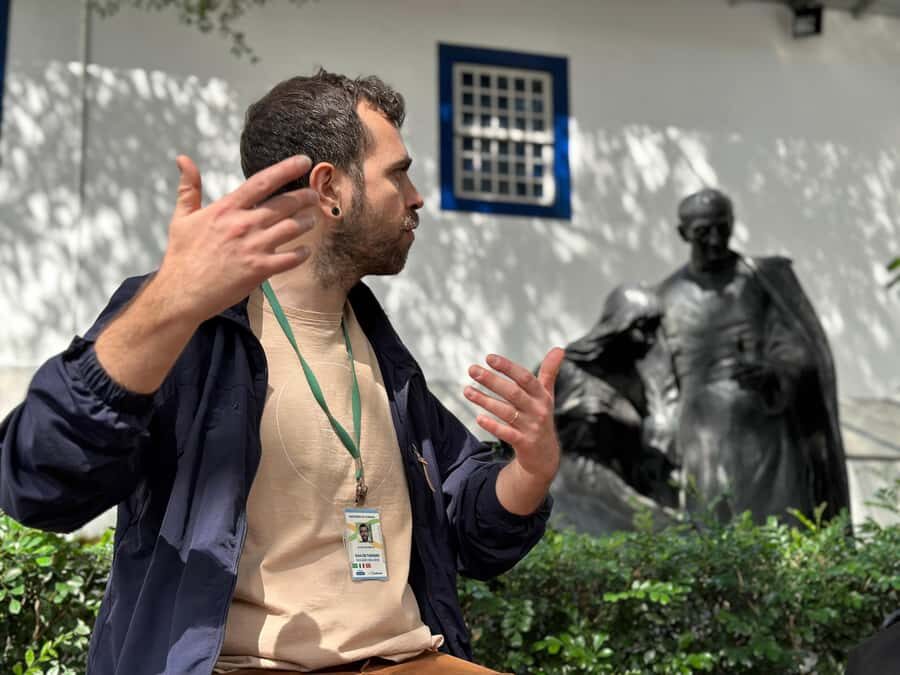
São Paulo’s downtown can feel like a puzzle box. This walking tour helps you turn the pieces the right way. You’ll start in the business-and-skyline area, then move through historic downtown streets where churches, old institutions, and community spaces sit close together.
The goal is simple: you get a working sense of the city in just 2 hours. You won’t leave with every detail memorized. You will leave with the big ideas: how people arrived, where power and money formed, how religion and education shaped neighborhoods, and why you see certain architectural styles where you do.
Why this downtown route makes sense for your first day
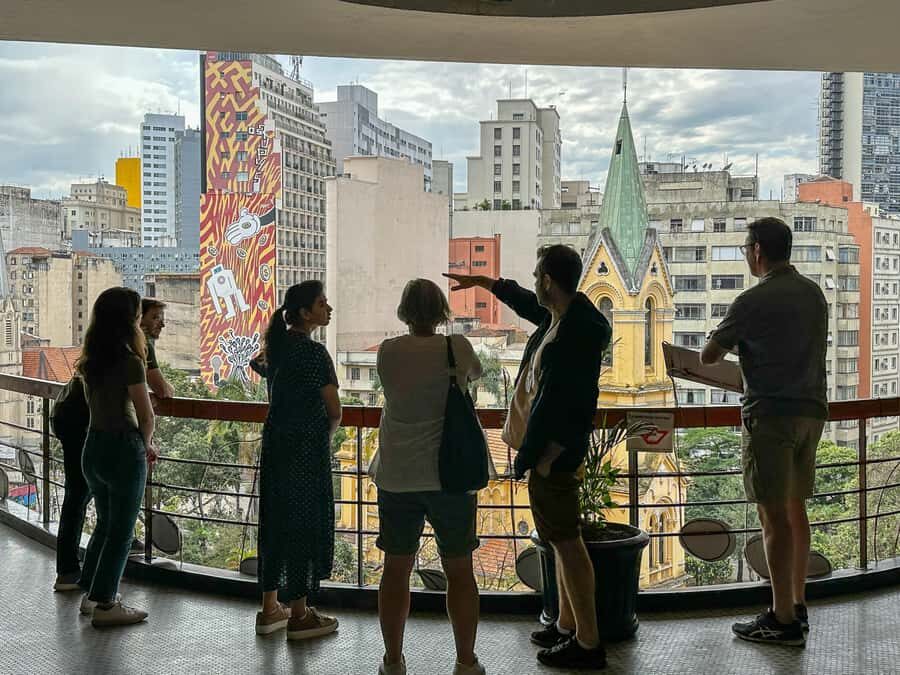
What I appreciate here is the storyline. São Paulo isn’t presented as one single culture. It’s shown as a stack of communities that grew over time, including major immigrant communities like Italians and Japanese, plus Syrian-Lebanese roots that helped shape the city.
The tour route is built to show that history through buildings you can actually see:
- Early skyscraper-era ambition (including some of the first in Latin America)
- Colonial and pre-colonial context connected to Indigenous Tupi presence and older pathways across the region
- Later waves of churches, banks, schools, and migrants layering into the streets
If you like history, you’ll enjoy the timeline. If you mostly want practical understanding, you’ll still get it. The buildings act like bookmarks, and the guide keeps tying each stop to what the street life looks like today.
You can also read our reviews of more walking tours in Sao Paulo


Meeting at Edifício Itália and getting the timing right
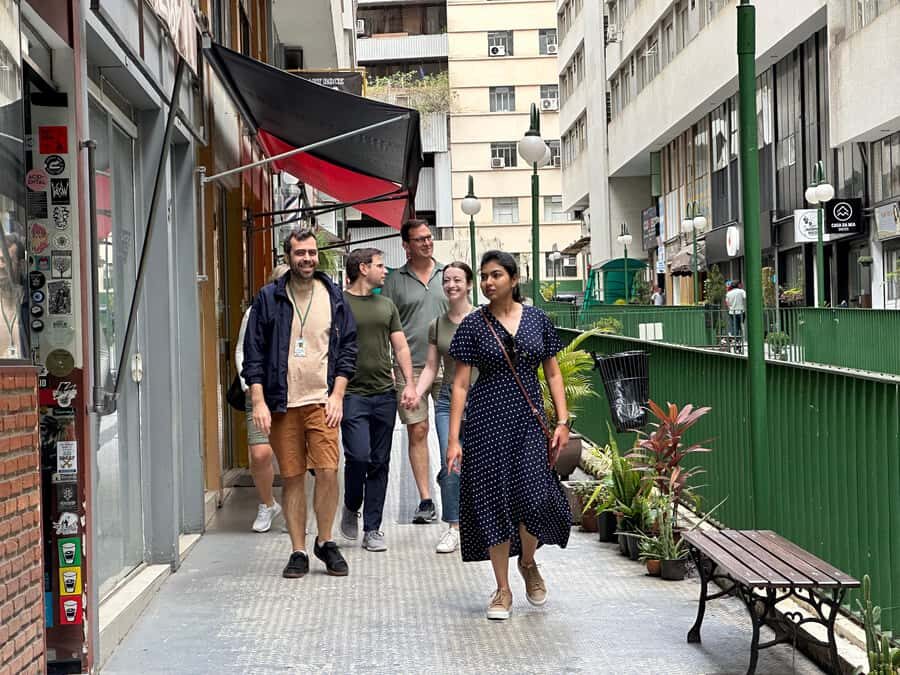
You meet near Edifício Itália, standing at the entrance. The tour starts strictly on time. That matters because it’s a tight 2-hour walk with multiple stops and short visits inside some buildings.
One thing I like about this setup is the small group format: limited to 10 people. That helps the guide keep a steady pace and still handle questions without turning the whole walk into a slow parade.
Also plan for rain. São Paulo can have unpredictable tropical weather. Have sunscreen and an umbrella. Even if you’re only outside briefly at each stop, clouds can roll in fast, and downtown sidewalks get slippery.
Copan Building: early skyline ambition and a style you can recognize
The walk begins with a stop at the Copan Building. This is one of those São Paulo landmarks people hear about immediately, so it’s a strong first anchor.
Here’s why it works on day one: the Copan isn’t just a photo stop. It represents the city’s shift toward vertical growth and modern urban ambition. The tour connects that skyscraper era to broader changes happening in Latin America at the time, so you’re not only seeing an iconic shape—you understand why it shows up in this particular city.
You get about a 10-minute visit and walk-by time here, so don’t expect a long sit-down. Think of it as a visual reset button: this is where the city’s modern story starts to feel real.
Galeria Metrópole and Galeria do Rock: shopping arcades with real local meaning
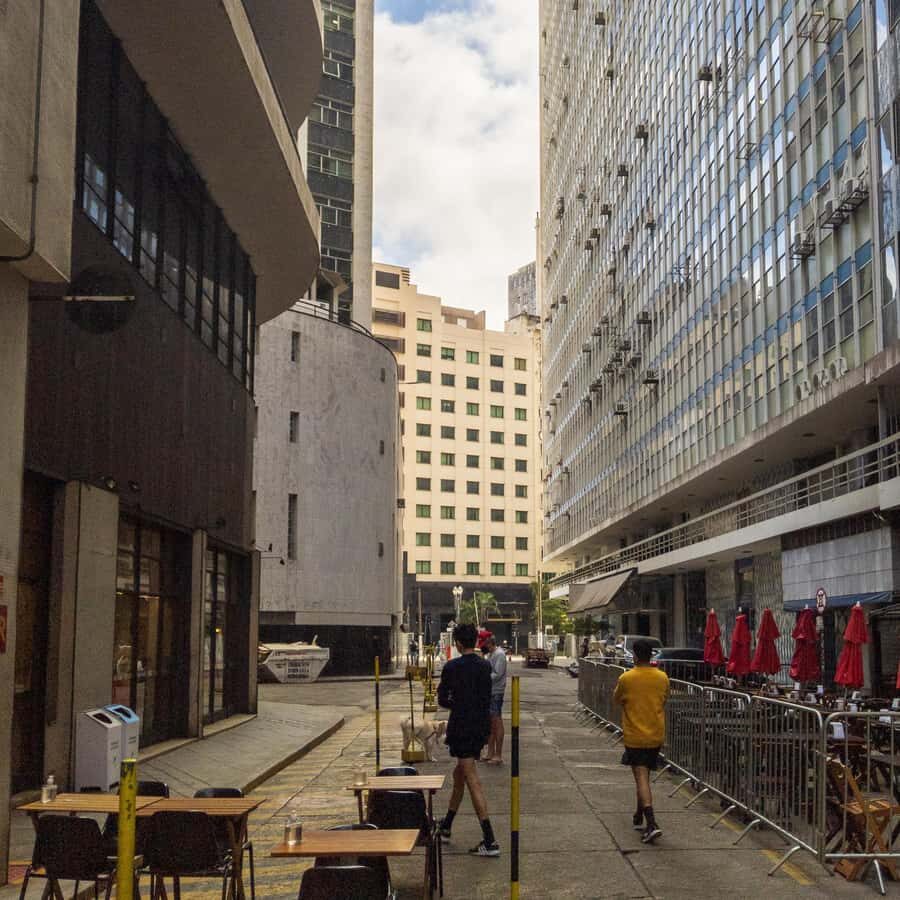
Next up are the indoor passageways and arcades: Galeria Metrópole and then Galeria do Rock.
These stops are less about grand monuments and more about how people live with the city. Downtown São Paulo has long been shaped by commercial corridors where you can move inside, browse, and feel the city’s daily rhythm.
Galeria do Rock, in particular, gives you something different from the classic church-and-theatre rhythm. It’s a reminder that downtown culture isn’t only official institutions. It’s also youth-oriented spaces, music-related identity, and the kind of storefront street energy that you miss if you only chase museums.
The time you get is short, but the context makes it worthwhile. You’re learning what these buildings signal about how communities gather.
Municipal Theatre of São Paulo: when art and city identity meet
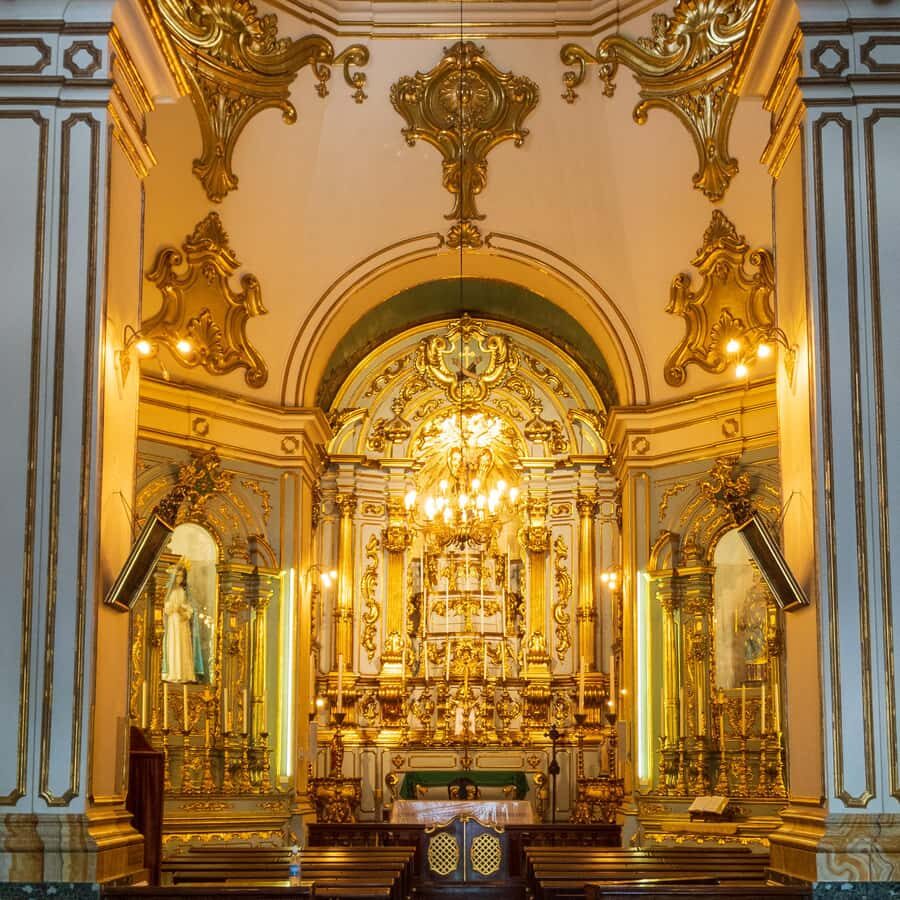
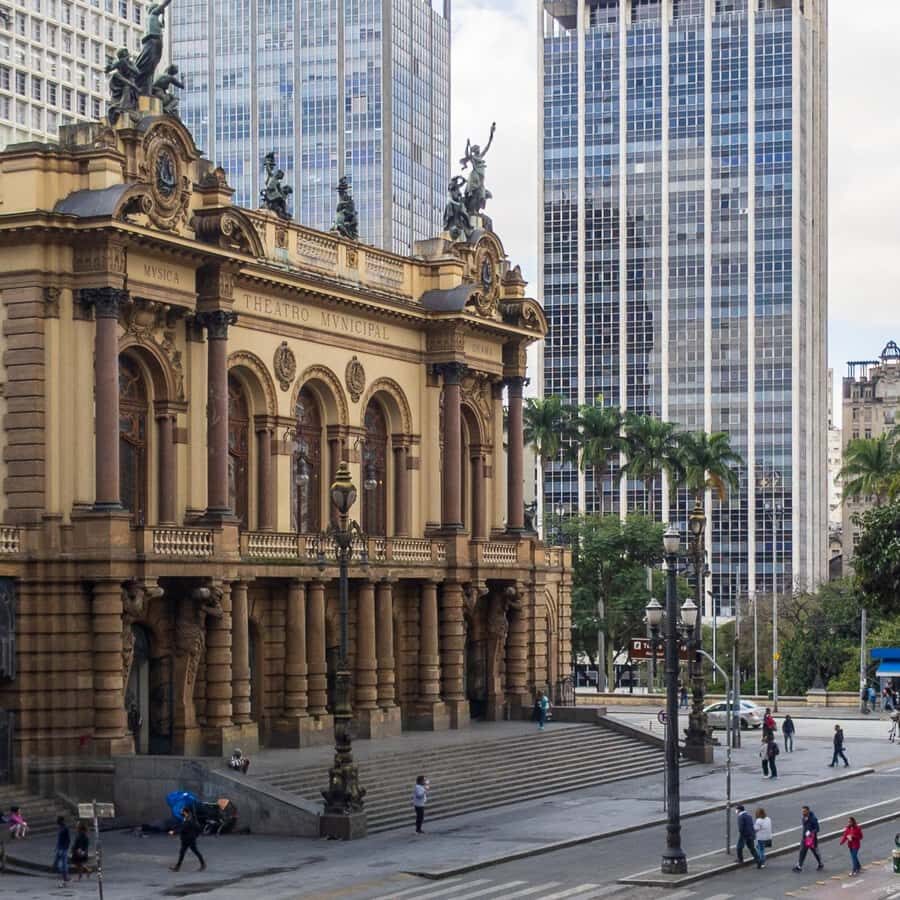
After the arcades, the route reaches the Municipal Theatre of São Paulo for a quick visit.
The theatre matters because it shows how the city expressed itself through major public arts. Even if you’re not an opera person, the building gives you a feel for civic ambition. The guide connects architecture to the social world around it—who built these big institutions, and what their presence said about what the city wanted to become.
A 10-minute stop is enough to get the visual takeaway. If you want more, this is still a great moment to note where the theatre sits relative to the surrounding streets, because that helps you orient yourself later on your own.





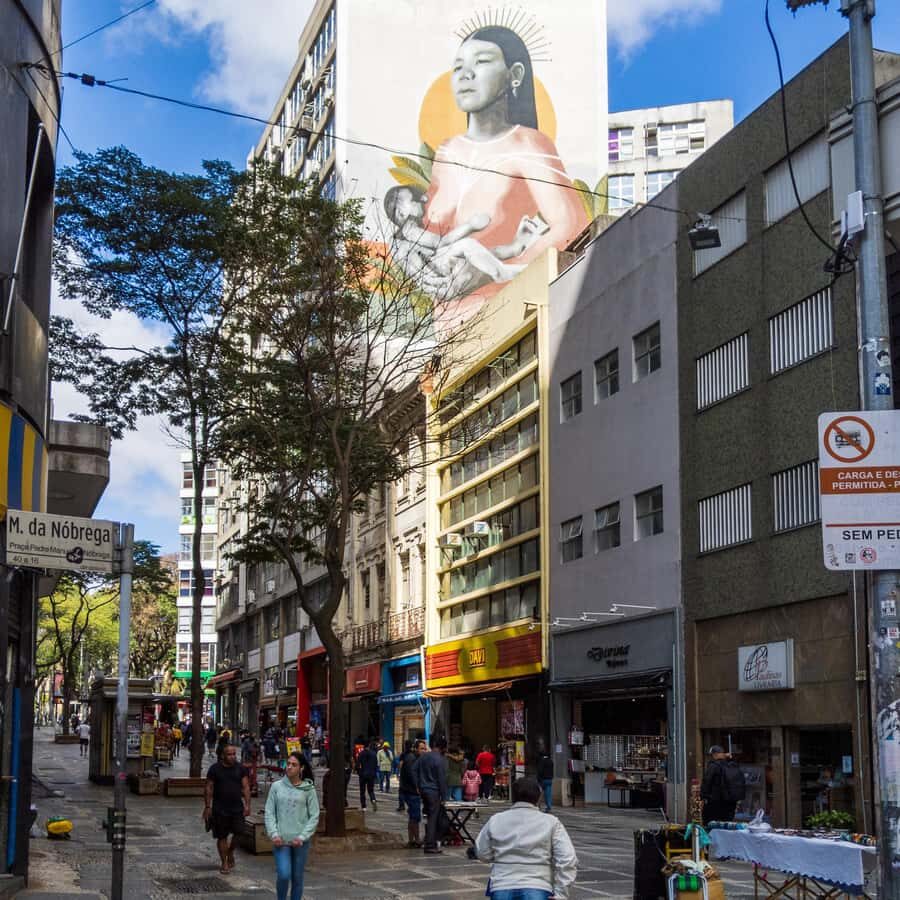
Paróquia São Francisco de Assis: religion, power, and neighborhood shape
Then comes Paróquia São Francisco de Assis, with about 20 minutes.
Church stops can either feel like a detour or like a key. Here, it’s the latter. The guide uses religious architecture as part of the city’s long-running thread: Jesuits, conquerors, churches, banks, migrants, and immigrants all get tied into what you see in the built environment.
So the church isn’t just a place of worship in the abstract. It’s part of how communities formed, and part of how downtown functioned as a hub for centuries. If you’re the type who enjoys understanding how different social forces used space, this stop will likely be one of your favorites.
Mosteiro de São Bento and the Bank of Brazil Cultural Center: old tradition meets modern institutions
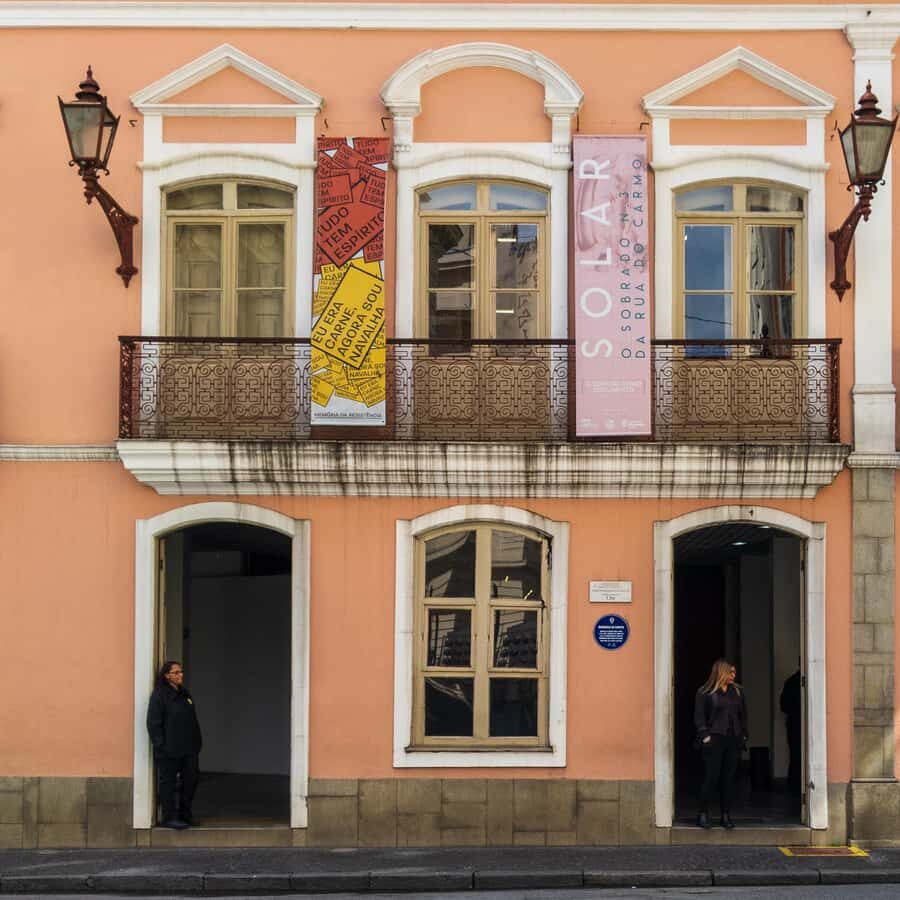
Two powerful stops back to back are Mosteiro de São Bento and then the Bank of Brazil Cultural Center.
Mosteiro de São Bento is a monastery stop with about 15 minutes. The value here is less about checking boxes and more about feeling how religious tradition and daily life coexist in a city that’s also known for towers and finance. The guide helps you see the monastery as part of São Paulo’s historical spine.
Then you shift into the Bank of Brazil Cultural Center for around 15 minutes. That contrast is useful. You’re looking at how institutions with power also create cultural presence. It’s a neat way to notice that downtown São Paulo isn’t only old or only modern. It’s both, sometimes within walking distance.
College Pateo and São Paulo Cathedral: big public spaces that explain the streets
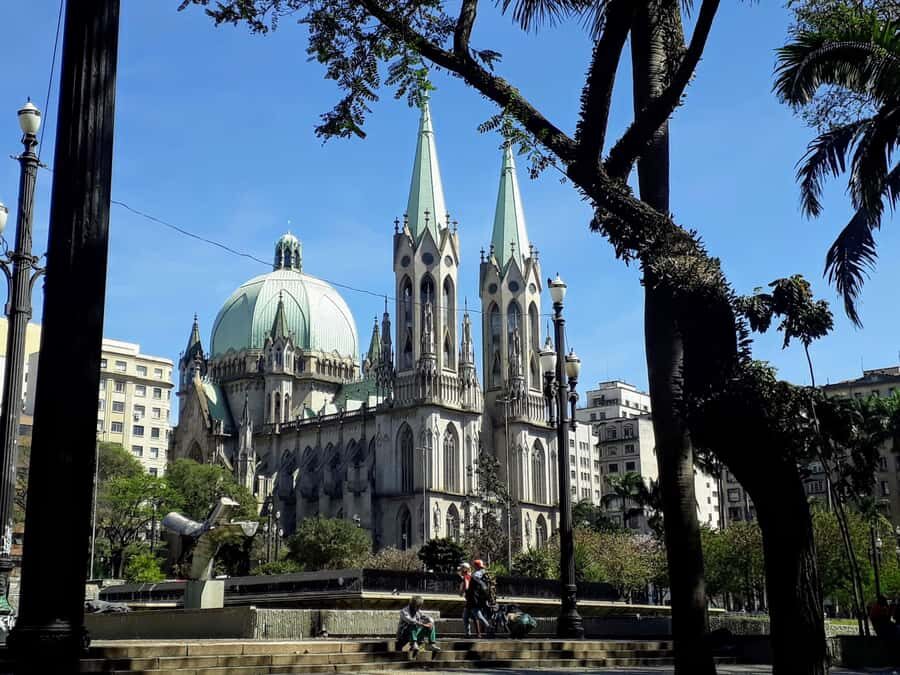
The walk continues to College Pateo (about 20 minutes) and then São Paulo Cathedral (around 15 minutes).
The cathedral stop works because it’s a visual landmark you can’t easily ignore, and it anchors the tour’s downtown route. From there, the guide’s explanation helps you interpret the surrounding streets as more than scenery. You start to see why people gather where they do, and why certain buildings keep showing up in maps and local routines.
College Pateo, with its longer visit time (20 minutes), is one of those stops that often gets overlooked in generic tours. Here, it helps complete the mix: education, culture, institutions, and the way downtown serves as a meeting point for different groups.
Finishing in Praça da Liberdade (Liberdade): a practical exit into another neighborhood
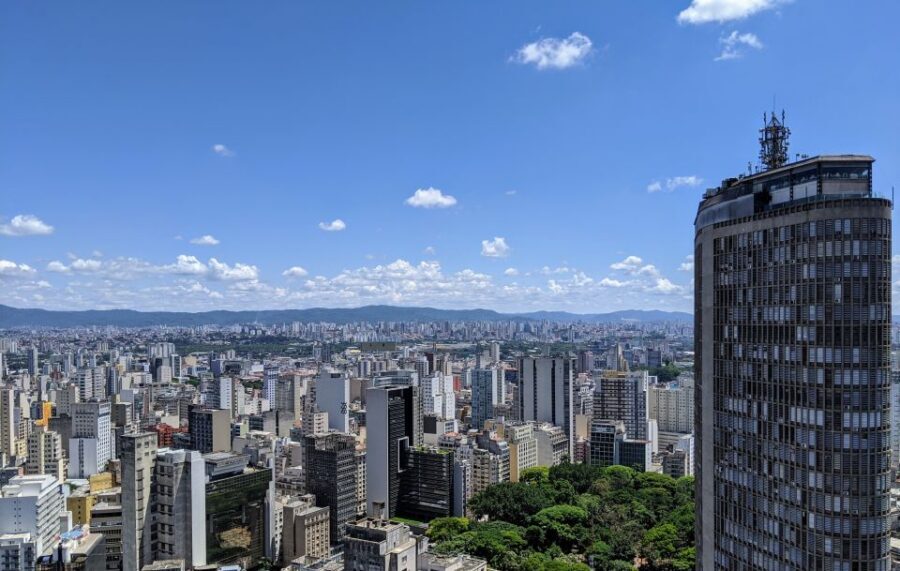
The tour ends at Praça da Liberdade in Liberdade.
This matters. A lot of city-center tours end in the same kind of office block they started from. Ending in Liberdade gives you a more interesting next step, since the area is closely associated with major immigrant community history and daily street life.
Think of this as your landing zone. After the tour, you’ll be in a neighborhood where you can keep exploring with clearer context. You’ll know what to look for and how to connect the architecture you just learned about to what you might see next.
English-only guidance with a small group you can actually talk to
The tour is English only, led by a professional guide in fluent English. That’s a real quality-of-life detail in São Paulo, where you can otherwise spend energy translating in your head.
The small group limit of 10 people is a big deal for the feel of the walk. You’re close enough to hear explanations without straining, and there’s room for back-and-forth questions. In past tours, Giuliano has also been praised for keeping pace while juggling questions and details, even in mixed-language settings.
One extra bonus I’ve seen highlighted: Giuliano shares local recommendations beyond the obvious sights. One standout example from participant feedback was vegetarian food tips and suggestions for where to look—useful because downtown sightseeing can create hunger fast, and you don’t always want to guess with your first meal.
Price and value: what $37 gets you for a 2-hour orientation
At $37 per person for 2 hours, this is priced like a serious guided city experience rather than a quick walk-through. You’re paying for:
- A licensed guide with fluent English delivery
- A structured route with multiple major landmarks
- Short interior visits at select stops (when allowed)
- A guide who interprets architecture and context instead of just pointing
If you’re doing São Paulo in a short window, that value adds up quickly. A half day of self-guided wandering in the center can be tiring and still leave you with blank spots about why things are where they are. This tour helps you fill those blanks fast.
Weather and comfort tips for downtown sidewalks
São Paulo’s tropical weather can change without warning. Even if you start sunny, you can get rain while you’re still in the middle of the walk.
My practical advice:
- Carry a compact umbrella or rain shell.
- Wear shoes with grip. Downtown sidewalks vary.
- Bring sunscreen, even on cloudy days.
- Keep water handy, since no food or drinks are included.
Also remember: there’s no pickup or drop-off. You’ll navigate to the meeting point on your own. That’s normal for a walking tour, but it’s still worth building a little buffer into your schedule so you arrive before the start.
Who should book this São Paulo downtown walk
This is a strong fit if you want:
- A quick, guided orientation for your first day
- Clear explanations of major landmarks and how they connect to immigration and local development
- A small group pace where you can ask questions
- An English guided walk with practical local context
It may not be the best fit if you hate walking long-ish distances on urban sidewalks, or if you have mobility concerns. The info provided includes both wheelchair accessibility and a note that it’s not suitable for people with mobility impairments. If that relates to you, I’d treat it as a must-confirm situation with the operator before you book.
Should you book the downtown walking tour?
If you’re heading to São Paulo and want your bearings fast, I think this is worth booking. The route hits both big-name architecture and the everyday institutions that make downtown feel like a living city, not a museum corridor.
The guide-led storytelling is the real value, especially with Giuliano’s knack for explaining architecture in social context and answering questions. Add in the small group size and the practical recommendations, and it becomes a tour that helps you plan what to do next instead of just ticking boxes.
If you’re tight on time, bring good shoes, pack rain gear, and go. This walk gives you a strong foundation for exploring São Paulo afterward on your own terms.
FAQ
Where do I meet the tour guide?
Meet at Edifício Itália. The guide will be standing at the entrance. The starting location listed is Av. Ipiranga, 336.
How long is the walking tour?
The tour duration is 2 hours.
Is the tour in English?
Yes. The tour guide provides the tour in English only.
How many people are in the group?
It’s a small group, limited to 10 participants.
What’s included in the price?
You get a professional tour guide in fluent English. There’s also walking-only routing, so no transportation costs are expected.
Is food or drink included?
No. Food and drinks are not included.
Do I need transportation to join the tour?
No pickup or drop-off is included. You’ll need to make your way to the meeting point yourself.
What should I bring because of the weather?
São Paulo can have unpredictable tropical weather, so bring sunscreen and an umbrella.
Is the tour wheelchair accessible?
The activity information says it is wheelchair accessible, but it also states it is not suitable for people with mobility impairments. If you have mobility needs, confirm details before booking.
What’s the general route and where does it end?
You’ll pass by major downtown sights such as the Copan Building, Galeria Metrópole, Galeria do Rock, the Municipal Theatre, Mosteiro de São Bento, São Paulo Cathedral, and the tour ends in Praça da Liberdade (Liberdade).