REVIEW · SAO PAULO
Sao Paulo: Downtown-Center History Walking Tour – in English
Book on Viator →Operated by Concrete Jungles Walking Tours · Bookable on Viator
São Paulo can feel like a blur, until you walk it. This 2-hour, small-group history walk strings together major landmarks with real stories about why the city looks the way it does. I love the tight route and photo-friendly stops, and I love how the guide connects architecture to everyday life, not just dates and names.
One possible drawback: it’s a Centro walk, so you’ll want to stay alert and stick with the group the whole time, especially if you’re new to big-city neighborhoods.
You’ll see eye-catching buildings, then you’ll get the “why” behind them. That’s where the tour earns its spot: the guide’s explanations are built for understanding, with answers that go past the basics. I also like that it ends in Liberdade, where the city’s immigration story shows up in markets and street life.
If you’re hoping for a super-fast hit-and-run tour, this may feel too thoughtful. You’ll pause often, take in details, and sometimes linger so the stories can land.
In This Review
- Key reasons this walk works
- Starting at Edifício Itália: why this meeting point matters
- Copan’s curves and the brutalism story you actually care about
- Gallery of Rock: shopping corridors where subcultures live
- Theatro Municipal de São Paulo and the Week of Modern Art
- Centro Cultural Banco do Brasil: the coffee boom behind the facades
- Pátio do Colégio: 1554, Jesuits, and the original foundation story
- Sé Cathedral: why this neo-Gothic giant feels symbolic
- Ending in Liberdade: the Japan-outside-Japan neighborhood and the market
- Group size, guide style, and why people rave about Giuliano
- Safety in the Centro: sensible habits that keep you comfortable
- Price and value: is $31.24 worth it?
- Who should book this walk (and who might skip it)
- Should you book this São Paulo downtown history walk?
- FAQ
- How long is the tour?
- How much walking is involved?
- What is the group size?
- Where does the tour start and when?
- Where does the tour end?
- How much does it cost?
- Is the tour in English?
- Are there free admission tickets for the stops?
- What is the cancellation policy?
- Does weather affect the tour?
Key reasons this walk works
- Small group (max 10): easier questions and a calmer pace on busy streets
- Architecture + cause and effect: buildings tied to shifts in money, politics, and identity
- Liberdade food and produce market time: not just a photo stop, you’ll learn what’s there
- Street-level culture stops: like the Rock-focused shops and underground corridors
- A guide who answers hard questions: including citywide socioeconomic context
- Lots of major landmarks in 3 km: a concentrated way to get your bearings fast
Starting at Edifício Itália: why this meeting point matters
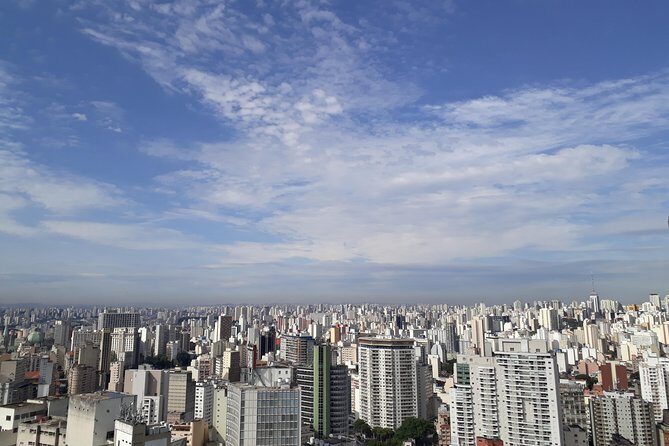
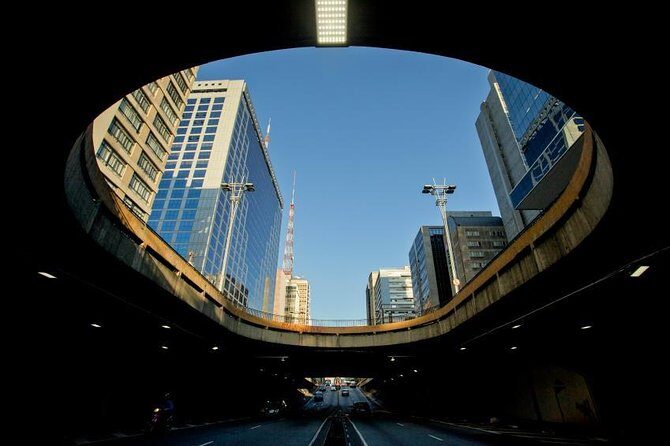
The tour begins at Av. Ipiranga, 344 in the Centro Histórico area, right near Edifício Itália. It’s a smart start because this is one of those places where São Paulo’s ambition shows up immediately. The building itself is famous for being once the tallest in the city, and it still anchors views of “Centro Novo,” the part of downtown that grew up around modernization and vertical expansion.
From a practical standpoint, starting here also helps you “orient” to the walk. Within minutes, you’re moving through a district that mixes old and new layers, which is exactly what you want on day one.
One more small detail that matters: the tour is designed as a 2-hour loop of about 3 km, so you’re not spending the day commuting between scattered sites. You’ll walk enough to feel downtown, but not so much that your feet take over the itinerary.
You can also read our reviews of more walking tours in Sao Paulo


Copan’s curves and the brutalism story you actually care about
Next up is the Edifício Copan, designed by Oscar Niemeyer. It’s one of those buildings you recognize from movies, postcards, and street photos, but this stop is more than “look at the architecture.” The guide frames it as part of São Paulo’s mid-century verticalization—when people were building upward with big dreams, while the city’s reality stayed messy.
That matters because brutalism can feel cold if you don’t know the context. Here, the story turns the blocky feel into a human one: architecture as an attempt to manage rapid growth, density, and change.
As you walk past it, pay attention to how the building’s scale changes your sense of distance in the street. That’s the kind of “I never noticed that” moment the tour is good at creating.
Gallery of Rock: shopping corridors where subcultures live
Then comes a very São Paulo stop: the Gallery of Rock area. You’ll wander through underground corridors and galleries with vinyl records, antiques, manga, and pop-culture relics. This is where the city’s contemporary identity shows up, not through official monuments, but through what people collect, trade, and display.
If you like street-level culture, you’ll appreciate that the tour treats this zone as history too. It’s about diversity, consumer culture, and resistance, all folded into the way the neighborhood sells and shares ideas.
A practical note: underground and gallery spaces can feel cooler than the open street, and you might get a break from sun and heat. Also, this is a good moment to slow down, ask questions, and take photos without feeling rushed.
Theatro Municipal de São Paulo and the Week of Modern Art
At the Theatro Municipal de São Paulo, the tour shifts gears to Brazilian cultural identity. You’ll hear how a building inspired by European architecture became a stage for something uniquely Brazilian, especially during the 1922 Week of Modern Art—a turning point when artists pushed back against strict tradition.
This stop works well because it isn’t just about fancy interiors. The guide connects the theater to a cultural moment: elegance mixed with rebellion. If you’ve ever wondered why São Paulo can look simultaneously European-in-detail and fiercely local in spirit, this is a clear explanation.
One small drawback for some people: theaters are often best appreciated when you can see details up close, but your experience here will still be a walk-and-story version rather than a long museum-style visit. If your top goal is interior time, go with the expectation that the building is part of the narrative, not the whole show.
Centro Cultural Banco do Brasil: the coffee boom behind the facades
The walk then moves to Centro Cultural Banco do Brasil, an area tied to São Paulo’s coffee golden age. Here, the story is economic, but it’s explained in a way that makes the streets make sense. You’ll learn how art deco façades and grand architecture reflect wealth, progress, and the city’s cosmopolitan ambition during the coffee boom.
This is a valuable stop because coffee wasn’t just a product. It helped finance infrastructure and cultural growth, while also fueling deep social contrasts that still show up in the city layout and neighborhood boundaries.
If you like history but hate lectures, you’ll probably enjoy this one. The guide keeps it tied to what you can see: the scale of buildings, the style choices, and why those choices “belong” to a particular era.
You can also read our reviews of more historical tours in Sao Paulo




Pátio do Colégio: 1554, Jesuits, and the original foundation story
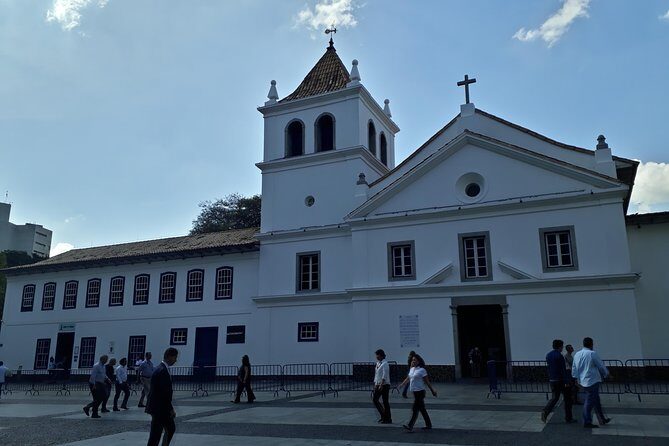
At Pátio do Colégio, the tour gets to the beginning. This is the official founding location of São Paulo in 1554, connected to Jesuit missionaries and the Tupi-Guarani peoples. The guide treats the plaza as more than a marker; it’s presented as a place of tension between colonization and resistance, religion and power.
This is one of those stops where you’ll feel the city’s “old world” layer beneath the modern skyline. Even if you’ve walked São Paulo before, this point can reframe it, because it forces you to think in longer timelines than the city usually encourages.
A realistic consideration: plazas can be open and exposed. If you’re taking the tour in hot weather, wear sun protection. One review mentions the guide trying to keep things shaded when possible, which is helpful to know.
Sé Cathedral: why this neo-Gothic giant feels symbolic
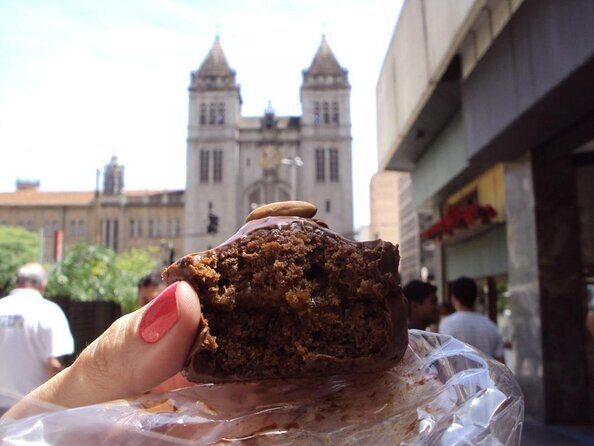
The highlight for many people is the Catedral da Sé de São Paulo, a massive neo-Gothic cathedral and one of the largest of its type in the world. Here, the tour doesn’t just cover architectural style. It focuses on symbolic meaning—how the cathedral acts as a gathering place and a space of protest, not only worship.
This angle is important. Without it, Sé can look like an impressive building you visit and then forget. With the story, it becomes part of São Paulo’s social rhythm.
Also, this is “ground zero” in the tour’s framing—meaning it’s positioned as a symbolic center for the city’s identity. If you’re trying to understand why downtown feels intense, this stop explains part of the emotional geography.
Ending in Liberdade: the Japan-outside-Japan neighborhood and the market
The tour finishes in Liberdade, described as the largest Japanese neighborhood outside Japan. You’ll see lanterns, market streets, and multicultural life that reflects São Paulo’s immigration story.
What makes the ending feel complete is that you’re not just staring at the streets. The guide spends time on the Liberdade street market, explaining produce and authentic foods you’ll find there. This gives you practical value for later: you’ll know how to navigate the area and what kinds of items locals focus on.
If you want to turn the walk into a full day, this is a great landing zone. You’ll finish with energy for food and exploring, instead of ending in a dead-end administrative area.
Group size, guide style, and why people rave about Giuliano
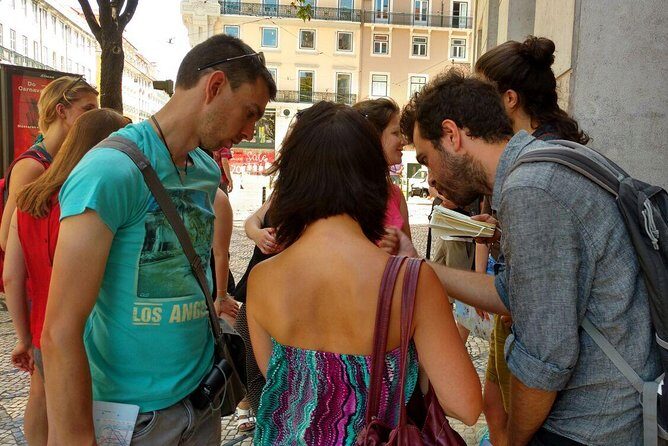
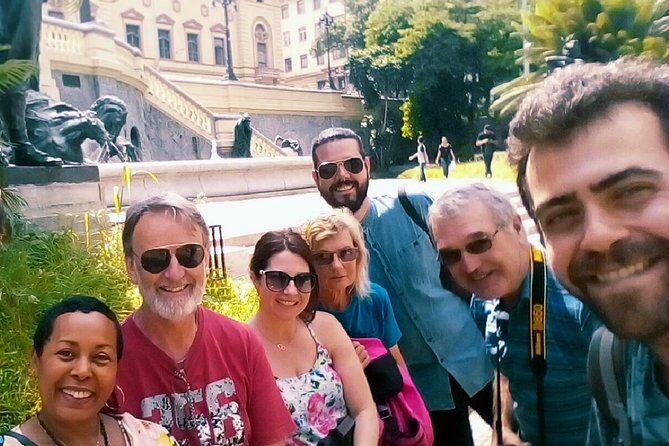
This is a small group tour with a maximum of 10 travelers. That size is the difference between hearing a story and actually being able to ask questions. More than once, the guide is described as attentive and quick to answer questions, with a style that keeps things light and fun while still grounded in facts.
Guides for this walk are reported with the name Giuliano. In reviews, he’s credited with making the city feel alive, including socioeconomic reasons behind changes and even touches of Brazil’s current political climate. That mix matters because it helps you connect buildings to power and everyday life.
If you’ve taken tours where the guide rattles off dates, you’ll likely like this one more. The format seems designed for clarity, pace, and interaction. One review also mentions multilingual delivery, which can be a big deal in a diverse group.
Safety in the Centro: sensible habits that keep you comfortable
The Centro area comes with a reputation, and you should respect that. Even with a knowledgeable guide and a planned route, your job is simple: stay aware, stick with the group, and don’t wander off.
Here are the habits that make the walk feel easier:
- Keep your phone and valuables secure while you’re taking photos
- Use the tour as your “permission” to be in the area safely; don’t break away
- If you’re sensitive to crowds, treat peak times cautiously
One review specifically noted being warned about safety but feeling that it was fine during the tour. I’d translate that into a balanced rule: downtown can be workable with structure, but you still need street smarts.
Price and value: is $31.24 worth it?
At $31.24 per person for about 2 hours and roughly 3 km, this price lands in the “good deal” range for a São Paulo downtown orientation.
Where the value comes from:
- You hit major landmarks that would take time to plan and stitch together yourself
- Many of the listed stops show free admission tickets
- You get explanations tied to what you see, plus market time in Liberdade
It’s also a smart purchase if São Paulo feels intimidating on arrival. You’ll return to your hotel with better context and a clearer mental map of where things are and why they’re there.
Who should book this walk (and who might skip it)
You’ll likely love this tour if:
- you’re visiting São Paulo for the first time and want fast orientation
- you like architecture but also want the human story behind it
- you want a market-food ending instead of only monuments
You might skip it if:
- you prefer long indoor museum time over outdoor walking and storytelling
- you don’t like being in busy downtown areas even briefly
- you need an unstressful route with zero pauses and zero group interaction
Also, a small but real perk: at least one review mentions toilets at two stops, so you’re not guessing entirely.
Should you book this São Paulo downtown history walk?
Yes, if your goal is to understand São Paulo, not just photograph it. This is a concentrated, well-paced walk that connects landmarks to bigger forces—urban growth, cultural shifts, and immigration—ending where you can translate the learning into food and street browsing.
If you’re the type who likes asking questions, take it even earlier in your trip. It’ll make the rest of your days feel easier because you’ll know what you’re looking at.
If you’re on the fence, remember the biggest promise here is simple: major sights plus a guide who makes the connections clear. For most first-timers, that’s exactly what you want.
FAQ
How long is the tour?
The tour runs about 2 hours.
How much walking is involved?
The walk is about 3 km.
What is the group size?
The tour has a maximum of 10 travelers.
Where does the tour start and when?
It starts at Av. Ipiranga, 344 – Centro Histórico de São Paulo, with a start time of 10:00 am.
Where does the tour end?
It ends at Base da PM – Praça da Liberdade, 125 – Liberdade, São Paulo.
How much does it cost?
The price is $31.24 per person.
Is the tour in English?
Yes, it is listed as an in English tour.
Are there free admission tickets for the stops?
The itinerary notes free admission tickets for the stops listed.
What is the cancellation policy?
You can cancel for a full refund up to 24 hours in advance of the experience start time.
Does weather affect the tour?
Yes. The experience requires good weather, and if it’s canceled due to poor weather, you’ll be offered a different date or a full refund.