REVIEW · SAO PAULO
8-Hour Private Tour São Paulo: Major Tourist Attractions–Optional Airport Pickup
Book on Viator →Operated by Gregtur Turismo · Bookable on Viator
São Paulo in one focused day. This private tour strings together the city’s best-known landmarks and neighborhoods in a smart order, with a licensed guide to connect the dots. You also get flexibility with multiple tour times and an optional upgrade for Guarulhos Airport (GRU) pickup.
I love two things most. First, the day is built around a private experience, so you can ask questions and set your own pace at key moments. Second, many stops are free-admission, which helps you keep the cost reasonable without sacrificing the big views and signature sights.
One possible drawback: it’s eight hours, so several places are quick hits. If you want long museum time or slow wandering, you’ll likely want a second trip to go deeper.
In This Review
- Key highlights to look forward to
- A private São Paulo day built for getting your bearings fast
- The X-shaped bridge stop: São Paulo’s 138-meter “postcard” opener
- Ibirapuera Park and MAC USP: lakes, fountains, and a 360-degree view
- The Ibirapuera monument you’ll want to photograph
- Liberdade for Japanese culture on weekends, then Sé Cathedral in the city center
- Jesuit roots, monk-made snacks, and the vertical garden effect
- Luz Station and the immigrant gateway story
- Mercado Municipal and Paulista Avenue: eat, then read the city
- Nossa Senhora do Brasil, Europa Ave, and Jardim Europa’s wealthy edge
- Batman Alley and Vila Madalena: street art that never sits still
- Price and value: what $254 gets you in 8 hours
- Should you book this São Paulo major attractions private tour?
- FAQ
- How long is the private São Paulo highlights tour?
- Is the tour truly private?
- What kinds of stops does the tour include?
- Can I get pickup from Guarulhos Airport (GRU)?
- What’s included in the price?
- Are entrance fees included?
- What is the cancellation policy?
Key highlights to look forward to
- X-shaped suspended bridge postcard stop with a 138-meter structure
- Ibirapuera Park + MAC USP for lake vibes and a 360-degree city view
- Sé Cathedral and the historic founding area tied to Jesuit-era roots
- Mercado Municipal for an edible snapshot of Brazil
- Batman Alley + Vila Madalena for street art that changes constantly
- Private guiding and transport, including optional GRU airport meet-up
A private São Paulo day built for getting your bearings fast
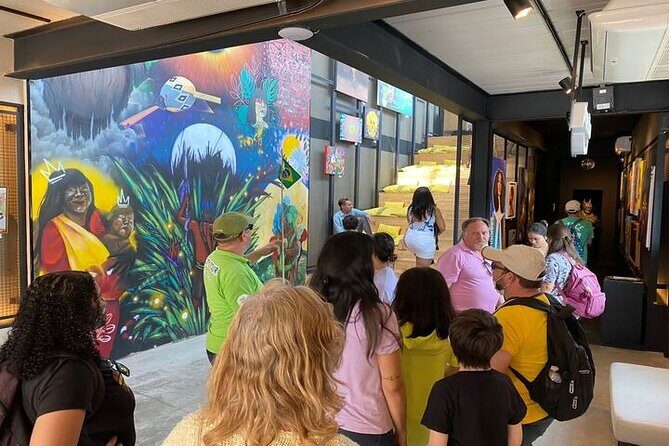
If you’re in São Paulo for the first time, the biggest challenge is scale. This city is huge, and jumping between distant neighborhoods can eat your time. The biggest win of a private, 8-hour format is that it turns chaos into a guided route—so you can see a lot and still understand what you’re looking at.
You ride in a fully-equipped vehicle with a professional licensed guide. If your group is larger than four, you get a private driver; if it’s smaller, the guide drives. That matters because you’re not negotiating transit plans every time traffic slows down.
Also, the tour offers several starting times, so you can match it to your schedule. If your timing is tight—like an airport layover—this is one of the easiest ways to make your day count.
You can also read our reviews of more private tours in Sao Paulo

The X-shaped bridge stop: São Paulo’s 138-meter “postcard” opener
Before you even get into neighborhoods, you’ll make a quick stop to see São Paulo’s famous suspended bridge formed by two lanes in independent curves. It’s a 138-meter structure, and it’s the kind of place that looks impressive even for a few minutes.
This is a good opening stop for a simple reason: it gives you an instant sense of engineering and skyline geometry. Then, your guide can shift from the physical city to the story behind it.
Ibirapuera Park and MAC USP: lakes, fountains, and a 360-degree view
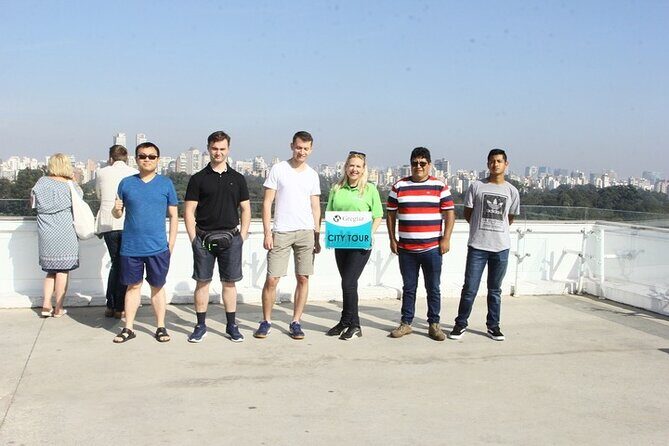
Ibirapuera Park is the kind of place that makes you understand why locals talk about it like a living room. It’s been recognized as a top park, and the highlights are exactly what you’d hope for: an attractive lake setting and water fountain moments that make the park feel designed for strolling.
You’ll also pass major art anchors around the park area, including MAC and MAM, plus an Afro-Brazil museum stop. Even when time is limited, this gives you a real sense that Ibirapuera is both outdoorsy and cultural.
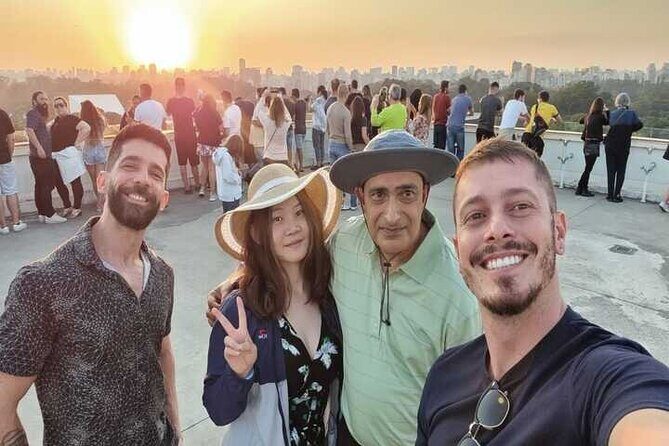
A standout moment here is the view from Museum of Contemporary Art (MAC USP Ibirapuera). You spend about 30 minutes there, and the best payoff is a 360-degree city perspective from the museum facing the park. It’s one of the fastest ways to grasp São Paulo’s layout—so later stops make more sense.
Your guide can point out how the park’s setting ties into São Paulo’s modern identity. And yes, admission at this stop is listed as free, which is a rare win in a city full of paid options.
The Ibirapuera monument you’ll want to photograph
Alongside the park sights, there’s also a monument honoring early settlers—one of the city’s famous postcard scenes. It’s short and scenic, but it’s worth it because it anchors the “founding to modern” theme you’ll keep seeing all day.
Liberdade for Japanese culture on weekends, then Sé Cathedral in the city center
After Ibirapuera, the route shifts to Liberdade, São Paulo’s Japanese neighborhood. This area has a distinct feel, especially around the lighting poles with a Japanese-style look. The big factor is timing: every weekend, there’s an art, craft, and culture fair that gives the neighborhood energy in a way you don’t get from a weekday walk.
It’s a good stop for photos and for getting a quick sense of São Paulo’s immigrant layers. Even if you only have a short visit, Liberdade gives the day a human texture: small-scale crafts and community culture.
Then you swing into the center at Sé for the Cathedral (Catedral da Sé de São Paulo). The cathedral’s design is inspired by medieval European churches, which makes it feel visually heavy in a city that mixes styles constantly. The location is also key: it marks São Paulo’s central ground point at Sé Square, and the area is busy. That’s part of the point. You see the city’s pulse, not just its landmarks.




Jesuit roots, monk-made snacks, and the vertical garden effect
This part of the day is where São Paulo’s older layers show up clearly.
You’ll visit the historic São Paulo founding site and museum. The story centers on the Jesuits, who built an early school and started what later became the city’s biggest growth phase. The guide’s job here is to connect that early mission to how São Paulo expanded over centuries into a major metropolis in the Southern Hemisphere.
Next comes San Benedictine Monastery, which is one of those stops that works even if you don’t consider yourself religious. A notable highlight is that Pope Benedict XVI hosted there during his Brazil visit. Inside, you’ll learn about Gregorian chants during masses, and yes, there’s also a practical detail: monks make breads, cakes, cookies, and jams, using recipes described as secular. It’s a rare mix of spiritual tradition and food culture.
Then, you’ll see the world’s largest vertical garden along the walls. Even without stopping to read every label, the sheer idea does something to your brain: it shows São Paulo trying to layer nature into dense urban walls.
Right after that, the route goes to a major industrial-era building: the Matarazzo Industries headquarters area. It was inaugurated in 1939 to host one of Brazil’s largest industrial conglomerates, and the design is tied to Marcello Piacentini, described as the favorite architect of Benito Mussolini. That political/architectural connection is exactly the sort of detail a guide can translate into something understandable.
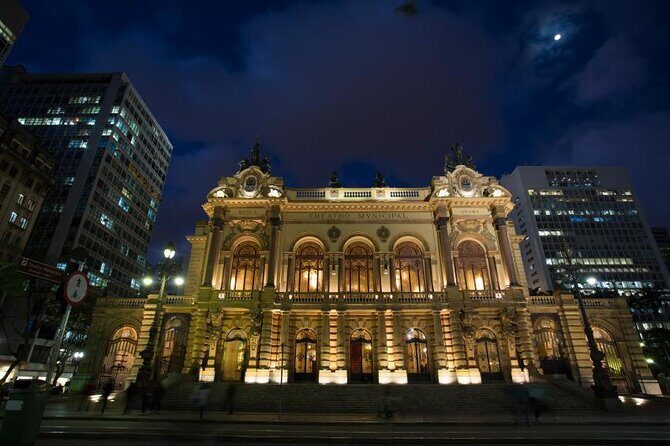
And you’ll also get a quick look at the Municipal Theater, considered a São Paulo postcard. It’s important for cultural events, including the Week of Modern Art in 1922—one of the moments that helped push modern arts forward in Brazil.
Finally, you’ll stop at Julio Prestes station, which is a historical building that functions as an actual train station and also serves as a concert house for the São Paulo Symphonic Orchestra. It’s a neat reminder that public transport spaces can also be cultural stages.
Luz Station and the immigrant gateway story
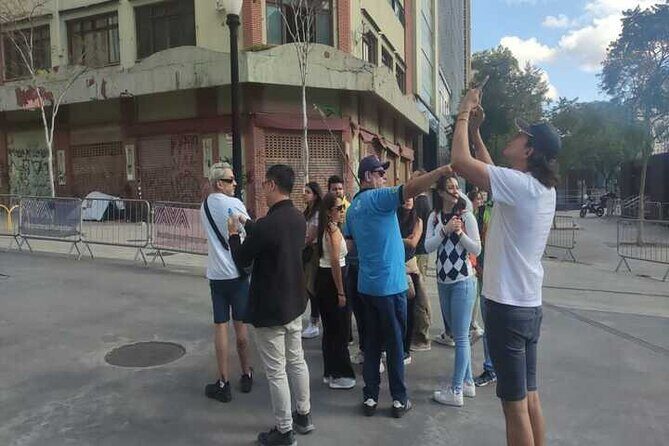
At Estação da Luz, you’re not just seeing an old station building. This stop matters because it played a major role in Brazil’s immigration history.
Your guide explains how, over the past century, Luz became a gateway for immigrants arriving by train after they came to Brazil at the port of Santos. That mass wave helped turn São Paulo from a smaller town into a metropolis across the 20th century.
Even if your visit is only about 10 minutes, it’s an efficient way to understand why São Paulo feels like it does today. The city’s “texture” comes from movement—people, goods, and stories—routing through places like this.
Mercado Municipal and Paulista Avenue: eat, then read the city
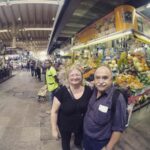
If you only do one food stop in São Paulo, make it Mercado Municipal de São Paulo. This market is often treated as a mandatory attraction, and it makes sense: it’s a concentrated sampler of Brazil in the form of fruits, nuts, wines, cheeses, beers, and lots of ready-to-eat food options.
Even with limited time (about 40 minutes), you’ll get that sensory hit that guidebooks struggle to provide. I like how this stop works with the rest of the tour. You’ve already seen immigrant layers in the streets and architecture; now you see how people trade, cook, and celebrate everyday life.
Then you move to Paulista Avenue, one of the most important streets in São Paulo. You’ll walk through it for about 15 minutes. On your own, Paulista can feel like a long road full of buildings. With a guide, it becomes a timeline—how business, culture, and city identity shifted over time.
Nearby, the tour also includes Jardins, described as elegant and significant, with leisure, entertainment, culture, and shopping options. It’s a nice counterpoint after the market.
A different kind of shopping intensity shows up at 25 de Março St., a street known for good prices and massive daily foot traffic (around 400,000 people daily). There are about 5,000 registered stores described for everything from goods to sewing supplies. This is where you see commerce as a city-wide habit, not a niche activity.
Nossa Senhora do Brasil, Europa Ave, and Jardim Europa’s wealthy edge
Next up is a visually dramatic church: Paroquia Nossa Senhora do Brasil. The description is spot-on for what to look for—ceiling paintings that can feel like a Sistine Chapel moment. The church blends baroque inspiration from Brazilian and Portuguese traditions and uses a neo-colonial style common in São Paulo’s 1920s–1930s architecture.
You’ll spend around 15 minutes here, so keep your camera ready and focus on the ceiling details. Short visits work best if you look, absorb, then ask your guide what you’re seeing.
After that, you head to Europa Avenue, described as a strong car-dealership zone with imported brands like Ferrari, Lamborghini, Maserati, and Bentley. This isn’t a museum stop, but it’s still a cultural clue: the city’s money, taste, and global connections show up in plain sight.
Then you reach Jardim Europa, portrayed as a high-value neighborhood surrounded by mansions tied to bankers, politicians, industrialists, entrepreneurs, and football players. It’s a quick look, but it completes the day’s emotional arc—from historic roots to modern arts to luxury edges.
Batman Alley and Vila Madalena: street art that never sits still
One of the most memorable parts of São Paulo for many people is street art. This tour gives you a focused hit at Batman Alley (within Vila Madalena), with about 30 minutes here.
The description is perfect for managing expectations: there’s virtually no surface left untouched. The high-walled residences create a visual corridor where spray paint murals turn walls into changing galleries. Because street art evolves constantly, you’re more likely to see something fresh than the same static photo you’ve seen online.
After Batman Alley, you’ll also visit Vila Madalena as a broader cultural hub with artists, small private art galleries, and studios. Even on a short stop, the point is that this neighborhood is about making and showing—not just buying.
If you still want shopping after street art, the route also includes the Oscar Freire St. area. It’s known for luxury stores, but the tone here is practical: stores may signal status more than only outrageous prices, and the largest chain stores can end up with discounted items through stranded products.
Price and value: what $254 gets you in 8 hours
At $254 per person for about 8 hours, this tour sits in the “worth it if you want your time back” category.
Here’s why the value can be strong:
- You get a private, licensed guide with a route built for seeing major anchors without random travel detours.
- You ride in a fully-equipped vehicle, and parking fees during stops are included.
- You get VAT and all taxes handled.
- You also get an airport Greet & Meet service, plus hotel and airport pickup/drop-off within São Paulo and its greater area limits.
- Many stops listed have free admission, so you’re not paying extra just to make the route work.
What could make it feel less like a deal: the tour is intentionally paced for highlights. Several sites are scheduled as short stops, so the day can feel like a fast museum montage if you’re hoping for long deep dives. Also, entrance fees are listed as not included, and while the stops shown are free, it’s smart to keep a little flexibility in your plans if something changes in real life.
One more practical note: meals aren’t included. Plan on grabbing lunch or snacks on your own, ideally near stops your guide recommends.
And yes, organization matters. The strongest praise in the info you have points to guides who show up on time, handle logistics well, and adjust in real moments. Names like Laura, Bruno, Danilo, and Gilbran come up for enthusiasm, detailed explanations, and attentive service.
Should you book this São Paulo major attractions private tour?
Book it if you want:
- A first-time orientation to São Paulo that still includes park time, food, architecture, and street art
- A safe, efficient way to handle a tight schedule or layover
- A private guide who can explain why places matter, not just what they look like
Skip it (or plan a follow-up) if:
- You prefer slow pacing, long museum time, or reading in silence without moving every few stops
- You’re only interested in one narrow theme and don’t need cross-neighborhood context
My take: for most people with one day, this is a smart use of time. You’ll get your bearings, hit the icons, and walk away with a clearer mental map of how São Paulo’s different neighborhoods connect.
FAQ
How long is the private São Paulo highlights tour?
It runs for about 8 hours.
Is the tour truly private?
Yes. It’s a private tour/activity, meaning only your group participates.
What kinds of stops does the tour include?
The route includes major São Paulo landmarks and neighborhoods such as Ibirapuera Park, MAC USP, Sé Cathedral, Estação da Luz, Mercado Municipal, Paulista Avenue, and Batman Alley, plus additional nearby sights in the same day.
Can I get pickup from Guarulhos Airport (GRU)?
Yes. Airport pickup is available as an optional upgrade, including airport Greet & Meet service.
What’s included in the price?
Includes transport by fully-equipped vehicle, a professional licensed private tour guide, and a private driver for groups bigger than 4 people (otherwise the guide drives). It also includes VAT, all taxes, handling charges, parking fees during stops, and pickup/drop-off in São Paulo and nearby areas.
Are entrance fees included?
Entrance fees are not included. That said, the stops listed for this tour include many with free admission.
What is the cancellation policy?
Free cancellation is available up to 24 hours in advance for a full refund.