REVIEW · SAO PAULO
São Paulo: Downtown Historical Bike Tour
Book on GetYourGuide →Operated by Urban Bike SP · Bookable on GetYourGuide
Downtown São Paulo rolls by at bike speed. This 3-hour ride stitches together Paulista Avenue must-sees and the city’s older core, with stops that make the architecture make sense fast.
I love how the tour feels practical: clear route flow, lots of time for photos, and a guide who keeps everyone moving without rushing. Portinha 183 also gives you a real local-style start, not a token coffee.
I also like the way the stops balance big-name sights with places you might miss on your own. You’ll hit MASP, the Copan area, and the cathedral-and-foundation zone around Pátio do Colégio, plus the cultural swing of Liberdade.
One possible drawback: you do need solid basic bike skills and you should expect traffic-adjacent moments even with bike lanes, since downtown is still downtown.
In This Review
- Quick Hits Before You Ride
- Starting at Portinha 183: Your Pre-Ride Café Routine
- Paulista Avenue Photo Stops: Art, Parks, and City-Scale Views
- Niemeyer Downtown and the Civic Sights: Where São Paulo Shows Its Muscle
- Luz Station to Pinacoteca: Rail Grandeur and Top-Tier Art
- Pátio do Colégio and Sé Cathedral: Founding Day, Up Close
- Liberdade: Japanese Culture in São Paulo’s Streets
- How the Bike Ride Feels: Safety, Pace, and Realistic Terrain
- Small Group Energy and Guide Style That Actually Changes the Experience
- Price and Value: Why $85 for 3 Hours Can Be Worth It
- Who This Tour Fits Best (and Who Might Want Another Option)
- Should You Book This Downtown Historical Bike Tour?
- FAQ
- How much does the São Paulo Downtown Historical Bike Tour cost?
- How long is the tour?
- Where do I meet the guide?
- What’s included with the ticket?
- How big is the group?
- What languages are offered for the guide?
- How far will I ride?
- Is it suitable for children?
- Can I get a refund if plans change?
Quick Hits Before You Ride
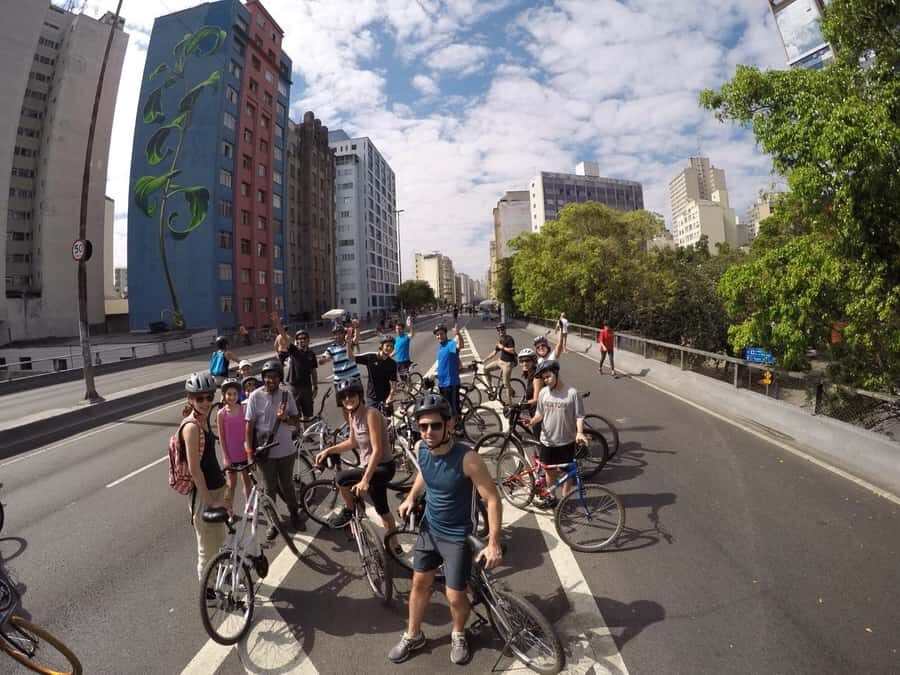
- Portinha 183 Café sets the tone with coffee or juice before you pedal
- Paulista Avenue delivers big architecture, parks, and major-photo stops
- Oscar Niemeyer’s Copan Building plus nearby civic sights make the downtown stretch click
- Luz Station + Pinacoteca brings you from 19th-century rail grandeur to top-tier art
- Sé Cathedral and Pátio do Colégio connect São Paulo’s 1554 founding to what you see today
- Liberdade’s torii gates and lantern streets add a cultural contrast before the ride wraps
Starting at Portinha 183: Your Pre-Ride Café Routine
The tour meets at Portinha 183 Café (Rua França Pinto, 183), about 5 minutes from Ana Rosa subway station. I like this start because it’s not just a pickup spot—it’s a real break in the day. You’ll fuel up with Brazilian coffee or juice, then roll out when everyone’s ready.
The included pre-/post-snack setup is also a smart touch for a 3-hour tour. You get an iced mate tea and a slice of life with pão de queijo, so you’re not hunting for food later. And if you’re the type who likes a sweet finish, the end-of-tour spread (like ice cream and açai) is right there.
Practical tip: arrive about 10 minutes early so you can get your bike, helmet, and water bottle sorted without stress. In a busy city, calm starts matter.
You can also read our reviews of more cycling tours in Sao Paulo

Paulista Avenue Photo Stops: Art, Parks, and City-Scale Views
Paulista Avenue is São Paulo’s show-and-tell street. On this ride, it’s not just a drive-by; you get intentional pauses that help you understand why it’s famous.
You’ll start with a Paulista Avenue photo stop (about 20 minutes), then continue to Casa das Rosas, a French-style mansion used as a cultural center. That stop works well if you like seeing how European design became part of São Paulo’s city story. It’s also a good moment to regroup because the ride rhythm is busy-but-manageable.
Next up: Trianon Park (about 20 minutes) and the São Paulo Museum of Art, MASP—noted for bold architecture and a world-class collection. Even if you don’t go inside, the MASP exterior stop is one of those instant “okay, I get this city” moments. The route also includes Augusta Park, where nature and the urban grid share the same frame—great for photos and a little breathing room.
What I’d watch for: this portion is heavy on photo stops, so your best photos will come when you keep moving after the stop. Don’t spend the whole break taking one shot—grab a few angles, then come back to the ride so you keep the whole day feeling connected.
Niemeyer Downtown and the Civic Sights: Where São Paulo Shows Its Muscle
Once you shift downtown, the tour leans into the kind of architecture that makes you stop mid-sentence. The Copan Building is a key highlight here, a modernist masterpiece by Oscar Niemeyer. It’s the anchor for the downtown stretch, and you get the chance to see the building’s scale up close rather than as a thumbnail.
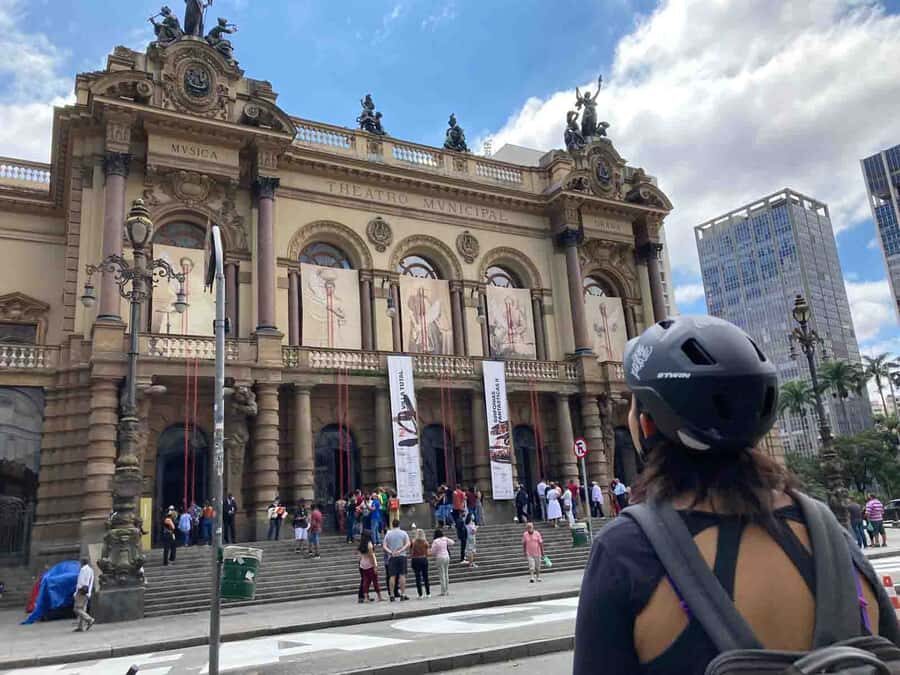
The Municipal Theater is also part of this downtown arc, inspired by European architecture. This matters because São Paulo’s story isn’t only Brazilian—so much of the city’s development reads like a negotiation between global influences and local realities. You’ll also pause at Praça Ramos de Azevedo to take in its impressive façade, which is the kind of civic setting you’d miss if you only focused on shopping streets.
Then comes Vale do Anhangabaú, a historic square tied to major political and cultural events. Even if you’re not reading every detail off the stonework, the stop helps you connect the dots between what looks like a practical urban crossing and what used to be a central stage for public life.
This is a good section for first-time visitors because it gives you a mental map of where the city’s big public identity lives.
Luz Station to Pinacoteca: Rail Grandeur and Top-Tier Art
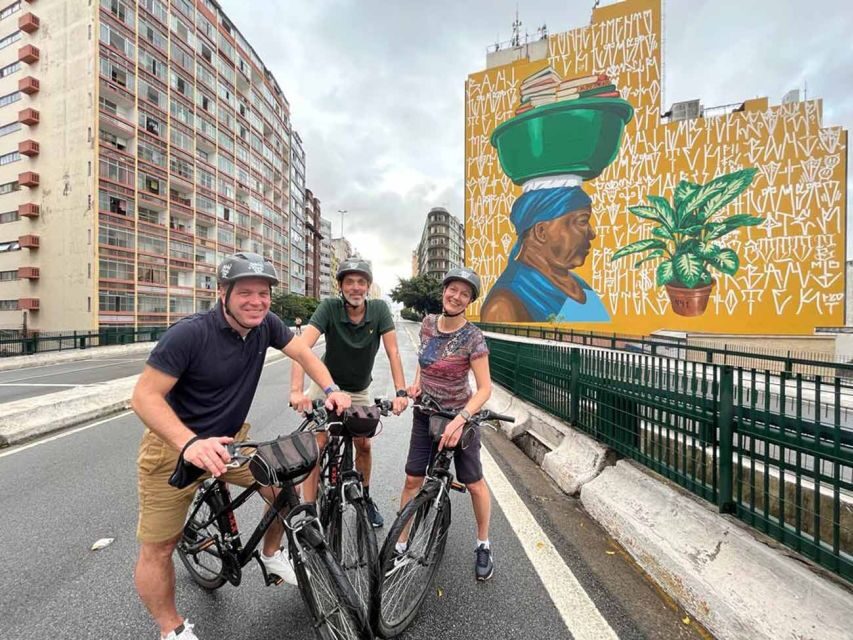
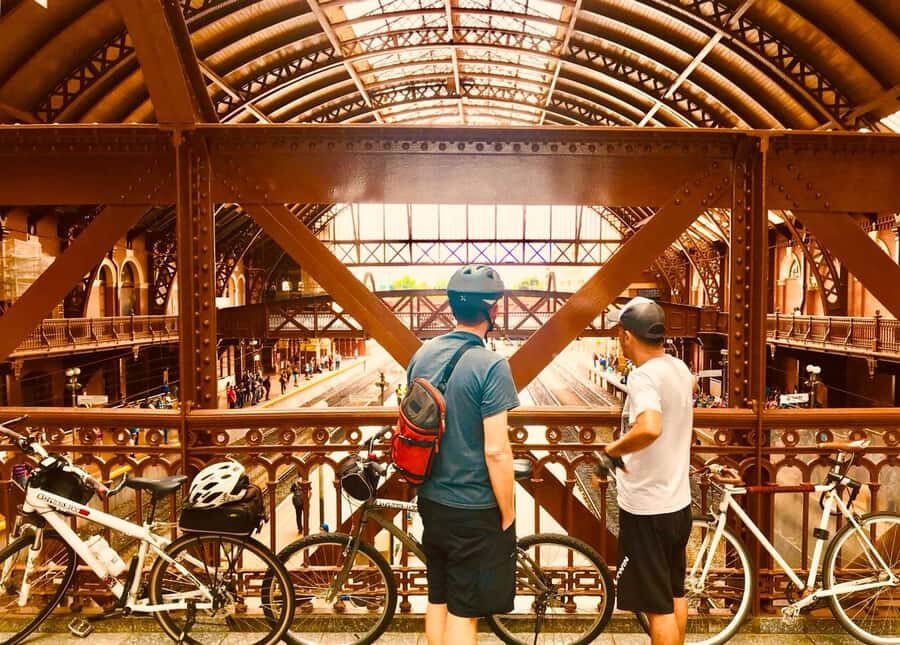
Luz Station is one of those places that feels like it belongs in an old film. The tour includes Luz Station, a stunning 19th-century railway station, followed by a visit to the Pinacoteca de São Paulo. If you care about visual arts, the Pinacoteca is a meaningful stop, since it’s one of Brazil’s most important art museums.
Right after, there’s time for a peaceful stroll through Luz Park, which is a welcome shift from concrete intensity. It helps the ride feel like a sequence rather than a checklist.
Finally, you cross the Santa Ifigênia Viaduct for panoramic views of the historic center. I like this kind of viewpoint stop because it turns the route into a bigger picture: you can see how the downtown layers stack up around you.
Tip: bring your phone camera or a small camera, but don’t treat every view like a photoshoot. Take a couple shots, look around, then get back in line. This keeps the ride fun instead of frantic.
Pátio do Colégio and Sé Cathedral: Founding Day, Up Close
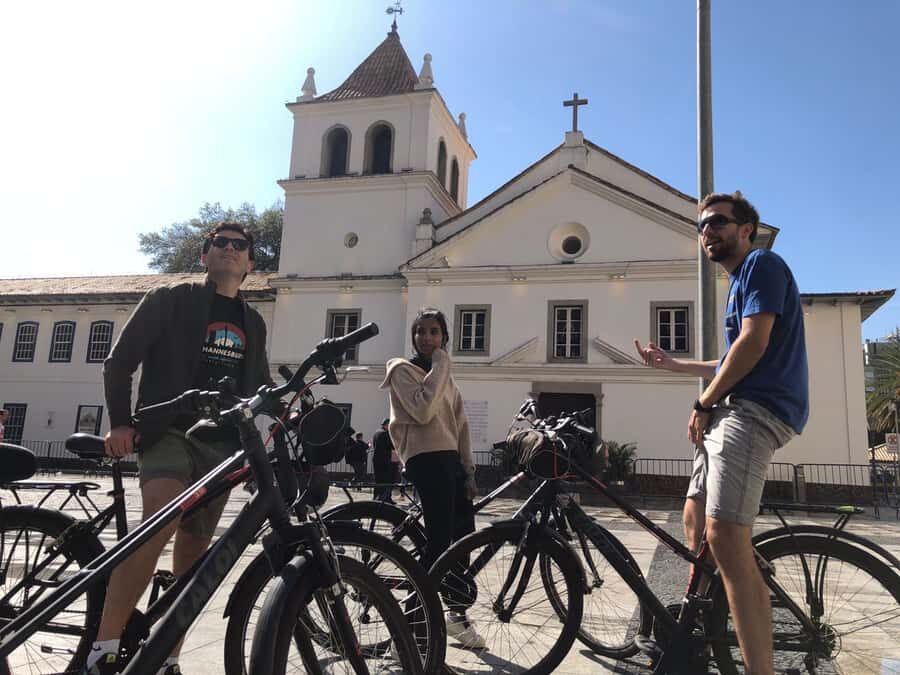
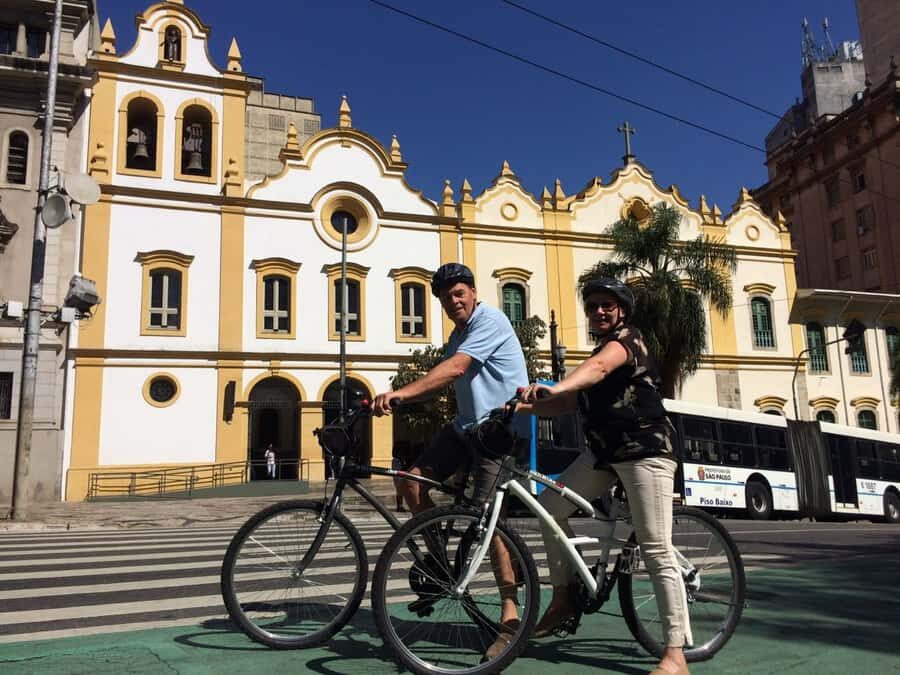
Here’s where the tour slows just enough to feel significant. You’ll arrive at Pátio do Colégio, described as the birthplace of São Paulo, where the city was founded in 1554. This stop adds context to the rest of the ride: suddenly, the downtown sights don’t feel random. They become chapters.
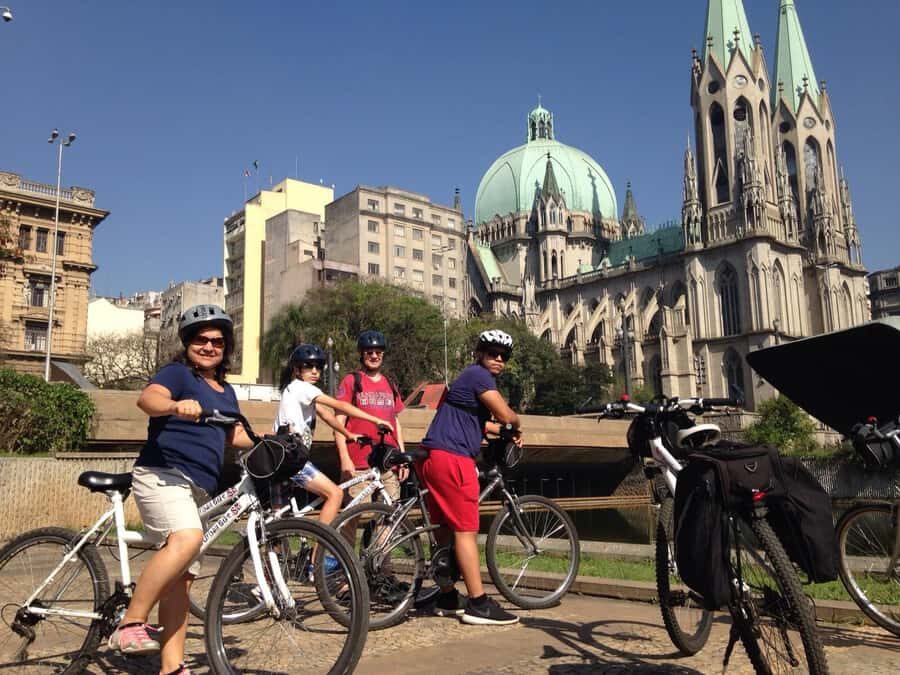
A few steps away is the Sé Cathedral, a neo-Gothic masterpiece with towering columns and stained-glass windows. Even from a distance, it’s dramatic. If you’ve ever visited a European-style cathedral and wondered how it would translate in South America, this stop gives you the answer in stone and light.
If you like history with a side of atmosphere, this section hits. If you prefer pure modern city energy, you might not linger as long—but it still helps you understand why São Paulo grew where it did.
You can also read our reviews of more historical tours in Sao Paulo


Liberdade: Japanese Culture in São Paulo’s Streets
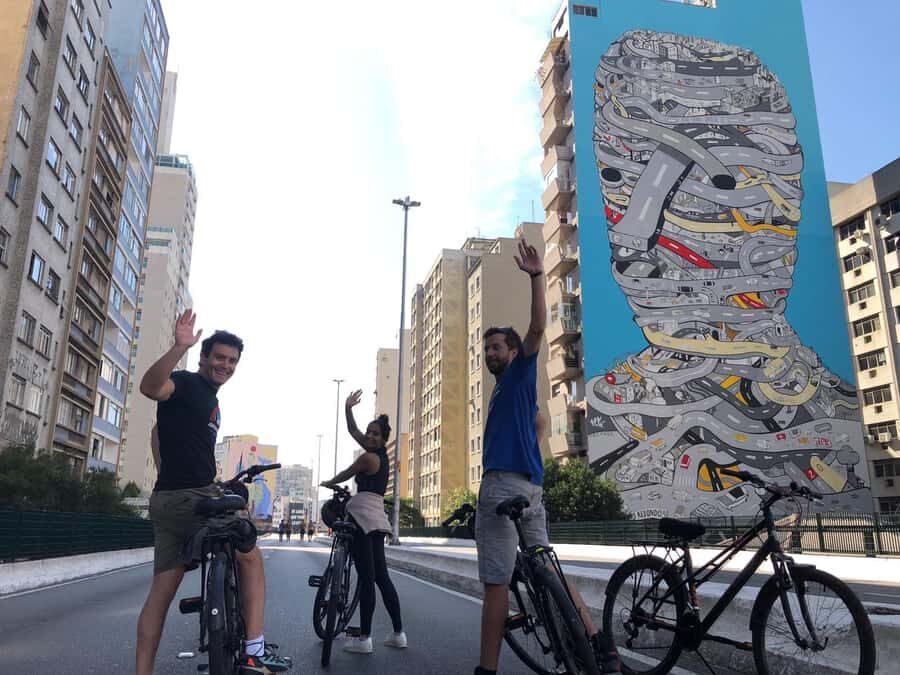
Then the ride swings toward Liberdade, home to the largest Japanese community outside Japan. The tour builds in a photo stop (around 30 minutes) so you can really notice what makes the neighborhood feel different: streets adorned with lanterns and torii gates.
This contrast is one of the best parts of the tour because it changes the mood. The downtown segment is architecture and civic scale. Liberdade feels more like neighborhood life, with cultural cues that make you slow down and look at details instead of chasing major landmarks.
It’s also a good reminder that São Paulo is not just one city. It’s dozens of mini-worlds that connect through movement—on foot, on transit, and yes, on two wheels.
How the Bike Ride Feels: Safety, Pace, and Realistic Terrain
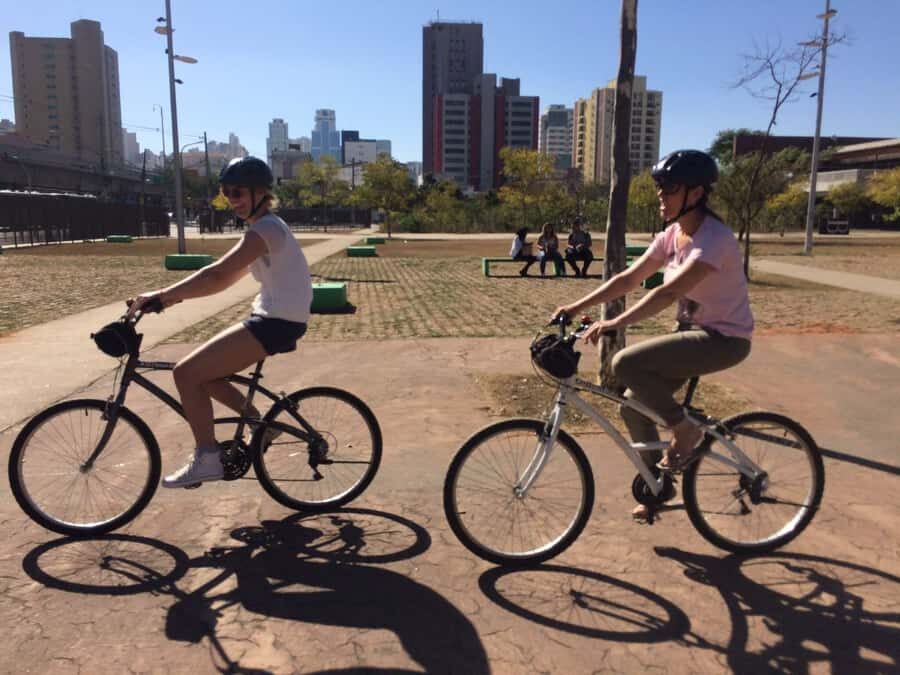
This tour is designed for beginners and intermediate riders who can handle basic city biking. The distance is 9 to 12 miles over three hours, which is a solid workout without turning into a test of endurance.
Most of what you’re riding is described as bike-lane friendly in practice, and guides manage safety with extra attention—holding group pace and watching everyone’s spacing. Many past riders also noted the ride is mostly on bicycle paths and can be smooth, with traffic managed. Still, downtown means you should stay alert. At times you’ll be sharing space with cars and pedestrians, so don’t zone out.
Terrain is usually manageable, but you should be prepared for a few steeper stretches depending on your experience. If you’ve only biked on flat streets, start with a slower first hour.
My quick advice: wear sunscreen, bring a camera, and keep water within reach. The tour includes a water bottle, plus a raincoat if needed. And if it’s sunny or humid, you’ll thank yourself for bringing your own comfort planning.
Small Group Energy and Guide Style That Actually Changes the Experience
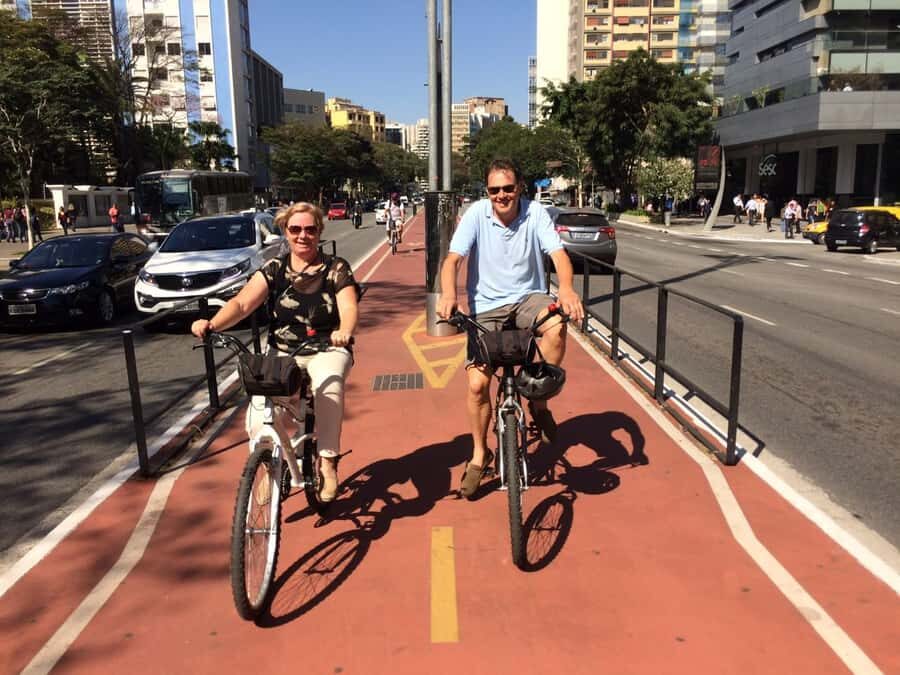
A huge part of the value here is the small group size—limited to 10 participants. That keeps the ride tight enough for good pacing and allows the guide to look out for everyone, especially at photo stops.
The guides also stand out in how they communicate. I’ve seen feedback praising guides like Roberto, Juliana, Pedro, and Arthur for mixing clear city stories with practical safety habits. One rider even noted a guide using their phone for group-safe photo/video capture, which is a nice balance between documenting and keeping you moving.
If you’re the kind of person who loves learning why things are the way they are, this style fits you. It’s not just naming streets—it’s tying landmarks to the city’s development so you feel oriented rather than overwhelmed.
Price and Value: Why $85 for 3 Hours Can Be Worth It
At $85 per person, this isn’t a bargain bike rental. But the value is in what you get bundled:
- Bike rental
- Helmet
- Water bottle
- Raincoat if needed
- A live guide
- A souvenir
- Iced mate tea and pão de queijo
On top of that, you’re getting a concentrated tour of major landmarks across multiple zones—Paulista Avenue, downtown civic sights, Luz, the founding area around Pátio do Colégio and Sé Cathedral, and Liberdade. For São Paulo, which can feel huge and complicated, buying time with a good route and a competent guide can be a smart use of your vacation hours.
Also consider the alternative: you could piece together these stops with taxis and transit, but you’d spend more time figuring out logistics and less time getting the city’s “how it connects” story. Here, you’re moving with a plan.
If price is your main concern, the best strategy is simple: go hungry, go rested, and use the full time for photos and questions. You’ll get more out of the $85 when you treat it like a guided orientation plus a sightseeing sprint.
Who This Tour Fits Best (and Who Might Want Another Option)
This tour is a strong match if you’re:
- A solo traveler who wants an efficient way to learn the city fast
- Traveling with friends or a business group that wants a clean, structured half-day
- Someone who likes modern architecture, museums, and major civic landmarks
- A rider who wants a safe-feeling bike route with frequent stops
It might be less ideal if:
- You’re not comfortable riding in city conditions
- You’re traveling with kids (it’s not suitable for children under 13)
- You hate any chance of traffic-adjacent moments, even when bike lanes are used
Should You Book This Downtown Historical Bike Tour?
Yes—if you want an efficient orientation to São Paulo and you like seeing the city as a connected story, not separate attractions. The route covers major landmarks that usually take multiple trips, and the small group size helps it stay calm enough to enjoy.
I’d book it early in your stay if you’re short on time. It’s also a smart pick if you want to understand the city before you explore on your own—especially around the areas that tend to feel overwhelming without a map.
If you’re cost-sensitive, treat this as a guided value play: use the included snacks, ask questions at the stops, and take the viewpoint moments seriously. If you’re already a confident city cyclist who enjoys self-guided wandering, you might still like the structure—but you’ll get the biggest payoff if you actually engage with the guide’s storytelling.
FAQ
How much does the São Paulo Downtown Historical Bike Tour cost?
The price is $85 per person.
How long is the tour?
The tour lasts 3 hours.
Where do I meet the guide?
You meet at Portinha 183 Café, Rua França Pinto, 183, Vila Mariana, São Paulo. It’s about 5 minutes from Ana Rosa Subway Station (blue and green lines). Arrive 10 minutes before the start.
What’s included with the ticket?
Bike rental is included, along with a helmet, water bottle, and a raincoat if needed, plus a guide, a special souvenir, iced mate tea, and pão de queijo.
How big is the group?
The group is small, limited to 10 participants.
What languages are offered for the guide?
The guide operates in Spanish, English, and Portuguese.
How far will I ride?
You should expect to ride between 9 and 12 miles.
Is it suitable for children?
No. It’s not suitable for children under 13.
Can I get a refund if plans change?
Yes. There is free cancellation up to 24 hours in advance for a full refund.