REVIEW · ILHA GRANDE
Ilha Grande: Private Hiking with Forest, Beaches & Waterfall
Book on GetYourGuide →Operated by Ilha Grande Hiking · Bookable on GetYourGuide
Feiticeira’s waterfall hits the day early. I love the 13-meter Feiticeira Waterfall payoff and the mix of rainforest hiking with beach time, all guided in a way that feels personal. The main consideration is the pace: it’s a moderate 12 km round-trip with ups and downs, so it won’t suit low fitness (or anyone with certain health limits).
What makes this hike especially interesting is how it ties nature to place. You’ll move from Praia Preta through historical remnants like the Lazareto ruins and the arches of the old 19th-century aqueduct, then spend real time at multiple beaches where you can cool off and relax. Guides such as Quintino and Matteus have been praised for keeping the route fun and shaping the day to the group’s rhythm, including wildlife spotting.
One more thing to plan around: the tour runs rain or shine unless conditions get unsafe. Bring the right gear, respect the no-feeding and no-bare-feet rules, and you’ll be set for a memorable Atlantic Forest day.
In This Review
- Key highlights you’ll care about
- A private hike that mixes Atlantic Forest, beaches, and history
- Where you meet, how you start, and why the guide matters
- Praia Preta, Lazareto ruins, and the 19th-century aqueduct arches
- The Atlantic Rainforest trail to Feiticeira Waterfall
- Beach breaks: Eseada das Estrelas, Camiranga, and Pereque
- Fora Beach finish: included drink and optional Brazilian food
- The return hike on the same trail (and how to plan for it)
- Price and value: what $269 gets you on Ilha Grande
- What to pack so the hike stays fun
- Who this tour fits best (and who should skip it)
- Wildlife and Brazilian history: why the guide-led approach matters
- Should you book this private Ilha Grande hiking tour?
- FAQ
- How long is the Ilha Grande private hiking tour?
- Where do we meet?
- Is this tour private?
- What’s included in the price?
- Will the hike run if it rains?
- What should I bring?
- Who is the tour not suitable for?
Key highlights you’ll care about
- 13-meter Feiticeira Waterfall with time for a refreshing break and waterfall shower
- Praia Preta to historic Lazareto ruins plus 19th-century aqueduct arches on the way
- About 12 km total walking on a moderate route through Atlantic Rainforest
- Multiple beach stops including Eseada das Estrelas, Camiranga, Pereque, and Fora Beach
- Wildlife rules that keep the experience respectful and safe (no feeding animals)
- Included beach drink at Fora Beach, with options like cocktails or soft drinks
A private hike that mixes Atlantic Forest, beaches, and history
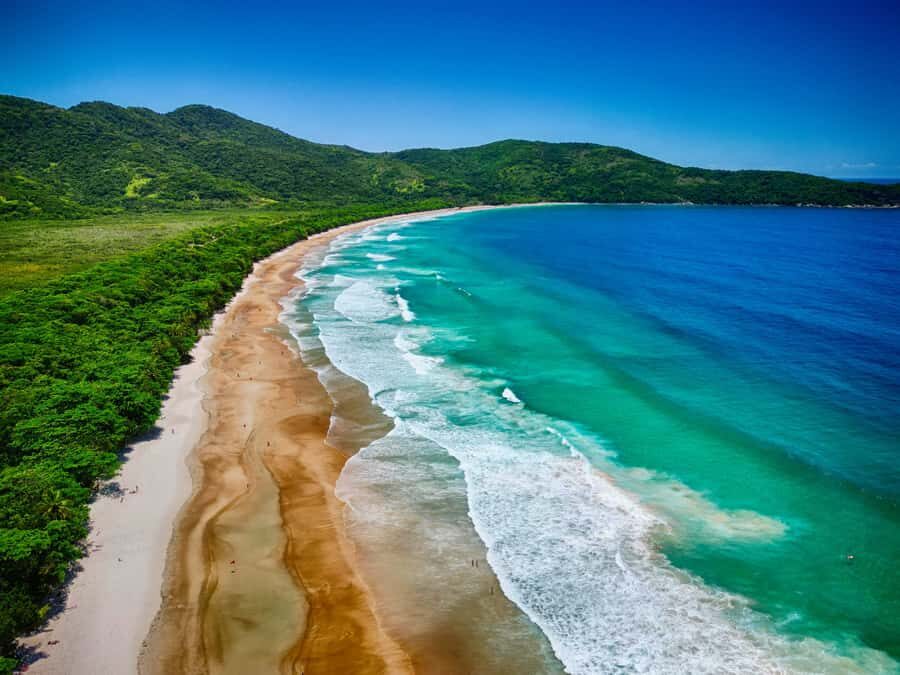
Ilha Grande can be about beaches, but this day gives you a different angle: you earn the views. The route cuts through the Atlantic Rainforest, then shifts into sand-and-swim mode with stops that let you dry off and reset. I like that the day isn’t just walking in a straight line; it’s walking with clear reasons to pause.
The history component matters more than it sounds. Starting with a historical walk toward Praia Preta, then seeing the Lazareto ruins (an Imperial-era landmark) and the bold arches of a 19th-century aqueduct turns the island into more than scenery. It helps you connect what you’re seeing to why the island mattered in Brazilian history, even when you’re busy smelling wet leaves and sunscreen.
Is it physical? Yes. It’s listed as moderate with ups and downs, and you’ll hike about 12 km total. If you’re hoping for an easy stroll, you’ll feel the climb and the return hike.
You can also read our reviews of more tours and experiences in Ilha Grande.
Where you meet, how you start, and why the guide matters
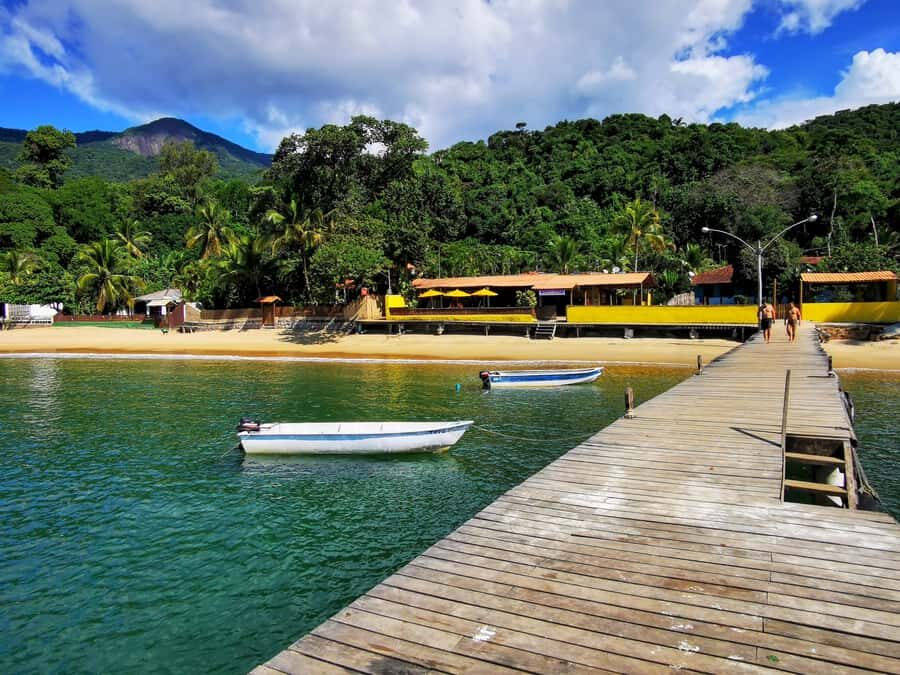
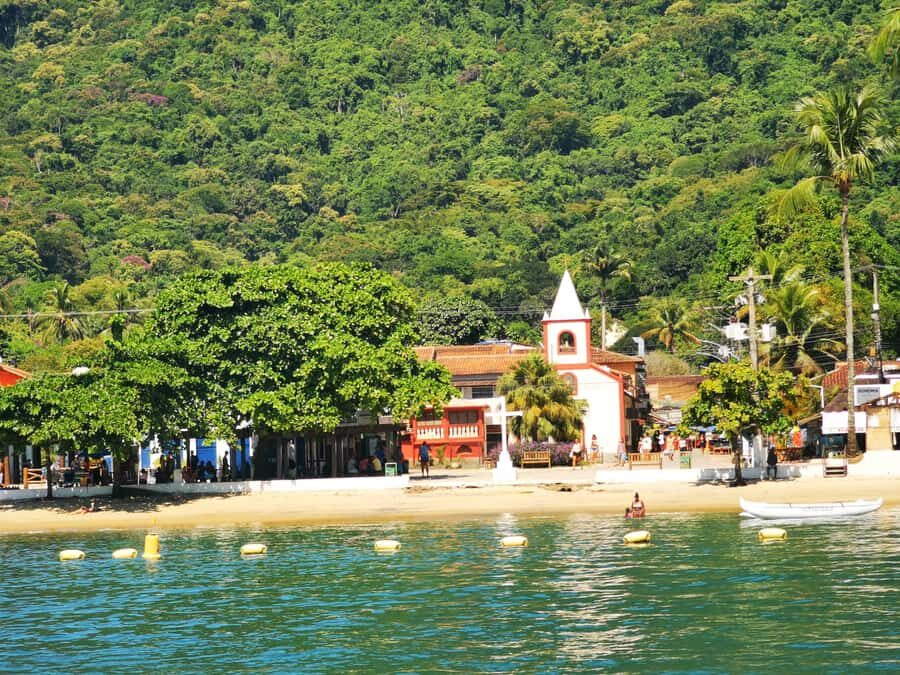
You’ll meet at the São Sebastião church in the main square, a simple landmark that works well if you’re staying in or near Vila do Abraão. Most people are picked up by the operator, which helps you avoid turning the first part of your day into logistics.
Before you head out, expect a safety briefing and protective gear. It’s a small detail, but it sets a tone: the hike isn’t treated like a free-for-all, especially when you’re moving between forest trails and wet areas near waterfalls.
This is a private group experience, and that’s a big part of the value. In past runs, guides like Quintino, Matteus, and Rashan have been singled out for being friendly, attentive, and willing to adjust pacing. You’ll also be supported across languages including English, Portuguese, and Spanish.
Praia Preta, Lazareto ruins, and the 19th-century aqueduct arches
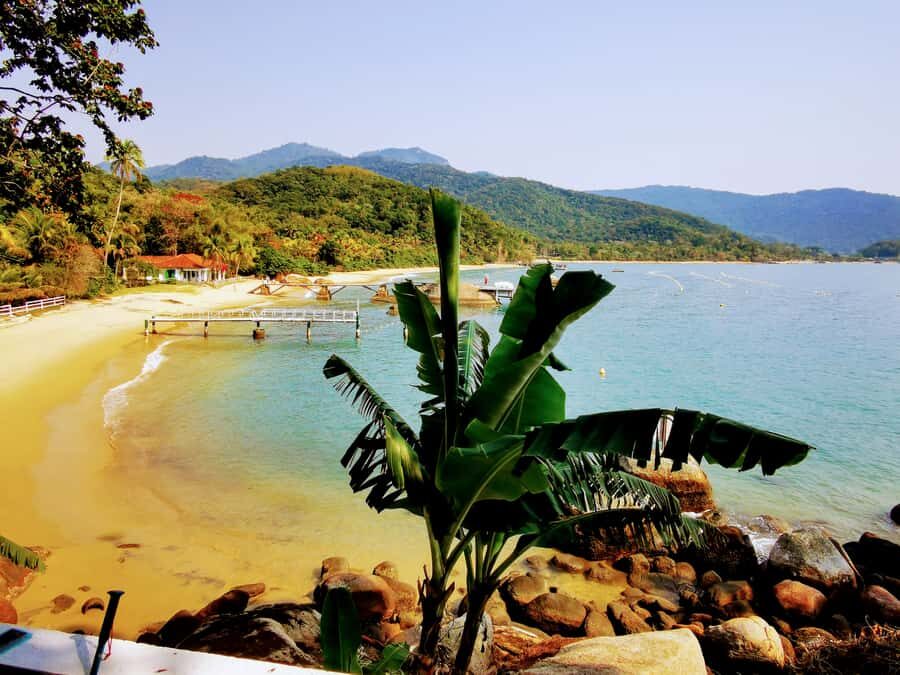
The first stretch does two jobs at once: it gets you moving and it gives you context. You’ll leave from Vila do Abraão on a historical walk aimed toward Praia Preta, which helps you warm up mentally before you get into the longer rainforest trail.
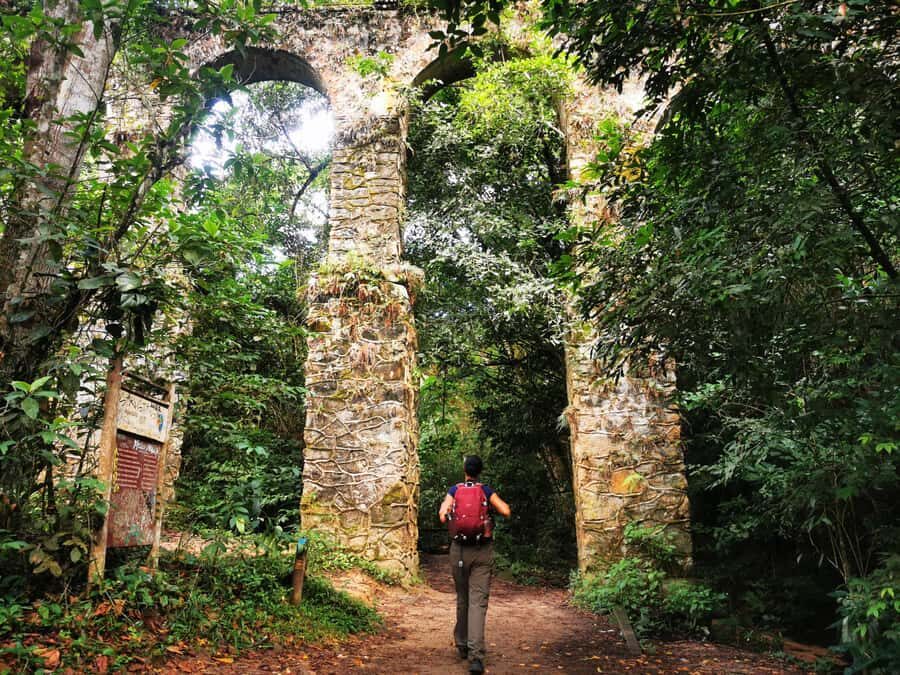
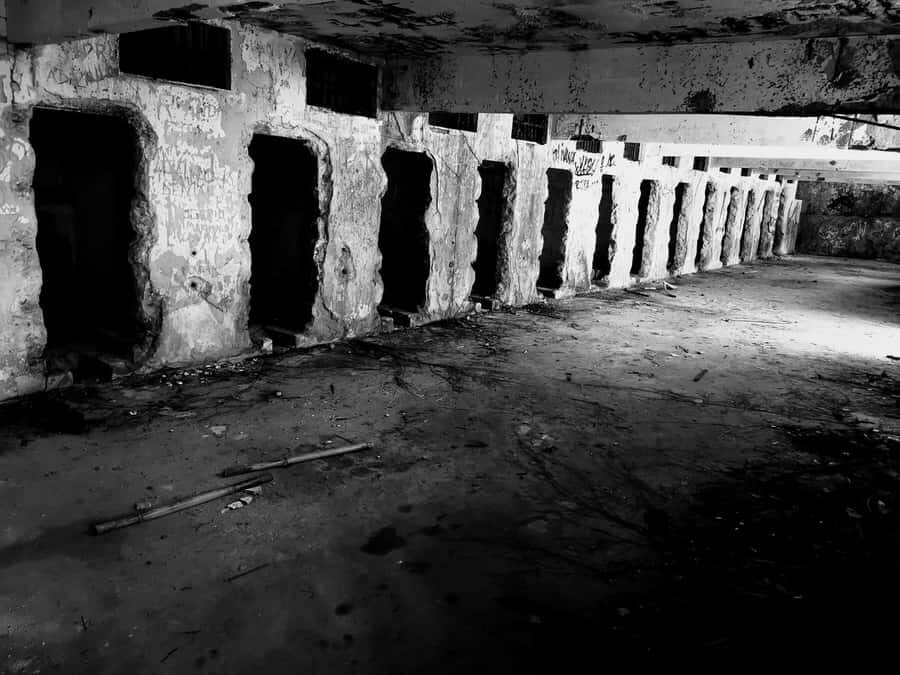
Along the way, you’ll pass the ruins of the Lazareto. These aren’t just “old stones.” They’re tied to Brazil’s Imperial era, and it’s the kind of stop that turns a photo opportunity into a real story. Then you’ll cross the arches of the aqueduct, described as one of the bolder structures of its time. Even if you’re not a history buff, it’s hard not to respect a stone structure that survived long enough to still anchor the route.
A practical tip: wear clothes that can get dirty and use biodegradable sunscreen. You’ll be in humid conditions with lots of vegetation, and you’ll thank yourself for not worrying about a little mud.
The Atlantic Rainforest trail to Feiticeira Waterfall
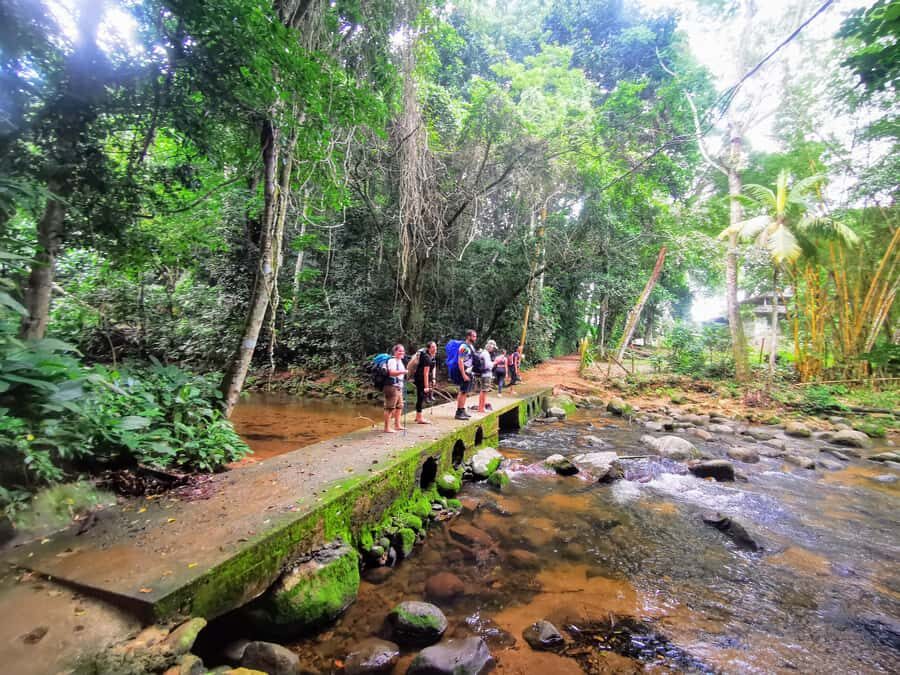
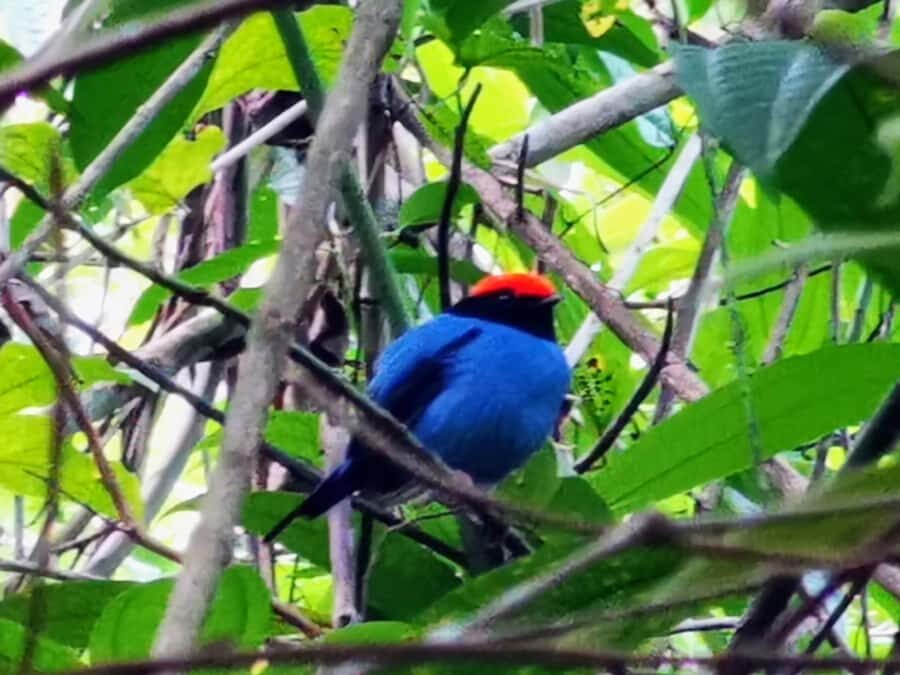
After the historical walking portion, the day shifts fully into trail mode through the Atlantic Rainforest. The route is described as moderate, with ups and downs, and it’s where the island’s biodiversity comes alive. If wildlife matters to you, this is the section where a good guide makes the difference, since you’re moving through habitat rather than just looking at a distant view.
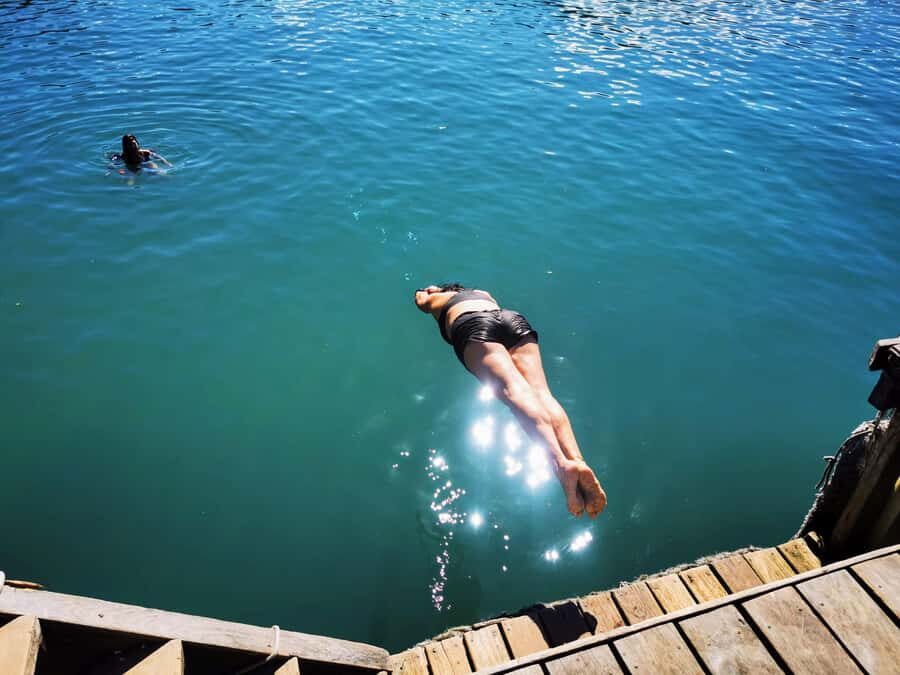
After about 2 hours of walking, you reach Feiticeira Waterfall. It’s a 13-meter water veil dropping in the forest, and the break here is more than standing by the falls. The plan includes time for a refreshing shower, and the whole experience is built around that moment when the trail finally gives you something cool and cinematic.
Now, a reality check: if you’re carrying heavy rain gear or you didn’t pack swimwear, this part can feel more annoying than magical. But if you’re ready to get wet, you’ll probably love the contrast between sweat from the hike and the cool spray from the falls.
Beach breaks: Eseada das Estrelas, Camiranga, and Pereque
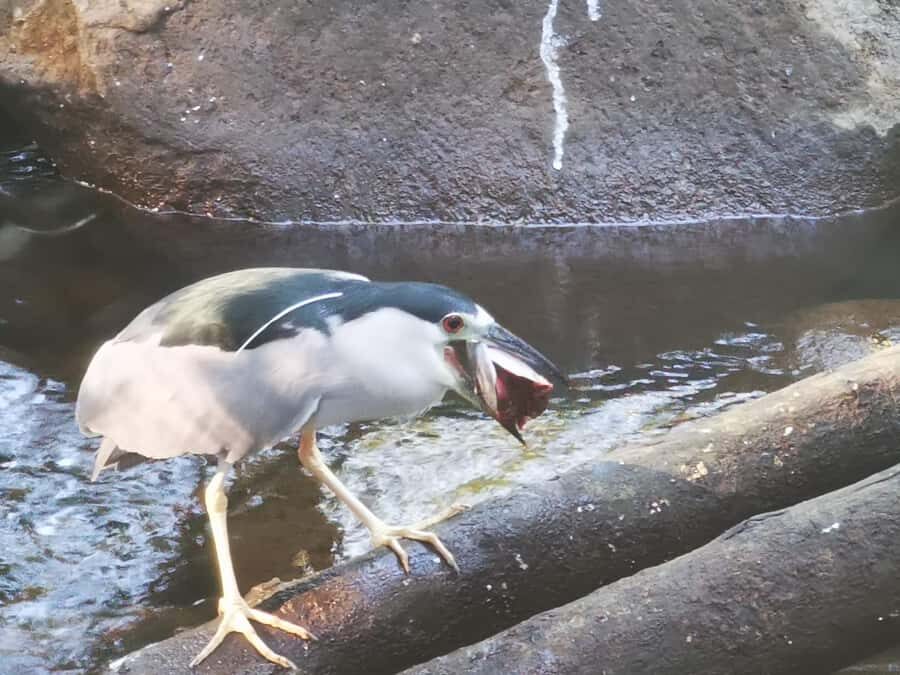
Once Feiticeira’s out of the way, the tour keeps its rhythm by continuing to beach areas. The next stop is Eseada das Estrelas, and from there you’ll take about 45 minutes to reach Camiranga and Pereque, where you get another break.
This is where you switch from “trail brain” to “vacation brain.” You can sit, swim, and sunbathe. The tour is designed around that rhythm: work the route, then reward yourself at the waterline. I also like that the itinerary spreads beach time across different places, so it doesn’t feel like one long waiting period.
One practical consideration: you’ll be walking again after each break. That’s why packing a towel and having a plan for wet shoes matters. Also, the tour explicitly notes no bare feet, so bring footwear that works when surfaces are slick.
Fora Beach finish: included drink and optional Brazilian food
Your last destination is Fora Beach, where you enjoy the beach and get a complimentary drink. The included drink round lets you choose between cocktails, national alcoholic drinks, or soft drinks, so it’s a true “day ended” moment rather than a random refresh.
You’ll also have the opportunity to taste Brazilian cuisine, but food isn’t included. That’s why I suggest bringing cash or using a credit card if it’s supported there. The drink is covered; your lunch or snack plans are up to you.
It’s a good final stop because it gives you a safe place to linger before the return hike. You’re not rushing straight off the last sand patch; you get time to recover first.
The return hike on the same trail (and how to plan for it)
After Fora Beach, you put your shoes back on and hike back to Abraão Village using the same trail. Because it’s about 12 km total both ways, the return matters as much as the start. If you’re feeling fine at the waterfall but fade on the way back, it’s often because energy gets spent too fast early.
The most helpful strategy is simple: don’t treat every pause like a missed opportunity to move faster. Guides—especially ones known for attention to group pacing—tend to keep the day comfortable rather than “maximum distance at maximum speed.” In past experiences with guides like Quintino and Matteus, the pacing was described as adaptable, including time spent in the water.
Price and value: what $269 gets you on Ilha Grande
At $269 per person for a 5–8 hour private hike, you’re paying for three things: a local guide, a private group format, and a structured day that includes transportation pickup and at least one included drinks round.
Here’s why that can be good value:
- You’re not just getting a route. You’re getting historical walking context plus safety briefing and protective gear.
- The itinerary includes a meaningful waterfall stop and several beach breaks, not a quick “photo and go” day.
- The private format means you’re less likely to feel rushed or squeezed into someone else’s pace.
The main cost risk is what isn’t included. Food or snacks and extra drinks are on you. If you plan to buy meals during breaks, you should budget that in. For me, the price feels most worth it when you’ll actually use the included benefits (drink + swim breaks + guide-led stops) rather than treating it like a basic walk.
What to pack so the hike stays fun
The best “bring list” is the one that keeps you comfortable across forest, waterfall spray, and beach sand. Here’s what you should seriously consider:
- Swimwear and a towel for the waterfall and beach breaks
- Hiking shoes and comfortable clothes that can get dirty
- Biodegradable sunscreen and biodegradable insect repellent
- A daypack plus water and personal medications
- A windbreaker and sunglasses, since weather can shift fast in coastal rainforest areas
You’ll also want snacks, even though they’re listed as something to bring rather than being included. In one described experience, a guide provided a small snack bag at arrival, which is a nice touch, but I wouldn’t count on that as a guarantee.
Also note what’s not allowed: intoxication, feeding animals, speakers, and bare feet. The vibe is kept outdoorsy and respectful, which helps when you’re around wildlife and in wet terrain.
Who this tour fits best (and who should skip it)
This isn’t a casual stroller-day. It’s not suitable for children under 9, anyone with mobility impairments, wheelchair users, people with heart problems, those with recent surgeries, people with low fitness, or people over 70. It’s also not a good match if you have insect allergies.
If you can handle moderate hiking with some ups and downs, and you want a structured day that blends forest and beach time, this kind of private tour can be a strong choice. If you’re recovering from an injury, managing health conditions, or you know the “return hike” is where you usually struggle, you’ll probably be happier picking a shorter walk or a lighter day plan.
Wildlife and Brazilian history: why the guide-led approach matters
You’ll be observing exceptional wildlife, and the guide role is central. You’re not walking a manicured boardwalk where animals come to you; you’re moving through habitat in the Atlantic Rainforest, and your best chance is staying alert and following the guide’s lead.
The rules matter here. You won’t be feeding animals, and that’s not just a guideline for safety; it protects both the animals and your experience. The same is true for speakers, which help keep the forest atmosphere intact.
On the history side, the stops around Imperial-era remains and the aqueduct arches give you a way to understand the island’s role in Brazilian history without turning the day into a museum. It’s learn-while-you-walk, then rinse off in cool water, then sit on sand. That rhythm is the real “secret sauce” of the itinerary.
Should you book this private Ilha Grande hiking tour?
Book it if you want a guided day that mixes forest hiking, a big waterfall moment, and real beach downtime, all in one outing. The included guide time, pickup, protective gear, and the included drink at Fora Beach make it a practical splurge for people who value structure and want to see parts of Ilha Grande beyond the easiest shorelines.
Skip it if you’re not comfortable with a moderate hike around 12 km with a return on the same trail. Also skip if you fall into the listed health or age limits, or if insects are a problem for you.
If you do book, come ready: pack swimwear, sunscreen, insect repellent, and a towel. Then let the guide pace the day. Done right, you’ll leave feeling like you saw Ilha Grande the way you hoped you would—rainforest first, then beaches, with the history quietly keeping score in between.
FAQ
How long is the Ilha Grande private hiking tour?
The duration is listed as 5 to 8 hours, depending on availability and starting times.
Where do we meet?
You meet at São Sebastião church at the main square, where the guide will be identifiable in front of the church.
Is this tour private?
Yes, it’s a private group experience.
What’s included in the price?
Included are a local tour guide, hotel pickup, and a round of drinks at the beach (cocktails, national alcoholic drinks, or soft drinks). Food and snacks are not included.
Will the hike run if it rains?
The tour runs rain or shine, except in the event of unsafe conditions.
What should I bring?
Bring hiking shoes, comfortable clothes, a daypack, water, windbreaker, sunglasses, swimwear, a towel, biodegradable sunscreen, biodegradable insect repellent, snacks, and cash or a credit card. You should also bring personal medications and an ID card (passport or copy accepted).
Who is the tour not suitable for?
It’s not suitable for children under 9, people with mobility impairments, wheelchair users, people with heart problems, people with recent surgeries, people with low fitness, people over 70, and people with insect allergies.