REVIEW · RIO DE JANEIRO
Rio de Janeiro: Maracanã Stadium Behind the Scenes Tour
Book on GetYourGuide →Operated by CARIOCA TROPICAL TOUR OPERATOR · Bookable on GetYourGuide
Maracanã feels different when it’s empty. I like that this tour gets you into the locker rooms and the VIP press box, not just the public stadium areas. You also get real football storytelling, including mentions of legends such as Garrincha and Pelé. The one thing to watch: the stadium portion can feel short, and the depth of history you get once inside may vary by guide.
You’ll start with hotel pickup by air-conditioned minivan (mainly from Copacabana, Ipanema, and Leblon, depending on your address). Then you’ll ride into Rio’s football heart with a live guide speaking English or Spanish, and in many cases that person does more than recite facts—like Efraim for the road-trip chatter, or Victoria leading a group with a warm, on-topic style.
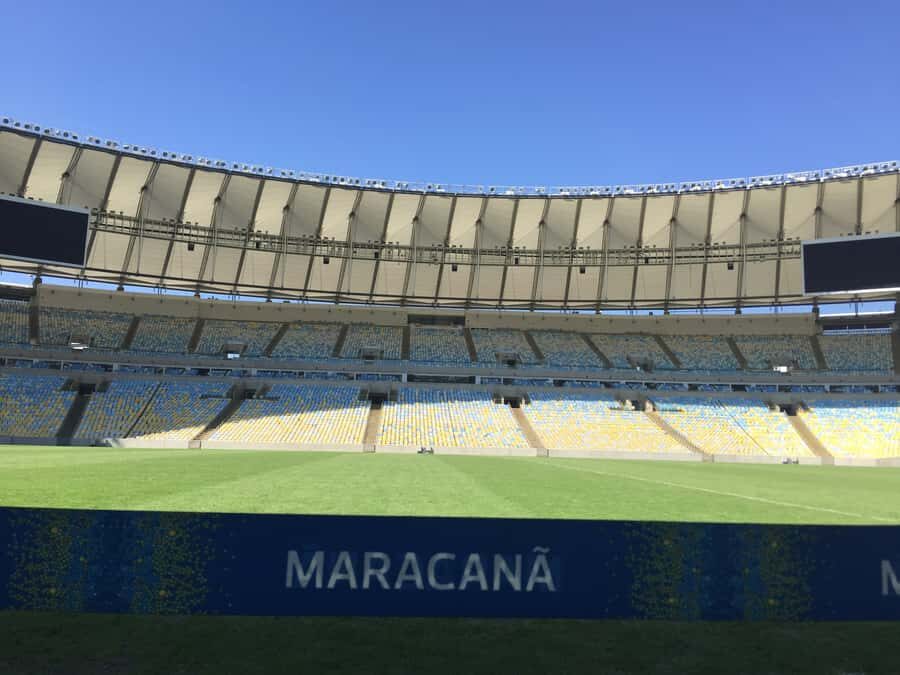
Once you’re at Maracanã, the experience is very physical and visual: empty seats, the decorated locker rooms, and a walk toward the pitch that makes the atmosphere easy to imagine. Just keep in mind that the full schedule is 3 hours, but you may spend less than you expect inside the stadium, so come with questions and curiosity ready.
Key things I’d plan around
- VIP press box access and the angles most fans never see
- Locker rooms with Brazilian-team jersey décor that helps the building feel real
- Walkways that put you close to matchday circulation (entry ramp and pitch-side views)
- World Cup context tied to both the 2014 and 1950 tournaments
- Guide-driven storytelling is the make-or-break part of the visit
In This Review
- Maracanã Behind-the-Scenes: More Than a Walk Past the Pitch
- Hotel Pickup in Copacabana, Ipanema, and Leblon (and Why It Matters)
- The Empty Stadium Bowl: Where the Scale Hits First
- Locker Rooms and Jersey Décor: Football’s Most Human Space
- The VIP Press Box: A Media View of the Match
- Pitch-Side Moments and the Entry Ramp (Imagining Matchday)
- Stories About Garrincha and Pelé: How the Guide Can Make It Land
- Price and Value: Is $99 Reasonable?
- Timing: The 3-Hour Window and How to Build in Flexibility
- Small Group, Live Guide, English or Spanish
- Who This Tour Fits Best (and Who Might Skip It)
- Should You Book the Rio Maracanã Behind-the-Scenes Tour?
- FAQ
- How long is the Maracanã Stadium behind-the-scenes tour?
- Does the tour include hotel pickup and drop-off?
- What areas of Maracanã will I visit?
- Is food included in the ticket price?
- What’s included besides the tour guide?
- What languages are the guides?
- Is the tour wheelchair accessible?
Maracanã Behind-the-Scenes: More Than a Walk Past the Pitch
This tour is built for people who want to see Maracanã as a working stadium, not a souvenir stop. You’ll move through areas fans usually only picture on TV: locker rooms, a VIP media area, and the vantage points that matchday teams and staff use.
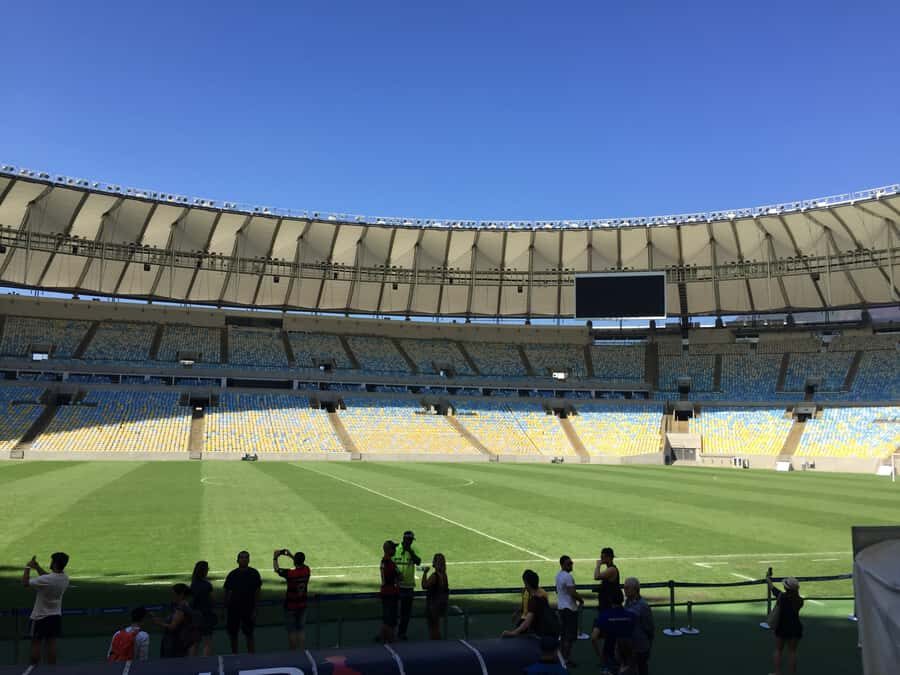
The stadium itself is huge, with seating for up to 79,000 when it’s full. Even in daylight and with no crowd, the bowl still carries that scale, especially when you’re standing where spectators normally roar. If you love football details—tunnel energy, dressing-room routines, press logistics—this experience fits your mindset.
Hotel Pickup in Copacabana, Ipanema, and Leblon (and Why It Matters)
Starting with pickup is a big deal in Rio. The tour includes transportation by air-conditioned minivan, and pickup is possible from most hotels in Copacabana, Ipanema, and Leblon (select hotels for the official program). That means you don’t have to figure out timing, parking, or how to get everyone back together after your visit.
This also helps you experience the tour as a smooth block of time rather than a series of complicated steps. If your day is already packed with Rio sights, being able to hand your phone over to the guide’s group plan is practical and stress-reducing.
You can also read our reviews of more tours and experiences in Rio De Janeiro.



The Empty Stadium Bowl: Where the Scale Hits First
When you enter Maracanã for a guided behind-the-scenes look, the first strong feeling is simple: the stands are empty, but the stadium still reads like a stadium. You’ll stroll through the venue where up to 79,000 fans sit during big matches, which makes the space feel massive even without the crowd.
You’ll also be seeing a venue tied to major world football moments: the 2014 FIFA World Cup and the 1950 World Cup. That context isn’t just trivia—it changes how you interpret what you see. The same seating that looks like architecture from outside becomes a stage once you understand what it hosted.
If you’re the kind of traveler who likes to connect place to story, this is the right start. You’ll be in the right frame of mind for the later stops, especially when you step closer to the pitch.
Locker Rooms and Jersey Décor: Football’s Most Human Space
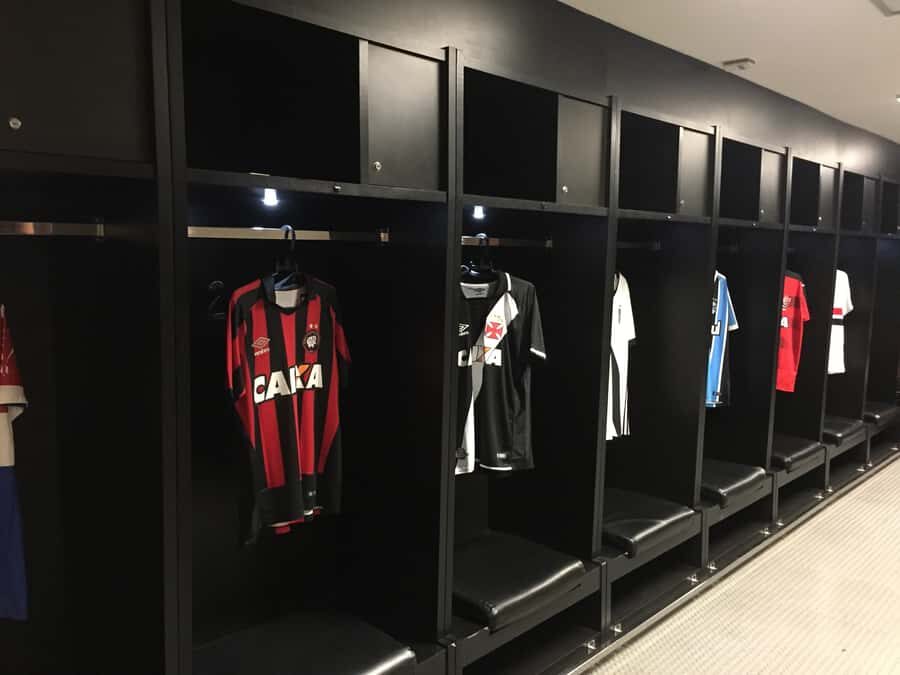
The locker rooms are one of the most valuable parts of the tour for me, because it’s where football stops being myth and starts feeling like routine. You’ll enter a space decorated with the jerseys of famous Brazilian teams, which helps the rooms feel tied to real clubs and real identities—not just “a room with benches.”
Even if you don’t know every team logo by heart, you’ll get the idea quickly. The locker room is where the stadium’s drama becomes personal: it’s the in-between zone before you run out. Seeing it on a quiet tour day makes the contrast with matchday easier to imagine.
This stop also tends to work well for photographers (if you like that sort of thing). The décor gives you visual anchors, so it’s not just generic walls and lockers.
The VIP Press Box: A Media View of the Match
Next up is one of the more “wow” access points: the VIP press box. This is where the tour earns its behind-the-scenes label, because it puts you in a role-adjacent area rather than a player-adjacent one.
From there, you get a different sense of how a match is experienced from the outside. The guide can connect what you’re seeing to how famous matches get reported and remembered. And when a guide tells stories well, the press box becomes more than a room with chairs—it becomes a vantage point for the football world’s spotlight.
If you care about how big events are run—cameras, access points, sightlines—this is the stop that often justifies the price for people who are serious about football.
Pitch-Side Moments and the Entry Ramp (Imagining Matchday)
One of the best sections is the moment you look out from pitch-side areas, because it’s the same kind of vantage players have during a game. You’ll get that “stand where the action is” feeling, which is hard to replicate from the stands.
Then you’ll walk up the entry ramp. That last ramp walk is more than a photo moment. It gives your brain a path to follow: tunnel → ramp → roar → kick-off. Even without sound, the stadium layout does part of the job for you.
Practical tip: wear comfortable shoes and move at a steady pace. Stadium floors can be uneven or crowded with staff movement even during tours, so you’ll enjoy the walk more if you’re not rushing.



Stories About Garrincha and Pelé: How the Guide Can Make It Land
The tour’s success often depends on storytelling quality. The description includes stories about legendary players such as Garrincha and Pelé, and that’s exactly the kind of connection that makes old stadium bones feel alive.
From the way guides are described in feedback, you might meet someone like Efraim on the drive—known for packing useful context into the ride. Others, like Victoria, are noted for making the tour feel genuinely enjoyable. That matters because the stadium itself is only half the product; the guide is the other half.
If your guide keeps things brief inside the stadium, the best move is to ask for specifics: which eras the stadium is associated with, what role the VIP areas played during major tournaments, or how the spaces function on matchdays. You’ll often get better details that way than you would by just watching quietly.
Price and Value: Is $99 Reasonable?
At $99 per person, this is not a budget activity, so it needs to “click” for you. Here’s what you’re actually paying for: hotel pickup (for many neighborhoods), small-group format, air-conditioned transport, guided access to several behind-the-scenes areas, and entrance fees.
If you’re a football fan who wants locker rooms and VIP media access, that value can make sense quickly. Those are usually the parts you can’t easily recreate on your own without planning.
But there’s a real consideration: some visits may feel short once inside—one person described the stadium portion as very brief compared with the 3-hour schedule. If you’re paying for a longer guided deep history and what you get is mostly access with limited narration, the price can feel steep. For you, the fix is simple: go in expecting a mix of access and guided highlight stops, not a full-length museum lecture.
Timing: The 3-Hour Window and How to Build in Flexibility
The tour is scheduled for about 3 hours. You’ll start with pickup, then travel to Maracanã, and then experience the guided parts inside the stadium, including locker rooms, the press box, pitch views, and the entry ramp.
Food and drinks are not included, so plan for your energy. If you’re combining this with other Rio plans, consider having a snack before pickup and bring water if you can. That way, the tour timing doesn’t turn into a grumpy ending.
Weather can also affect plans. If roads close due to poor weather, you’ll be offered an alternative date, which is good to know if you’re visiting during the rainy season.
Small Group, Live Guide, English or Spanish
This is a small-group tour, and it’s led by a live guide in Spanish or English. That format matters more than it sounds. In a smaller group, you’re more likely to be able to ask follow-up questions and actually hear the guide without competing with a crowd.
The live guide component is also what turns access into meaning. Empty stadium seats are impressive, but the stories about legendary players and the context of major World Cup tournaments are what help you connect the spaces to something bigger than the building itself.
Who This Tour Fits Best (and Who Might Skip It)
I’d say this tour is a strong match if you:
- Love football culture and want access beyond the public areas
- Want to see locker rooms and VIP press spaces in one trip
- Enjoy guided storytelling tied to famous names like Garrincha and Pelé
It might feel less ideal if you:
- Want long, lecture-style history inside the stadium
- Are very price-sensitive and expecting a slow, museum-like pace
- Prefer to explore at your own speed with no group schedule
If you fall in the middle, aim to get the most out of the tour by asking questions at each stop. The guide is where the extra value lives.
Should You Book the Rio Maracanã Behind-the-Scenes Tour?
Book it if you want a practical, access-focused football experience: pickup, a guided route through key stadium spaces, and that pitch-side and entry-ramp perspective. It’s especially worth it if you know you’ll enjoy locker rooms, the VIP press box, and the World Cup connection.
Skip or reconsider if your top priority is deep, long-form stadium history and you’re worried the visit may feel short inside. In that case, you might want to compare options and choose an experience where narration time matches your expectations.
If you do book, arrive ready to engage. Bring questions, wear good shoes, and treat it like a behind-the-scenes access tour first, with stories as the bonus that makes the place stick.
FAQ
How long is the Maracanã Stadium behind-the-scenes tour?
The tour duration is listed as about 3 hours.
Does the tour include hotel pickup and drop-off?
Hotel pickup and drop-off are included for select hotels, and pickup is possible from most hotels in Copacabana, Ipanema, and Leblon.
What areas of Maracanã will I visit?
You’ll visit the VIP press box, locker rooms, and areas that give pitch views, plus you’ll walk up the entry ramp and stroll around the empty stadium.
Is food included in the ticket price?
No. Food and drinks are not included.
What’s included besides the tour guide?
Entrance fees, transportation by air-conditioned minivan, and the small-group guided format are included.
What languages are the guides?
The live tour guide provides interpretation in Spanish and English.
Is the tour wheelchair accessible?
Yes, the tour is wheelchair accessible. You should advise the operator at booking.
Tour operator: CARIOCA TROPICAL TOUR OPERATOR