REVIEW · SOUTH BRAZIL
Official Ticket: Oceanographic Museum Univali – Piçarras – SC
Book on Viator →Operated by Museu Oceanográfico Univali · Bookable on Viator
Sharks and turtles, neatly organized. The Oceanographic Museum Univali in Piçarras is a focused way to learn marine biodiversity through seven wings packed with specimens and aquariums, and I especially like the clear theme-by-theme layout plus the big outside-scale Ocean Giants display. The one watch-out: some rooms feel dim and a few labels/images can leave you wanting more explanation.
I also like that the ticket gives you more than glass cases. You get access to the exhibit and a sensory experience with marine animals, which makes the visit feel more hands-on, especially if you’re there with kids.
For families, it’s an easy win: you can do it in about 1 to 1.5 hours, and the format keeps attention moving from fossils to fish to turtles to marine mammals.
In This Review
- Key Things You’ll Notice Right Away
- Entering the Univali Oceanographic Museum in Piçarras (SC): Timing and First Impressions
- The Exhibit Route: Seven Wings of Brazilian Marine Life
- Blue Wing: Emergence of Life and Oceanography
- Red Wing: Marine Invertebrates (Corals, Squid, Echinoderms, More)
- Green Wing: Cartilaginous Fish (Sharks and Rays)
- Brown Wing: Bone Fish, Deep-Sea Finds, and Oceanic Mixes
- Gray Wing: Marine Reptiles (Sea Turtles Take Center Stage)
- Beige Wing: Seabirds and Penguin Representation
- Black Wing: Marine Mammals and the Whaling History Connection
- The Ocean Giants Panel Outside: Full-Scale Wow Without the Noise
- Aquariums, the Touch Lab, and the Live-Animal Factor
- What the Museum Does Well (And Why It Matters)
- Where You Might Feel Friction: Lighting and Label Detail
- Price and Value: Is $15.68 Worth It?
- Who Should Book This Museum
- Should You Book Oceanographic Museum Univali in Piçarras?
- FAQ
- What’s included with the Oceanographic Museum Univali ticket?
- How long does the visit usually take?
- What are the opening hours for the museum?
- How many pieces are in the permanent exhibit?
- Is there anything alive to see, or is it only specimens?
- What special shark or ray exhibit is mentioned?
- Are sea turtles included in the marine reptiles section?
- Is the Ocean Giants Panel part of the experience?
- Are service animals allowed?
- Is there an educational package for groups?
Key Things You’ll Notice Right Away
- Seven themed wings that follow real marine-life categories, not a random collection
- Over 1,400 pieces in the long-term exhibit, covering Brazilian ocean life
- Aquariums with live animals paired with shells, skeletons, and specimens
- Special shark and ray sections, including a jaw display reported as unique in Brazil
- Marine reptiles with sea turtles presented across multiple species
- Outside Ocean Giants Panel, including a full-scale blue whale model (33 meters)
Entering the Univali Oceanographic Museum in Piçarras (SC): Timing and First Impressions
Plan your visit around the museum’s late afternoon window. It’s open Tuesday through Sunday, from 2:00 PM to 5:30 PM, during the listed season (12/01/2025 to 02/28/2027). With a typical stay of 1 to 1.5 hours, you’ll want to arrive with enough time to calmly walk each wing without feeling rushed.
The building experience starts with that classic museum rhythm: you move from one themed area into the next, with the exhibits laid out like a guided route. Even if you don’t follow every label, the structure helps you keep your bearings fast.
One practical tip: bring your eyes for detail. A few areas can be on the darker side, and some explanations are placed on or near images rather than every single piece. If you like reading, go a bit slower than you think you need.
You can also read our reviews of more tours and experiences in South Brazil.

The Exhibit Route: Seven Wings of Brazilian Marine Life
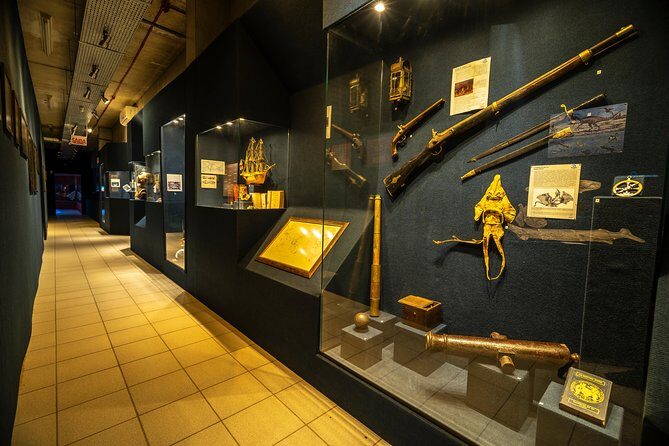
The museum’s long-term exhibit uses seven wings to organize everything from ancient ocean history to modern animals. Each wing has its own logic, and the best part is how the museum pairs objects (fossils, skeletons, shells, preserved specimens) with live animals in aquariums.
Here’s what you’ll encounter as you go.
Blue Wing: Emergence of Life and Oceanography
This wing sets the stage with fossils from different geological ages. It’s not just old rocks on display—it’s a story about how life in the sea changes over time, with historical items that connect human curiosity about the ocean to the era of exploration.
You’ll also see a section on modern technologies of ocean exploration, which helps connect the past fascination with how we study the ocean today. If you like science that has names and purpose, this wing gives you that foundation before you hit the animals.
Red Wing: Marine Invertebrates (Corals, Squid, Echinoderms, More)
The Red Wing is built around marine invertebrates, and it’s one of the most visually satisfying stops because it mixes shape, color, and function. You’ll find calcareous skeletons of groups such as sponges and corals, set in front of aquariums with alive specimens of similar species.
Shells and whole specimens help you understand how form connects to life in the sea. There’s mention of preserved examples such as a giant squid specimen, plus echinoderms like sea stars, sea urchins, and sea cucumbers.
This wing also covers crustaceans—think shrimp, crabs, lobsters, and related groups. If your brain likes category sorting (mine does), you’ll feel like you’re building a mental map of the ocean ecosystem.
Green Wing: Cartilaginous Fish (Sharks and Rays)
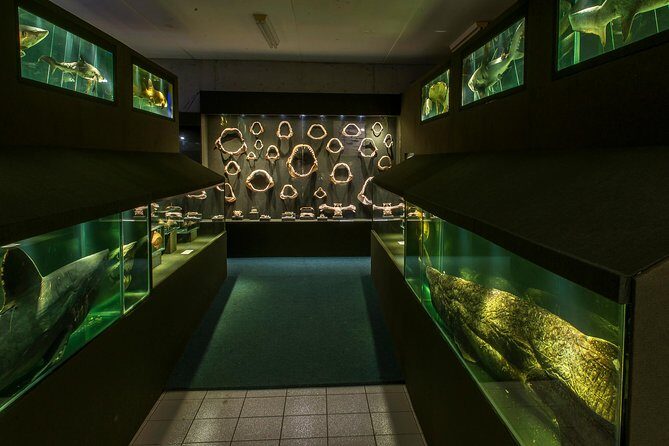
This is the wing for people who want sharks and rays, but also the people who like the biology behind them. You’ll see a wide variety of sharks and rays, including coastal species, deep-sea animals, and endangered ones.
One headline detail here is the display of jaws and teeth for the main species, including the only white shark jaw on display in Brazil (as described for this museum). Even if you don’t memorize every species name, it’s a strong visual reminder that these animals are built for feeding in very specific ways.
The wing also explains reproduction in cartilaginous fish and how they adapt to different marine habitats. Four aquariums in this wing represent habitats in the wild, which is helpful because it stops the exhibits from feeling purely “display-only.”
Brown Wing: Bone Fish, Deep-Sea Finds, and Oceanic Mixes
The Brown Wing focuses on bony fish and shows the variety of shapes and adaptations in this group. You’ll spot examples of large fish such as tarpon and swordfish, which helps you see how different ocean lifestyles shape anatomy.
The aquarium section is described as fish from the Indian Ocean and the Pacific Ocean, so it’s not just “Brazil only.” That’s useful for context because it lets you compare patterns you might otherwise miss.
A special note in this wing: a rare deep-sea fish exhibit found in the abyssal area over 2,000 meters deep. Even if deep sea is hard to picture, this kind of exhibit can make the ocean feel bigger than the beach part.
Gray Wing: Marine Reptiles (Sea Turtles Take Center Stage)
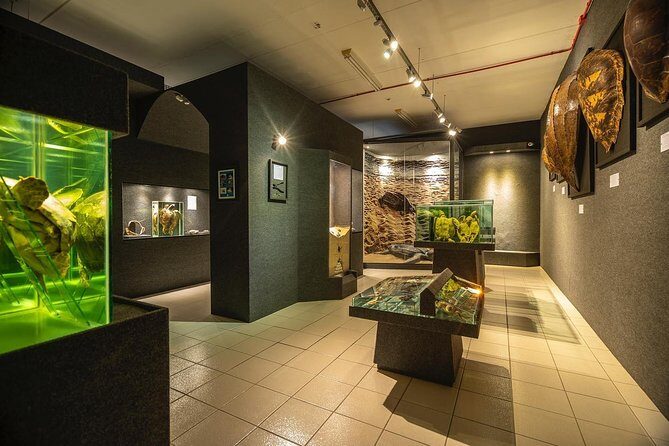
Marine reptiles in the museum are restricted to 14 species, with the collection mostly made up of sea turtles. In Brazil, there are five sea turtle species, and all of them are presented here.
This wing looks at more than identification. You’ll see aspects of biology and ecology, from small juvenile turtles through very large individuals. It’s the kind of structure that helps you understand why turtles are so threatened—because their life cycle and habitats are closely tied to conditions across the ocean.
Beige Wing: Seabirds and Penguin Representation
The Beige Wing shifts from ocean animals you swim with to ocean animals you watch from above. You’ll find highlights about biology and ecology of seabirds, including all species of penguins, with information about their distribution in the southern hemisphere.
The standout here is a diorama of an oceanic island where an endangered species like the wandering albatross is represented. A diorama can feel old-fashioned, but when it’s done with good scale and clear themes, it helps you “place” birds in their habitat rather than treating them like separate facts.
Black Wing: Marine Mammals and the Whaling History Connection
The Black Wing begins with historical material about whaling and commercial exploitation, an activity noted as being widely practiced in Santa Catarina. Then it moves into marine mammal species found in southern Brazil, including multiple dolphin and whale species, with biology notes.
This wing also includes South American sea lions and manatees from northeastern Brazil, linking regional species coverage across Brazil. If you’re the type of person who wants both science and context, this part can add a more human layer to the marine story.
The Ocean Giants Panel Outside: Full-Scale Wow Without the Noise
Don’t rush past what’s outside the museum. The Ocean Giants Panel is located outside and shows the largest marine animals of each group on a full-scale basis.
The blue whale detail is the headliner: a blue whale that stood 33 meters long and weighed about 170 tons (as described). Seeing numbers like that on a screen can feel abstract. Full-scale models make the scale hit your body and not just your brain.
This outside stop also works as a palate cleanser before you wrap up your route, especially if the indoor galleries start to feel like sensory overload in the best way.
Aquariums, the Touch Lab, and the Live-Animal Factor
The museum’s structure is built around pairing physical collections with live animals in aquariums. That’s the big difference between a museum that shows you dead specimens only and one that lets you watch how animals actually behave.
You’ll see aquariums tied to multiple wings, including clear links in the cartilaginous fish and bone fish sections. The museum also highlights a broader sensory experience with marine animals with access included in your ticket.
There’s also a touch lab mentioned as a unique experience for both children and adults. That kind of hands-on moment can turn a standard museum visit into a memory, but it isn’t for everyone. Some people feel the touch lab doesn’t justify the time or cost—so if you’re sensitive to dim rooms and you’re mainly there for the animals you can see, aim to keep the touch lab as optional rather than your whole plan.
What the Museum Does Well (And Why It Matters)
This museum’s strength is how it organizes knowledge. The seven-wing format helps you understand marine life as a system with categories, habitats, and adaptations. The exhibits aren’t just “look at this”; they’re set up so you can follow cause-and-effect.
Two things I’d call out as especially strong:
1) The pairing of fossils and live animals.
The Blue Wing gives context, then later wings make it concrete with specimens and aquariums. That reduces the feeling that you’re just collecting facts.
2) The jaw-and-teeth focus in sharks and rays.
That sort of detail helps you connect anatomy to feeding strategy. Even if you don’t read every caption, the objects are set up so your eyes understand what they’re looking at.
Where You Might Feel Friction: Lighting and Label Detail
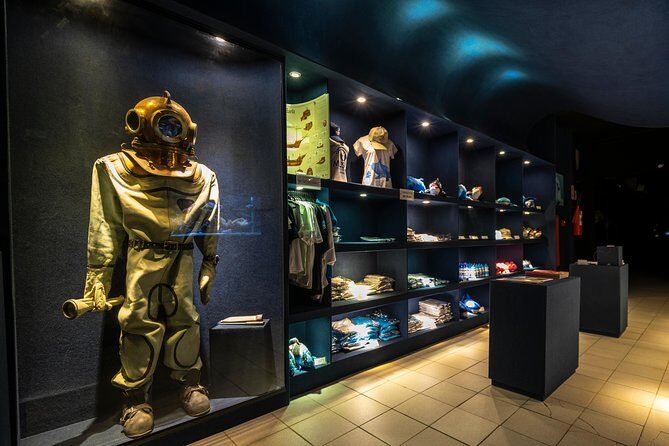
A fair heads-up: some parts of the museum can feel dark, and a few images or species displays may have limited explanation. If you love reading every label, you might find yourself wanting more text near certain displays or clearer wording.
Also, aquarium variety can feel different depending on what you expect. Some people want more fish in the tanks. Others are happy as long as the animals are well presented. The good strategy is to treat aquariums as “one piece of the route,” not the only reason to go.
Price and Value: Is $15.68 Worth It?
At about $15.68 per person, this museum is priced like a solid local attraction—especially because the ticket includes full exhibition access and a sensory experience. You’re not just paying for one room or one aquarium; you’re paying for a structured circuit across multiple wings plus the outside Ocean Giants Panel.
The value increases if you’re visiting with kids or if you enjoy organized learning. The museum is built for flow: you move from group to group without needing extra planning or separate ticket add-ons.
It may feel less worth it if you’re looking for a high-volume collection of spectacular live animals at every stop or if you strongly prefer bright, text-heavy interpretation throughout.
Who Should Book This Museum
This is a great fit if you’re one of these:
- You’re traveling with kids and want a place where science feels approachable.
- You like marine animals and want a clear overview of categories: invertebrates, cartilaginous fish, bony fish, reptiles, seabirds, and mammals.
- You prefer museums that feel structured and easy to follow in a short time.
It can also work as a calm change of pace if you’ve been outdoors all day. The route is inside, with themed sections that give you a mental rest while still feeling active.
Should You Book Oceanographic Museum Univali in Piçarras?
I’d book it if you want a straightforward, reasonably priced museum visit that teaches you how Brazilian marine life is organized and why it matters. The seven-wing layout, the live animal aquariums, and the outside Ocean Giants Panel give you both real education and real visual scale.
Skip or reconsider if you need consistently bright lighting and very detailed labels everywhere. If you’re sensitive to dim rooms, plan to spend a little extra time and use your phone for translation only if you can access it easily.
If you can only do one short cultural stop in Piçarras, this one is a smart pick.
FAQ
What’s included with the Oceanographic Museum Univali ticket?
The ticket includes access to the exhibition and a sensory experience with marine animals.
How long does the visit usually take?
Expect about 1 hour to 1 hour 30 minutes.
What are the opening hours for the museum?
It’s open Tuesday to Sunday from 2:00 PM to 5:30 PM during the listed period.
How many pieces are in the permanent exhibit?
The long-term exhibit features over 1,400 pieces.
Is there anything alive to see, or is it only specimens?
You’ll find live animals in aquariums along the exhibition route.
What special shark or ray exhibit is mentioned?
The museum displays teeth and jaws, including the only white shark jaw on display in Brazil (as described for this museum).
Are sea turtles included in the marine reptiles section?
Yes. Marine reptiles are presented with a focus on sea turtles, and five sea turtle species found in Brazil are presented.
Is the Ocean Giants Panel part of the experience?
Yes. The Ocean Giants Panel is located outside the museum and features the largest marine animals of each group, including a blue whale model.
Are service animals allowed?
Yes, service animals are allowed.
Is there an educational package for groups?
An educational package is available for groups, but it is not included with standard admission.