REVIEW · RIO DE JANEIRO
Rio Street Art Tour
Book on Viator →Operated by Guia Wellington/Berimbautour · Bookable on Viator
Graffiti here is more than decoration. This Rio street art tour strings together famous murals with the city’s bigger story—architecture, politics, and Afro-Brazilian culture—without the big-bus boredom. You’ll ride public transit, walk real neighborhoods, and learn what the images mean.
Two things I really like: the route mixes major landmarks with less-frequent street-art spots, and the guide, Wellington, ties each wall to a clear theme so it all makes sense fast. It feels like walking Rio with someone who actually cares.
One thing to consider: it’s about three hours and includes walking plus subway/VLT/tram time, so if you hate crowds or have limited mobility, you’ll want to plan carefully—also, the tour requires good weather.
In This Review
- Key highlights you’ll care about
- Setting the tone: from the Municipal Theater toward Glória
- Selarón Staircase: why rainbow steps mean more than selfies
- Cinelândia: where libraries and the main theater set the cultural rules
- Olympic Boulevard: the museum strip and the post-event era
- Porto Maravilha and the Etinia panel: world-scale graffiti at the end
- Transit, timing, and what the 3 hours really feels like
- Price and value: what $68.61 buys you in Rio
- Who this tour suits best
- Should you book the Rio Street Art Tour?
- FAQ
- How long is the Rio Street Art Tour?
- Where does the tour start?
- Is this a private tour?
- What public transportation do you use during the tour?
- How much does the tour cost?
- Are entrance tickets included for the stops?
- Do I need good weather for this experience?
- Can I cancel and get a full refund?
Key highlights you’ll care about
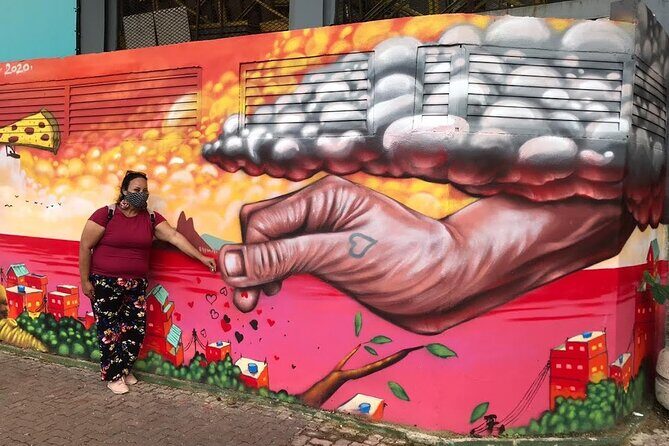
- Legalized graffiti in Rio: you start with the city’s turning point, not random tags
- Selarón Staircase by design, not just sightseeing: you see what people built into the stairs and why it matters
- Cinelândia’s cultural power: libraries and theater set the stage for how art and influence work together
- VLT rides make the story smoother: you travel between areas without wasting the whole day stuck in traffic
- Porto Maravilha’s world-scale mural: you finish with the Etinia panel, listed as the largest graffiti mural in the world
- Private-group feel: it’s only your group, which keeps questions flowing and the pace comfortable
Setting the tone: from the Municipal Theater toward Glória
I like starting near the Municipal Theater of Rio de Janeiro because it anchors the day in real Rio culture, not just street corners. From there, you head toward the Glória area by subway. That first transit move is part of the fun: you get your bearings and you feel how the city moves before the murals start shouting.
In Glória, you begin with the idea of legalized graffiti in Rio. That matters, because it reframes what you’re seeing. Instead of treating street art as random rebellion, the tour explains how public space and permission collided—and how that changed what artists could do and how the public reacted.
You also pick up architectural context early. The tour points out European architectural influence in the city, and you’ll start to notice how style and power show up even when the wall looks “just artistic.” It’s a smart way to keep the day cohesive.
Then, rather than rushing to the most famous shots, you keep moving through the route—there’s passing by the Selarón area and continued street-art viewing before you circle back later. If you like stories that build instead of bouncing, this pacing helps.
A few more Rio de Janeiro tours and experiences worth a look

Selarón Staircase: why rainbow steps mean more than selfies
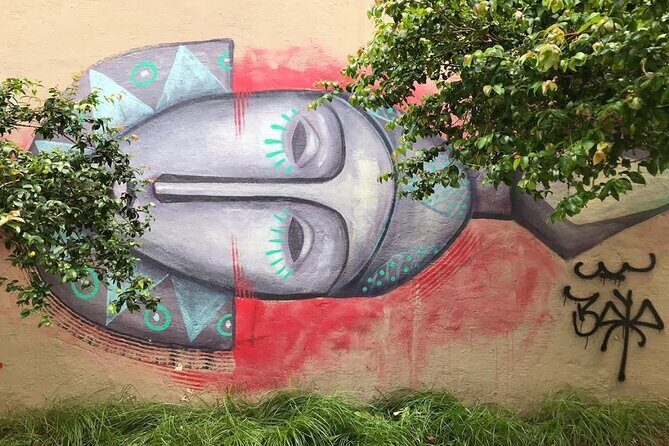
The Escadaria Selaron (Selarón Staircase) is Rio’s “you can’t miss it” spot, which is exactly why you should be ready to see it with meaning, not just a camera habit. The tour treats the stairs as an art project and a social signal, not a postcard.
You’ll spend time here, and the difference is in what you look for. You don’t just walk up and take a few snaps. You get pointed to how the stairs connect to the neighborhood’s identity and how the artwork became part of Rio’s public conversation.
Also, the tour works the timing so you’re not only standing in the tourist churn. You’ll have the benefit of context first—so when you finally arrive at the stairs in the main stop, your eyes know what to search for.
Practical note: expect steps, uneven surfaces, and general “this is a busy landmark” energy. Comfortable shoes win here.
Cinelândia: where libraries and the main theater set the cultural rules
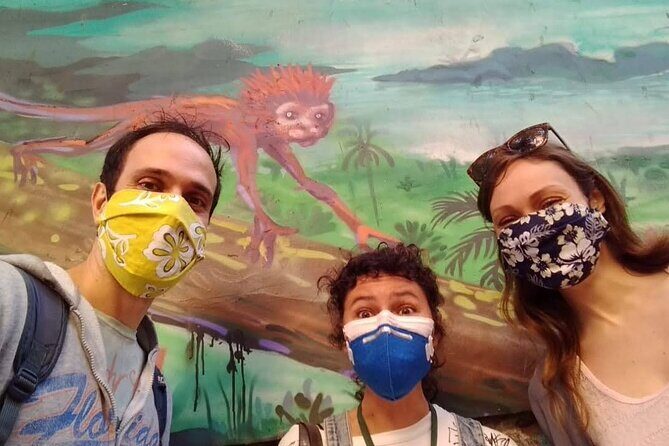
After Selarón, the tour shifts the mood toward Cinelândia, a central area known for institutions: major libraries and the city’s main theater. This is one of my favorite parts of the route because it connects the street to formal culture.
You’ll see how public buildings shape the kinds of stories a city tells. Then you’ll be guided to think about who gets attention, who gets funding, and how art moves from street walls to official stages.
The tour’s big value here is how it links art styles to politics and public life. Street art doesn’t exist in a vacuum. If you want the “why” behind the walls, this stop gives it to you without turning into a lecture.
Then you head onward by VLT (public transportation) toward the next big cluster: Olympic Boulevard.
Olympic Boulevard: the museum strip and the post-event era
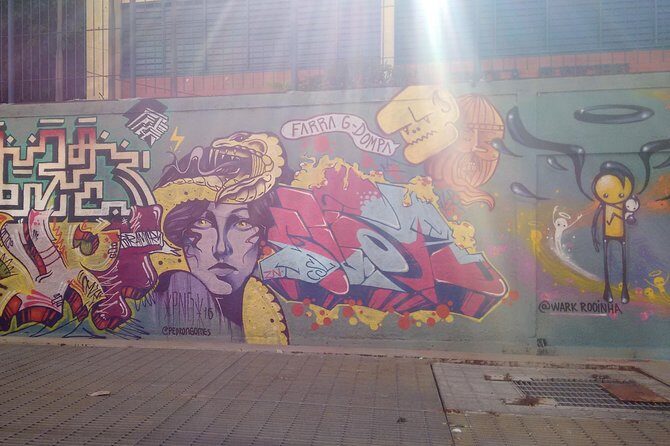
At the Olympic Boulevard, the day turns into a “watch Rio in transition” walk. This area is known for the city’s main museums, and the tour helps you see why that matters for street art.
Museums aren’t just about preserving art. They’re about shaping what’s considered important. When you pair museum space with earlier street-art context, your brain starts doing the comparison automatically—which is exactly the point of this route.
You’ll have time to take in the area’s museum energy while still staying focused on street art’s bigger themes. It’s not “go look at buildings.” It’s “look at how Rio decides what gets to be seen.”
If you’re the kind of traveler who likes to understand a city’s choices—what gets protected, what gets displayed—this stop will feel satisfying. If you hate walking between sights, the transit segments may feel like work. For most people, though, it’s a balanced pace.
Porto Maravilha and the Etinia panel: world-scale graffiti at the end
The tour closes in Porto Maravilha, a key waterfront redevelopment zone where art has room to be huge. This is where you meet what the tour describes as the largest graffiti mural in the world, the Etinia panel.
Finishing here is smart. By the end of three hours, you’ve already learned how to read graffiti as culture and message. So the final mural lands with more weight than it would as a random bucket-list image.
The guide also ties the area to deeper context. In at least one strong moment during the experience, the discussion connects Porto Maravilha’s port area to the history of enslaved Africans in Brazil. That kind of context doesn’t turn the day grim—it gives the art a backbone and helps you see why certain themes keep returning in Rio.
There’s also a useful “how to keep exploring after” element. People mention that the tour ends near other spots worth eating at and checking out, including local hangout options. If you’re hungry right after a tour, this is the kind of ending that helps you avoid wasting time figuring out what’s nearby.






Transit, timing, and what the 3 hours really feels like
On paper, this is about 3 hours. In real life, it feels like a focused city loop: some walking, multiple transit segments, and a steady stream of art stops. Because it uses subway and VLT, you’re not stuck in long, slow transfers.
The best part is that the route doesn’t feel like a scavenger hunt. Each section adds a piece:
- legalized street art roots,
- a public landmark that became art,
- institutional culture in Cinelândia,
- museum territory at Olympic Boulevard,
- then a finish at world-scale mural size.
That structure helps if you’re short on time but still want more than a quick photo tour.
Also, this is a private tour/activity, meaning it’s only your group. That usually changes the experience. Instead of shouting over a crowd, you can ask questions and get real answers from Wellington.
Price and value: what $68.61 buys you in Rio
The price is $68.61 per person for roughly three hours. That’s not “cheap,” but it’s also not inflated for what you get.
You’re paying for:
- a guide who connects street art to history, politics, architecture, and culture,
- multiple neighborhoods instead of one photo stop,
- time spent at major landmarks like Selarón and Cinelândia,
- and a route built around public transportation so you’re not wasting energy on logistics.
One subtle value point: multiple reviews note that Wellington handles practical details smoothly. For example, there’s an instance where the guide purchased a train ticket so the group stayed on track and avoided a potential problem. That’s the kind of behind-the-scenes help that makes a tour feel worth the money.
So here’s my take: if you want a street art tour that teaches you how to read the walls and not just where to stand, this price can feel like a fair deal. If you only want a quick highlight reel with zero context, you might find it a little too thoughtful.
Who this tour suits best
This tour fits you best if:
- you enjoy street art with meaning,
- you want a guided blend of murals and city culture,
- you like public transit in a city you’re still learning.
It’s also a great option if you’re traveling solo and want a private-group feel, or if you’re with friends or family and want a pace that’s more flexible than a bus tour.
If you’re only interested in the biggest names with minimal walking and minimal reading, you might prefer a shorter, more focused street-art outing. But if you want context, this route is built for you.
Should you book the Rio Street Art Tour?
If your goal is to see Rio through its walls—while also understanding why those walls matter—then yes, I think you should book it. The route covers both iconic and story-heavy places, and the guide’s style comes through in how he explains what the art is saying and how it connects to Brazil’s broader cultural themes.
Two quick decision checks:
- Do you like learning while you travel? If yes, this will feel satisfying.
- Are you okay with walking plus subway/VLT time in about three hours? If yes, you’ll get a lot done.
If either answer is no, you might still enjoy the murals, but you may feel impatient with the pacing and context.
FAQ
How long is the Rio Street Art Tour?
It runs for about 3 hours.
Where does the tour start?
The meeting point is at the Municipal Theater of Rio de Janeiro, Praça Floriano, S/N – Centro, Rio de Janeiro – RJ, 20031-050, Brazil.
Is this a private tour?
Yes. It’s private, so only your group participates.
What public transportation do you use during the tour?
The route uses subway and VLT (public transportation). You’ll also walk between stops.
How much does the tour cost?
The price listed is $68.61 per person.
Are entrance tickets included for the stops?
Admission ticket info is listed as free at the stops included on the tour.
Do I need good weather for this experience?
Yes. The experience requires good weather, and if it’s canceled due to poor weather, you’ll be offered a different date or a full refund.
Can I cancel and get a full refund?
Yes. You can cancel up to 24 hours in advance for a full refund.