REVIEW · RIO DE JANEIRO
Rio de Janeiro: Bossa Nova Walking Tour with Guide
Book on GetYourGuide →Operated by Rio Bossa Experience · Bookable on GetYourGuide
Bossa Nova sounds better when you can walk it. This 3-hour Rio de Janeiro Bossa Nova Walking Tour strings together Ipanema and Copacabana with real street context, plus live performance from the guide-musician as you go. You’re not just watching photos of Rio’s classic era. You’re walking the kind of places where the music takes shape on the ground.
Two things I especially like: the guide is also a performer, so the story comes with songs and guitar breaks, and you get composer-and-song stop points like Tom Jobim and Dorival Caymmi made into an actual route. One thing to consider: the tour is a walking circuit with several stops (and photo moments), so it’s not ideal if you want lots of sit-down time or slower pacing.
In This Review
- Key Points at a Glance
- Why This Bossa Nova Walk Feels Like Rio’s Music Map
- Your Route: 3 Hours of Ipanema and Copacabana Connections
- Praça Nossa Senhora da Paz: The Starting Line and the First Mini-Class
- Rua Nascimento Silva and the Early Photo Stops That Build Momentum
- Cantagalo to Praça General Osório: Neighborhood Energy and Composer Context
- Av. Atlântica 3968 and Dorival Caymmi: Turning the Coast Into a Story
- Garota de Ipanema and Arpoador: The Place Name That Became a Song
- Estátua de Tom Jobim and Casa de Cultura Laura Alvim: Names That Stop Being Abstract
- Ending at a Local Bar: How the Tour Closes the Bossa Nova Loop
- Price and Value: Is $49 a Fair Trade for 3 Hours?
- Language, Group Style, and Who This Tour Fits Best
- Practical Notes Before You Show Up
- Should You Book This Bossa Nova Walking Tour?
- FAQ
- How long is the Rio Bossa Nova walking tour?
- What’s included in the ticket price?
- Where do I meet the tour guide?
- What areas does the tour cover?
- What languages are available?
- Is the tour suitable for children or mobility needs?
Key Points at a Glance
- Live Bossa Nova on the route: you’ll hear it, not just hear about it
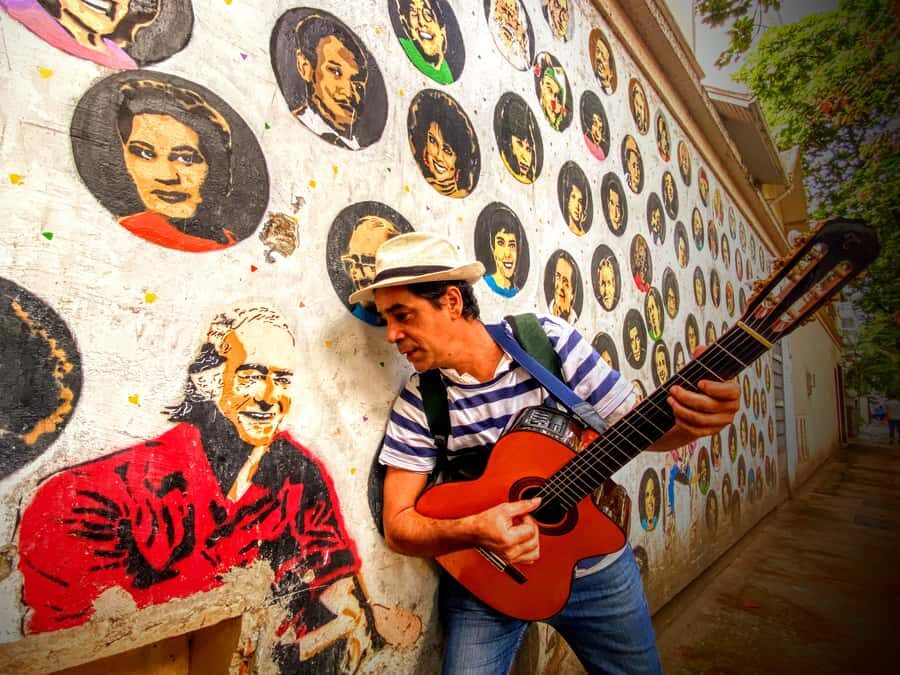
- A guide who performs: in some groups, Guilherme (also credited as Gui) brings both explanations and music
- Stops tied to real locations: Ipanema and Copacabana streets, statues, and cultural spots
- Composer trail, not trivia lists: Tom Jobim and Dorival Caymmi are built into the walk
- 3 hours with about 10 key stops: expect frequent short stretches on your feet
Why This Bossa Nova Walk Feels Like Rio’s Music Map
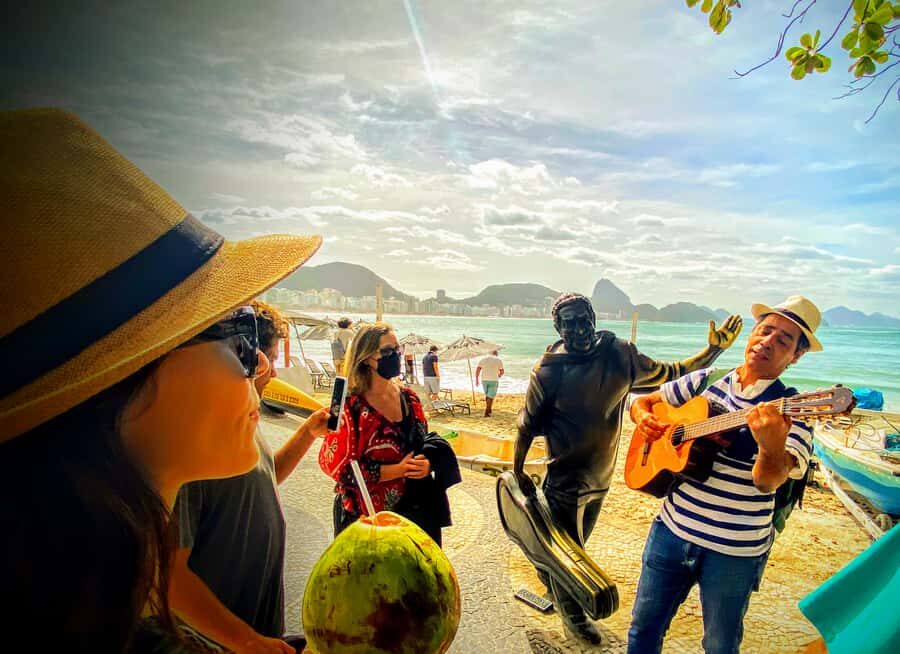
Bossa Nova is often described like it’s a mood. This tour treats it like geography. The route is set up so you connect sound to place: beaches, neighborhood streets, and famous landmarks where the style’s creators and performers made their mark. That matters because Bossa Nova wasn’t made in a vacuum. It was shaped by the streets, the culture, and the post-war social life of Rio.
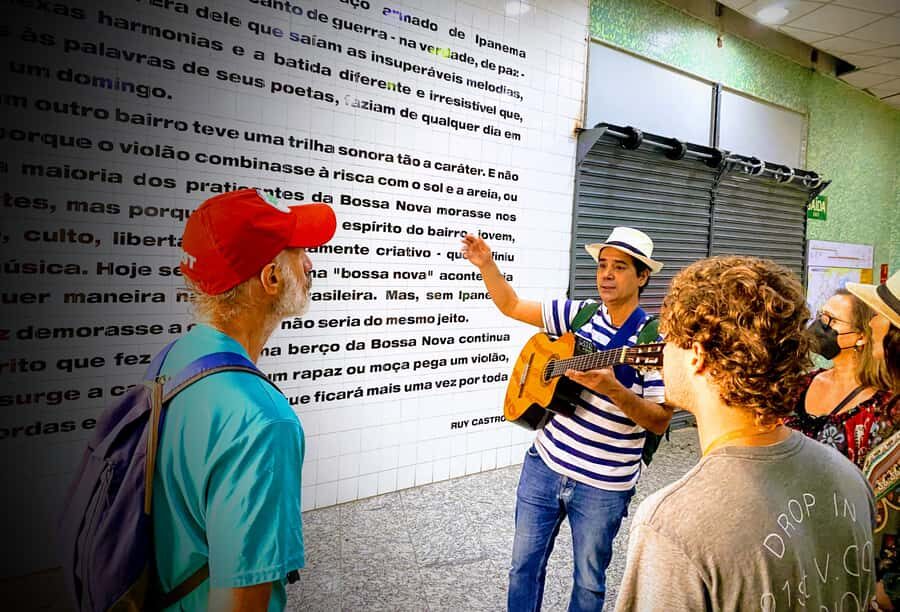
What makes the experience practical is the structure. You get a guided circuit through Ipanema and Copacabana, with short stops that work like chapters. Each stop is paired with context, and at several points you get live Bossa Nova played by the guide. That turns a history-style walk into something you can actually remember.
This is also a good pick if you’re the kind of person who likes hearing the “how” and “why,” not just the “what.” The guide walks you through how Bossa Nova started, who the main composers and performers were (Tom Jobim, Vinícius de Moraes, João Gilberto, and others), and the curiosities that make the story more human than textbook.
You can also read our reviews of more walking tours in Rio De Janeiro



Your Route: 3 Hours of Ipanema and Copacabana Connections
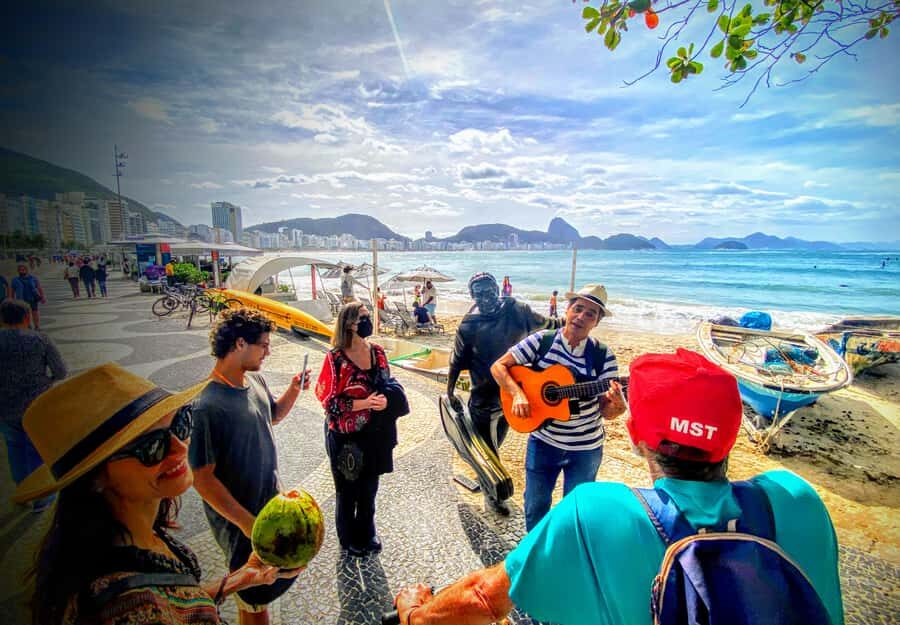
The tour is designed to run at a steady pace for about 3 hours, and it packs in around 10 different spots across Ipanema and Copacabana. Along the way, you’ll do a mix of walking, guided explanations, and photo stops. Some segments also include a live performance moment, which helps break up the route and keeps the theme consistent.
Think of it as a “greatest hits” walk for Bossa Nova in Rio, but with street-level details. You’ll also move through a handful of famous sites that many people recognize from stories and titles, then you see the physical setting that makes those references click.
If you’re hoping for long musical sessions, note this is a walking tour with music threaded in, not a full concert evening. One review comment even pointed out wanting more music time. So if Bossa Nova audio is your top priority, it may be worth booking this as your cultural-and-context stop, then planning separate time for more music later.
Praça Nossa Senhora da Paz: The Starting Line and the First Mini-Class
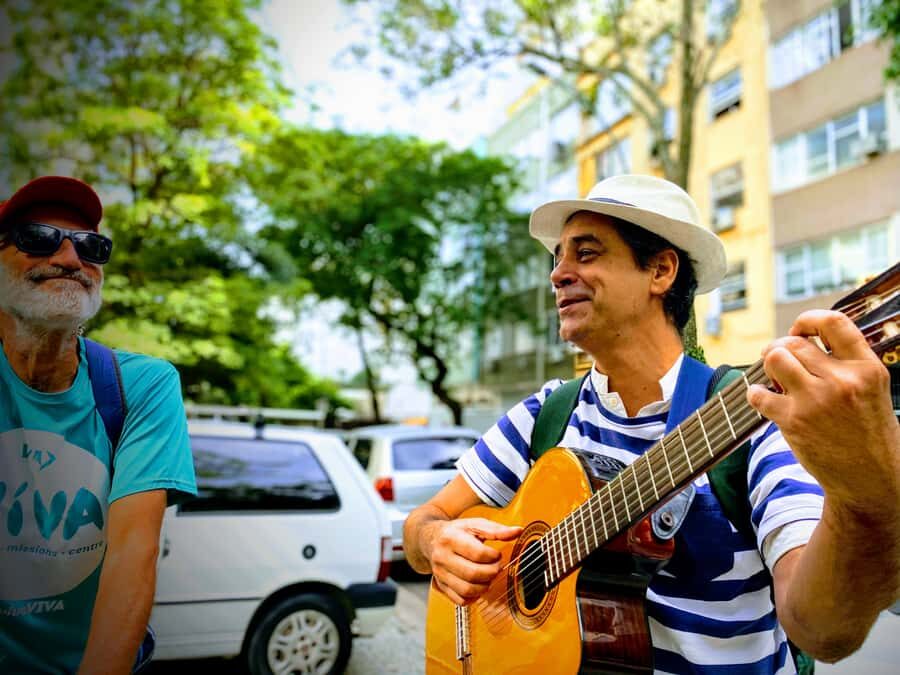
You begin at Praça Nossa Senhora da Paz in Ipanema, near metro exit A. The meeting point is clearly identified for you, and the night before the tour, you’ll get an email with the exact location in the square and guidance for finding the guide.
Once you’re there, the tour starts with a short “set the stage” block (about 20 minutes). This is when you get the foundation: what Bossa Nova is, when it took off, and how Rio’s mid-century culture fed the sound. I like this approach because it prevents the walk from becoming random sightseeing. Instead, you start with context, then you spend the rest of the time verifying that context with your feet.
It also helps that the guide in this format isn’t just talking. In groups like the one led by Guilherme (often referenced as Gui), the performer side is part of the delivery. You’re building a mental playlist while you’re building the route.
Rua Nascimento Silva and the Early Photo Stops That Build Momentum
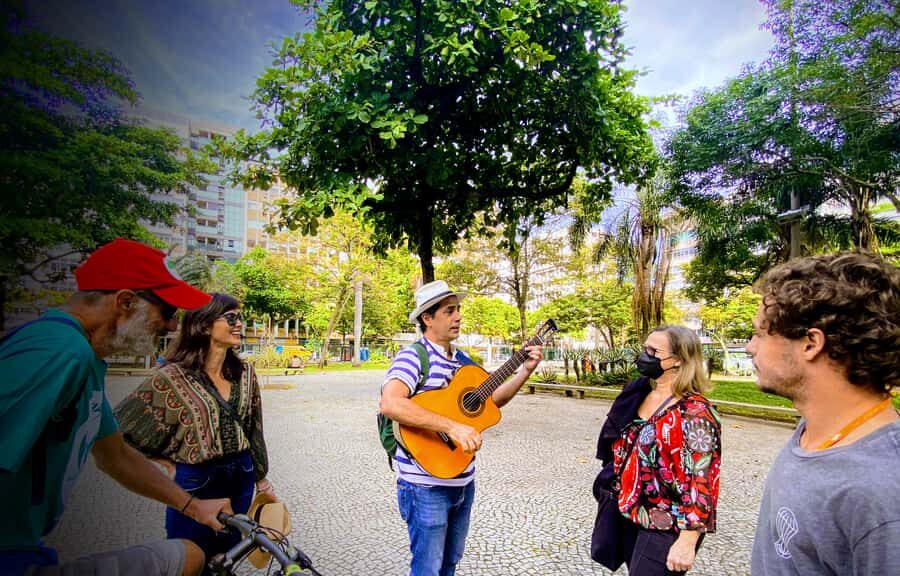
After the opening lesson, you shift into street mode. You’ll move along with photo stops and guided explanation on streets like Rua Nascimento Silva, plus other “secret” and “hidden corner” style viewpoints built into the circuit.
These first stops matter for two reasons. First, they teach you what to notice: the neighborhood vibe, the kind of places where social life and music intersected, and the way the city’s layout helped shape the culture. Second, they set a rhythm for the walk: short blocks of moving, stopping, hearing, photographing, and then moving again.
At several points early in the route, the live performance component shows up (brief concert moments). That means the tour avoids the “stand in place, listen to history” trap. Instead, you’re hearing Bossa Nova while the guide points to the surroundings that support the story.
Cantagalo to Praça General Osório: Neighborhood Energy and Composer Context
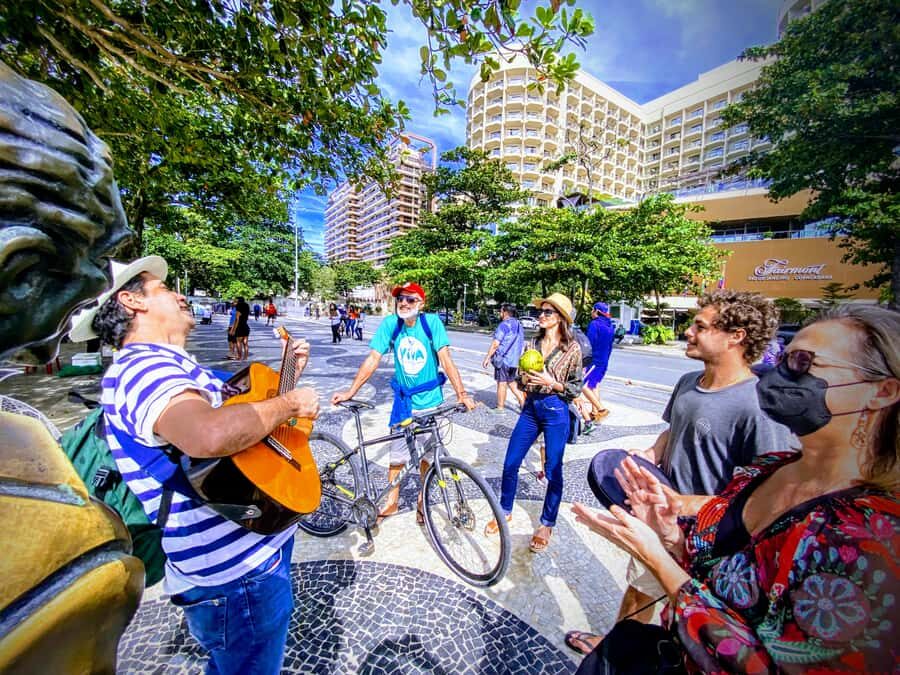
As you continue, stops like Cantagalo and Praça General Osório turn the route into something more than a beach walk. These are the kinds of spots that help you understand how Bossa Nova wasn’t only about the oceanfront postcard. It was also about neighborhoods, daily life, and the social scene that carried the music forward.
This section works especially well if you like the “people side” of music history. The guide connects the style to key names such as Tom Jobim and Vinícius de Moraes, and you’ll hear how performers and composers influenced each other. You also get “curiosities,” the small bits that explain why certain songs and collaborations became iconic.
The live music moments keep it from becoming a lecture. Even when the stop is short, you get enough of the sound to make the discussion feel grounded.
You can also read our reviews of more guided tours in Rio De Janeiro






Av. Atlântica 3968 and Dorival Caymmi: Turning the Coast Into a Story
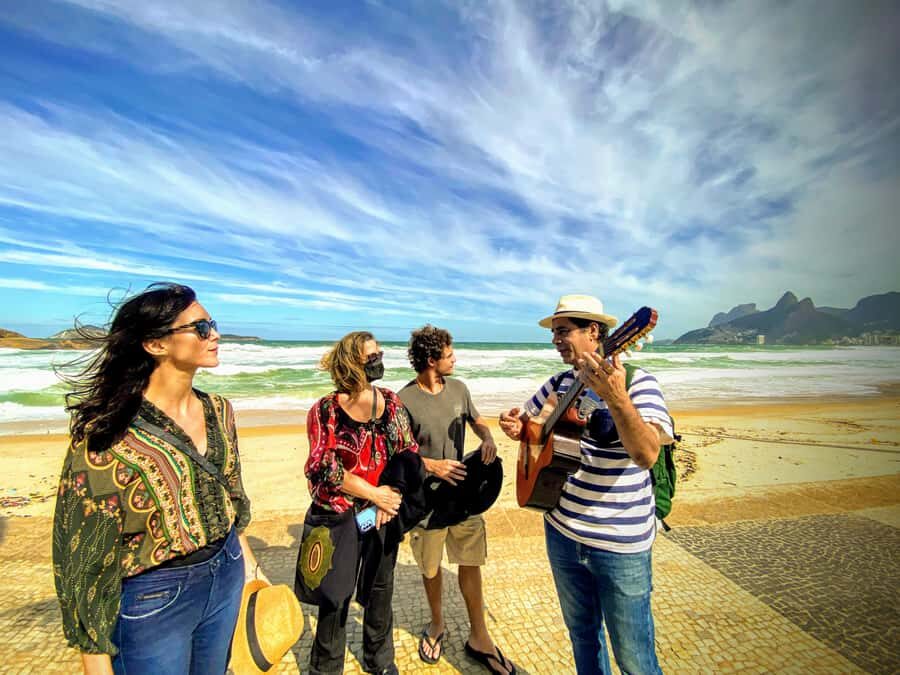
Then the tour leans hard into the coast. One marked stop is Av. Atlântica, 3968, where you’ll get scenic views along the way. This is a smart choice. Av. Atlântica is one of the places where Rio’s “classic” feeling shows up, and for Bossa Nova, that visual connection helps your brain link the music to its setting.
You also stop at the Estátua de Dorival Caymmi. Caymmi’s name belongs to the larger Brazilian music ecosystem, and placing him on the route helps you see Bossa Nova as part of a bigger continuum, not an isolated style. When the guide connects these dots, the statues stop being decoration. They become signposts in the story.
If you’re a first-timer to Rio, I like that you get a mix of famous landmark recognition and actual explanation at each point. It keeps you from just nodding politely.
Garota de Ipanema and Arpoador: The Place Name That Became a Song
You’ll hit Garota de Ipanema, with a short stop for guided context and photo time. Then the route continues to Arpoador, again with the guide explaining and pointing as you move.
This is where the tour becomes extra fun if you already know the cultural references around Bossa Nova. You’ll walk by places connected to Girl from Ipanema (the famous title tied to the Ipanema stretch), and that’s exactly the kind of connection that turns a song you recognize into a place you can picture.
Arpoador adds another layer because it’s one of those Rio coastal spots that feels like it belongs in a song. Even if you’re not an expert, you’ll understand why the shoreline shows up so often in the style’s story.
Music is lightly stitched into this part too, so you’re not only sightseeing. The sound reinforces what you’re being told about the era the guide describes (the 50s and 60s years when Bossa Nova found its golden momentum and glamorous social life).
Estátua de Tom Jobim and Casa de Cultura Laura Alvim: Names That Stop Being Abstract
Next comes Estátua de Tom Jobim. Jobim is one of the anchor figures in Bossa Nova, and seeing his name represented physically on the route is a quick way to make the composer side feel real. Instead of reading a name and moving on, you stop, listen, and connect the name to the surrounding neighborhood feeling.
After that, you visit Casa de Cultura Laura Alvim. This stop works well because it adds “culture” beyond just music facts. You get a sense of how the city preserves memory and how the arts scene keeps names and stories in circulation. Even with a short timeframe here, it adds variety to the route—statues and streets make up most of the walk, and this gives you another angle.
If you like tours that mix famous references with lesser-known context, this is one of the better transitions.
Ending at a Local Bar: How the Tour Closes the Bossa Nova Loop
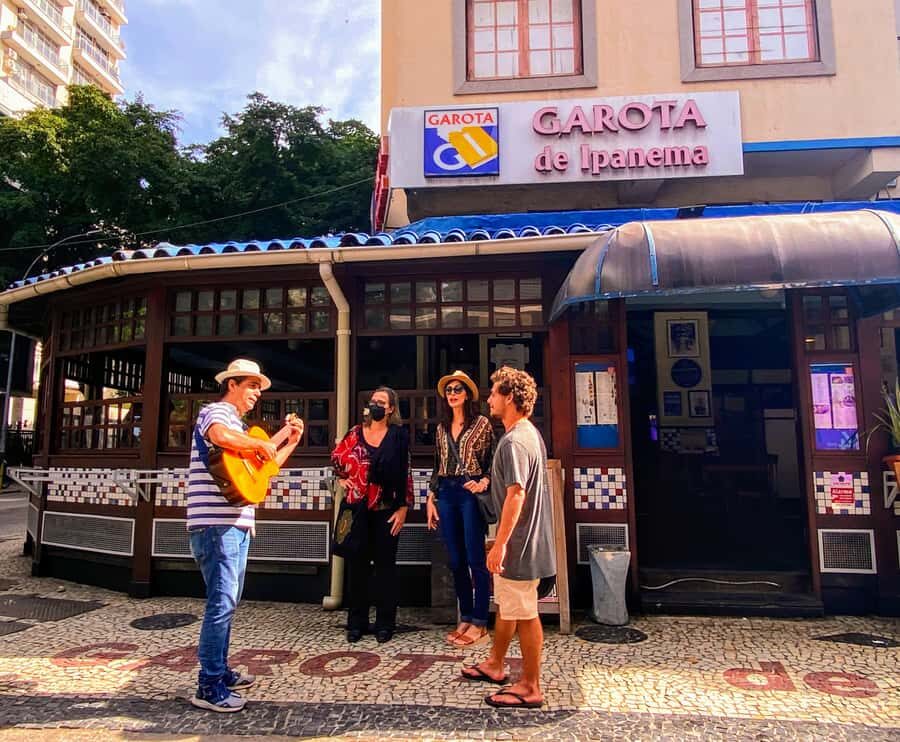
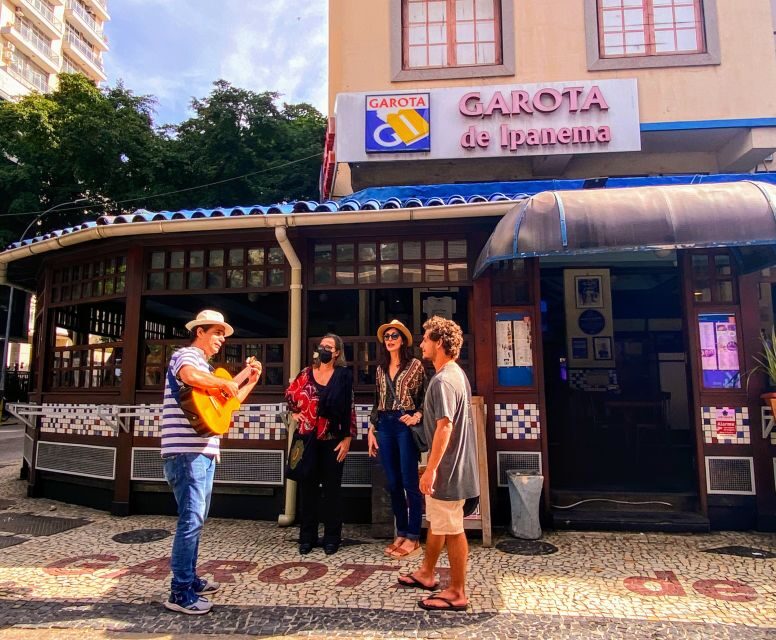
The walk finishes at Restaurante e Bar Garota de Ipanema. Before you reach the end, there’s typically a local bar stop with a photo moment and guided time that keeps the theme alive.
I like bar closings on walking tours when they feel like the final chapter, not a rushed departure point. Here, the tour ends in a place that matches the overall vibe: music-culture-energy, not just “thanks for coming.”
You don’t need to plan for food because it’s not included. Still, having a real bar at the end is practical. You can decide whether you want to stay for something extra or head out immediately while the route context is still fresh.
Price and Value: Is $49 a Fair Trade for 3 Hours?
At $49 per person for a 3-hour walking tour, the value is mainly in two inclusions: a guided walk and live performance. If you’ve ever done “history walks” that are mostly talking, this package is trying to do something different by putting the music directly into the timeline of the walk.
The route also has real-world payoff. You’re visiting named landmarks connected to key figures, plus the Ipanema-Copacabana street circuit that ties the story to the look and feel of the city. That’s harder to recreate on your own unless you’re already doing serious research.
One small caution on value: the experience is structured with shorter live music breaks, not a long concert. So if your priority is hours of listening, this might feel more like a guided cultural sampler than a full-on musical event.
But if your priority is context you can walk through, and you want the guide to sing/play while explaining, $49 starts to make sense quickly.
Language, Group Style, and Who This Tour Fits Best
The tour runs with a live tour guide in Portuguese, Spanish, and English, and it offers private or small group options. That combination matters. Small-group formats generally make it easier to ask questions, and multilingual guides make sure you’re not relying on gestures when the story gets specific.
Who this fits best: first-time Rio visitors who want a clear “Bossa Nova lens,” music lovers who know the big names (Jobim, Vinícius de Moraes, João Gilberto) but want the street-level connections, and anyone who likes tours where the guide is also doing the performing.
Who might skip: people who need minimal walking time, anyone with mobility limitations, and children under 8 years. The tour isn’t positioned for wheelchair users, and it’s not set up for slower movement or stroller-friendly pacing.
Also, if you want a pure music immersion session, you may prefer a dedicated concert. This is a walking story with music, not a concert-only ticket.
Practical Notes Before You Show Up
Wear comfortable shoes. This is a walking circuit with multiple stops, including photo moments and scenic walk segments. Dress in comfortable clothes, since you’ll be moving for most of the 3 hours.
The meeting point is Praça Nossa Senhora da Paz, near metro exit A. The night before, you’ll receive an email at 20:00 with exact meeting location details and how to find the guide in the square. That small step helps you avoid the usual “where exactly do we gather” stress.
If you’re planning your day, give this tour enough time to do what it’s designed to do: walk, stop, listen, and occasionally hear Bossa Nova played live on the route.
Should You Book This Bossa Nova Walking Tour?
If you want Rio that’s more than a skyline and a beach photo, I’d book it. The main reason is the format: you get live Bossa Nova paired with a guided route through Ipanema and Copacabana, plus landmark stops tied to composer names like Tom Jobim and Dorival Caymmi. It’s one of the better ways to connect song titles to streets without doing a scavenger-hunt.
I’d hesitate only if your top priority is lots of uninterrupted music time, or if you need accessibility-friendly pacing. For most people, this is a strong value: guided explanation, street-level context, and real performances in a tight 3-hour window.
FAQ
How long is the Rio Bossa Nova walking tour?
It lasts 3 hours.
What’s included in the ticket price?
You get a guided walking tour and a live performance by the musician.
Where do I meet the tour guide?
You meet at Praça Nossa Senhora da Paz in Ipanema, near metro exit A. You’ll also receive an email the night before at 20:00 with exact meeting details.
What areas does the tour cover?
The walk focuses on Ipanema and Copacabana and includes about 10 different spots.
What languages are available?
The guide offers tours in Portuguese, Spanish, and English.
Is the tour suitable for children or mobility needs?
It’s not suitable for children under 8 and it’s not suitable for people with mobility impairments or wheelchair users.