REVIEW · RIO DE JANEIRO
Rio’s city walking tour: a glimpse of history and olympic legacy
Book on Viator →Operated by Gray Line Brazil · Bookable on Viator
Old Rio tells its story on your feet. This tour is a smart way to connect the famous churches and government-era landmarks with the Olympic-era makeover around Mauá Square, all while a guide keeps you moving through historic downtown. I especially like the high-hit stops like São Bento’s chapel and library, and the way guides (from André to JB) seem ready to adjust the pace so you don’t feel herded. One drawback to plan for: it’s still a walk, and some days traffic can mean more riding between points than you expect.
You’ll start with the neoclassical Church of Our Lady of Candelária, then move into the São Bento Monastery complex for paintings and gilt carving details. After that, you’ll cover Praça XV do Novembro and the Portuguese-style Paço Imperial, then swing toward the modern Museum of Tomorrow area and the cultural energy that Olympic legacy kicked into motion at Mauá Square, including Rio Art Museum and Cobra murals. You’ll end near the Metropolitan Cathedral of Saint Sebastian and Carioca Square, where you can keep exploring on your own.
Time-wise, it’s about 4 hours starting at 1:00 pm, with a max group size of 35 people. That schedule works well if you want a first-day orientation, but it means each major stop is usually brief, so bring your curiosity and be ready to ask questions fast.
In This Review
- Key things to know before you go
- Old Rio on foot: what the 4-hour plan really feels like
- Candelária Church: the neoclassical opening you shouldn’t skip
- São Bento Monastery: paintings, gilt carvings, and that old-library feeling
- Praça XV and Paço Imperial: Brazil’s crown moments in plain sight
- Mauá Square and the Olympic legacy: Museum of Tomorrow area without the confusion
- Confeitaria Colombo: take your 20 minutes, and yes, you’ll want a treat
- Uruguaiana Street to the Metropolitan Cathedral: the cone you can’t unsee
- Price and value: what you get for $60.77
- Who should book this Rio city walk (and who might not love it)
- Small practical tips that make the tour easier
- Should you book this Rio city walking tour?
- FAQ
- What sites will I see on this Rio walking tour?
- How long is the tour and when does it start?
- How much does it cost?
- Is hotel pickup and drop-off included?
- Are entrance fees included?
- Are food and drinks included?
Key things to know before you go
- São Bento’s inside-the-church art: look for paintings and gilt carving details that are often hard to spot without a guide.
- Old-book Portuguese Library vibes: the stop includes the type of room you’ll want to linger in, even with a time limit.
- Praça XV and Paço Imperial context: you’ll see where emperors were crowned in the 1800s and where the Portuguese Royal Family lived and worked.
- Mauá Square is the Olympic legacy story: you’ll pass the Museum of Tomorrow area plus Rio Art Museum and Cobra murals.
- Real downtown walking, with some transfers: the tour is called walking, but you may still move by vehicle between points.
- Guides can personalize: several guides (like André and JB) are noted for being attentive and willing to adjust where time allows.
Old Rio on foot: what the 4-hour plan really feels like
This is a downtown-focused route designed for momentum. You’ll get hotel pickup and drop-off for hotels in São Conrado, Leblon, Ipanema, and Copacabana, then settle into a guided loop that links old Portuguese and imperial Brazil to the modern museum district near Mauá Square.
Start time is 1:00 pm, which is great for people who don’t want to wake up early. It also helps you catch daylight at churches and monuments, and then shift toward the Museum of Tomorrow area later in the afternoon.
The walk is paced for “see a lot” rather than “stay forever.” Many stops are listed around 10–20 minutes, so you’re not going to get a slow, museum-style experience. If you love photo stops and architecture close-ups, you’ll do well—just don’t expect long sit-down time at each place.
You can also read our reviews of more walking tours in Rio de Janeiro



Candelária Church: the neoclassical opening you shouldn’t skip
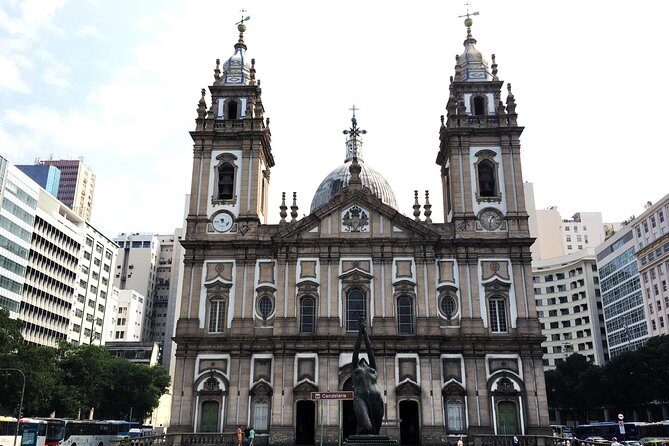
Your tour kicks off at the Church of Our Lady of Candelária, a standout for its neoclassical look. Construction began in 1630 and it was finished in 1775, which gives you instant historical weight before you even start moving deeper into downtown.
Because the itinerary includes a free admission ticket, you can spend a few minutes inside rather than just looking from the sidewalk. The key here is using the guide’s commentary to understand what you’re seeing: the design isn’t random decoration—it’s the style language of that era.
Also, this is a good “warm-up stop.” Your feet will be fresh, your eyes will be set on details, and the rest of the tour will feel easier.
São Bento Monastery: paintings, gilt carvings, and that old-library feeling
The São Bento Monastery is one of the big reasons to book. The monastery complex was founded in 1590 by two monks from Bahia, and it’s considered one of the most important patrimony sites for Brazilian architecture.
You’ll spend about 10 minutes here in the schedule, with admission listed as free. That’s enough time to see why the place is famous—especially the combination of church artwork and ornate details like paintings and gilt carving work.
One recurring highlight in guide notes is the Portuguese-style library area with older books. Even if your reading days are over, it’s the kind of room that makes you slow down. If you’re the type who likes architecture more than shopping, this is where the tour starts paying you back fast.
There’s also a practical side to coming here with a guide: monasteries like this can feel confusing on your own. You’ll get the “what to look for” framing, so you don’t wander past the best views while trying to figure out where you are.
Praça XV and Paço Imperial: Brazil’s crown moments in plain sight
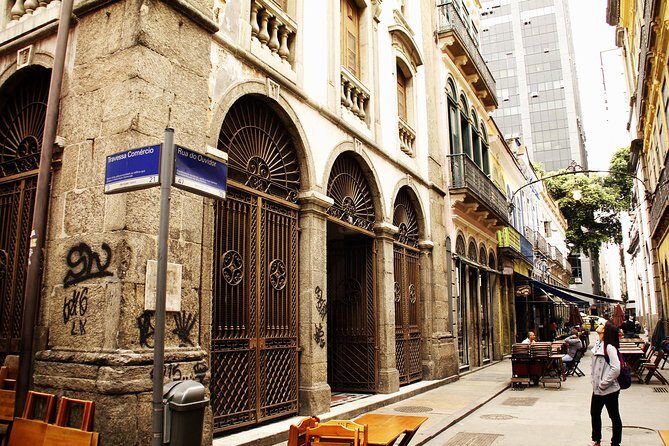
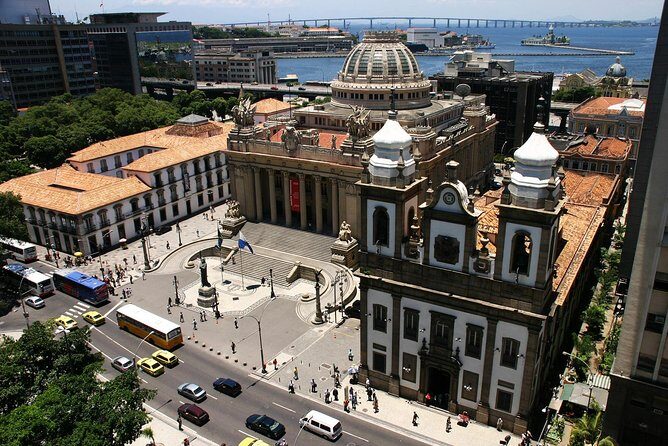
Next comes Praça XV do Novembro, a major square tied to the imperial era. This is where Brazil’s emperors were crowned in the 1800s and where important historical events played out.
This isn’t just trivia. Squares like this are where cities show their power: they’re built for gatherings, ceremonies, and visible authority. Walking through it with context helps you read the space instead of just passing through it.
From there, you’ll see the Paço Imperial (Imperial Palace), a Portuguese-style building designed as both a home and a workplace for Brazil’s rulers. The palace was built in the 1700s, and it was also the residency of the Portuguese Royal Family after their arrival in Brazil.
If you like “why this building exists,” you’ll enjoy this section. If you want just scenic pictures, you might feel like the time is slightly dense. The fix is simple: ask your guide what’s worth noticing from where you’re standing—then take your photos quickly.
You’ll also pass through the downtown market streets, which gives the walk a lived-in feel rather than turning it into a parade of monuments.
Mauá Square and the Olympic legacy: Museum of Tomorrow area without the confusion
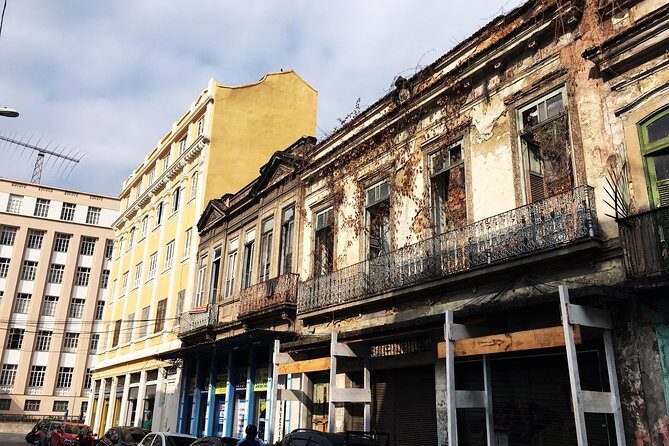
The tour then shifts from the heavy historic core toward the Olympic legacy transformation at Mauá Square. This is described as a gift from the Olympic legacy that changed life for Cariocas, creating a new pole of entertainment and culture.
In practical terms, this section helps you understand modern Rio as something built on top of older streets. You’ll see the Museum of Tomorrow and also references to Rio Art Museum and the cultural center vibe around this area.
A fun detail worth hunting for is the Cobra murals. Street art adds a layer of “current Rio” that you simply won’t get if you only stick to churches and palaces.
Also, the Museum of Tomorrow is the kind of place where your photos can disappoint if you don’t get the right angle. The tour format usually works because the guide points out how to position yourself, and you’re not spending an hour figuring out where to stand.
You can also read our reviews of more city tours in Rio de Janeiro






Confeitaria Colombo: take your 20 minutes, and yes, you’ll want a treat
A classic stop follows at Confeitaria Colombo, the famous bakery. The schedule gives you about 20 minutes, with admission listed as free.
This is not an included meal stop. Food and drinks are not part of the price, so treat it like a chance to taste one of Rio’s well-known café names rather than a full lunch solution.
Even if you only grab something small, this break is useful. After churches and squares, a short pause helps you keep your energy for the last stretch—especially if you’ve been walking under city heat and humidity.
One caution: if you’re hoping for extra time outside rather than inside, keep an eye on how the group moves. The plan gives a specific time window, and some days can feel a little more café-focused than others, depending on pace and traffic.
Uruguaiana Street to the Metropolitan Cathedral: the cone you can’t unsee
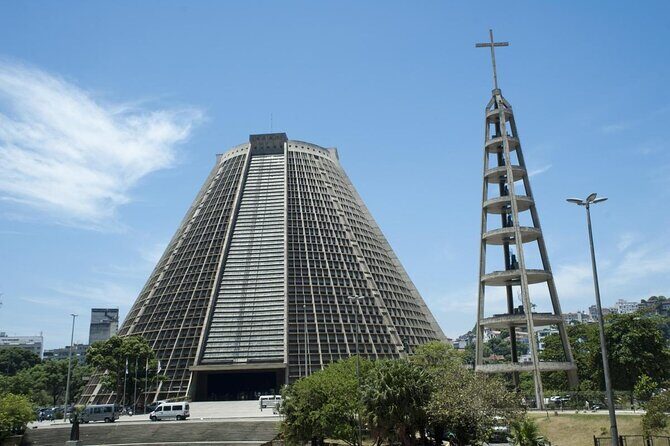
As you head toward the end of the tour, you’ll walk down Uruguaiana Street, and you’ll get views toward the Metropolitan Cathedral of Saint Sebastian and Carioca Square.
The cathedral is a showstopper. It’s conical in form, and the dimensions are huge: 96 metres internal diameter, 106 metres external diameter, and 75 metres overall height. That’s the kind of scale where it helps to have someone point out the structure so it doesn’t just look like a big shape from the sidewalk.
Admission is listed as free, and the schedule gives about 10 minutes inside. That’s enough time to understand why it’s architecturally important and to grab a few photos before you lose the light.
Carioca Square is a good finish line because it leaves you in a place where you can decide what you want next. You can keep exploring nearby on your own, or you can ride back to your hotel.
Price and value: what you get for $60.77
At $60.77 per person for about 4 hours, the value mostly comes from three things: coverage, access, and pickup.
First, you get a guided route that includes multiple high-impact stops: Candelária, São Bento Monastery, Praça XV, Paço Imperial, Mauá Square/Museum of Tomorrow area, Confeitaria Colombo, and the Metropolitan Cathedral. That’s a lot to stack into one afternoon if you’re trying to avoid running around downtown alone.
Second, the schedule lists free admission tickets at key stops like Candelária, São Bento, and the Metropolitan Cathedral. You’re not paying separately just to enter the major sights on the itinerary.
Third, roundtrip transfers are included for hotels in São Conrado, Leblon, Ipanema, and Copacabana. Those pickup and drop-off logistics matter in Rio, where moving across neighborhoods can eat up time.
What you should watch for is time allocation. Each site isn’t a long, deep visit, so this isn’t the best choice if you want a slow crawl. It’s best when you want an organized “see the essentials” afternoon and then follow up later on your own.
Who should book this Rio city walk (and who might not love it)
This tour fits you if you want a first-time orientation to Rio’s downtown and you like seeing how architecture and power shift across centuries. It’s especially good if you’re drawn to church art, ornate interiors, and palace-era buildings, because the stops focus heavily on that kind of sightseeing.
It also works well if you prefer a guided thread connecting everything. The São Bento and imperial-era landmarks can feel random without context, and that’s where the guide’s job really pays off.
Skip or rethink it if you’re not comfortable walking for a few hours or if you hate tight stop times. Some routes involve vehicle movement too, and on heavier traffic days you might end up with more “ride time” than “on-foot time.”
Small practical tips that make the tour easier
- Wear comfortable shoes. Downtown sidewalks are not always predictable, and you’ll cover multiple streets.
- If you’re meeting the pickup, go into your hotel reception rather than waiting outside. It’s a small move that can save you stress.
- Bring questions. This tour is built for a guide-led explanation, and asking early is the easiest way to get more meaning out of each stop.
- If you’re sensitive to pacing, tell your guide your priorities at the start. Some guides are known to adjust time at the sites depending on what you care about.
Should you book this Rio city walking tour?
If you want a guided afternoon that links old Brazil and imperial-era landmarks with the Olympic-era Museum of Tomorrow area, this is a strong pick. The combination of major churches, Praça XV and Paço Imperial context, and a final stop at the Metropolitan Cathedral gives you a complete “downtown story” in one run.
Book it if you want structure, not total freedom. You’ll finish with good bearings for the rest of your Rio days—and you’ll know which places deserve a second visit on your own.
Just be aware of one reality: you’re trading length for coverage. If you’d rather spend 90 minutes in one building than 10 minutes in five, choose a more focused itinerary instead. And if the tour doesn’t run as scheduled due to minimum numbers, plan on a rebook or refund option so you can still protect your trip plans.
FAQ
What sites will I see on this Rio walking tour?
You’ll visit or stop for views at the Church of Our Lady of the Candelária, São Bento Monastery, Praça XV do Novembro, Paço Imperial, the Museum of Tomorrow area at Mauá Square, Confeitaria Colombo, the Metropolitan Cathedral of Saint Sebastian, and you’ll end around Carioca Square.
How long is the tour and when does it start?
The tour runs about 4 hours and starts at 1:00 pm.
How much does it cost?
The price is $60.77 per person.
Is hotel pickup and drop-off included?
Yes. Hotel pickup and drop-off are included for Most Hotels in São Conrado, Leblon, Ipanema, and Copacabana.
Are entrance fees included?
The itinerary lists free admission tickets for the Church of Our Lady of the Candelária, São Bento Monastery, and the Metropolitan Cathedral of Saint Sebastian (and the Confeitaria Colombo stop is also listed with free admission).
Are food and drinks included?
No. Food and drinks are not included, so you’ll want to budget for any purchases during the café stop.