REVIEW · RIO DE JANEIRO
Rio de Janeiro: Little Africa Heritage Walking Tour
Book on GetYourGuide →Operated by Sou Mais Carioca · Bookable on GetYourGuide
Samba has a deeper address. This Little Africa Heritage walk ties African heritage to Rio’s port neighborhoods, with a rooftop view of Mauá Square and the story that leads you to Pedra do Sal, often called samba’s birthplace. I also like that the guide starts you with Brazil’s colonial context, so the streets make sense; just note it’s rain or shine and you’re on your feet about 2.5 hours.
You meet at Museu de Arte do Rio, and the tour is English-only, with guides such as Luana, Nathalia, Eddie, and Ryane earning praise for clear storytelling and patient answers. The main thing to plan for is logistics: there’s no hotel pickup, and the guide can wait only 15 minutes if you’re late.
In This Review
- Key highlights at a glance
- Why this Little Africa walk hits harder than a typical city stroll
- Starting at Museu de Arte do Rio: getting your bearings fast
- Morro da Conceição: the walk connects a hill to a story
- Largo da São Francisco da Prainha: African influence shows up on the ground
- The Mercedes Baptista statue stop: Afro dance, Brazilian recognition
- Pedra do Sal: samba’s birthplace, and why that claim matters
- Jardim Suspenso do Valongo and Cais do Valongo: ending at Valongo
- Price and timing: does $40 make sense for 150 minutes?
- Logistics that actually affect your day
- What the guides do exceptionally well (based on what’s repeatedly praised)
- Who should book this tour, and who might want a different option
- Should you book Rio de Janeiro: Little Africa Heritage Walking Tour?
- FAQ
- Where does the tour start?
- How long is the Rio’s Little Africa Heritage Walking Tour?
- How much does it cost?
- Is hotel pickup included?
- What language is the tour offered in?
- Does the tour run in bad weather?
- What should I bring?
- Is there a time limit for being late?
- Is this tour suitable for young children?
Key highlights at a glance
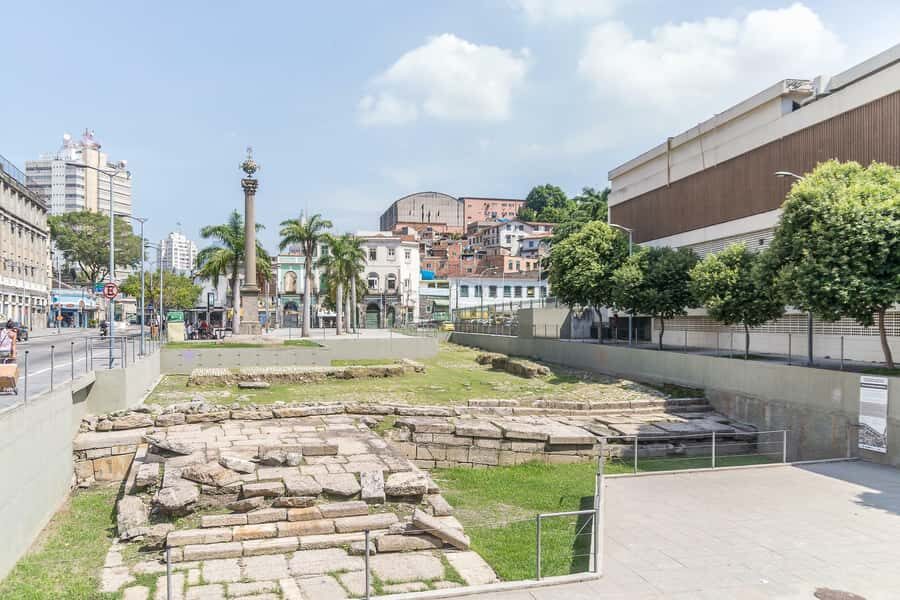
- Rooftop panoramas at Rio Art Museum: Mauá Square and Guanabara Bay in one quick, high-impact stop
- Little Africa context, not just names: the port neighborhoods that formed after the slave trade became illegal
- Food and culture connections at Largo da Prainha: African influence in Brazilian gastronomy
- Mercedes Baptista statue stop: Afro dance and a first black dancer at Rio’s Municipal Theater
- Pedra do Sal to Valongo: samba origins then a thoughtful ending at Jardim Suspenso do Valongo and Cais do Valongo
Why this Little Africa walk hits harder than a typical city stroll
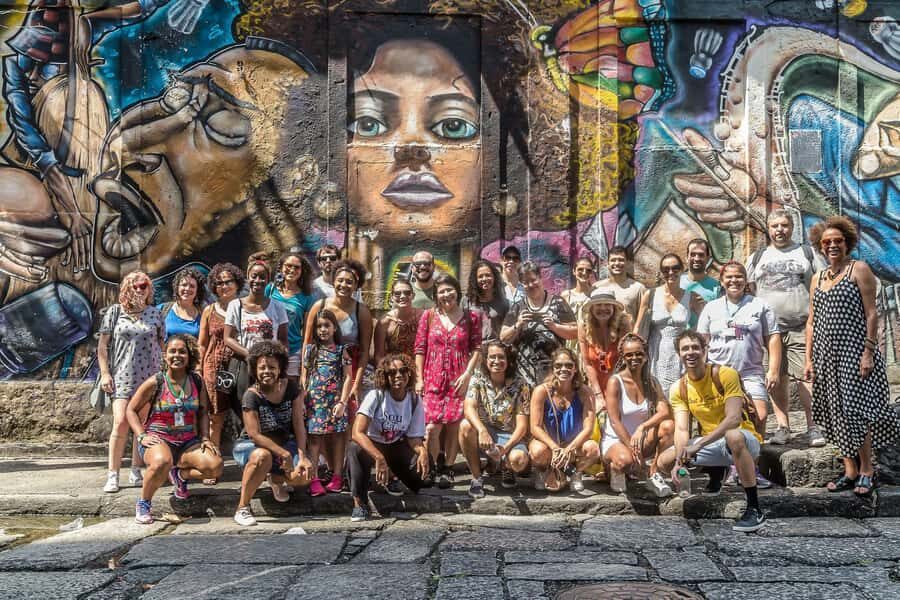
Rio’s postcard story is all about beaches, mountains, and Carnival. This walk gives you the other side: the African roots that shaped the port neighborhoods that came to be known as Little Africa around the turn of the 20th century.
What I like most is that you do not treat history like a museum caption. You connect the dots from colonial Brazil, to freed enslaved people staying in the area after the slave trade became illegal, to cultural life that shows up later in dance and music. And because you walk site to site, you start to recognize how the city’s geography shaped community life.
The vibe is educational, but it is also human. Many guides in the program are praised for storytelling that feels personal and thoughtful, not robotic. Just go in ready for topics that can be heavy, because the walk is honest about the past.
You can also read our reviews of more walking tours in Rio De Janeiro



Starting at Museu de Arte do Rio: getting your bearings fast
Your tour begins in front of Museu de Arte do Rio. This matters more than you might think. It is a clean starting point that helps you get oriented before you head into streets and landmarks that can feel disconnected if you arrive cold.
Right away, you get an introduction to Brazil during the colonial period. That short setup is the difference between memorizing facts and actually understanding why this part of Rio is important. You also get a brief break at the museum (10 minutes). It is a good moment to top up water and use the restroom before the walking ramps up.
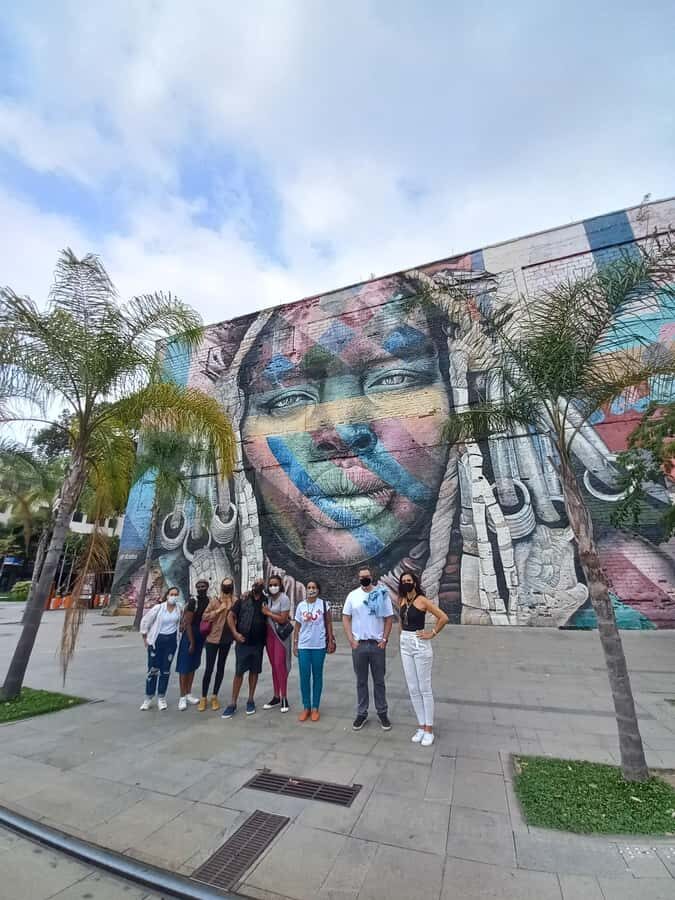
Then comes one of the best “arrival rewards” in the whole experience: a rooftop viewpoint from the museum. From up there, you can take in Mauá Square and Guanabara Bay, which gives context for why the port region mattered in the first place. Even if you know Rio already, seeing the bay from this angle helps.
Morro da Conceição: the walk connects a hill to a story
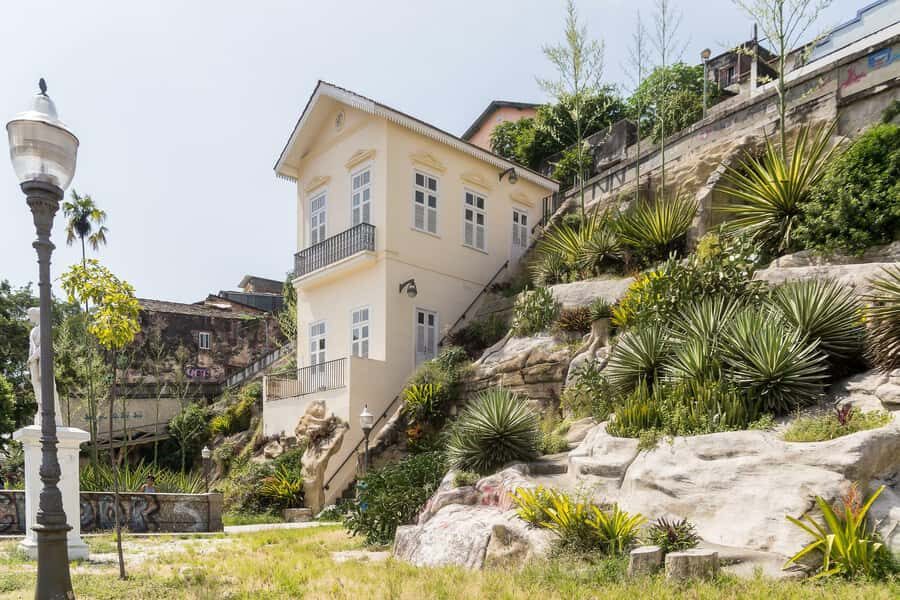
After the museum intro, you head toward Morro da Conceição. You will spend about 20 minutes here with guided walking and explanations.
Morro da Conceição works as a bridge stop. You are moving from big-picture history into the lived reality of neighborhoods. You get to see how the topography shapes movement, visibility, and community space in Rio. That is the kind of detail that makes the rest of the route easier to follow.
Because this is a walking tour, the pacing is also part of the value. You are not being rushed between stops. You get time to look up, look around, and hear how people’s lives intersected with the city’s economic and cultural systems.
Largo da São Francisco da Prainha: African influence shows up on the ground
Next you visit Largo da Prainha (the tour route includes Largo de São Francisco da Prainha). This is where the walk starts to feel like culture, not just chronology.
You learn about the African influence in Brazilian gastronomy. That is a smart angle, because food is one of the quickest ways culture becomes everyday. You are seeing how heritage travels through ingredients, flavors, and cooking traditions, even when the official story people hear first is incomplete.
One practical note: this is outdoor walking. Heat and sun can sneak up, so bring what the tour suggests—comfortable shoes, water, and sunscreen. You’ll thank yourself when the shade disappears.
The Mercedes Baptista statue stop: Afro dance, Brazilian recognition
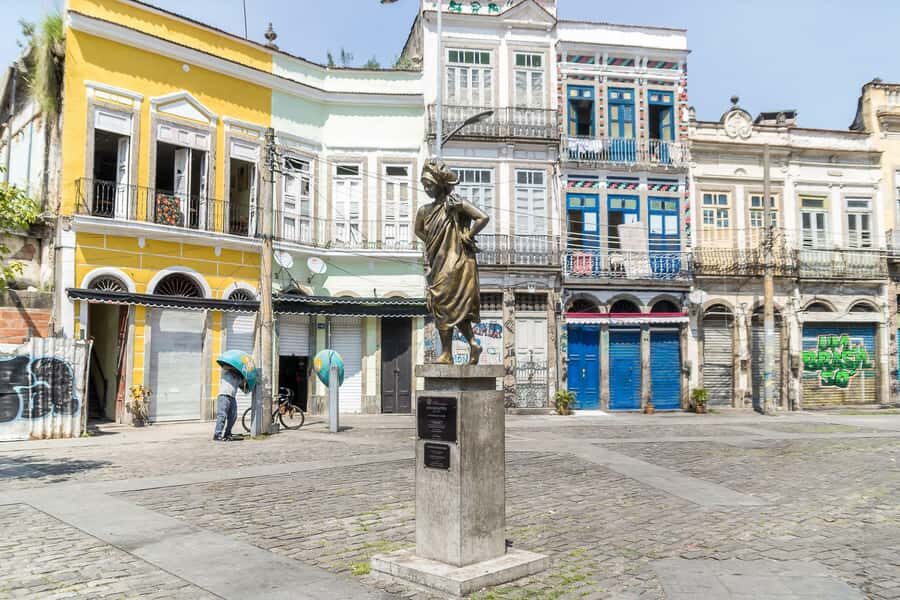
There is a specific stop for a statue honoring Mercedes Baptista, described as a forerunner of Afro dance in Brazil and the first black dancer at Rio’s Municipal Theater.
This stop is important because it shows a key theme of the whole tour: African heritage is not stuck in the past. It shows up in performance history, in who got recognized, and in how Brazilian culture evolved. Hearing this through a guide’s narration makes the statue feel like a story marker, not just a photo spot.
Also, the guide’s tone tends to matter here. In the program, multiple guides are praised for balancing sensitivity with clear explanation, and for asking thought-provoking questions. That kind of guidance helps you process what you’re seeing without turning it into a sad lecture.
You can also read our reviews of more historical tours in Rio De Janeiro





Pedra do Sal: samba’s birthplace, and why that claim matters
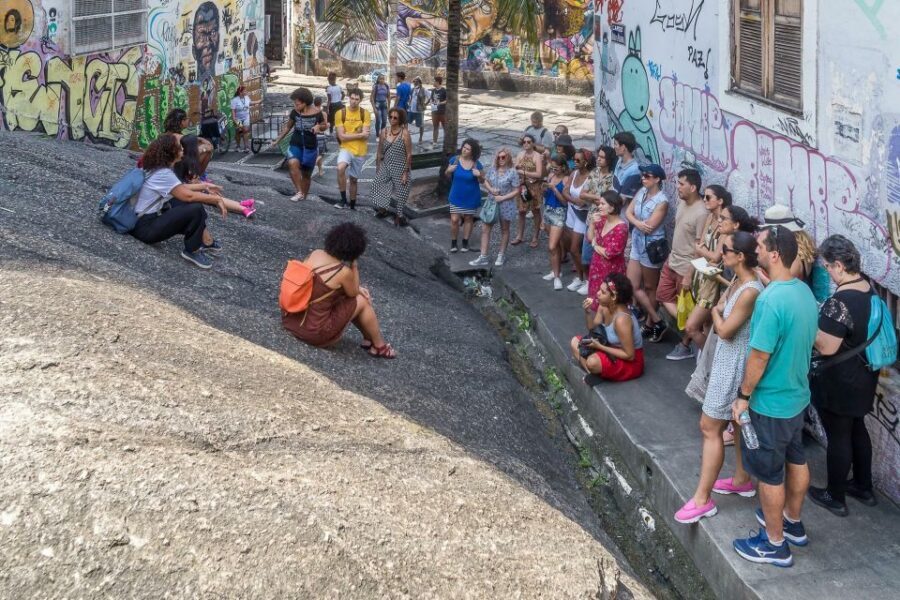
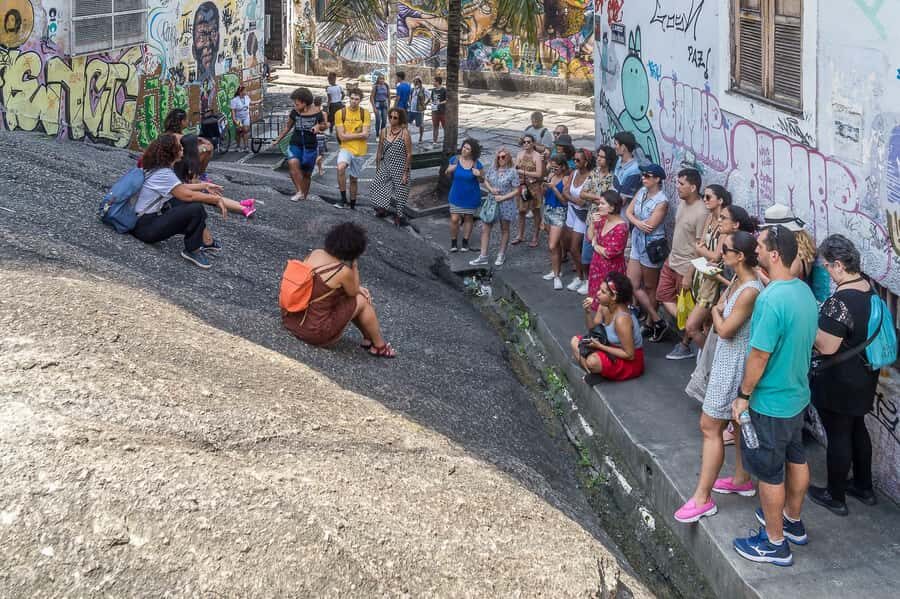
Then you reach Pedra do Sal, described as the place where samba was born. This is one of the stops that earns the strongest energy from the group, because it connects music to a real neighborhood rather than an abstract origin story.
Pedra do Sal is also tied to the idea of continuity. The area is considered the oldest continuously-inhabited black neighborhood in Brazil. That matters because it reframes what “birthplace” means. It is not just a single moment—it is a place where community endurance helped keep culture alive.
If you care about why samba feels the way it does—rhythms, communal energy, call-and-response vibes—this stop gives you the groundwork. You start to understand how a neighborhood can be both history lesson and living influence.
Jardim Suspenso do Valongo and Cais do Valongo: ending at Valongo
The tour’s last major segment brings you to the Jardim Suspenso do Valongo (Hanging Garden of Valongo), and then to Cais do Valongo. You end back in the area of Valongo.
This ending section is set up to leave you with a sense of place and gravity. The hanging garden name alone signals that the environment itself has a role in the story. And Cais do Valongo brings you to the waterfront context that fits with the port history the tour discussed at the start.
Even without getting overly technical, the route makes it clear that Rio’s port region was more than scenery. It was a point of contact, movement, labor, and cultural shaping. When the walk ends here, you’re not just tired—you’re mentally oriented.
Price and timing: does $40 make sense for 150 minutes?
At $40 per person for about 150 minutes, this is a solid value if you want guided structure. This is not a short “see a few spots” stroll. You get multiple landmark stops and a narrative that connects them—plus a rooftop viewpoint you would likely skip if you were wandering.
The math also works in practical terms. Your time is limited in Rio. Paying for a guide often saves you from the hardest part: figuring out what matters in the first place. Here, you get a path through the key sites tied to African heritage and the samba origin story.
Two timing realities to plan for:
- It runs rain or shine.
- It is a walking tour outside for roughly 2.5 hours, plus a short break.
So wear shoes you can walk in for real. Rio sidewalks can be uneven, and the sun can feel intense even when you think you’re fine.
Logistics that actually affect your day
There’s no hotel pickup and drop-off. You meet in front of Museu de Arte do Rio, and you should arrive about 5 minutes early. The guide can only wait 15 minutes if you’re delayed. That’s a bigger deal than it sounds, especially if you’re navigating Rio traffic or using ride-hail apps.
Also, the tour is English-only. If you’re traveling with someone who needs Portuguese interpretation, this is worth checking ahead of time.
And yes, it’s hot some days. Bringing water isn’t optional. The tour suggests it, and your legs will agree.
What the guides do exceptionally well (based on what’s repeatedly praised)
One reason this tour earns a standout rating is the guide quality. Multiple guides—Luana, Nathalia, Eddie, Ryane, Marina, Larissa, and others—are praised for passion, clarity, and pacing.
Here’s what that typically means for you:
- Storytelling that builds understanding: You start with the colonial period and move into the port neighborhoods so the sites don’t feel random.
- Time spent on explanations: Several notes emphasize that guides took their time and answered questions, instead of sprinting through the route.
- Sensitive handling of hard topics: Guides are praised for discussing slavery, structural racism, and related issues with care, including humor when appropriate to keep it human.
- Active engagement: Some guides ask thought-provoking questions that make the group participate instead of acting like spectators.
There are also small, human moments that show up in feedback, like guides helping participants coordinate after the tour, or giving recommendations for where to eat nearby. One participant even noted lunch and an enjoyable group wrap-up after the walk, including mention of bobô de camarão and mamata (depending on what’s available and what you choose afterward).
Who should book this tour, and who might want a different option
This is a great fit if you want to understand Rio beyond the obvious. If you care about Afro-Brazilian culture, samba roots, or how historical forces shape neighborhoods, you’ll likely feel the value fast.
It is also a strong choice if you like walking tours with a narrative thread. You will see multiple specific sites, and each one is tied to a point the guide is making.
It may be less ideal if you:
- Do not enjoy topic-heavy walks.
- Want a purely casual sightseeing loop.
- Travel with very young kids. The tour is not suitable for children under 5.
And if you have limited stamina, the rain-or-shine and 2.5-hour duration might be a factor. This isn’t a short, mostly optional “wander.”
Should you book Rio de Janeiro: Little Africa Heritage Walking Tour?
I think you should book it if you want a guided, meaningful way to experience Rio’s port history and African cultural influence. The combination of rooftop views, specific landmark stops (Pedra do Sal, Mercedes Baptista’s statue, Jardim Suspenso do Valongo, and Cais do Valongo), and a narrative that starts in the colonial period is exactly the kind of structure that turns sightseeing into understanding.
Book it especially if you’ll be in Rio long enough to do one guided deep-history activity and you want it to feel respectful and real, not like a checklist.
Skip it if you want an easy, low-energy walk with zero heavy themes. This tour is built to teach you something, and it does not shy away from the hard parts.
FAQ
Where does the tour start?
You meet in front of Museu de Arte do Rio.
How long is the Rio’s Little Africa Heritage Walking Tour?
It lasts about 150 minutes.
How much does it cost?
The price is $40 per person.
Is hotel pickup included?
No. There is no hotel pickup or drop-off.
What language is the tour offered in?
The tour is offered in English.
Does the tour run in bad weather?
Yes. The tour takes place rain or shine.
What should I bring?
Bring comfortable shoes, sunscreen, water, and comfortable clothes.
Is there a time limit for being late?
The guide can wait 15 minutes if you are delayed.
Is this tour suitable for young children?
No. It is not suitable for children under 5 years old.