REVIEW · RIO DE JANEIRO
Explore Little Africa : Unveiling Afro Heritage in Rio de Janeiro
Book on Viator →Operated by Agência Etnias Turismo e Cultura · Bookable on Viator
A single walk can change how you see Rio. This Little Africa tour strings together major places tied to Afro-Brazilian memory, from port history to church-adjacent heritage, with a decolonial lens and real-world context. I especially like the mix of short exterior stops and meaningful museum time, so you’re not just looking at buildings—you’re learning how the city records Black presence.
Two things I love: the guided storytelling at each stop (with lots of care for pacing) and the practical route that ends near another landmark area. One consideration: there’s a good amount of walking, plus a short public-transport ride, so you’ll want comfortable shoes.
Guides make or break a history tour, and this one has a strong track record with leaders like Raphael and Carolina, plus Rafael, Malu, and Val showing up in recent feedback. The tour also keeps you moving through neighborhoods that don’t get the same postcard treatment as Rio’s big-name sights. If you’re sensitive to heavy themes like slavery and institutional inequality, go in with an open mind and a ready heart.
In This Review
- Key highlights before you go
- Why Rio’s Little Africa story needs a guided route
- Meeting at Santuário de Santa Rita and getting oriented
- Matriz da Paroquia de Santa Rita: heritage with a decolonial frame
- Instituto de Pesquisa e Memoria Pretos Novos (IPN): memory you can feel
- MUHCAB in Gamboa: Afro-Brazilian history in a territory museum setting
- Cais do Valongo: port history that changes the meaning of Rio’s streets
- Pedra do Sal and the Saúde neighborhood: religious and historical meaning nearby
- Largo São Francisco da Prainha: zungus, Black presence, and the cool-factor
- How the guide experience shapes everything
- Price and logistics: what you’re really paying for
- Timing, heat, and getting good photos
- Who should book this Little Africa tour
- FAQ
- FAQ
- How long is Explore Little Africa: Unveiling Afro Heritage in Rio de Janeiro?
- What does it cost?
- Where does the tour start and end?
- Is any admission included?
- Do we ride public transport during the tour?
- Is lunch included?
- Is there a group size limit?
- Is the tour available every day?
- Is it wheelchair or mobility-friendly?
- What should I bring for the best experience?
- Should you book this tour?
Key highlights before you go
- Two included museum moments: the Instituto de Pesquisa e Memoria Pretos Novos (IPN) and the New Black Institute ticket
- Built-in context at major sites, including Cais do Valongo and the Saúde neighborhood landmarks
- A small group cap of 20 travelers, which helps the guide keep track of questions and pace
- Short VLT public-transport ride is included, so you’re not stuck walking every meter
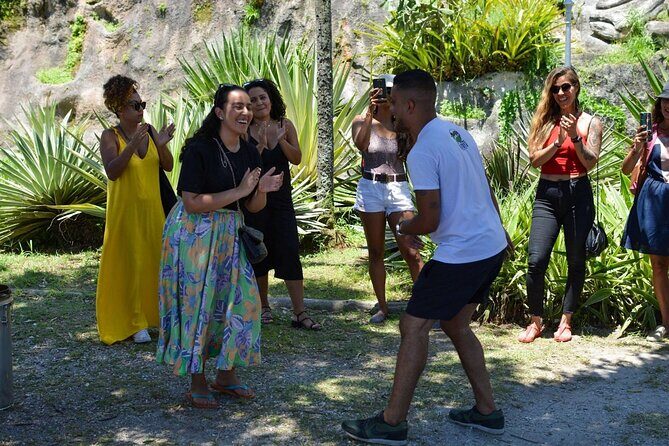
- Outdoor time + photos at places like Pedra do Sal and Largo São Francisco da Prainha, where Black presence is part of the story
- Good-weather dependent experience planning, since it involves street-level walking
Why Rio’s Little Africa story needs a guided route
Rio is famous for a few headline monuments, but it’s also packed with layered history you can miss if you just wander. This tour focuses on what’s often overlooked: how Afro-Brazilian culture, memory, and struggle show up in the city’s physical landmarks.
I like the tone here because it’s not only about facts. It’s about meaning. You’ll hit religious and cultural spaces, a research and memory institute tied to the Pretos Novos, and major port history connected to forced movement. Then you end in a square area associated with Little Africa and the zungus.
You can also read our reviews of more historical tours in Rio de Janeiro



Meeting at Santuário de Santa Rita and getting oriented
The tour starts at Santuário de Santa Rita in the Centro area (Largo de Santa Rita, s/nº). It runs about 3 hours 30 minutes, with a mix of walking and a short ride.
You’ll also get a brief push for practical navigation: the tour includes a short ride on the VLT public transport, which helps break up the route and keeps the walking manageable. Since the meeting and ending points are in different areas of the city, this format also saves you time versus trying to DIY the same sequence.
Matriz da Paroquia de Santa Rita: heritage with a decolonial frame
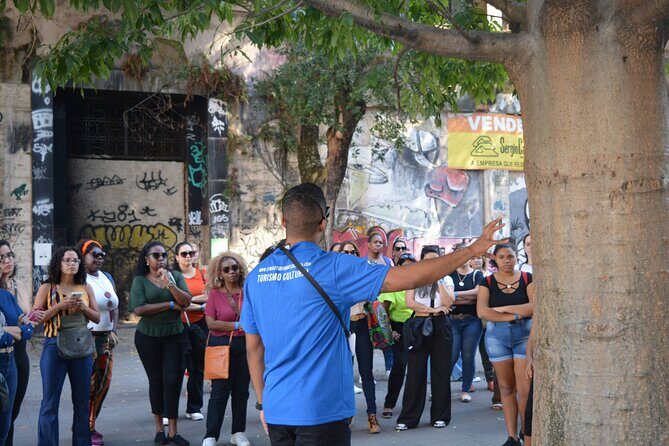
Your first stop is Matriz da Paroquia de Santa Rita. You’ll see it externally, with a heritage-based explanation tied to historical context and a decolonial narrative.
Why this matters: churches and plazas in Rio aren’t just architecture. They’re social anchors. Starting with this kind of framing sets you up to understand that later stops—port sites, research institutions, and Afro-Brazilian cultural museums—aren’t separate topics. They’re linked.
This is a 20-minute stop, so it’s not a long sermon. It’s a structured kickoff that helps you read what you’ll see next.
Instituto de Pesquisa e Memoria Pretos Novos (IPN): memory you can feel
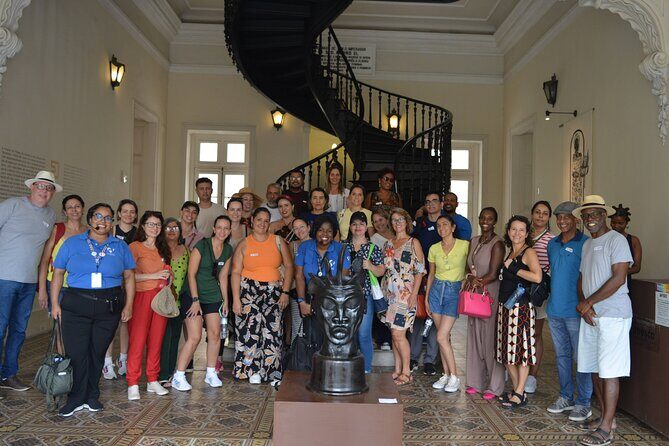
Next comes the Instituto de Pesquisa e Memoria Pretos Novos, often shortened to IPN. It’s described as an archaeological-focused place, and the stop includes the ticket for entry.
Plan for about 40 minutes here. The IPN is specifically described as a Brazilian institution in Rio de Janeiro tied to research and memory. That focus is the point. You’re not just looking at artifacts in isolation; you’re seeing how a city builds public memory around people who were brutalized by the slave system and then erased from easy storytelling.
If you’re hoping for a tour that doesn’t soften the hard parts, this is one of the segments that supports that goal. Many guides on this route are praised for compassion and for handling sensitive themes professionally.
MUHCAB in Gamboa: Afro-Brazilian history in a territory museum setting
After IPN, you’ll visit MUHCAB, the Museu da História e da Cultura Afro-Brasileira in the Gamboa region. Expect about 40 minutes. Admission is free for this stop.
This is the “culture and identity” portion of the day. The museum is positioned as a territory museum focused on Afro-Brazilian history and culture, which helps you connect the dots between the port and research sites earlier in the route and the neighborhood landmarks later.
A practical note: museum time can vary based on what your guide emphasizes and how your group questions land. The upside is that a smaller group size helps the guide adjust without dragging the pace.






Cais do Valongo: port history that changes the meaning of Rio’s streets
Then you head to Cais do Valongo, the Valongo Wharf, in Rio’s port district. This is another external visit, around 30 minutes, with free admission.
This stop is important because it anchors the whole story in the physical reality of forced arrival and movement. Port districts are busy even when you don’t notice the history. With the guide’s context, the same streets start to feel like a timeline.
If your brain wants visuals, this is also a good place for photos—just remember that you’re in an active urban port area, so keep an eye on where you stand and how long you’ve blocked others for the shot.
Pedra do Sal and the Saúde neighborhood: religious and historical meaning nearby
Next up is Pedra do Sal, in the Saúde neighborhood near Largo da Prainha. It’s an external visit and runs about 25 minutes, free.
Pedra do Sal is described as both a historical and religious landmark. The way this stop connects to the later square area gives you a clearer sense of how sacred space, community identity, and public memory can overlap in one small stretch of the city.
Then you’ll keep moving toward the heart of Little Africa storytelling.
Largo São Francisco da Prainha: zungus, Black presence, and the cool-factor
Your final stop is Largo São Francisco da Prainha. This is an external visit with about 20 minutes. Admission is free.
This square is described as a symbolic territory of Little Africa marked by Black presence and the zungus. The route ends here at R. São Francisco da Prainha, 7, in Saúde.
One extra detail that’s hard to ignore: this is also described as one of the coolest places in Rio by Time Out. So you get two things at once: a serious historical frame and a neighborhood vibe that feels modern in the best way.
How the guide experience shapes everything
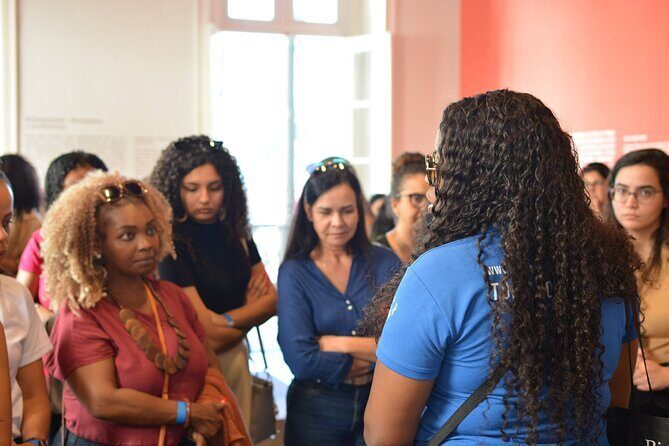
A tour like this lives or dies by how the guide handles pacing, tough themes, and questions. The standout detail across recent feedback is that guides focus on clear explanation and thoughtful adjustments.
You’ll see names like Raphael, Rafael, Carolina, Malu, Val, and Carol in past groups’ praise. People repeatedly highlight that the guides manage questions comfortably and keep the group moving without rushing. One of the most meaningful bits of feedback is about compassion—like adjusting the walking pace for someone who couldn’t manage everything.
So here’s the practical take: if you care about context, not just photos, pick this tour even if you think you already “know slavery history.” This route teaches you to read Rio itself as a document of Afro-Brazilian presence.
Price and logistics: what you’re really paying for
The price is $82.53 per person for about 3 hours 30 minutes. That sounds modest on paper, but the value comes from what’s included and what you don’t have to plan yourself.
You get:
- all fees and taxes
- the included ticket for the New Black Institute
- the IPN stop admission
- the short VLT ride
- a route that pairs free external stops with the ticketed museum components
What you don’t get:
- lunch
- tips
To me, the value is strongest if you want a guided route that already handles transport and ticket pieces. If you’re the type who likes building your own day, you could probably assemble something similar. But if you want to focus on learning and not on coordination, this price tends to make sense.
Timing, heat, and getting good photos
This tour requires good weather, which matters in Rio. Also, most of the walking is outdoors. Comfort isn’t optional.
There’s also a timing trade-off. One piece of guidance from past comments suggests doing the tour earlier in the day because the last part can get dark and reduce photo quality. At the same time, the operator has a practical reason to like afternoon departures: Rio heat can get intense (over 40°C), and people often get hungry and less focused when they’re exhausted. After the sun starts dropping, it can be easier to keep attention and energy.
My advice: choose a time that matches your tolerance for heat and your photo priorities. If you’re sensitive to sunlight and fatigue, plan earlier. If you handle heat fine and prefer fewer crowds and better stamina later, afternoon can work well.
And regardless of time: pack comfortable shoes. Even with a short VLT ride, you’re moving through multiple sites.
Who should book this Little Africa tour
This experience is described as suitable for most travelers, with service animals allowed and the route near public transport. But it’s also noted as not recommended for people with disabilities, which usually means uneven terrain and a lot of walking.
You’ll likely enjoy this tour most if:
- you want a focused story about Afro-Brazilian history in Rio’s actual neighborhoods
- you’re okay with themes tied to slavery and institutional inequality
- you like guided interpretation that connects places to meaning, not just dates
- you want a smaller group setting (max 20) so questions don’t get swallowed
If you want only light sightseeing with zero heavy context, this probably won’t be the best match.
FAQ
FAQ
How long is Explore Little Africa: Unveiling Afro Heritage in Rio de Janeiro?
It runs about 3 hours 30 minutes (approx.).
What does it cost?
The price is $82.53 per person.
Where does the tour start and end?
It starts at Santuário de Santa Rita, Largo de Santa Rita, s/nº – Centro, Rio de Janeiro, and ends at R. São Francisco da Prainha, 7 – Saúde, Rio de Janeiro (Largo da Prainha).
Is any admission included?
Yes. The ticket for the New Black Institute is included, and the IPN stop includes admission. Other listed stops are described as free external visits.
Do we ride public transport during the tour?
Yes. The tour includes a short ride on the VLT public transport, and that ride is included in the final price.
Is lunch included?
No. Lunch is not included.
Is there a group size limit?
Yes. The maximum group size is 20 travelers.
Is the tour available every day?
It notes that on Sundays, the New Black Institute is closed. It also says that from 16th December to 5th January and during Carnival season, all museums will be closed.
Is it wheelchair or mobility-friendly?
It’s not recommended for disabled people, and the tour involves walking and outdoor stops.
What should I bring for the best experience?
Comfortable shoes are a must since you’ll walk between several sites. Also be ready for street-level outdoor time.
Should you book this tour?
If you want the part of Rio that often gets skipped—the Afro-Brazilian story written into ports, plazas, research spaces, and community-linked landmarks—this is a strong pick. The included tickets, small group size, and consistent praise for guides like Raphael and Carolina make it feel like time you’re spending on purpose, not just checking boxes.
Book it when you’re ready for context and honest history, and when you can handle a walking-heavy half day. If you’re seeking relaxed sightseeing with minimal emotional weight, you might prefer a lighter route. But if you want Rio to make sense beyond the obvious views, this Little Africa walk is one of the better ways to do it.