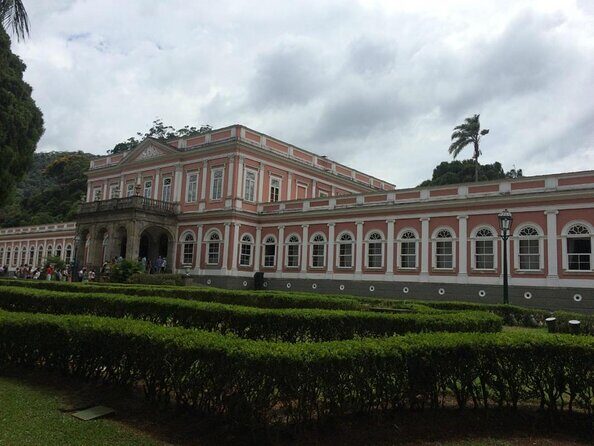
REVIEW · RIO DE JANEIRO
Learn the History of Rio with an Unforgettable City Center Walking Tour
Book on Viator →Operated by RFWTour · Bookable on Viator
Rio’s Centro tells stories fast.
This private walking tour strings together major landmarks so you understand how Rio’s arts, religion, and street life grew into the city you see today. You’ll cover everything on foot with a guide who can steer the pace and customize what you focus on, and the big sites along the way list free admission.
I especially like two things: first, the tour is private for your party, so you’re not stuck listening while your group gets split or rushed. Second, the route hits the places that explain Rio’s identity in plain sight—starting with the Theatro Municipal and ending at Paço Imperial, two anchors of the Centro.
One possible drawback: because it’s time-based, you’ll want to pay attention to pacing. There’s at least one cautionary note about a tour feeling shorter than expected, so it’s smart to set your expectation early about how long you’ll spend at each stop.
In This Review
- Key highlights you’ll feel on this Rio walking tour
- A 3-hour Centro stroll that ties Rio’s story together
- Where you start and end: Theatro Municipal to Paço Imperial
- Stop 1: Theatro Municipal of Rio de Janeiro (your arts intro)
- Stop 2: Cinelândia and the movie-theater era
- Stop 3: Escadaria Selarón, the tile staircase you can’t skip
- Stop 4: Arcos da Lapa in bohemian Lapa
- Stop 5: Metropolitan Cathedral of Saint Sebastian
- Stop 6: Largo da Carioca, where the oldest buildings sit
- Stop 7: Confeitaria Colombo for a traditional coffee-and-bakery stop
- Stop 8: Paço Imperial, the historic-squares finale
- Price and value: what $49.05 buys you (and why it’s not just walking)
- Private guide pacing: what to expect from Rafael- or Danielle-style tours
- Timing, heat, and the real-world “Rio checklist”
- Who should book this Rio Centro history walk
- Should you book this Rio Centro walking tour?
- FAQ
- How long is the Rio Centro walking tour?
- What does it cost?
- Is the tour private?
- Where do we meet, and where does the tour end?
- What’s included in the price?
- Are entrance tickets included?
- Do I need to bring anything?
- What should I know about entry requirements?
- Can I cancel for a refund?
Key highlights you’ll feel on this Rio walking tour
- Private, flexible route: the guide can adjust the walk to what you care about most.
- All day-center stops with free entry: major sights along the Centro route are listed as free admission.
- Selarón + Lapa close together: street art color at Escadaria Selarón, then the old aqueduct arches in Lapa.
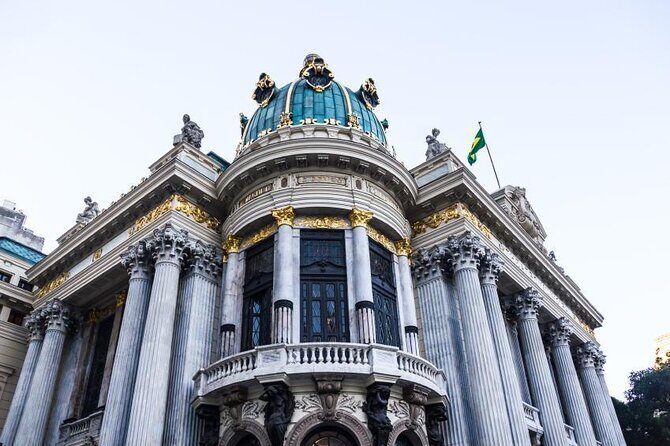
- Architecture that tells a timeline: opera house, cathedral design, and historic squares back-to-back.
- Classic Rio break point: a stop at Confeitaria Colombo, a traditional coffee shop and bakery.
A 3-hour Centro stroll that ties Rio’s story together
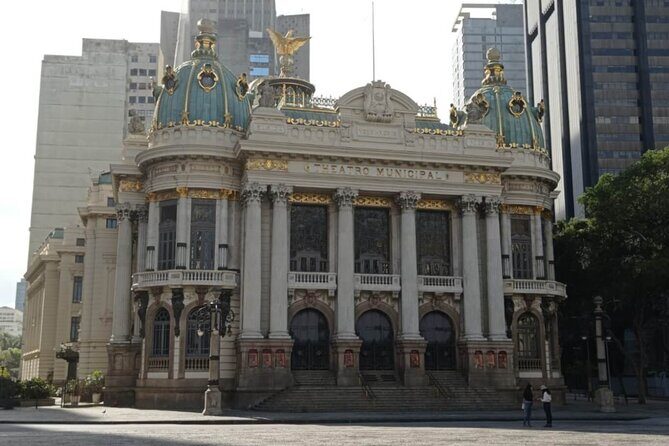
Rio’s Centro can feel like you need a map and a history book at the same time. This tour is built for that exact problem. In roughly 3 hours, you cover several landmark “chapters” without pretending you can master Rio in one afternoon.
I like how the walk mixes culture with civic space. You’re not only staring at monuments. You’re moving through squares and streets where daily life, big ideas, and public buildings overlap. That’s the key to understanding Rio: the city tells its story in what’s next to what.
And since this is a private experience for your party, you can ask follow-up questions as you go. Guides like Rafael and Danielle have been praised for making history and architecture feel clear, not like a lecture you have to decode.
You can also read our reviews of more walking tours in Rio de Janeiro



Where you start and end: Theatro Municipal to Paço Imperial

You meet at the Municipal Theater of Rio de Janeiro (Praça Floriano, S/N – Centro). It’s a strong starting point because it immediately signals “arts and public identity.” Even if opera isn’t your thing, the setting helps you understand why Rio invested in major cultural buildings.
The tour ends at Paço Imperial (Praça Quinze de Novembro, 48 – Centro). Paço Imperial is one of the most important historic squares in Brazil, so ending here feels like reaching the “roots” section of your walk.
One practical tip: Paço Imperial’s listed opening hours are Monday–Saturday, 9:30 AM–2:00 PM (for the given date range). If your tour timing lands close to the cutoff, check in with your guide so you don’t feel rushed at the end.
If you want to retrace steps, the guide can lead you back toward Cinelândia.
Stop 1: Theatro Municipal of Rio de Janeiro (your arts intro)
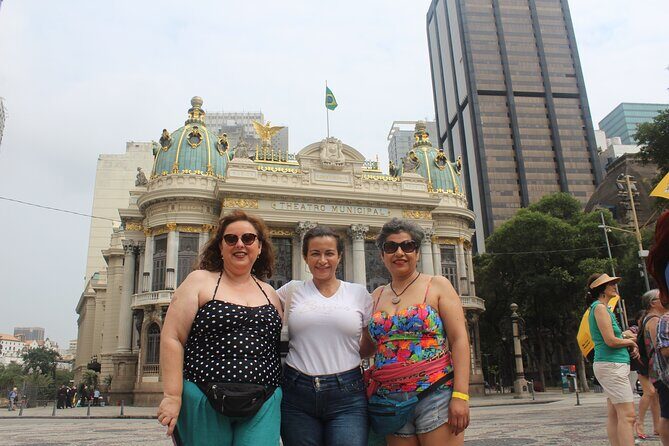
This first stop is the Theatro Municipal do Rio de Janeiro, the meeting point and your first big visual anchor. Since the admission is listed as free, it’s an easy win early in the walk.
Why start here? Because it’s a quick way to understand how Rio viewed culture as something worth building big and public. From there, you move into nearby civic spaces where entertainment, architecture, and status all start to connect.
Possible drawback: if you’re the kind of person who wants lots of time inside buildings, you might find the stop is more about orientation than deep interior touring. That’s normal for a walking tour, but it’s good to know what kind of visit you’re buying.
Stop 2: Cinelândia and the movie-theater era

Next up is Cinelândia, the square associated with the first movie theaters in Rio, plus several important historical buildings. This is where the tour shifts from grand “culture” to how mass entertainment changed the city.
Even from outside, the area works because a square is a story format: buildings face each other, and you can see how planning shapes movement. You’ll get a sense of how Rio’s public life organized itself around entertainment and major institutions.
What I like here is the timing. You’ve already got arts context from the Theatro Municipal. Then Cinelândia adds a newer layer—how the city’s identity started showing up in movie theaters and prominent structures.
Stop 3: Escadaria Selarón, the tile staircase you can’t skip
Then comes the stop that many people dream about before they even book. Escadaria Selarón is the staircase decorated with colored tiles from all over the world, and it’s described as a must-see.
This is the moment where the tour becomes less formal. You’re watching art in motion—color, texture, and a kind of public creativity you can’t replicate with a museum alone. It’s also a great breather on a walking route because you can pause, look up, take photos, and let your brain rest between heavier architecture stops.
Possible drawback: it can be crowded at popular times, and a short scheduled stop means you’ll have to pick what you zoom in on. If you’re detail-focused, tell your guide you want a slower look at the tile work.
You can also read our reviews of more city tours in Rio de Janeiro






Stop 4: Arcos da Lapa in bohemian Lapa
From the tile staircase, you walk to Arcos da Lapa in Lapa, the famous bohemian neighborhood where the arches—former aqueduct—sit. This stop connects old infrastructure to later neighborhood character.
Why it matters: you’re no longer just looking at a pretty façade. You’re seeing the afterlife of city engineering. A former aqueduct doesn’t just disappear. It gets repurposed in the urban story—becoming a landmark that people build their nights and gatherings around.
If you like places where history and nightlife overlap, this stop is the right kind of “contrast.” Daytime city planning, then Lapa’s reputation, all in one compact walk.
Stop 5: Metropolitan Cathedral of Saint Sebastian
Next is the Metropolitan Cathedral of Saint Sebastian, known for unique architecture. This is one of the tour’s best “big design” stops because cathedrals often represent more than religion—they reflect how a society wants to be seen.
Even if you only spend a short time here, you’ll likely notice the scale and the way the building holds space around it. That’s why it works in a walking tour: the architecture becomes a physical landmark that helps you orient your mental map of the Centro.
Possible drawback: if your interests are strictly street-level—food, markets, everyday neighborhoods—you might find this stop feels more “structure-focused” than “scene-focused.” Still, it’s an important chapter in the route.
Stop 6: Largo da Carioca, where the oldest buildings sit
Then you hit Largo da Carioca, described as the square with the oldest buildings in the city. This is a classic walking-tour move done well: you come from a modern-feeling architectural moment and then step into older urban layers.
A square like this helps you connect the dots. Buildings around it aren’t just pretty—they show you how long Rio’s Centro has held onto its core civic identity. This stop also works as a reference point for everything you’ll see later in the day.
If you like to understand cities in time order, this is where you start feeling the timeline. It’s not one straight “walk forward.” It’s a back-and-forth through different eras.
Stop 7: Confeitaria Colombo for a traditional coffee-and-bakery stop
Next, you stop at Confeitaria Colombo, described as the most traditional coffee shop and bakery in the city. This is where the tour offers something that matters for energy and enjoyment: a place to slow down, smell coffee, and decide what kind of break you want.
The tour doesn’t include food or drinks, so you’re not buying anything as part of the package. But the stop is still valuable because it gives you a real-world “Rio pause.” It also breaks up the walking so your photos don’t feel like sprinting.
Practical tip: since you’ll already be outside in Centro, consider planning your food moment here instead of later. You’ll be less likely to scramble and more likely to enjoy it.
Stop 8: Paço Imperial, the historic-squares finale
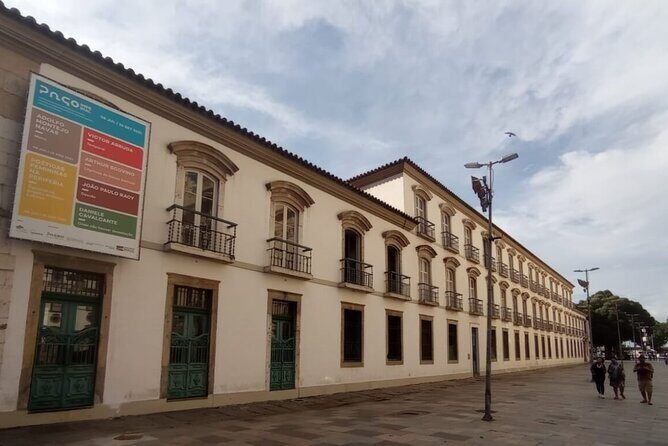
Finally, you reach Paço Imperial, one of the most important historic squares in Brazil. Ending here makes sense because the tour started with Rio’s public cultural icon and ends on a historic square tied to Brazil’s wider story.
At this stage, you’re not only looking at one building. You’re absorbing the overall shape of the walk: arts, entertainment, public art, civic spaces, and historic grounding.
Because the end point has listed hours (Monday–Saturday 9:30 AM–2:00 PM), your guide’s timing matters. If you’re sensitive to schedule pressure, ask your guide how they plan to pace the last stop before you start.
Price and value: what $49.05 buys you (and why it’s not just walking)
At $49.05 per person for about 3 hours, you’re paying mainly for three things: a guide, a smart route, and time saved from figuring out what to prioritize.
You’re not paying for museum admissions here. Each stop is listed as free admission, which makes the price easier to justify. The guide also gives structure, so you aren’t guessing what you should pay attention to at each landmark.
What’s not included is also clear: transportation and food/drinks are on you. That’s normal, but it changes how you should budget. If you plan to add a coffee or snack at Confeitaria Colombo, treat that as extra.
The best “value signal” is the format: it’s private for your group, and flexibility is part of the deal. In a city like Rio, that can matter more than squeezing in a long checklist.
Private guide pacing: what to expect from Rafael- or Danielle-style tours
The reviews highlight guides who keep the walk friendly and informative. Names like Rafael and Danielle come up with praise for guiding people through Rio’s history and architecture in an engaging way.
That’s the ideal guiding style for this kind of route: explain just enough context to make the buildings “click,” then give you room to look around. The route includes visual-heavy stops, so your guide’s job is to connect what you see to what you’re supposed to remember.
One consideration based on a cautionary note: if you care about seeing every stop fully, don’t assume the tour will run “comfortably long.” Ask early how they pace time at each site. In plain terms: you want to know whether 3 hours means quick photo stops or a slower look with explanations.
A good private guide will meet you in the middle—history that’s readable, plus time to enjoy the street scenes.
Timing, heat, and the real-world “Rio checklist”
Rio can get hot, especially in summer, and the tour info explicitly reminds you to bring bottled water. I’d treat that as non-negotiable. Walking in Centro in high heat can drain your energy fast, and you’ll enjoy the architecture more if you don’t feel dehydrated.
Also, plan around local rules. The tour info states that, as per city law, showing a COVID-19 vaccination document is mandatory to visit the tourist attractions in the city. If you don’t have it, you could get stuck at entrances even when admission is listed as free. That’s one of those details that can ruin a plan, so check your documents before you go.
Good news for logistics: the tour is near public transportation, and most people can participate. Service animals are allowed too, which is helpful if anyone in your party needs that support.
Finally, this experience is often booked ahead—on average 30 days in advance. If you want a specific day or time window, don’t wait until the last week.
Who should book this Rio Centro history walk
This tour is a strong match if you:
- Want a clear first pass through Rio’s Centro without bouncing between far-flung neighborhoods.
- Like understanding cities through architecture + public squares, not only beaches or viewpoints.
- Prefer a guided plan that you can adjust for your interests.
- Are okay with a short stop at each highlight, with time to look and ask questions.
It’s also smart for groups who want structure but don’t want to sit in a bus. You’ll get the sights in sequence and build a mental map as you walk.
If you dislike walking in heat or want lots of time inside buildings, you might find a walking tour format tighter than you prefer. But the inclusion of free admission stops helps keep the pace manageable.
Should you book this Rio Centro walking tour?
I’d book it if you want a compact, high-impact way to learn Rio’s Centro story. The route covers major landmarks with free admission, the experience is private, and the guide can tailor the focus. That combination usually means you leave with a clearer sense of what you saw and why it matters.
I’d also book it knowing what could go wrong: if you’re expecting long stays at every site, set expectations with your guide early about pacing. And don’t forget the practical stuff—water for the heat and your COVID-19 document for attraction entry.
If you’re planning a first trip to Rio and want to “get your bearings fast” in the city center, this walk is a good value use of a morning or afternoon.
FAQ
How long is the Rio Centro walking tour?
It’s about 3 hours (approx.).
What does it cost?
The price is $49.05 per person.
Is the tour private?
Yes. It’s a private tour/activity, and only your group participates.
Where do we meet, and where does the tour end?
You start at the Municipal Theater of Rio de Janeiro at Praça Floriano, S/N – Centro. You end at Paço Imperial at Praça Quinze de Novembro, 48 – Centro.
What’s included in the price?
A tour guide is included.
Are entrance tickets included?
Admission is listed as free for the stops on the tour route.
Do I need to bring anything?
Bring bottled water, since Rio can be hot. Also, bring your smile.
What should I know about entry requirements?
The tour info says showing a COVID-19 vaccination document is mandatory to visit the tourist attractions in the city.
Can I cancel for a refund?
Yes. You can cancel up to 24 hours in advance for a full refund. If you cancel less than 24 hours before the start time, the amount paid is not refunded.