REVIEW · RIO DE JANEIRO
Walking tour of the bohemian neighborhoods of Santa Teresa and Lapa
Book on Viator →Operated by Good Guide In Rio · Bookable on Viator
Santa Teresa starts with a climb. This is one of my favorite ways to see Rio’s bohemian side fast, because you combine the yellow Bonde tram with a relaxed walk through Santa Teresa’s viewpoints and Lapa’s big-city showpieces. I love the mix of scenic rides and street-level architecture, and I especially like how local guides such as Edmundo, Lorena, or Ivan bring the neighborhood to life with personal stories. One possible drawback: the route includes hills and staircases, so comfy shoes matter.
What makes this tour work is the pacing. You stop for views at Santa Teresa’s viewpoints, then you head down to the famous Escadaria Selarón and the Arcos da Lapa aqueduct, and you finish at Cinelândia’s grand buildings—all in about 3 hours 30 minutes. The price also feels practical because the tram ticket is included and the other main sights are free-entry stops.
This is a small group tour (up to 12 people), so you’re not stuck in a crowd shuffle. If you’re traveling solo, a couple, or you want a guided plan without losing the freedom to look around, this format is a smart choice.
In This Review
- Key highlights worth marking on your mental map
- Entering the Santa Teresa to Lapa route (and why it stays fun)
- The yellow tram at Santa Teresa: your built-in viewpoint
- Largo dos Guimarães: the heart of Santa Teresa’s street life
- Parque das Ruínas: Laurinda Santos Lobo’s viewpoint over Rio
- Escadaria Selarón: stairs that became an ongoing art project
- Arcos da Lapa: the aqueduct, the graffiti, and the sense of history in motion
- Cinelândia: finish with Rio’s grand civic square sights
- Price and value: is $72.09 a fair deal?
- Choosing a guide: Edmundo, Lorena, and Ivan as standout examples
- What to bring and how to plan your morning
- Who should book this Santa Teresa to Lapa walk?
- Should you book it?
- FAQ
- How long is the walking tour?
- How much does the tour cost?
- What time does the tour start?
- Where does the tour begin?
- Does the tour end at the same meeting point?
- What’s included in the price for admissions?
- How many people are in the group?
- Which stops are part of the route?
- What if the tour is canceled because the minimum number of travelers isn’t met?
- Is the experience refundable if I cancel?
Key highlights worth marking on your mental map
- The yellow Bonde tram up to Santa Teresa for panoramic views without a full workout
- Largo dos Guimarães for old houses, street energy, and classic Santa Teresa viewpoints
- Parque das Ruínas with the gazebo view toward Centro, the Arches of Lapa, Christ, and Botafogo
- Escadaria Selarón where George Selarón’s color-splashed staircase turns a stair climb into an art moment
- Arcos da Lapa aqueduct under the arches with graffiti and the sense of old Rio still flowing below
Entering the Santa Teresa to Lapa route (and why it stays fun)
Santa Teresa and Lapa are neighbors in Rio’s geography, but they feel like different worlds. Santa Teresa sits high on the hills, with slow streets, balconies, and that artsy, lived-in vibe. Lapa drops you into a louder, more public Rio with the aqueduct arches and big downtown landmarks.
The value here is that you don’t just “check boxes.” You move through the city in the same rhythm locals do: rise by tram, wander for views and details, then descend toward major sights. In a half-day span, you get the best of both neighborhoods’ energy.
You can also read our reviews of more walking tours in Rio de Janeiro



The yellow tram at Santa Teresa: your built-in viewpoint
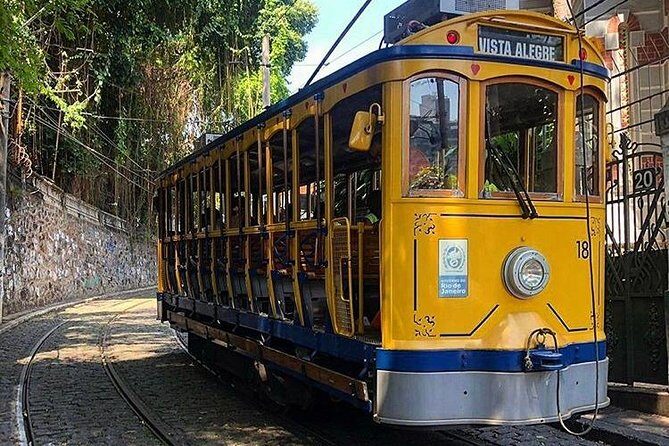
Stop 1 is the Station of Santa Teresa trams, where you ride the famous yellow Bonde tram uphill. The ride is about thirty minutes and is described as panoramic—meaning you’re not just traveling, you’re looking.
What I like about this part is that it turns the first stretch into something pleasant instead of a chore. Yes, Santa Teresa is hilly, but the tram gives you the height and angles for free (well, included in your tour). Even if you’re not a “tram person,” it’s a great way to get your bearings fast.
Practical note: bring your camera early. The nicest photo moments usually happen before you’ve finished acclimating to the slope and the light.
Largo dos Guimarães: the heart of Santa Teresa’s street life
Next you stroll around Largo dos Guimarães, right in the middle of Santa Teresa. This is where the neighborhood’s architecture starts to feel personal—homes dating from the end of the 1800s into the early 1900s, plus the mix of small restaurants and bars that keep the square alive.
What makes this stop worthwhile is how it sets the tone for the rest of the morning. From street corners and small vantage points, Santa Teresa’s charm isn’t abstract. It’s visible in façades, staircases, and how people use the space.
Because it’s a free-entry stop with time built in, you can take it slow. If you like browsing menus, people-watching, or simply photographing doors and balconies, this is the moment to do it.
Parque das Ruínas: Laurinda Santos Lobo’s viewpoint over Rio
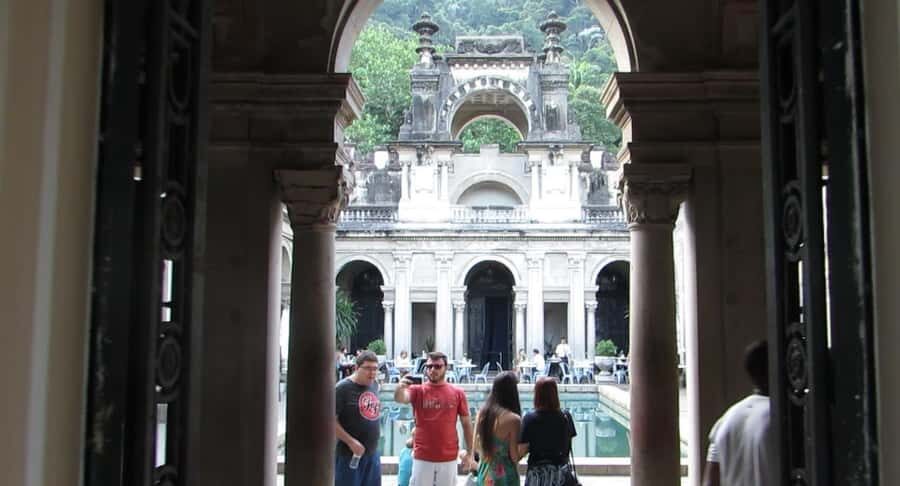
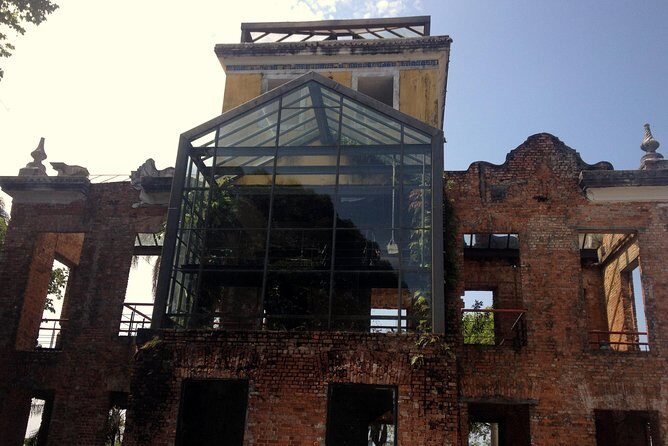
Then you reach Centro Cultural Municipal Parque das Ruínas, one of Santa Teresa’s iconic points. The site was the former home of Laurinda Santos Lobo, and it’s now transformed into a gazebo-style spot with an impressive view.
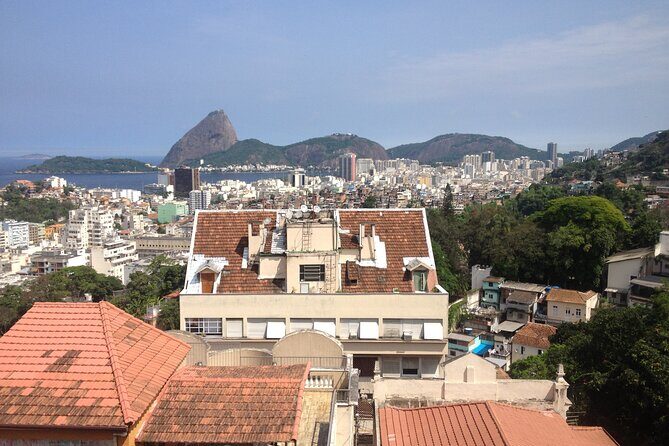
This is a “stop and look” moment. From here, you can take in a wide view that reaches toward Centro, the Arches of Lapa, Christ, and Botafogo. That’s a lot of Rio in one frame, and you get it without needing to plan separate sightseeing.
One consideration: viewpoints are great, but they can also feel windy or bright. If you’re sensitive to strong sun, plan to use sunglasses and consider a light layer you can manage.
Escadaria Selarón: stairs that became an ongoing art project
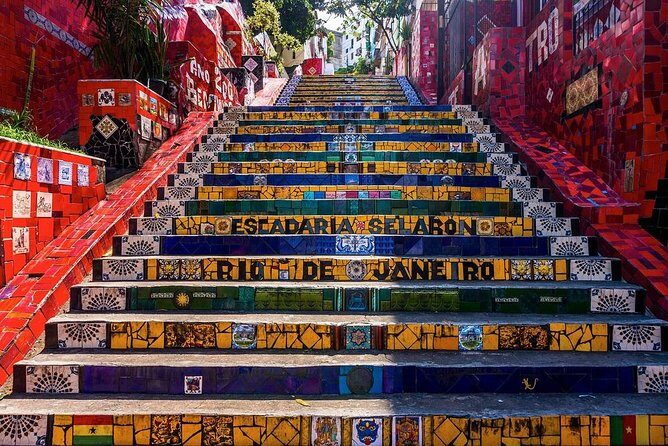
From Santa Teresa, you head down toward Lapa at the foot of the hill, passing by the famous multicolored staircase of George Selarón. He worked on the Escadaria Selarón for about twenty years, and the result is impossible to ignore.
This stop is short—around thirty minutes—but it’s built for impact. You’ll see the staircase as public art: texture, color, and the kind of creative devotion that turns a functional set of stairs into a destination.
I also like that it’s a photo-friendly stop without requiring tickets. It’s one of those places where you can spend a little time simply observing rather than rushing to a viewpoint checklist.





Arcos da Lapa: the aqueduct, the graffiti, and the sense of history in motion
From there, your route continues on foot while you admire the graffiti that decorates the walls around Lapa. You then reach the Arcos da Lapa, the old Rio aqueduct dating from the 1700s that supplied water to the city until the end of the 1800s.
Two things make this stop click. First, the arches look monumental, even when you’re not thinking about engineering. Second, you understand the role of the aqueduct as infrastructure, not just as decoration—so the walls feel like they have a job, not just a look.
There’s also a neat practical detail: the tram from Santa Teresa passes through the aqueduct to access Santa Teresa. It’s a visual reminder that Rio’s old structures still connect with today’s movement.
Cinelândia: finish with Rio’s grand civic square sights
Your last major stop is Cinelândia, a square with big downtown attractions. You’ll be guided through the area around major landmarks such as the Teatro Municipal (Rio’s opera house), the Museu das Bellas Artes, the Câmara Municipal, the Biblioteca Nacional, and the Teatro Odeon. The Teatro Odeon is noted as the only cinema in the square still in operation.
I like this finish because it contrasts with the earlier parts of the walk. Santa Teresa is compact and personal; Lapa brings street art and historic arches; Cinelândia feels formal and architectural. You end the tour with a sense of Rio’s scale.
Since the stop is around twenty minutes, don’t expect a deep interior tour. Instead, think of it as a “get the setting” visit, so you can decide later if you want to come back for museums or performances.
Price and value: is $72.09 a fair deal?
The price is listed at $72.09 per person for about 3 hours 30 minutes, and the small-group size (up to 12) is a big part of the value. For this length of time, the biggest cost item you get for free is the Santa Teresa tram admission ticket (about forty-five minutes allocated to the tram segment).
All the other main highlights on the route are free-entry stops: Largo dos Guimarães, Parque das Ruínas, Escadaria Selarón, Arcos da Lapa, and Cinelândia. Even if you don’t care about saving on tickets, it matters because it keeps the pacing smooth—less time dealing with entry fees and lines.
So the real question is what you’re paying for beyond transportation. You’re paying for local context and the practical “how to see this efficiently” planning. Based on the way guides are described—especially Edmundo, Lorena, and Ivan—that’s where your money goes.
Choosing a guide: Edmundo, Lorena, and Ivan as standout examples
This is where the tour’s reputation makes sense. The guides tied to this experience—Edmundo, Lorena, and Ivan—are described as locals with a strong personal connection to Santa Teresa’s art and daily life.
Edmundo is highlighted as an artist himself and is praised for being able to connect people across the neighborhood. If you like tours that feel like you’re being shown your way around by someone who belongs there, he’s a great fit.
Lorena gets strong praise for candid storytelling and humor, plus the ability to adjust when something changes at the start. That flexibility matters in Rio, where plans can shift during busy periods like Carnaval.
Ivan is presented as a local of Santa Teresa and a practical guide who meets people near their lodging and then leads a route that includes the key sights and also time for local art browsing. If you’re someone who wants the walk to include both landmark time and smaller “what is this place” moments, he’s worth aiming for.
If your booking options allow, I’d pick the guide whose style matches what you like: art-focused connections (Edmundo), humor-and-history with quick reroutes (Lorena), or local neighborhood fluency plus browsing time (Ivan).
What to bring and how to plan your morning
This tour is built for walking, plus it includes tram time and staircase areas. I’d treat it like a moderate walking day.
Bring:
- Comfortable shoes (you’ll be moving around hills and stairs)
- A light layer (viewpoints can feel cooler or windier than you expect)
- A reusable water bottle if you’re the kind of person who drinks often
Timing tip: start your day easy. Because the tour begins in the morning and ends back near the meeting point, you’ll likely want lunch afterward—but you don’t need to over-plan dinner reservations until you see how your energy levels feel.
Also, keep your expectations realistic about interiors. The tour is focused on sights and streets, not long museum time. It’s built for views, architecture, and streets you can actually stand on.
Who should book this Santa Teresa to Lapa walk?
This tour is a strong match if you want:
- A guided route that links Santa Teresa’s hill charm to Lapa’s aqueduct and downtown landmarks
- A small group format where you can ask questions and slow down for photos
- A half-day plan that feels complete, without being exhausting
It may not be ideal if you want a totally flat walking route. The area includes hills and the famous stairs, so if stairs are a deal-breaker, you might want to choose a different format.
Should you book it?
Yes, I’d book this tour if your ideal Rio morning includes a tram ride for views, famous street art at Escadaria Selarón, and ending at Cinelândia for architecture. The price is fair because the included tram ticket offsets a big chunk, and the rest of the stops are free-entry highlights.
I’d especially recommend booking if you care about guide quality and want someone who can translate what you’re seeing—like getting from “pretty staircase” to why George Selarón’s work matters, or from “big arches” to why Arcos da Lapa was essential infrastructure.
If you hate stairs, or you’re traveling with mobility limits, you’ll want to think carefully before committing. But for most people, this is one of those smart, well-paced Rio walks that turns a morning into a real story.
FAQ
How long is the walking tour?
It lasts about 3 hours 30 minutes (approx.).
How much does the tour cost?
The price is $72.09 per person.
What time does the tour start?
It starts at 9:00 am.
Where does the tour begin?
The meeting point is Copacabana Palace, A Belmond Hotel, Rio de Janeiro (Av. Atlântica, 1702 – Copacabana).
Does the tour end at the same meeting point?
Yes, the activity ends back at the meeting point.
What’s included in the price for admissions?
The Santa Teresa tram ticket is included. The other listed stops are free-entry.
How many people are in the group?
The maximum group size is 12 travelers.
Which stops are part of the route?
The tour includes Santa Teresa tram, Largo dos Guimarães, Centro Cultural Municipal Parque das Ruínas, Escadaria Selarón, Arcos da Lapa, and Cinelândia.
What if the tour is canceled because the minimum number of travelers isn’t met?
If it’s canceled for that reason, you’ll be offered a different date/experience or a full refund.
Is the experience refundable if I cancel?
No. The experience is non-refundable and cannot be changed for any reason.