REVIEW · RIO DE JANEIRO
Samba Class in Copacabana
Book on Viator →Operated by Rio Samba Dancer · Bookable on Viator
Samba lessons in Copacabana feel like a party. This Samba Class in Copacabana turns Rio’s street rhythm into a guided one-hour lesson that works even if you’ve never danced before. For $35, you’ll learn basic samba moves, get some Brazilian culture context, and leave with a “how do I keep the beat?” confidence boost.
I especially like the way the instruction stays clear and step-by-step, with teachers such as Bem Vind and Carla praised for making the counts make sense. I also like the social vibe: the group format mixes ages and solo travelers with couples, and the class design encourages you to interact instead of just watching.
One thing to consider: end-of-year and Carnival timing can get crowded, and in a tight room it can be harder to see the instructor clearly. The good news is you can still get your groove in, but you’ll want to plan your expectations for those peak dates.
In This Review
- Key things to know before you go
- Samba Class in Copacabana: the simple pitch
- Price and what you’re really paying for ($35 in context)
- Where the studio is (and why the address details matter)
- The one-hour flow: what happens during the class
- You might find some barefoot moments
- No partner needed: who this class fits best
- Learning samba culture, not just memorized steps
- Daytime classes and carnival costume time
- Group size and the “crowded at peak times” reality
- Language: what to expect if you don’t speak Portuguese
- Getting there: public transit and taxi are your friends
- Should you book Samba Class in Copacabana?
- FAQ
- How long is the samba class?
- What does the class cost?
- Do I need a dance partner or prior experience?
- What’s included in the price?
- Is transportation to and from the class included?
- Where do I meet for the class?
- Is the studio near public transportation?
- Are there any rules for children?
- Can I get a full refund if I change my plans?
Key things to know before you go

- Beginner-friendly samba basics with easy follow-along teaching, even for dance skeptics
- Clear counts and practical corrections from instructors including Bem Vind and Carla
- Group energy that helps you meet people, great for solo travelers and couples
- Daytime carnival costume option (when the daytime class is running)
- Studio is in an office building on Av. Nossa Sra. de Copacabana, room 603
- Class capped at 50 travelers, so it’s still a real lesson, not a packed event
Samba Class in Copacabana: the simple pitch
If you want one Rio activity that’s active, social, and not dependent on you being “a dancer,” this kind of class is hard to beat. You’re not just learning steps—you’re learning how samba moves in your body, and how the rhythm connects to Brazilian culture.
The format is also made for real travel schedules. It’s about an hour, so you can fit it between beach time in Copacabana and a dinner plan without turning your day into a long logistics puzzle.
A few more Rio de Janeiro tours and experiences worth a look

Price and what you’re really paying for ($35 in context)
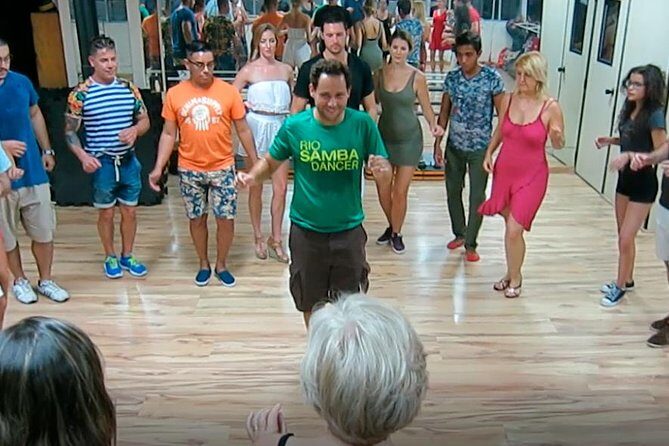
At $35 per person for about an hour, the value comes less from the duration and more from what’s included. You get a bottled water, plus a local guide, a professional guide, and a tour escort/host. That’s a lot of human support for a beginner-friendly class—someone to keep the timing moving, someone to teach the steps, and someone to help the whole group stay on track.
Also, the class is capped at 50 travelers, which matters. A smaller ceiling usually means fewer people per instructor, more room for corrections, and a better shot at feeling comfortable asking questions when you’re stuck.
A heads-up on cost vs. convenience: transportation to and from attractions isn’t included. So think of this as an activity you reach by yourself (taxi or public transit) rather than something a vehicle is built around.
Where the studio is (and why the address details matter)
Your meeting point is on Av. Nossa Sra. de Copacabana, 807, room 603, in Copacabana. It’s in a mixed office building, and the studio space is on the 6th floor—so the “real” work is finding the building entrance and the right room number.
This is the kind of place where you’ll be grateful you saved the exact address in your maps app. If you arrive early, you can take a minute to confirm the elevator or stairs route to room 603 before class starts.
If you’re going by taxi, it’s straightforward. If you’re using public transit, you’ll still likely have a short walk and a building search moment—nothing dramatic, but plan a little buffer so you don’t rush.
The one-hour flow: what happens during the class
The class is about one hour, and the teaching follows a logical “get moving, then refine” rhythm. Even if you’re a complete beginner, the structure is meant to keep you from feeling lost.
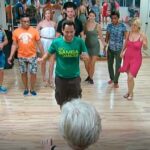
Expect you’ll start with basics—how to carry your body and follow the beat—then move into the kinds of steps you can actually repeat. Across-the-floor work and turns are part of the learning approach, which is great because it trains your coordination, not just your arm-and-foot memorization.
One detail I like: the instruction is designed so you don’t need a dance partner. You’re learning as an individual within the group, so couples and solo travelers are on equal footing.
You might find some barefoot moments
Most classes won’t be a surprise on footwear. Still, in at least one experience tied to a crowded setup, participants were doing the class barefoot because of space. The practical takeaway: wear footwear you can remove quickly if you’re asked, or bring a plan for clean feet. If you show up with brand-new sneakers and a heavy lacing system, you’re more likely to feel annoyed during quick transitions.





No partner needed: who this class fits best
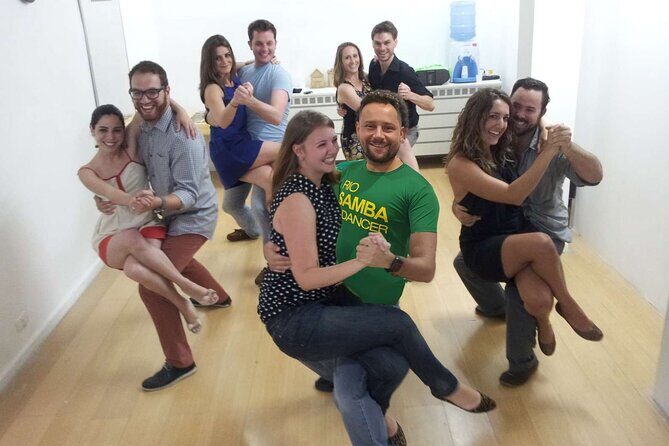
This samba lesson is built for people who want a fun Rio activity without the pressure of dancing “correctly” from the first minute. You don’t need dance experience, and you don’t need a partner.
That’s why it works well for:
- Solo travelers who want an easy way to connect in a group setting
- Couples who want a shared activity that isn’t just sitting and watching
- First-timers who feel nervous about big group performances
- People who want a workout but also want to learn something real
The instruction style also seems to focus on making the steps doable. That shows up in how teachers explain the counts and correct movement. If you’re used to ballet or modern dance, you might find it challenging in a good way, because samba has its own timing and body feel.
If you’re traveling with kids, note that children must be accompanied by an adult. The class is designed for most participants, but you’ll still want to judge whether your child can follow the group pace for an hour.
Learning samba culture, not just memorized steps
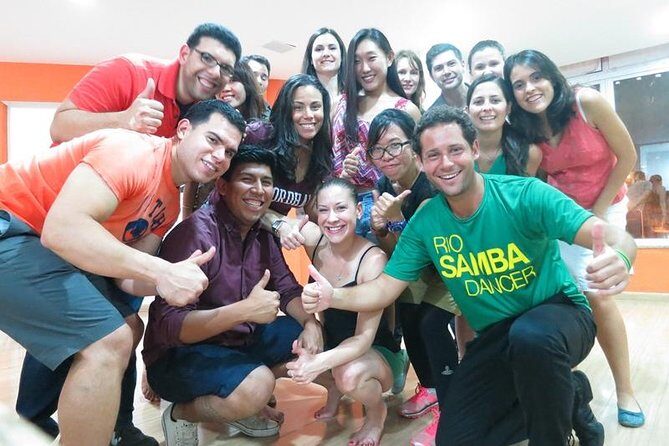
A good samba class is never only about the “move.” It’s about rhythm, posture, and the way the dance connects to Brazilian life.
Here, the teaching includes Brazilian culture context—so you’re not leaving with a random set of steps. You’re leaving with an understanding of why samba feels like samba, and how to keep the groove going on your own later.
And you can tell the class is designed with real-world energy in mind. Instructors are described as welcoming and high-energy, which matters because samba is partly about attitude and timing. When the teacher keeps the tempo fun, beginners don’t stall out.
Daytime classes and carnival costume time
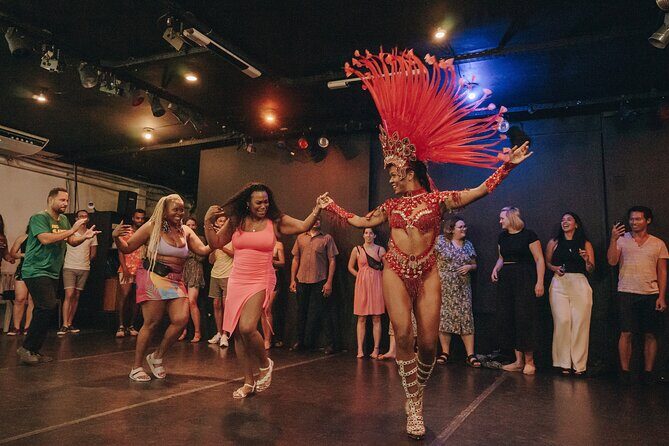
If your schedule matches a daytime samba class, you may be able to try a carnival costume. This can turn the hour into a memorable photo-and-motion experience, not just a lesson.
Even if you don’t plan to dress up, it helps to know that costumes are part of the atmosphere. That context often makes the class feel more like Rio and less like a studio exercise.
In some sessions, there are also photo/video moments. That’s the kind of thing you’ll appreciate later when you want proof you actually did it (and when you can share the best shots with friends back home).
Group size and the “crowded at peak times” reality
The class has a maximum of 50 travelers. That number is generally reasonable for a studio setting, but there’s still a difference between a comfortable group and a too-tight space.
At end-of-year and Carnival period, you may have a harder time seeing the instructor if the studio gets packed. One experience included a situation where the class was moved to a bigger space, but it was still tight enough that visibility suffered.
What you can do:
- Book earlier rather than waiting until the last week before Carnival
- Arrive a few minutes early so you can position yourself better
- If you’re sensitive to crowded rooms, choose a date outside peak season when possible
Also, if you care a lot about instructor visibility, don’t sit in the “last third” of the room. Put yourself where you can see feet and hips, not just the teacher’s face.
Language: what to expect if you don’t speak Portuguese
The experience may be operated by a multi-lingual guide, so it’s possible you’ll get English support. Still, one experience noted an instructor who didn’t speak English much, with translation typed during instruction.
So here’s the practical approach: treat the class as visual and rhythmic as much as verbal. If you’re following body cues and counts, you’ll be fine even when language is limited. If you want maximum comfort, booking with a date where you expect English support can help, but the class still works as a movement-based lesson.
Getting there: public transit and taxi are your friends
The studio is accessible by public transit and taxi. That matters because you don’t have to build your whole day around a hotel pickup.
Since transportation isn’t included, I’d plan this like a local activity: get yourself to Av. Nossa Sra. de Copacabana, find room 603, and show up with enough time to settle. If you arrive late, you risk missing the early step-building portion, and that’s the part that makes the rest feel easier.
Should you book Samba Class in Copacabana?
Yes, if you want a low-stress, high-energy way to experience Rio beyond sightseeing photos. This class is especially worth it for solo travelers and couples because the format nudges you to connect without needing a dance partner.
I’d think twice if:
- You’re visiting during end-of-year or Carnival and hate crowded spaces
- You need heavy verbal instruction in English the entire time (language support may vary)
- You’re sensitive about footwear rules and might not enjoy the possibility of barefoot moments
If your goal is to learn real samba basics, meet people, and get a fun workout in a single hour, this is a strong use of time in Copacabana.
FAQ
How long is the samba class?
It’s about 1 hour.
What does the class cost?
The price is $35.00 per person.
Do I need a dance partner or prior experience?
No. You don’t need a dance partner or any dance experience.
What’s included in the price?
You’ll get bottled water, a local guide, a professional guide, and a tour escort/host.
Is transportation to and from the class included?
No. Transportation isn’t included.
Where do I meet for the class?
Meet at Av. Nossa Sra. de Copacabana, 807, room 603, Copacabana, Rio de Janeiro, RJ, 22050-002, Brazil. The class ends back at the meeting point.
Is the studio near public transportation?
Yes. It’s near public transportation, and taxi is also an option.
Are there any rules for children?
Children must be accompanied by an adult.
Can I get a full refund if I change my plans?
Yes. You can cancel for a full refund up to 24 hours in advance of the experience start time.