REVIEW · PARATY
Paraty Historical City Walking Tour
Book on GetYourGuide →Operated by Gray Line Brazil · Bookable on GetYourGuide
Paraty is best learned one step at a time. This walking tour gives you a clear, guided look at the town’s historic architecture and the churches that helped shape its identity over centuries. You’ll move through pedestrian-only lanes, learning how Portuguese-era Paraty became a key export hub.
What I like most is the way the guide connects the buildings to the story. You get commentary that starts with the broader 1500s context and continues through Portuguese foundation in 1667, when Paraty grew as an export port for gold, and then into today’s tourism economy. With options that include English, Spanish, or Portuguese, you can actually follow the details without guesswork.
One thing to plan around: church visits depend on hours. The tour also isn’t made for slow, flat strolling, since the streets are irregular and the experience is not suitable for back problems or mobility impairments.
In This Review
- Key highlights to know before you go
- Paraty on Foot: How the Route Keeps You Oriented
- Where the Tour Starts (and Why This Matters)
- Picking the Right Option: Private vs Shared
- Shared option
- Private option
- The UNESCO and National Historic Monument Context (What Your Guide Will Explain)
- Church Stops You’ll Actually See (When They’re Open)
- How to get value from the church stops
- The Painted Houses and Paraty Architecture: What to Look For
- The Story Thread: Portuguese Foundation, Gold Trade, and Today
- Cachaçaria Tasting at the End: Optional, but Fun
- Price and Value: Is $72 Worth It?
- Who This Tour Fits Best (and Who Should Skip)
- A Realistic Weather Note
- Should You Book This Paraty Historical City Walking Tour?
- FAQ
- How long is the Paraty Historical City Walking Tour?
- What languages are available?
- What’s the difference between the shared and private options?
- Where is the meeting point?
- Are entrance fees included for museums or churches?
- Are the churches guaranteed to be visited?
- Is this tour suitable for people with mobility or back issues?
Key highlights to know before you go
- Bilingual guide options (English/Spanish for private; Portuguese-only for shared)
- UNESCO-style walking through Paraty’s protected historic core
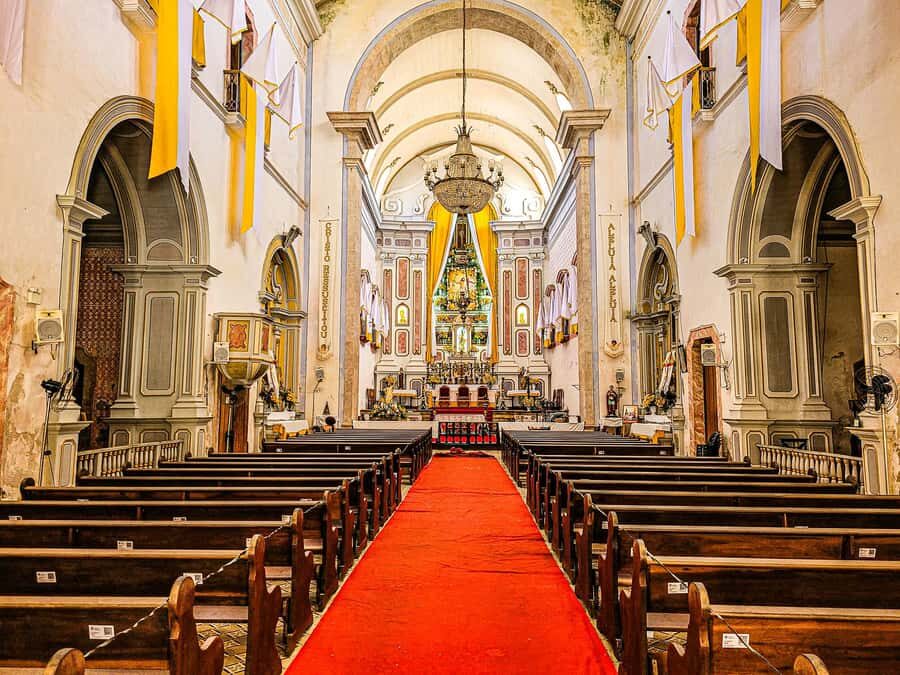
- Iconic baroque churches like Capela de Santa Rita and Igreja Matriz Nossa Senhora do Remédios
- Paraty’s gold-port era explained in plain language
- Optional cachaçaria tasting to finish your walk with something local
Paraty on Foot: How the Route Keeps You Oriented
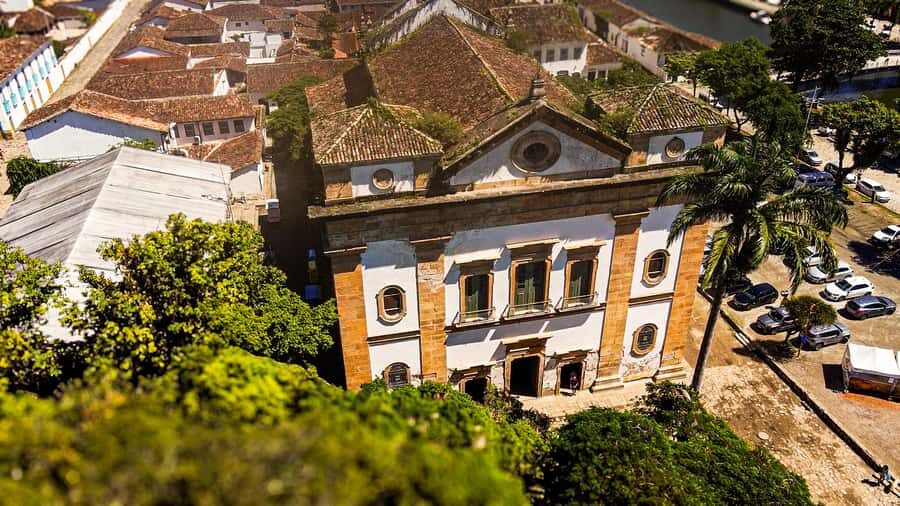
Paraty’s historic center is compact, but it can feel like a maze if you’re wandering alone. On this tour, you’re guided through the pedestrian-only streets so you can focus on what matters: façades, church fronts, and street patterns that hint at how people moved and traded.
The timing is built for an effective sweep. Shared tours run about 1.5 hours, while the private option lasts up to 2 hours. If you’re the type who wants enough time to look twice at details like painted walls or carved stone, the private duration usually feels more comfortable.
You also get a quick reminder that Paraty is not “museum indoors.” The center is a living, working town. That makes the walking feel real, not staged, even as you stop for specific landmarks.
You can also read our reviews of more walking tours in Paraty



Where the Tour Starts (and Why This Matters)
You’ll meet at Av. Roberto Silveira, 479, in the Centro area of Paraty. There’s no hotel pickup or drop-off, so you’ll want to build in a little buffer to get there on time.
This sounds minor, but it changes the whole experience. Without transfers, you save time and keep the focus on the walk itself. Just don’t underestimate the “getting there” part—Centro streets can be confusing if you arrive late or tired.
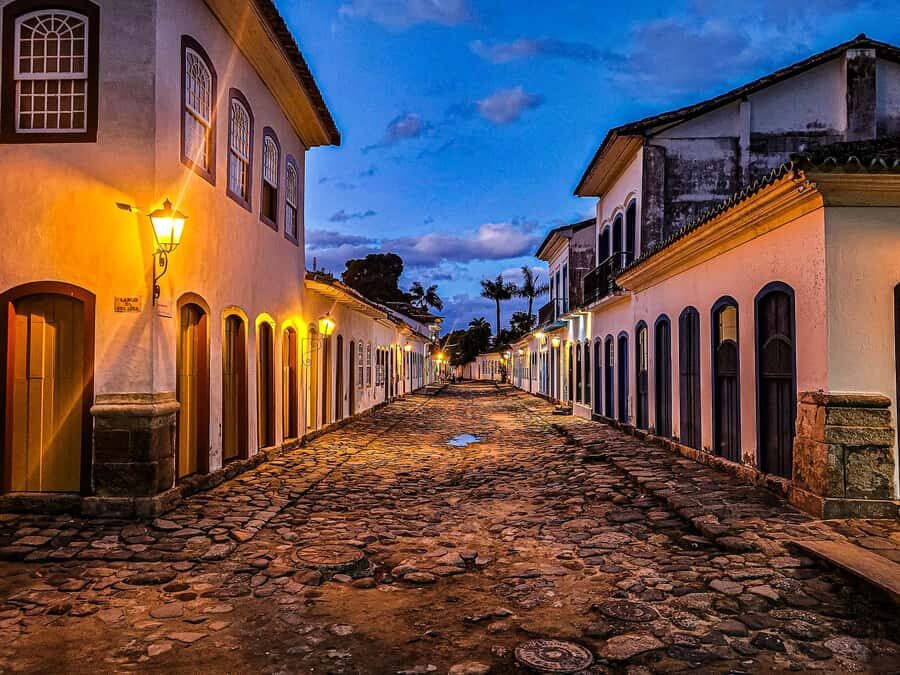
Good walking shoes are a must. The tour notes irregular streets, and that lines up with what you’ll see when you start: cobbles, uneven patches, and short climbs that don’t look dramatic on a map.
Picking the Right Option: Private vs Shared

The tour comes in two main formats, and the differences affect what you’ll hear and how long you’ll spend.
Shared option
- Departs at 9:00 am or 5:30 pm
- Runs about 1.5 hours
- Includes a guide who speaks Portuguese only
If you’re comfortable in Portuguese (or travel with someone who is), shared can be a good value. If you don’t speak Portuguese, you’ll likely miss parts of the narration, since this isn’t a bilingual setup for the shared departures.
Private option
- Lasts about 2 hours
- Start time can be arranged anytime between 8:00 am and 5:00 pm
- Bilingual guide available in English or Spanish
Private is your best bet if you want the full story without language friction and you like asking questions. It also gives you a bit more breathing room for stops around the churches and houses.






The UNESCO and National Historic Monument Context (What Your Guide Will Explain)
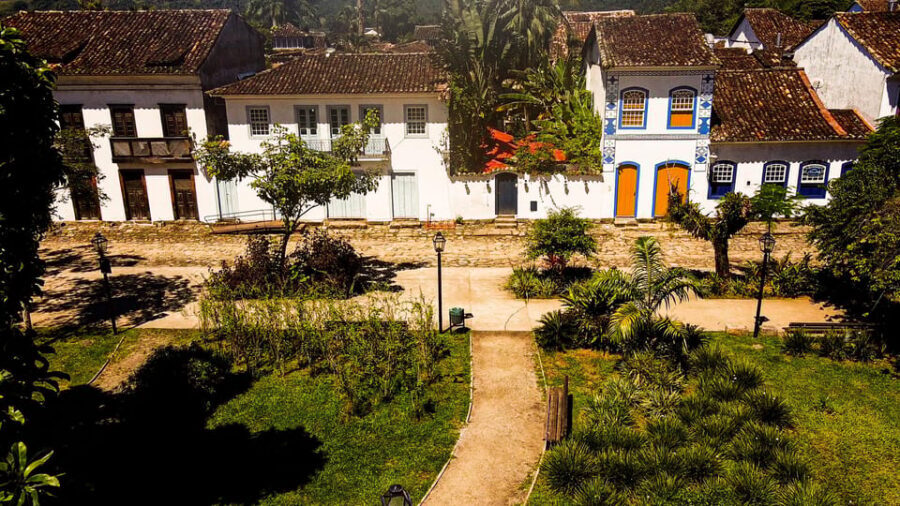
Paraty’s historic center sits inside protected conservation status: part of a Brazil National Historic Monument, and part of a UNESCO World Heritage setting. One useful detail you’ll hear is that about 65% of the area lies within the Serra da Bocaina National Park boundaries.
Why does that matter to you on a walking tour? Because it helps explain how Paraty has managed change. The town isn’t just “old buildings for photos.” It’s a protected landscape where history, tourism, and environmental limits all overlap. When you see the churches and architecture, the guide’s commentary helps you understand what people preserved—and what they built to reflect their role in the region.
Church Stops You’ll Actually See (When They’re Open)
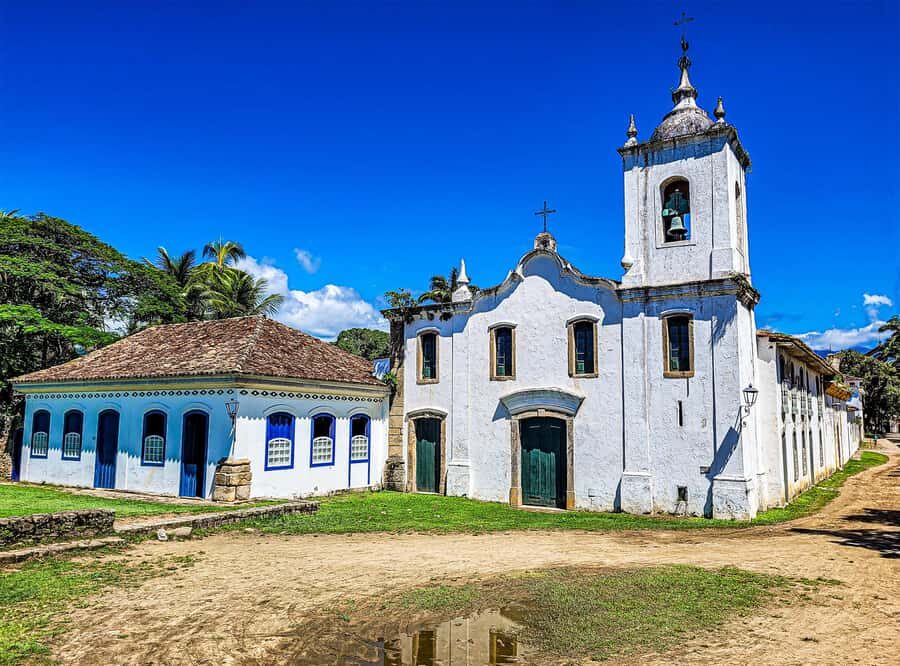
This tour is anchored by classic churches—baroque architecture that’s impossible to appreciate properly from a car window. You’ll pass several major sites, and you’ll visit them only if they’re open during your walk.
Here are the churches included on the tour route:
- Capela de Santa Rita
- Igreja de Nossa Senhora do Rosário e São Benedito
- Igreja Matriz Nossa Senhora do Remédios
- Capela de Nossa Senhora das Dores
How to get value from the church stops
Even when the doors are open, don’t rush the details. Spend 1–2 minutes looking at the front and the materials first, then let the guide explain what you’re seeing. On tours like this, the most satisfying moment is when the guide connects a visual feature to Paraty’s role in the wider Portuguese colonial story.
And here’s the practical reality: if a church is closed, you’ll still move through the town’s key landmarks, but you won’t get the inside look. The tour notes this clearly, so you’re not stuck hoping for miracles.
The Painted Houses and Paraty Architecture: What to Look For
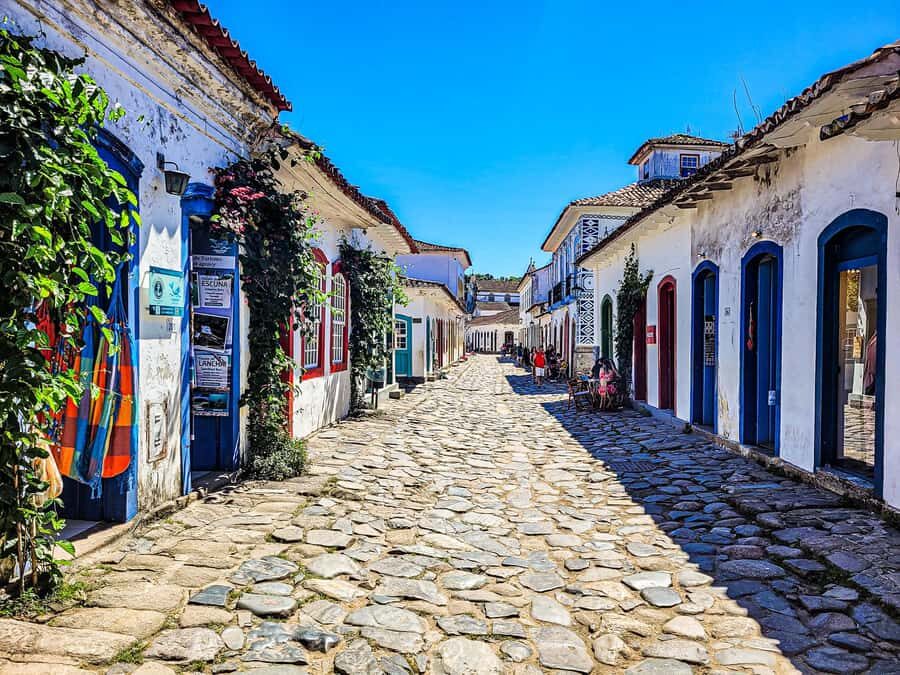
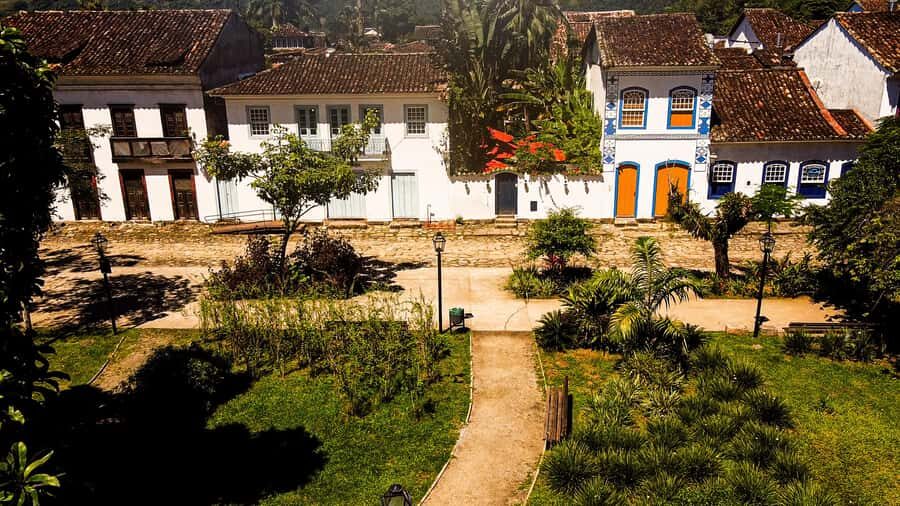
Walking through Paraty feels like reading an illustrated timeline. The painted houses and historic façades give you immediate visual clues about wealth, craft, and changing tastes over time.
I like that the tour doesn’t treat architecture like a background detail. The guide uses the buildings as a way to explain how Paraty grew—from colonization into trade—then how it became a destination for visitors.
A quick tip: when you stop for the next landmark, don’t just take a photo and move on. Look at:
- the color and condition of exterior paint
- the way buildings face the street
- the relationship between church fronts and the routes between them
Those small visual connections are what turn a walking tour from “I saw stuff” into “I understand what I saw.”
The Story Thread: Portuguese Foundation, Gold Trade, and Today
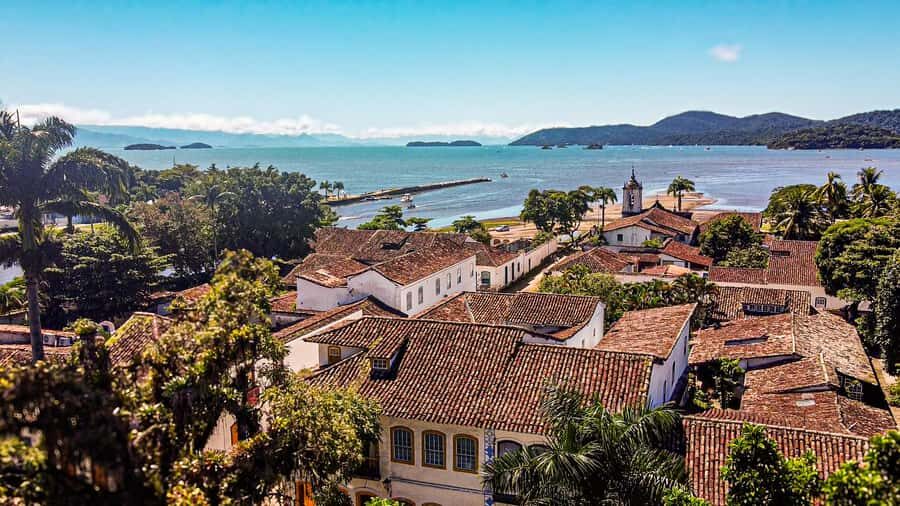
One reason this tour gets solid scores is the way the narration stays focused. The guide’s history arc covers:
- the 1500s context that sets the stage
- Portuguese foundation in 1667
- Paraty’s role as an export port for gold
- and the shift toward modern tourism
That gold-port era is the key that ties the walk together. When you understand Paraty as a trade point—where wealth flowed in and out—you can start seeing the architecture differently. It stops being only decoration and becomes evidence.
You’ll also hear enough background to place Paraty in the broader Southeast Brazil story without getting lost in dates. The guide’s job is to give you a mental map, not to recite a textbook.
And in the language options, the tour includes guides who can deliver that story in Portuguese, English, or Spanish depending on your selected format. The bilingual experience is especially helpful if you want historical nuance rather than a summary.
Cachaçaria Tasting at the End: Optional, but Fun
The tour ends in the Historic Center at a cachaçaria area for cachaça and liqueur tasting (optional). This is a smart finish. After churches and painted houses, you get something sensory and local—something you can bring home as a taste, not just a memory.
You should expect a casual tasting stop, not a formal meal. The tour does not include food, so come with at least a light plan for later.
If you’re picking between private and shared and you care about this ending, that’s another small reason to consider private: it’s usually less rushed, which helps you enjoy the tasting instead of sprinting through it.
Price and Value: Is $72 Worth It?
At $72 per person, you’re paying for guided time in a protected historic area plus multiple landmark stops. It’s not a budget “walk past a few sights” deal. This tour is built around expert commentary and several major churches and architecture features.
Here’s the trade-off: entrance fees are not included. The tour specifically warns that churches and attractions are only visited if open, and admission fees (if any) are extra. So your real cost depends on whether you enter places that require tickets during your visit.
Even with those potential extras, I think it’s usually good value if you fit one of these profiles:
- You want history explained clearly in your language.
- You want to see the main church landmarks in a short time window.
- You prefer not to figure out route logic on cobblestones.
If you’re the type who doesn’t care about commentary and just wants photos, you might question the price. But if you enjoy learning while walking, this is one of the easier “pay once, understand more” options in Paraty.
Who This Tour Fits Best (and Who Should Skip)
This is a solid match if you:
- enjoy walking and can handle uneven streets
- want a structured route through Paraty’s historic center
- like church architecture and want context for what you’re seeing
- travel in English, Spanish, or Portuguese and want your guide to translate the story
It’s not a good choice if you have back problems or mobility impairments, because the tour is a walking format on irregular streets.
Also, if you’re hoping for guaranteed inside visits to every church, adjust expectations. Access depends on opening hours during your specific tour window.
A Realistic Weather Note
Paraty weather can throw curveballs. I like that the tour is guided and flexible enough to keep moving even when conditions change. In one shared experience, the guide was praised for continuing the tour through heavy rain, which is a useful reminder: come prepared to walk regardless of the sky’s mood.
Bring a light layer and plan for wet pavement if rain is possible.
Should You Book This Paraty Historical City Walking Tour?
If you want a practical way to understand Paraty’s past—Portuguese foundation, gold trade, and the protected historic core—this is a strong option. The bilingual guide choices, the set of classic church landmarks, and the ending cachaça tasting combine into a tour that feels complete without turning into a long day.
Book it if:
- you can handle walking on irregular streets
- you want guided context, not just wandering
- you’ll benefit from English or Spanish in the private format
Skip or reconsider if:
- language is a big issue for you and you’re choosing the shared Portuguese-only departures
- you need guaranteed indoor church access
- uneven walking terrain is a problem
FAQ
How long is the Paraty Historical City Walking Tour?
The tour lasts 90 minutes to 2 hours, depending on the option you select.
What languages are available?
The tour offers Portuguese, English, or Spanish through the selected guide option. The shared option is Portuguese only, while the private option includes bilingual guides in English and Spanish.
What’s the difference between the shared and private options?
The shared tour departs at 9 am or 5:30 pm and lasts about 1.5 hours with a Portuguese-only guide. The private option lasts about 2 hours and you can arrange a start time between 8 am and 5 pm, with bilingual English/Spanish guides available.
Where is the meeting point?
The meeting point is Av. Roberto Silveira, 479, Centro, Paraty, RJ. The exact pickup time and spot are confirmed after you reconfirm your tour.
Are entrance fees included for museums or churches?
No. Entrance fees and any possible visitation fees are not included.
Are the churches guaranteed to be visited?
Church visits happen only if the churches are open during the tour time.
Is this tour suitable for people with mobility or back issues?
No. The tour is not suitable for people with back problems or mobility impairments.