REVIEW · RIO DE JANEIRO
African Heritage: Gastronomy and Musicality Experience
Book on Viator →Operated by Traveller XP · Bookable on Viator
Some Rio tours point, this one explains. You’ll connect African heritage to everyday Rio through food and music, plus major sites tied to history.
I especially love the way it pairs hands-on culture—Afro-Brazilian and Yoruba tastings—with serious context at places like the Pretos Novos archaeological exhibition and Cais do Valongo. Another strong plus is the stop at Quilombo Pedra do Sal, where you don’t just hear about resistance—you see how it lives today through percussion and samba.
One drawback to plan for: this experience isn’t suitable for people with food restrictions, since tasting is part of the main event.
In This Review
- Key moments I’d plan around
- A 5-hour route that links Rio’s past to what you hear tonight
- Starting at Praça Mauá and ending by Prainha: a smart way to see the city’s layers
- Morrinho Project at Museu de Arte do Rio (MAR): seeing favela life without the usual scripts
- Eduardo Kobra mural stop: graffiti as ancestry and visual memory
- Instituto de Pesquisa e Memória Pretos Novos (IPN): the part that makes everything else sharper
- Cais do Valongo and Little Africa: a short stop with human-scale importance
- Quilombo Pedra do Sal: cultural resistance you can taste and hear
- Afro-Brazilian and Yoruba gastronomy tasting (why it’s not just food)
- Percussion workshop: the rhythm lesson behind Rio’s sound
- Largo de São Francisco da Prainha at sunset: where the soundscape finishes the lesson
- Price and value: what $110 buys you in Rio
- What to expect from the guide and why it changes the feel
- Who this tour fits best
- Should you book this African heritage gastronomy and musicality experience?
- FAQ
- Where does the tour start and where does it end?
- How long is the tour and when is the meeting time?
- What’s included in the price?
- Is this a private tour?
- What if the weather is bad?
- Can I get a full refund if I cancel?
Key moments I’d plan around
- Morrinho Project at MAR: a detailed favela model that pushes past one-note stereotypes
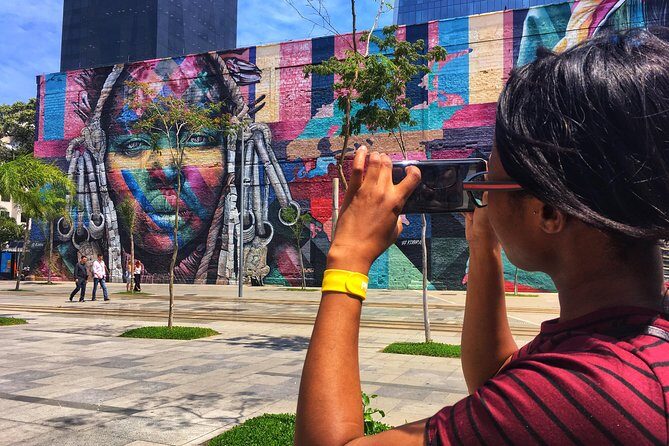
- Eduardo Kobra mural time: a giant graffiti work tied to ancestral cultures in Brazil’s story
- Instituto Pretos Novos (IPN): archaeological remains and a permanent exhibition that forces clarity about slavery
- Cais do Valongo + Little Africa: a short visit that hits big themes in human history
- Pedra do Sal: Afro-Brazilian and Yoruba tastings plus a percussion workshop with an African-instructor/d rummer
- Largo de São Francisco da Prainha at sunset: samba, funk, jazz, and chorinho spilling into the square
A 5-hour route that links Rio’s past to what you hear tonight
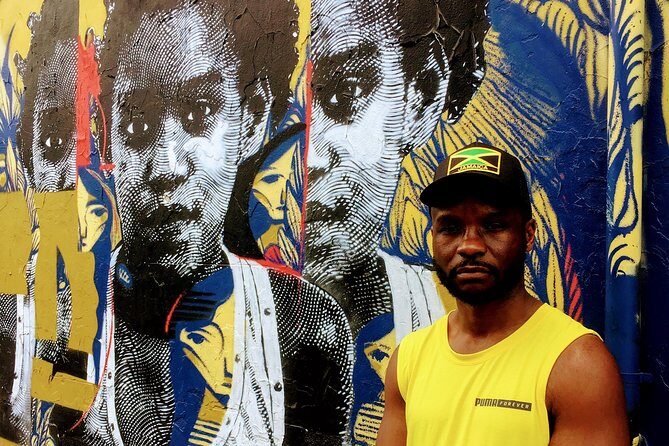
If you want Rio without the usual shortcuts, this route helps you make connections fast. It’s designed as a chain: art and neighborhoods, then hard history, then Afro-Brazilian culture you can still feel in the streets. You’ll walk away with more than facts—you’ll understand why the sounds of samba, funk, chorinho, and percussion aren’t random here.
I like that the tour doesn’t treat culture as decoration. Food and music show up as lived heritage, tied to religion of African origin and community memory. And because several stops are free-entry, you spend your money where it counts: the experience itself.
The pacing matters. Five hours can feel tight, but the itinerary is built around short-but-meaningful stops. That’s ideal if you’re in Rio for a limited time and want the biggest “why this matters” moments without spending an entire day in museums.
You can also read our reviews of more historical tours in Rio de Janeiro

Starting at Praça Mauá and ending by Prainha: a smart way to see the city’s layers
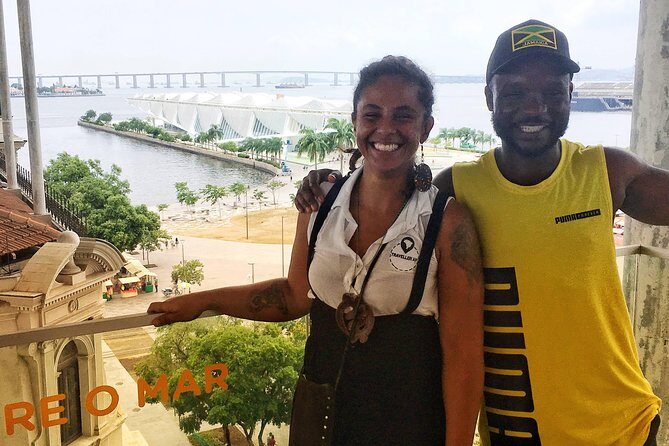
The tour starts at Museu do Amanhã, at Praça Mauá 1 in Centro, and ends at Largo São Francisco da Prainha in Saúde. Meeting at Museu do Amanhã is practical—you’re already near major transit options in the Centro area, and it’s easy to orient yourself before you move on.
You’ll finish in a neighborhood known for evening music. That’s not just a nice perk. It means your last stop lands while the city is in motion, so the cultural story you heard earlier can show up as sound in the street.
Also, this is a private tour, meaning it’s only your group. That usually makes it easier to ask questions and adjust pace, especially when the content is emotionally heavy at places like IPN.
Morrinho Project at Museu de Arte do Rio (MAR): seeing favela life without the usual scripts
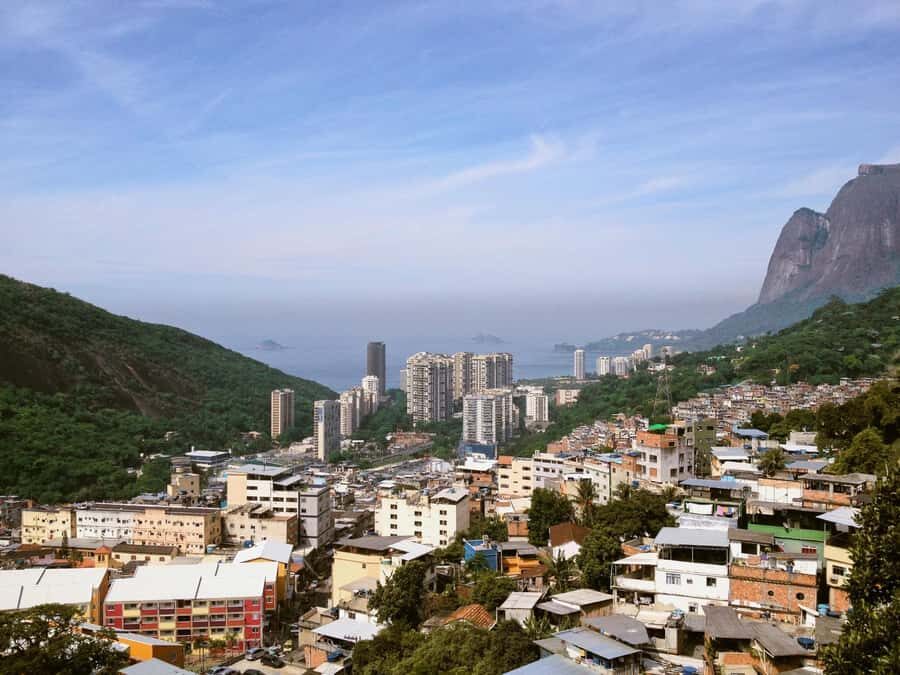
One of the most interesting parts of this tour happens at Museu de Arte do Rio (MAR), where the Morrinho Project sits as a permanent installation. This model reproduces, in detail, the streets, inhabitants, and daily life of the Pereira da Silva favela.
Why I like this stop: it flips the frame. Instead of treating favelas as a single headline, you’re shown texture—ordinary routines, community space, and the way people build a life in a place that outsiders often misunderstand.
Here’s the practical value for you: if your Rio experience is mostly built around famous viewpoints and beach zones, this gives you a clearer picture of how communities form, survive, and create culture. It’s also a helpful primer before you reach later stops tied to African heritage and resistance, because it teaches you to look at Rio as layered, not simplified.
A small consideration: installations like this can feel “still” compared to outdoor sites. If you get restless in indoor exhibits, plan for that and treat it like a guided story you’re stepping into.
Eduardo Kobra mural stop: graffiti as ancestry and visual memory

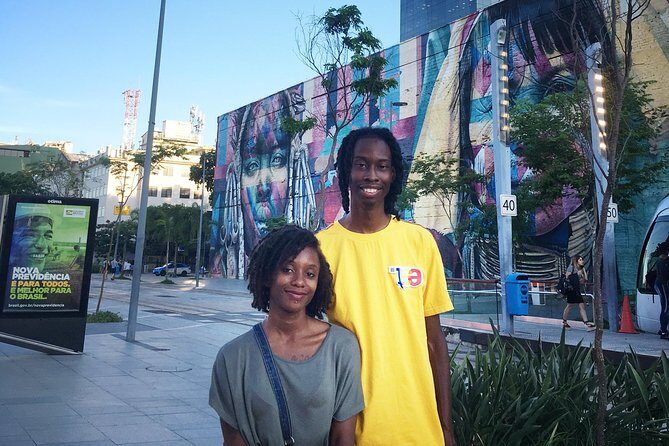
Next comes a time to contemplate the art of Eduardo Kobra, known for the claim of the largest graffiti mural in the world. The content you’ll focus on ties to ancestral ethnic groups and very old cultures connected—directly and indirectly—to Brazil’s history.
This stop works well because it bridges art and identity. Graffiti can get dismissed as decoration or vandalism, but in Kobra’s work it’s more like a public canvas for memory. For you, that means you’ll start seeing modern urban art as part of the same cultural thread as music, food, and community traditions.
A practical tip: take your time here. The mural is the kind of work that rewards slow looking. If you rush it, you miss the parts that connect faces, symbols, and historical references.
Instituto de Pesquisa e Memória Pretos Novos (IPN): the part that makes everything else sharper
At the Instituto de Pesquisa e Memoria Pretos Novos (IPN), you visit an archaeological site with a permanent exhibition that centers on the bones of Africans discovered there. This is one of those stops that changes your understanding of the slave period in Brazil because the evidence is literal, physical, and placed right in front of you.
Why it matters for your Rio trip: the rest of what you’ll learn—Little Africa, Quilombo spaces, African-influenced religious traditions—connects back to forced migration and the brutal conditions enslaved Africans faced. Without that clarity, the culture can feel like a separate topic. With it, you see the line from suffering to survival to cultural contribution.
Time-wise, the stop is short (around 40 minutes), but it’s not filler time. It’s the kind of visit where you’ll want a moment after to breathe and let the information settle.






Cais do Valongo and Little Africa: a short stop with human-scale importance
Then you head to Cais do Valongo, a Historical Site tied to the Pier of Valongo, plus the region known as Little Africa. Even with about 15 minutes on the schedule, this is a high-impact segment.
What makes it valuable: Valongo is a place where Rio’s history of forced arrival intersects with the story of humanity. The name Little Africa isn’t just a slogan—it points to how African communities shaped culture, music, language, and community life over time.
If you’re only visiting Rio once, this is the kind of stop you’ll remember because it reframes what you thought you knew. It also gives you vocabulary for later conversations—why certain traditions exist and why community spaces matter.
Quilombo Pedra do Sal: cultural resistance you can taste and hear
The heart of the experience happens around Pedra do Sal. Here you meet the remaining community of Quilombo Pedra do Sal, described as a place of cultural resistance and important for preserving Afro-descendant heritage.
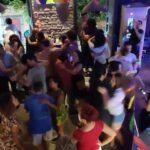
This is where the tour shifts from museums and historic sites into a living cultural world. You’ll also learn about the Cariocas’ celebration of Afro-Brazilian legacy through weekly outdoor samba sessions. Even if your schedule doesn’t line up with a full street party at the exact moment, the focus is clear: this neighborhood’s culture is active, not archived.
Afro-Brazilian and Yoruba gastronomy tasting (why it’s not just food)
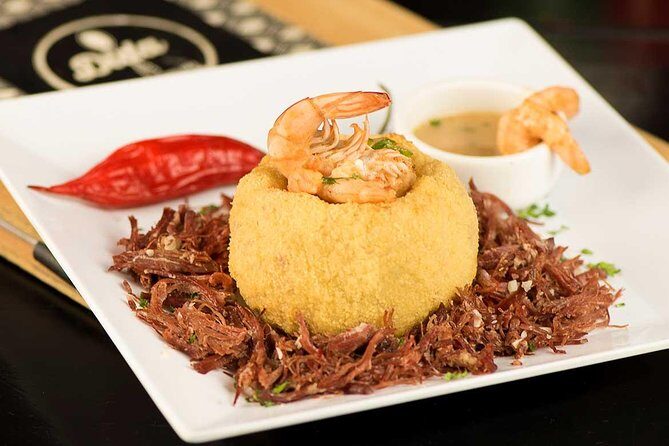
The tasting component is included in the tour and focuses on typical dishes from Afro-Brazilian and Yoruba cuisine—practices common in the daily practice of religions of African origin.
That combination matters. Food here isn’t only taste. It’s memory and meaning, tied to community and spiritual life. You’ll learn the culture behind the plate instead of treating it like a snack break.
One practical note: drinks aren’t included, so if you like to sip something while tasting, plan to buy beverages separately.
Percussion workshop: the rhythm lesson behind Rio’s sound
After the tasting, the tour includes a percussion workshop with an instructor and drummer from the African continent. The goal is not just to let you listen—it’s to focus on the culture behind the rhythms that still influence people today.
This part is often the “I’ll remember this forever” segment because percussion is physical. You feel the timing, the call-and-response energy, and how group rhythm turns into community identity. If you like music, this is worth showing up for even if you’re not a musician.
Largo de São Francisco da Prainha at sunset: where the soundscape finishes the lesson
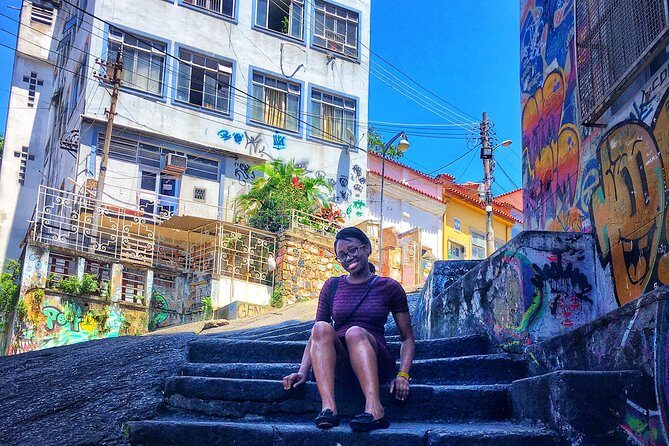
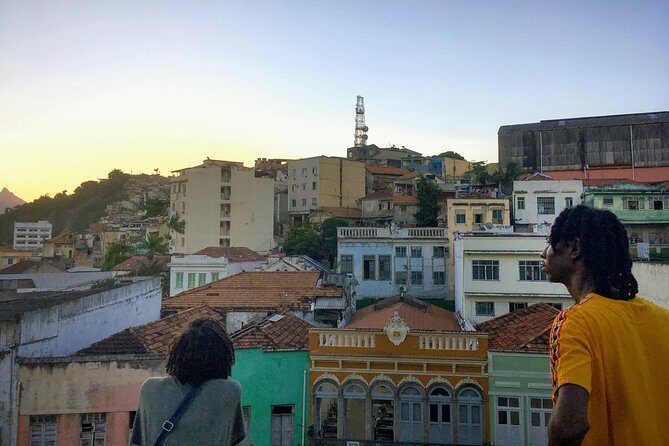
The last stop is Largo de São Francisco da Prainha, a lively cultural square where history and urban life come together. The description is very specific about the timing: when the sun sets behind Morro da Conceição, the area comes alive with samba, funk, jazz, and chorinho.
This is a smart way to end. Earlier stops give you context for African heritage and resistance. Then the city provides the payoff in real time: you’re in an area where outdoor seating, cold beers, and snacks from local bars are part of the scene.
Also, the square is surrounded by Portuguese architecture, which helps you see how Rio’s colonial layers and Afro-descendant culture overlap in the same urban space.
Price and value: what $110 buys you in Rio
At $110 per person for about 5 hours, this tour isn’t priced like a basic walking route. It includes Afro-Brazilian gastronomy tasting and IPN tickets. Most other stops listed are free-entry, so the money mainly supports the guided experience, translation of context at each stop, and the included cultural segments at Pedra do Sal.
For value, look at what you get in one package:
- a guided sequence through MAR, IPN, Valongo/Little Africa, Pedra do Sal, and the Prainha square
- tastings connected to African-origin religious traditions
- a percussion workshop with an instructor/drummer from Africa
- private-group format, which can feel like better value than joining a large group when the subject matter is personal and historical
If you’re someone who likes to learn through doing—tasting, listening closely, and even participating in rhythm—you’ll likely feel you’re getting your money’s worth.
If you have a tight schedule and you want only one “heritage + music” experience, this is one of the better ways to stack meaning without hopping across the entire city.
What to expect from the guide and why it changes the feel
The tour experience is built around teaching with empathy and clarity. Past feedback highlights guides who are very passionate about showing Black heritage in Brazil and explaining events in a way that’s easy to follow.
You’ll want that kind of guide for this itinerary because it mixes art and joy with sites tied to slavery. A good guide keeps the tone human, answers questions, and helps you connect the dots without rushing through heavy moments.
It also helps that the format is private. If you’re curious, you can ask things like what you’re seeing at MAR, what the bones exhibition means in context, or how Pedra do Sal’s samba culture connects to Yoruba-influenced religious practice.
Who this tour fits best
This is a strong fit if you want:
- Afro-Brazilian and African-diaspora perspectives in Rio
- a guided route that connects history to present-day culture
- music you can feel (including hands-on percussion)
- food tasting that comes with explanation, not just a plate
It’s less fit if:
- you have food restrictions (tasting is part of the tour and it’s not suitable for people with restrictions)
- you prefer strictly light topics with no slavery-related context
- you dislike learning in museum-style settings, since MAR and IPN are key parts of the day
Should you book this African heritage gastronomy and musicality experience?
Yes, if you want Rio in a way that feels honest and connected. The mix of MAR’s Morrinho Project, IPN’s permanent exhibition tied to the bones of Africans discovered there, and Valongo’s Little Africa gives you context you can’t easily get from a quick photo stop. Then Pedra do Sal brings it back to everyday life through Afro-Brazilian and Yoruba tastings and a percussion workshop led by an instructor and drummer from the African continent.
I’d book it sooner rather than later if your dates are fixed. It’s also weather-dependent, so you’ll want a day when skies cooperate.
If you’re traveling with curiosity and you’re ready to learn about both struggle and creative survival, this tour hits the right balance.
FAQ
Where does the tour start and where does it end?
It starts at Museu do Amanhã, Praça Mauá, 1 – Centro, Rio de Janeiro – RJ 20081-240 and ends at Largo de São Francisco da Prainha, Largo São Francisco da Prainha – Saúde, Rio de Janeiro – RJ 20081-270.
How long is the tour and when is the meeting time?
The tour runs for about 5 hours and the start time is 10:00 am.
What’s included in the price?
The price includes Afro-Brazilian gastronomy tasting and IPN tickets. Drinks are not included.
Is this a private tour?
Yes. This is a private tour/activity, so only your group participates.
What if the weather is bad?
The experience requires good weather. If it’s canceled due to poor weather, you’ll be offered a different date or a full refund.
Can I get a full refund if I cancel?
You can get a full refund if you cancel at least 24 hours before the experience’s start time. If you cancel less than 24 hours before, the amount paid won’t be refunded.