REVIEW · LIMON
Cahuita National Park Hiking
Book on Viator →Operated by Caribe Auténtico · Bookable on Viator
That first monkey call is pure magic. In Cahuita National Park, a guide helps you read the forest and beach while you move toward the Caribbean shoreline. You’ll get binoculars and a plan that removes the stress of trail-finding, so you can focus on spotting wildlife and asking questions.
Two things I especially like: you’re not just walking, you’re learning in real time with your guide, and you have a dedicated way to look closely thanks to the included binoculars/telescope. One thing to consider is that the park admission fee isn’t included in the tour price, so budget a little extra for the check-in donation step.
In This Review
- Key Points You Should Know Before You Go
- Cahuita’s Forest-to-Beach Hike: What This 2 Hours Really Delivers
- Meet Your Guide at Parque Nacional Cahuita (and Why It Matters)
- Check-In and the Park Donation Stop: Supporting What You’re Seeing
- Wildlife Spotting by the Caribbean: What You Can Expect to See
- Walking Between Forest and Beach: Why the Route Feels Different Than a Typical Trail
- Your Guide’s Q&A and Photo Time: How to Use the 2 Hours
- The Ending Choice: Walk Back or Stay at the Beach
- Price and Value: How $38 Makes Sense (With One Important Extra Cost)
- Who This Hike Is For (and Who Might Want Something Else)
- Practical Tips to Make This Feel Easy and Worth It
- Weather and Timing: When the Plan Stays Firm
- Should You Book Cahuita National Park Hiking?
Key Points You Should Know Before You Go
- Small group (max 6) keeps the hike interactive and question-friendly
- No navigation needed; you just follow your leader
- Binoculars/telescope included for wildlife spotting
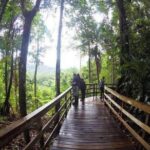
- Forest meets beach by the Caribbean Sea, so the scenery changes constantly
- Optional ending: return with your guide or stay at the beach
Cahuita’s Forest-to-Beach Hike: What This 2 Hours Really Delivers
This is the kind of hike that feels efficient in the best way. You’re in Cahuita National Park long enough to get into the rhythm—listen, look, pause—without spending your whole day moving. The route blends forest paths with stretches right by the Caribbean, which matters because it changes what you’re likely to see. Birds tend to show up in different places than monkeys and sloths, and the coast adds another set of wildlife and mood.
The park is also tied to something you can’t miss once you know it: Cahuita is known for having the largest reef in Costa Rica. That marine setting isn’t just a fun fact. It helps explain why the area supports lots of marine life and also a strong mix of birds that use the coastal and forest edges.
At the end, you get a choice. You can walk back with your guide or stay at the beach on your own. That flexibility is a small detail, but it’s smart. It lets you match the vibe of the day—whether you want more guided time or you’d rather linger by the water.
You can also read our reviews of more tours and experiences in Limon.


Meet Your Guide at Parque Nacional Cahuita (and Why It Matters)
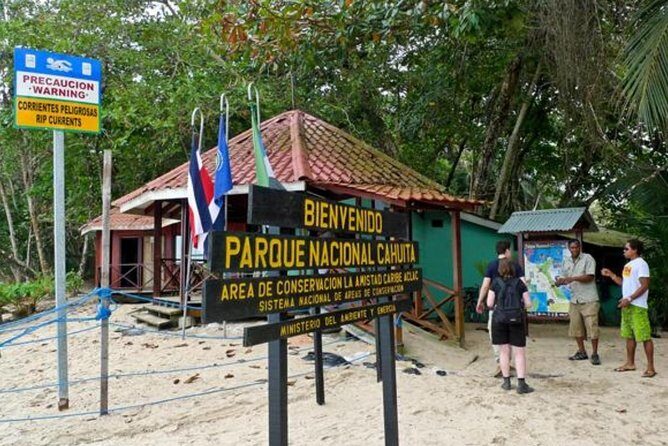
You meet at the park entrance area at Parque Nacional Cahuita, Av. 71 215, Limón, Cahuita, Costa Rica. From there, your guide walks you to the check-in spot at the counter inside the park area. This is one of those simple logistics steps that can otherwise eat up time when you’re on your own.
The real value is what happens after check-in. Your guide starts spotting what you might miss: animals in the canopy, birds at a distance, and smaller creatures you’re unlikely to notice unless someone trains your eyes. In the reviews, guides like Ariel are specifically praised for using binoculars and spotting wildlife from far away. That’s the difference between seeing the forest and actually seeing the forest residents.
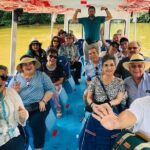
Also, the group size is capped at 6 travelers, which is huge for a short tour. You don’t feel rushed when you ask a question, and it’s easier for the guide to adjust the pace to what people want to photograph or learn.
Check-In and the Park Donation Stop: Supporting What You’re Seeing
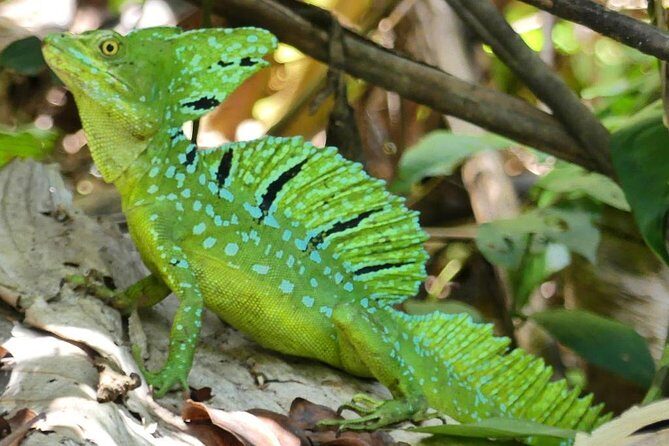
After meeting at the entrance, you walk to the counter for check-in and a donation to the park. This is part of the experience, not just paperwork. It’s how the park functions and how visitors can directly support conservation while doing an activity inside the protected area.
Here’s the practical catch: national park entrance fee is not included in the tour price. You’ll need to pay that separately during check-in. The tour itself is priced at $38 per person, so think of that as paying for the guided portion plus the included tools like binoculars/telescope—not the park access fee.
So if you want a smooth day, plan for that extra cost right from the start. It’s not a surprise at the last moment, but it will affect your final total.
Wildlife Spotting by the Caribbean: What You Can Expect to See
Cahuita National Park is one of those places where your “success” depends on attention, timing, and luck. The good news is that this hike is built around attention. Your guide doesn’t just point things out once and move on; they actively look for wildlife throughout the walk.
The kinds of animals you may see include:
- Monkeys
- Sloths
- Squirrels
- Snakes
- Frogs
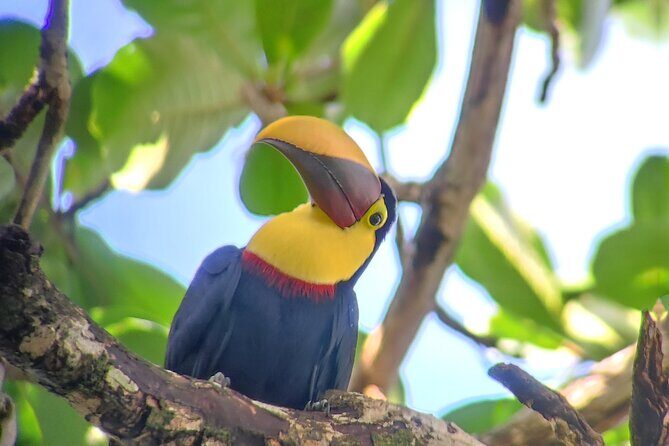
- Birds (with lots of species mentioned)
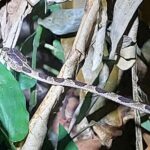
A few reviews stand out for how much difference the guide makes. People emphasize that without a guide they wouldn’t have found the animals, including sloths and even specific wildlife like an eyelash pit viper. That doesn’t mean you’ll see those exact species every time, but it does show the core point: the guide knows where to look and how to spot movement from the right angle.
And because you have binoculars/telescope included, you’re not stuck with tiny distant shapes. You can actually spend time viewing wildlife properly instead of doing the classic squint-and-guess.
Walking Between Forest and Beach: Why the Route Feels Different Than a Typical Trail
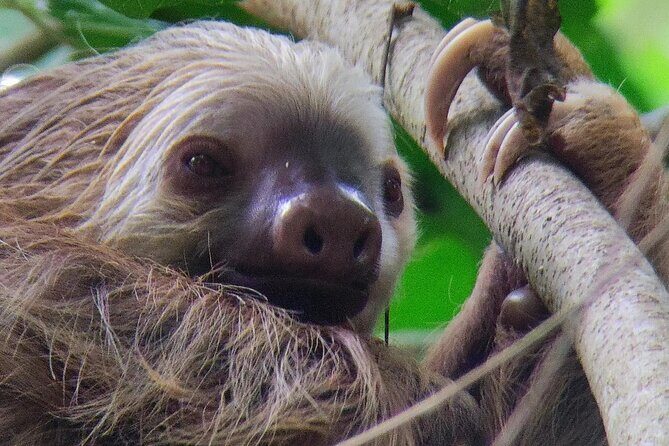
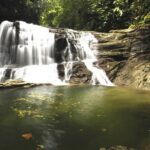
This hike isn’t one long straight shot. You’re moving between forest and beach, right next to the Caribbean Sea. That matters because coastal edges often act like wildlife highways. Birds and animals use the cover of trees, but they also travel through openings and along boundaries where food is easier to find.
The scenery also keeps you engaged. One moment you’re focused on the green canopy. The next, you’re facing the coastline atmosphere. That shift helps keep a short tour from feeling monotonous.
Also, having the coast nearby gives you an easy mental break. If you want to catch a photo, pause, or re-check what you’ve already spotted, the environment supports short stops without killing the momentum of the walk.

Your Guide’s Q&A and Photo Time: How to Use the 2 Hours
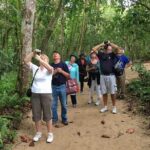
At each part of the hike, you’ll have time to ask questions and take pictures along the trail. In practical terms, this is where you get more than sightseeing. You start to understand why the guide is looking at certain spots and why some animals show up at certain moments.
If you want to maximize your photos, I’d treat the walk like a series of observation stations. When your guide slows down, don’t rush to the next turn. That’s usually when something worth seeing is close by, even if it looks invisible at first.
A name you’ll hear in the feedback is Ariel, who’s praised for being prepared with binoculars and telescope and for having strong knowledge of the creatures living in the area. Another guide mentioned is Abner, noted for sharing lots of information about flora and fauna and for making the hike feel worthwhile because you understand what you’re looking at.
The Ending Choice: Walk Back or Stay at the Beach
When the hike finishes, you get a choice: return with your guide or stay at the beach. That’s a big deal for a tour that lasts about 2 hours (not more than 2 hours). It avoids the awkward feeling of being “done” with your tour but stuck back where you started.
If you stay at the beach, you can keep the day going at your own pace. If you return with the guide, you’ll have a final chance to ask questions while you’re heading back toward the meeting point.
Either way, the activity ends back at the meeting point, so you’re not left scrambling for transport right after.
Price and Value: How $38 Makes Sense (With One Important Extra Cost)
At $38 per person for an approximately 2-hour small-group hike, this is priced like an activity that focuses on guiding, spotting, and included gear (binoculars/telescope). The value is strongest if you care about wildlife and want to reduce wasted time.
Why? Because wildlife spotting without help can turn into slow, frustrating wandering—especially in a dense area where animals don’t announce themselves. Here, you’re paying for a leader who knows what to look for and how to spot wildlife from farther away, then you get binoculars/telescope to actually see what they find.
The one value caveat: the park entrance fee isn’t included, and you’ll pay during check-in/donation. Add that in when you’re budgeting, and the total starts to make more sense as a guided experience inside a protected park rather than a standalone “walk.”
If you’re the type who enjoys learning while you travel, the guided interaction is where the money shows up.
Who This Hike Is For (and Who Might Want Something Else)
This hike fits you best if you:
- Want a short, focused nature outing
- Like wildlife viewing and want help spotting animals
- Prefer a guide-led experience rather than figuring out routes
- Enjoy asking questions and hearing what animals and plants are doing
It’s also a good option if you’re traveling with limited time. Two hours is long enough to feel like you got into the park, but short enough that you still have energy for the rest of your day.
A possible mismatch: if you’re expecting a long, strenuous hike or a full-day deep nature trek, this one may feel too brief. The tour keeps moving with purpose, and you’re back with options rather than locked into a long itinerary.
Practical Tips to Make This Feel Easy and Worth It
Here are the practical moves that keep this experience smooth, based on how the tour runs:
- Arrive at the meeting point on time at Parque Nacional Cahuita so you can check in without stress.
- Plan to handle the park check-in and donation step during the tour.
- Bring your camera habits into “quick pause” mode. You’ll have time for pictures, but wildlife doesn’t wait for your settings.
- Listen when your guide slows down. That’s often when spotting gets real.
- If you want a more beachy finish, keep the option in mind early. You’ll be asked at the end whether you want to return with the guide or stay.
Weather and Timing: When the Plan Stays Firm
This experience requires good weather. If it’s canceled due to poor conditions, you’ll be offered a different date or a full refund.
Since the tour is short, weather matters more than it would for a full-day activity. Bad conditions can affect visibility and trail comfort, so the provider is strict about keeping it enjoyable.
Also, the tour runs with a minimum number of travelers. If the minimum isn’t met, you’ll be offered a different date/experience or a full refund.
Should You Book Cahuita National Park Hiking?
Yes, book it if your top goal is wildlife and you want help seeing what’s actually in front of you. The big strengths are the small group, the guided searching, and the fact that you have binoculars/telescope to turn brief sightings into real viewing. It’s also a smart use of time at roughly 2 hours.
Skip it or consider alternatives if you’re hoping for a long hike or if you don’t want to pay the additional park entrance fee during check-in. And if you’re traveling in a stretch where weather is unpredictable, keep a flexible mindset because the experience depends on good conditions.
If you want one clear decision rule: if you’d rather stop, look, and learn than wander and wonder, this is a solid choice.