REVIEW · SAO PAULO
From São Paulo: Santo Amaro Island Trekking by Wild Beaches
Book on GetYourGuide →Operated by Vida & Energia Viagens e Turismo · Bookable on GetYourGuide
Rainforest trails, wild beaches, real swimming breaks.
This Santo Amaro Island trek strings together rainforest walking and three coastal stops, with time to cool off in natural pools along the way. I especially like the structure: you hike, you swim, you rest, then you hike again, instead of feeling rushed from one photo stop to the next. The small group (up to 7) also makes it easier to keep a steady pace and stay together without chaos. One thing to consider: the hike is medium/hard and can be wet or slippery, so you’ll want solid shoes and a body that can handle 12 km.
You start with logistics that are part of the adventure, crossing by ferry north of Santo Amaro Island and then following the trail network used by locals for reaching the beaches. My favorite moments are the beach-to-beach rhythm and the chance to bathe in the ocean and at the Camburi waterfall stop, when the day turns from walking to actual water time. The guide matters too; in past groups, Mauricio Vergnano stood out for clear explanations, attention to safety, and caring about the surrounding environment. Biggest drawback? If you miss the meeting time or connection, it can turn into a stressful scramble—so plan for traffic and be ready to communicate early.
In This Review
- Key things you’ll love on this trek
- Why this Santo Amaro Island walk feels different than a beach day
- Getting from São Paulo area to the island: transport + ferry reality
- The Hans Staden Trail start: White Beach as your first big reward
- White Beach to Black Beach: coastal walking and an ocean bath
- Camburi waterfall stop: when the hike turns into refreshing water
- Camburizinho Beach: the last beach finish and your return plan
- How hard is it, really? Pace, distance, and who it fits
- What you’re really paying for: value of the $118 price
- Guides and group size: the difference between chaos and calm
- What to bring so the wet parts don’t ruin your day
- Common gotchas: timing and slippery trail conditions
- Should you book this Santo Amaro Island trekking tour?
- FAQ
- How long is the Santo Amaro Island trekking experience?
- What’s the hiking distance and difficulty level?
- What stops are included during the trek?
- Is the tour good for kids or people with mobility issues?
- What does the price include, and what doesn’t?
- What should I bring for the day?
Key things you’ll love on this trek
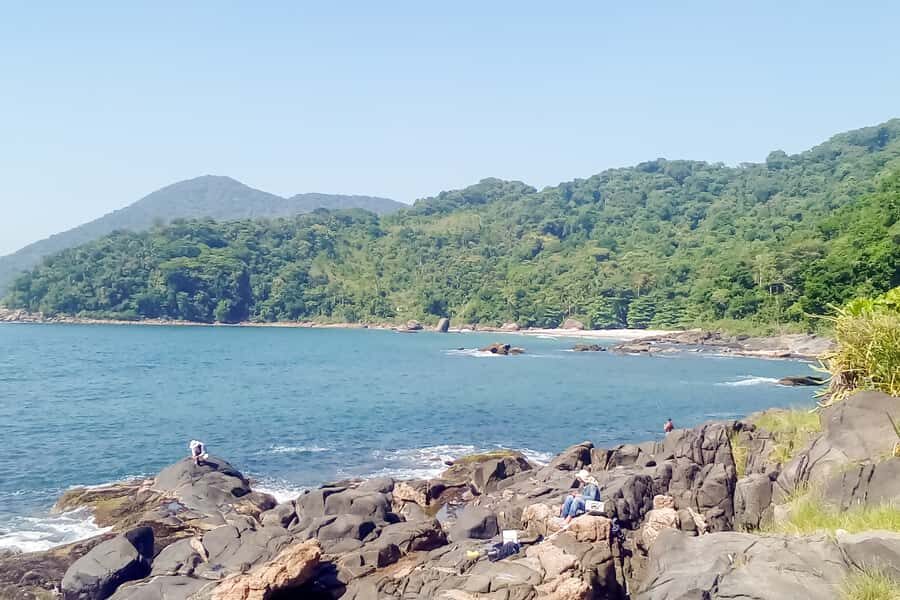
- Three beaches in one outing: White Beach, Black Beach, then Camburizinho
- Real swimming moments: ocean bath at Black Beach and a fresh stop at Camburi waterfall
- A small group (max 7), so the guide can manage pace and slippery sections better
- Rainforest walking with the Hans Staden Trail starting the route
- A 5-hour hike inside a 12-hour day, which keeps the effort focused and manageable
Why this Santo Amaro Island walk feels different than a beach day
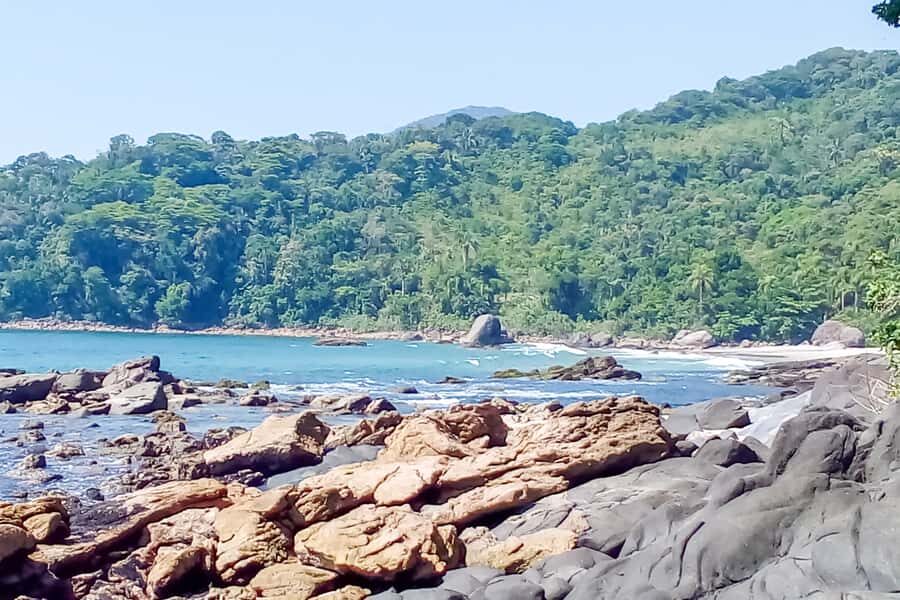
Most beach trips in Brazil are either pure sand and sun or pure sightseeing. This one blends both, but in a way that actually makes sense. You don’t just “arrive” somewhere—you earn the view by walking through dense rainforest and coastal trails that connect the beaches like a natural route.
The result is that each stop feels like its own mini reward. White Beach works like your warm-up and your reset. Black Beach is more about the ocean and that satisfying moment when your legs stop working and start floating. Camburi waterfall adds a different type of water break—less ocean, more fresh-and-cool. Then Camburizinho closes the loop with the last beach finish before you roll back toward White Beach for downtime.
The tour’s format also helps you pace yourself. Even though the total day is long (12 hours), the actual hiking window is listed at about 5 hours, over roughly 12 kilometers. That mix is ideal if you want adventure without spending the whole day in constant motion.
You can also read our reviews of more hiking tours in Sao Paulo
Getting from São Paulo area to the island: transport + ferry reality
The day starts with pickup by air-conditioned vehicle for hotels within 6 km from Sé Square (Sé, São Paulo). If you aren’t within that zone, you’ll meet the group at Ibis Paulista Hotel, Avenida Paulista, 2355. The local partner sends the exact pickup time the day before, so it’s smart to confirm and keep your phone accessible.
From there, the group heads to Bertioga city and crosses by ferry to the north of Santo Amaro Island. That ferry segment matters because it frames the whole experience: you’re not just being dropped off near a trailhead—you’re transitioning from city life to a park-like environment where the day depends on getting the timing right.
One practical note from real-world experience: traffic can mess with early plans. If you’re late, you may miss the group and your chances of being able to rejoin independently can be low. The best move is to treat pickup as a hard appointment, not a guideline. Leave a cushion so you arrive calm, not sprinting.
The Hans Staden Trail start: White Beach as your first big reward
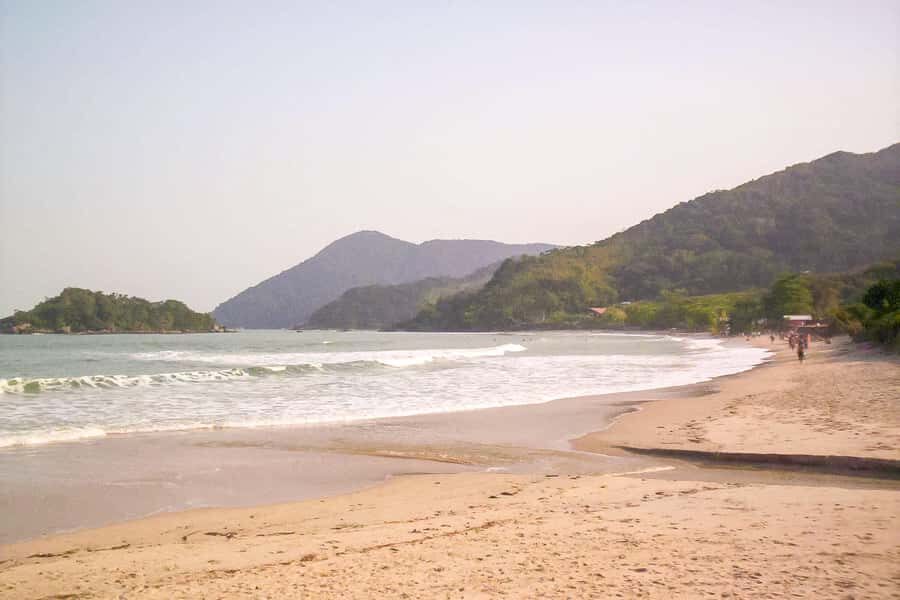
After safety instructions from your guide, you begin on the first stretch: the Hans Staden Trail, leading to White Beach. This first segment sets the tone. It’s where you find your footing, learn how the group moves together, and get oriented in a trail environment that’s different from sidewalks—especially if it has been rainy recently.
Once you reach White Beach, you can walk across the shoreline and take in the feel of the place before the next push. Think of White Beach as the tour’s “settle in” moment: you’re transitioning from trail mode to beach mode.
What’s worth planning for here is footwear and surface changes. Trail conditions can shift quickly, and even when a beach looks calm, the route to get there might include slick patches, roots, or damp ground. If you’ve got hiking shoes, bring them. If you’re tempted by flip-flops, don’t. This tour is built around walking that can be steep or wet.
White Beach to Black Beach: coastal walking and an ocean bath
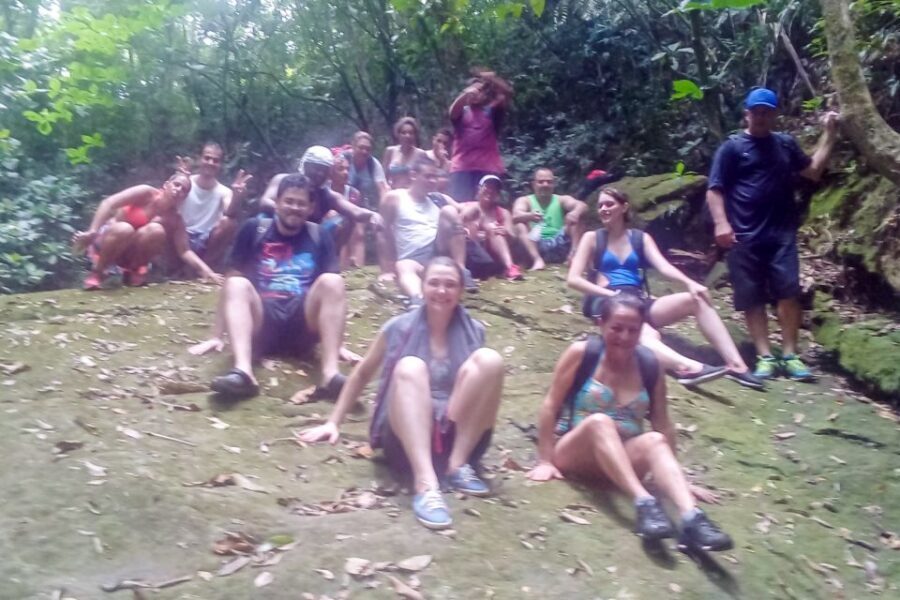
From White Beach, the hike continues to the second stop: Black Beach. This is not just a different color of sand moment. It’s a different kind of atmosphere—more raw, more exposed to the Atlantic, and a place where water time is part of the plan.
At Black Beach, you can take a refreshing bath in the Atlantic Ocean and also stop along the trail for breaks. This is where the day’s “adventure rhythm” really clicks. You’ll walk, reach a stunning coastal pocket, and then use the ocean break to reset your energy.
A detail that can matter: trails between beaches can be partially steep and wet, and caution is part of the deal. Guides in past runs (including Mauricio Vergnano) have led groups with safety and pacing in mind, but your job is simple: move carefully, keep your balance, and don’t rush because you’re eager to get to the next photo spot.
Camburi waterfall stop: when the hike turns into refreshing water
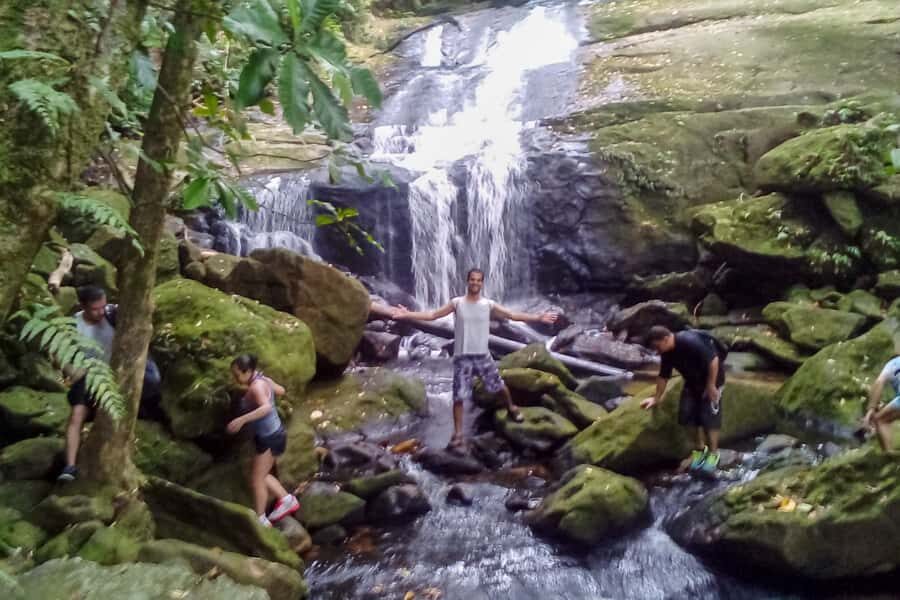
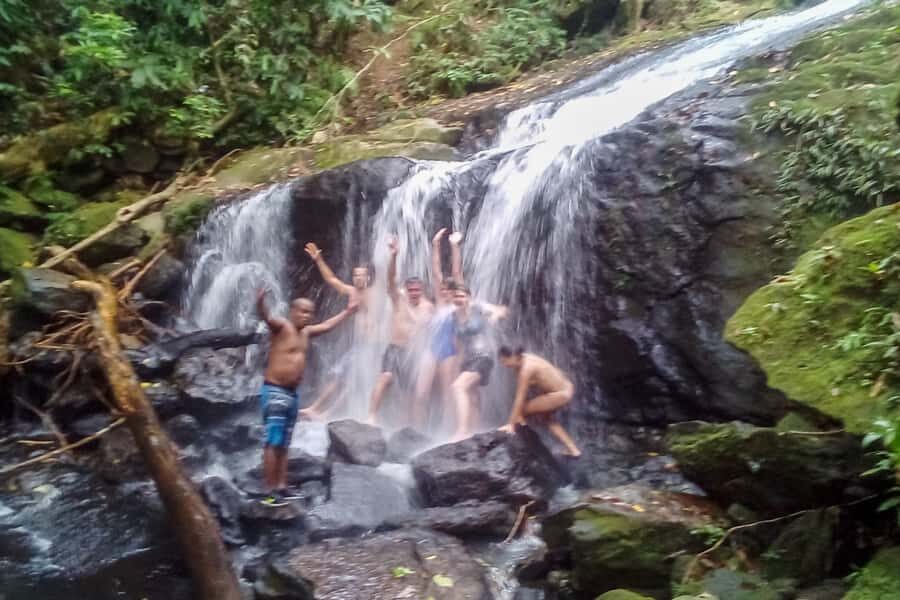
After Black Beach, you head toward Camburi waterfall. This stop is a big deal for two reasons. First, it breaks up the ocean pattern and gives your body a different kind of cooling. Second, it adds variety to the scenery without turning the day into a dozen small stops.
Here, you may enjoy a refreshing bath. That means you should treat this like a real swim stop, not just a quick look. Bring your towel, change of clothes, and swimwear as directed. This is the moment when the “nature” side of the rainforest experience becomes physical—cold water, slippery rocks, and that very real relief after hours on your feet.
If you’ve had rain before the hike, the waterfall area can be harder to navigate. That doesn’t mean you shouldn’t go. It does mean you should approach it with respect: watch where you place your feet, and give yourself extra seconds before you step.






Camburizinho Beach: the last beach finish and your return plan
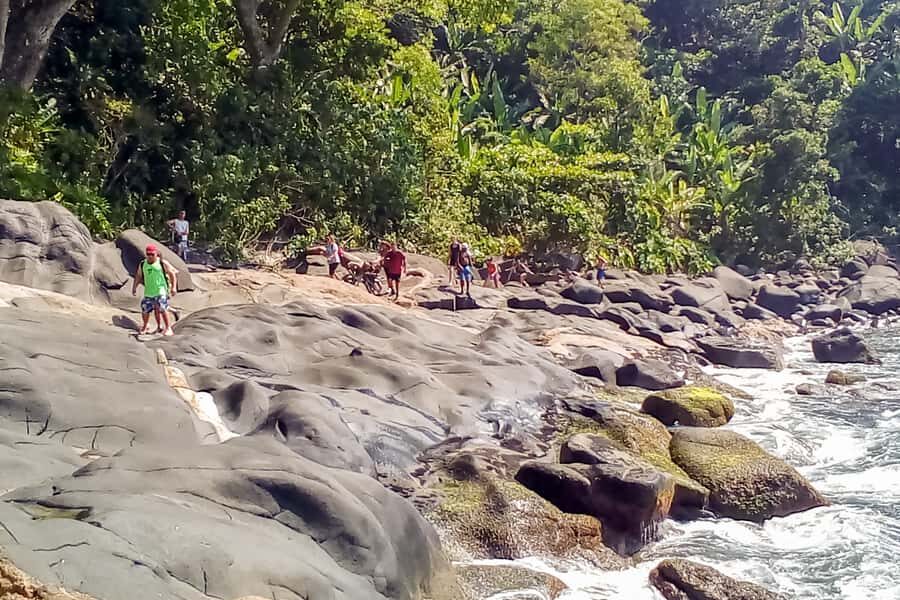
Next comes the third and last beach: Camburizinho. By the time you arrive, you’ve already done the main transition from trail to beach and back again twice. Camburizinho works as the endpoint energy check: can you stay steady through the final stretch and enjoy the reward without burning yourself out?
After the Camburizinho stop, you return to White Beach, which is where you get free time to enjoy the area before the tour concludes. This free time is valuable because it’s not scheduled like a train stop. You can use it to relax, rinse off (if you’re able), and let your body recover before the long ride back.
In other words: you get a last chance to enjoy the setting, not just a final checkpoint to move along.
How hard is it, really? Pace, distance, and who it fits
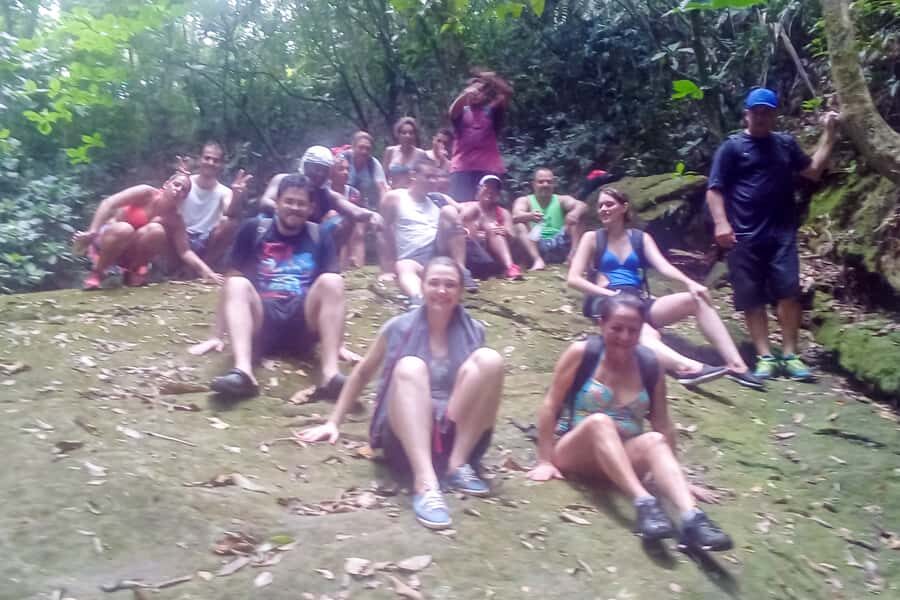
The tour lists a medium/hard difficulty level with a 12-kilometer hike over about 5 hours, even though the whole day runs 12 hours. That gap is important. It tells you the rest of the day includes transport, ferry time, safety instructions, and the water stops.
This is not “casual walking.” It’s a hike through uneven terrain with sections that can be steep and wet, so it’s best for people who are comfortable walking for hours and adjusting their pace on slippery ground.
The tour also explicitly says it’s not appropriate for:
- children under 12
- people with mobility difficulties or wheelchair users
- people with heart problems
- people with obesity (as stated)
- people with some type of phobia
If you fall into any of those categories, it’s better to choose a calmer day trip with fewer physical demands.
If you’re fit, enjoy hiking, and like the idea of ocean and waterfall swims inside a single day, this one can feel exactly right.
What you’re really paying for: value of the $118 price
At $118 per person for a 12-hour small-group day, the price isn’t just for views. You’re paying for the combination of:
- air-conditioned transport
- pickup and drop-off within a defined radius (or the set meeting point)
- a bilingual guide (Spanish, English, Portuguese)
- insurance
- group management for a route that includes trail walking and water access
What’s not included helps clarify value: meals and beverages aren’t provided, and tickets of the boat ride aren’t included. Also, your time allocation matters—because you’re getting a long day with a guided route, not a quick half-day beach shuttle.
So, is it good value? If you want guided pacing, safety, and a structured way to reach multiple beaches without worrying about the trail logistics yourself, yes. If you’re hoping for a low-effort day with no sweat and no walking, the $118 is probably not the best fit.
Guides and group size: the difference between chaos and calm
This is a small group tour capped at 7 participants. In practice, that matters because rainforest trails and beach approaches are easier when people aren’t all moving at wildly different speeds. It also makes it more realistic for the guide to keep an eye on footing and keep the group together.
Guides have a strong influence here. In past experiences, Mauricio Vergnano has led groups with clear explanations (including in English), kindness, and strong attention to safety and the environment. That “teacher” vibe helps, especially when trails are wet and you need to understand where to be careful.
If you like learning something while you move—rather than just following in silence—this format tends to land well.
What to bring so the wet parts don’t ruin your day
The packing list is practical, and you should take it seriously. Bring:
- comfortable shoes (hiking shoes if you own them)
- swimwear
- change of clothes
- towel
- sunscreen
- insect repellent
- snacks
The “change of clothes” part isn’t a luxury. When you’re hiking in heat, then cooling off at ocean and waterfall stops, you’ll sweat, you’ll get wet, and you’ll want to feel human again later.
Also, expect footwear to matter more than you think. Multiple experiences point out that some trail sections can be slippery after rain, and slipping can happen even when the route is doable. Proper shoes reduce that risk a lot.
Common gotchas: timing and slippery trail conditions
This tour lives on timing. You start with pickup, then ferry crossing, then safety instructions. If you show up late, you might miss the boat timing or the group’s departure window, and rejoining may not be straightforward.
One recent experience included a late arrival due to traffic and a rough interaction afterward. I’m not saying that’s the norm—but it’s enough of a signal to plan early and communicate fast if something goes wrong. Treat the meeting time like a flight check-in.
Second gotcha: wet trail conditions. The route can be steep and damp. You’ll still have fun if you take it slow, but if you rush, your balance goes first. The best strategy is simple: shorter steps, look at the ground, and trust the guide’s pace.
Should you book this Santo Amaro Island trekking tour?
Book it if you want a full day outdoors that combines rainforest hiking, three beaches, and multiple real water stops (ocean + waterfall). It’s a good match if you can walk 12 km, you don’t mind a medium/hard route, and you want a guided experience that reduces trail guesswork.
Skip it if you need low physical effort, if you have mobility or heart concerns, or if slippery terrain makes you anxious. This is also not ideal for kids under 12.
Finally, book with confidence if you’re the type who likes practical adventures: bring the right shoes, pack the change of clothes, and give yourself buffer time for pickup. Do that, and Santo Amaro can feel like a true escape—rainforest to ocean, all in one connected day.
FAQ
How long is the Santo Amaro Island trekking experience?
The total duration is listed as 12 hours, with the hiking portion taking about 5 hours.
What’s the hiking distance and difficulty level?
The hike is about 12 kilometers and the difficulty is marked medium/hard.
What stops are included during the trek?
You hike to White Beach first, then Black Beach, then Camburi waterfall, and finally Camburizinho before returning to White Beach for free time.
Is the tour good for kids or people with mobility issues?
The activity is not appropriate for children under 12 and it’s also not suitable for people with mobility difficulties, wheelchair users, or people with heart problems.
What does the price include, and what doesn’t?
Included: air-conditioned transportation, pickup and drop-off within the stated zone or the meeting point, a bilingual guide, and insurance. Not included: meals and beverages, and boat ride tickets.
What should I bring for the day?
Bring comfortable shoes, swimwear, a change of clothes, a towel, sunscreen, insect repellent, and snacks.