REVIEW · SAO PAULO
São Paulo Highlights: Culture, History, and Vibrance by Bike
Book on GetYourGuide →Operated by Gregtur Tourism · Bookable on GetYourGuide
Two wheels make São Paulo click fast. This private bike tour strings together the city’s biggest landmarks—from Avenida Paulista to the Historic Triangle—so you get context, not just sightseeing. You’ll ride along dedicated lanes, make planned photo and explanation stops, and leave with a map in your head of how São Paulo grew.
I especially like the mix of design and story on Avenida Paulista, with stops near MASP and the gardens at Casa das Rosas. I also like how the route naturally carries you into Liberdade, São Paulo’s Japanese district, where you see how immigration and culture shaped everyday life.
One thing to plan for: you’ll need to handle getting yourself to the meeting point near Ana Rosa, since there’s no hotel pickup, and you’ll be cycling for about 3.5 hours.
In This Review
- Key highlights worth planning for
- Getting oriented fast from França Pinto (and why the meeting point matters)
- Avenida Paulista: MASP, Casa das Rosas, and the city’s art-and-architecture contrast
- MASP: the building and the art conversation
- Casa das Rosas: gardens and a preserved mansion break
- Parque Trianon: a green breath
- Conjunto Nacional: culture and community near the center of it all
- Riding Consolação into downtown: Praça Roosevelt, Parque Augusta, Republic Square, and Theatro Municipal
- Theatro Municipal: why it earns a slow look
- Public spaces matter more than you think
- Vale do Anhangabaú and the Historic Triangle: São Paulo’s origins, from Jesuits to metropolis
- What you’ll do here (and why it works)
- Optional extension to Luz Station, plus Pinacoteca’s art stop, then Liberdade
- Luz Station and the adjacent park
- Pinacoteca: a major art institution stop
- Passing through Liberdade: a neighborhood identity, not just a photo stop
- Ending at Centro Cultural São Paulo and Catedral Metropolitana Ortodoxa
- Price and value: what $120 gets you (and what it avoids)
- Who should book this bike highlights tour?
- What the guides are doing right (based on prior experiences)
- Should you book São Paulo Highlights by Bike?
- FAQ
- How long is the São Paulo Highlights by Bike tour?
- Is this a private group tour?
- Where do I meet for the tour?
- What’s the nearest metro station?
- Do I need to bring my own bike?
- What’s included in the tour price?
- Is hotel pickup included?
- What languages does the tour guide speak?
- Is the tour route fixed, or can I extend it to Luz?
- What should I do before the tour starts?
Key highlights worth planning for
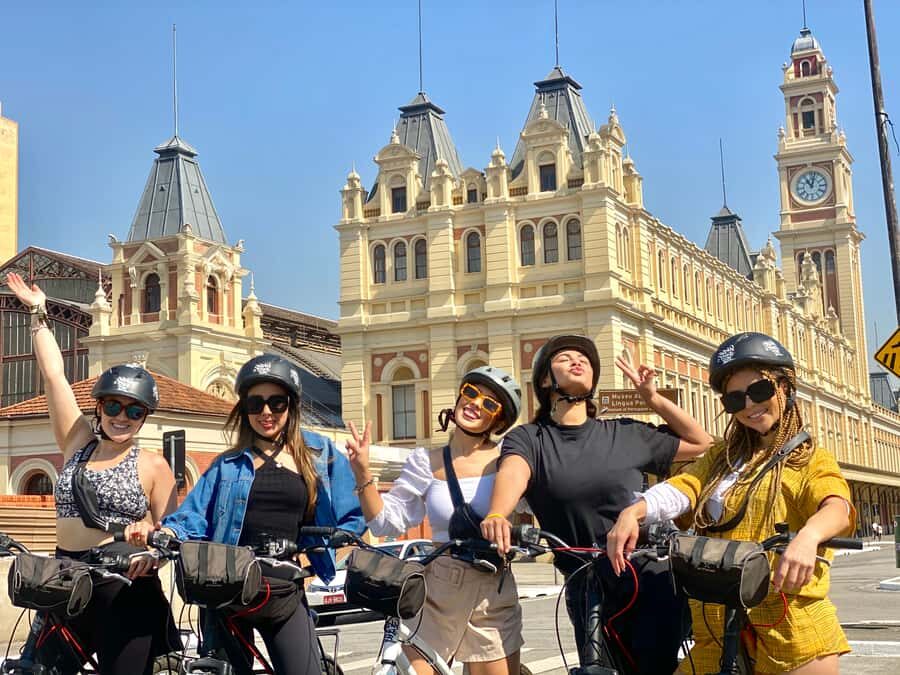
- França Pinto Bike Lane to Avenida Paulista: you start with a smooth, guided route toward the city’s cultural axis
- MASP stop for architecture + art context: an iconic building with a lot to explain beyond the photo
- Casa das Rosas gardens and preserved mansion vibes: a quieter pause inside a major city corridor
- Consolação descent into downtown: landmarks you’ll remember, like Theatro Municipal and Republic Square
- Historic Triangle perspective: you learn where São Paulo began with Jesuit missionaries
- Liberdade before you finish: you end with a neighborhood identity that still feels alive
Getting oriented fast from França Pinto (and why the meeting point matters)
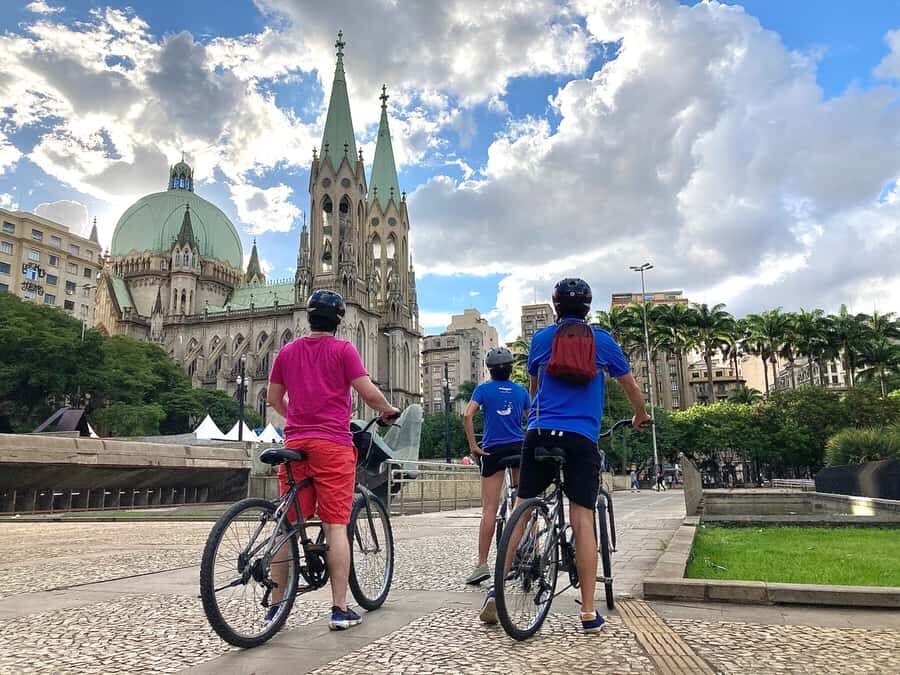
Most first-time São Paulo days feel chaotic. This route does something smarter: it starts you near the França Pinto Bike Lane and then turns you toward Avenida Paulista, so your brain has a spine to follow. Even if you’ve never been on a bike in a big city, the structure helps—ride, stop, look, learn, repeat.
You meet at Portinha 183, Rua França Pinto, 183 in Vila Mariana. The nearest metro is Ana Rosa Station (Line 1 – Blue), about a short walk (roughly 600 meters / around 8 minutes). Do yourself a favor and arrive about 15 minutes early. It’s not about rushing—it’s about having enough time to get your helmet, get settled, and start without stress.
The tour is private, so the guide can pace the ride for your group. That matters here because São Paulo is big. You want the “why” behind what you’re seeing, not a speed run past it.
You can also read our reviews of more cycling tours in Sao Paulo
Avenida Paulista: MASP, Casa das Rosas, and the city’s art-and-architecture contrast
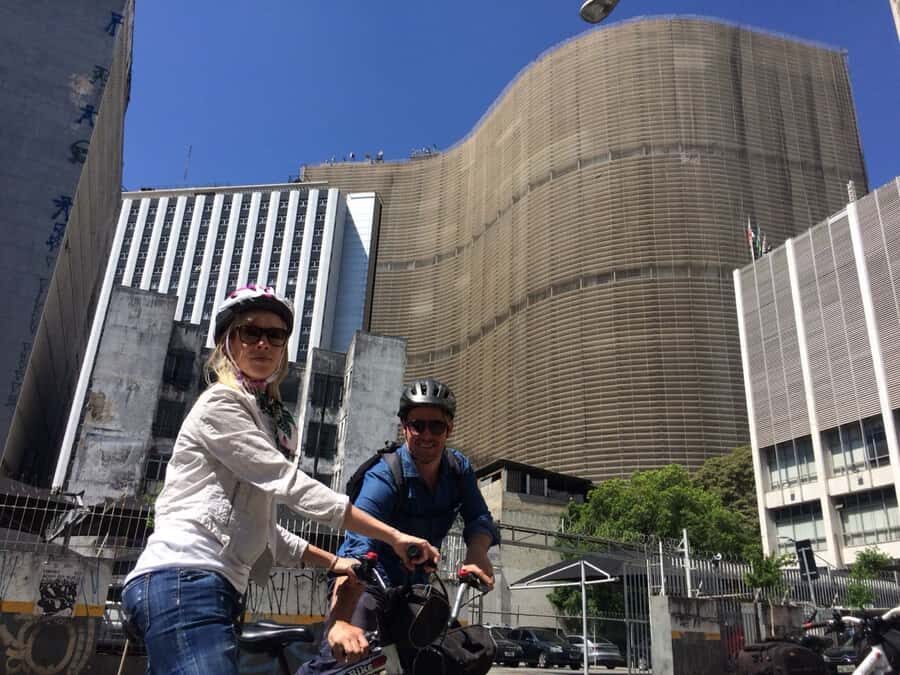
Avenida Paulista is often called the heart of São Paulo’s cultural scene, and this tour uses that idea in a practical way. You’re not just looking at a long avenue—you’re getting a sequence of stops that explain how the city layers old and new.
MASP: the building and the art conversation
You’ll stop around MASP, one of the most recognizable museum names in Brazil. The key value for you is not only the photo—it’s what the guide points out about the museum’s distinctive architecture and why it matters in the skyline. Even if you don’t go inside on this ride, MASP is a great “anchor.” You’ll connect the building to what the city values: public culture, big institutions, and modern design.
A good sign in the way the tour is described: you’re not left to guess. Your guide gives context as you roll by, which is exactly how you turn a landmark into a memory.
Casa das Rosas: gardens and a preserved mansion break
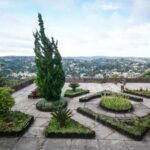
Then comes Casa das Rosas, a well-preserved mansion with gardens around it. This stop is a useful reset. Paulista can feel like constant motion—skyscrapers, traffic noise, and a rush of people. Casa das Rosas gives you a quieter pocket, and you’ll understand why it’s kept as part of the city’s cultural memory.
What you should love here: the contrast. On one side, modern scale. On the other, a place that looks like it was made for slower time. It’s a nice balance when you’re on a 210-minute ride.
Parque Trianon: a green breath
Between major sights, the route also takes you through Parque Trianon, a green oasis. Don’t skip this mentally. Even a short stretch of trees and open space helps your body recover from the “always on” feeling of a big avenue. It’s also the kind of stop that lets you look around without reading your watch every few minutes.
You can also read our reviews of more historical tours in Sao Paulo


Conjunto Nacional: culture and community near the center of it all
As you continue along Paulista, you’ll reach Conjunto Nacional, described as a hub for culture and community events. On bike, it’s a great spot because you can see how built spaces in São Paulo are used by real people, not just for show. Your guide can connect the dots between major institutions and the day-to-day energy around them.
Riding Consolação into downtown: Praça Roosevelt, Parque Augusta, Republic Square, and Theatro Municipal
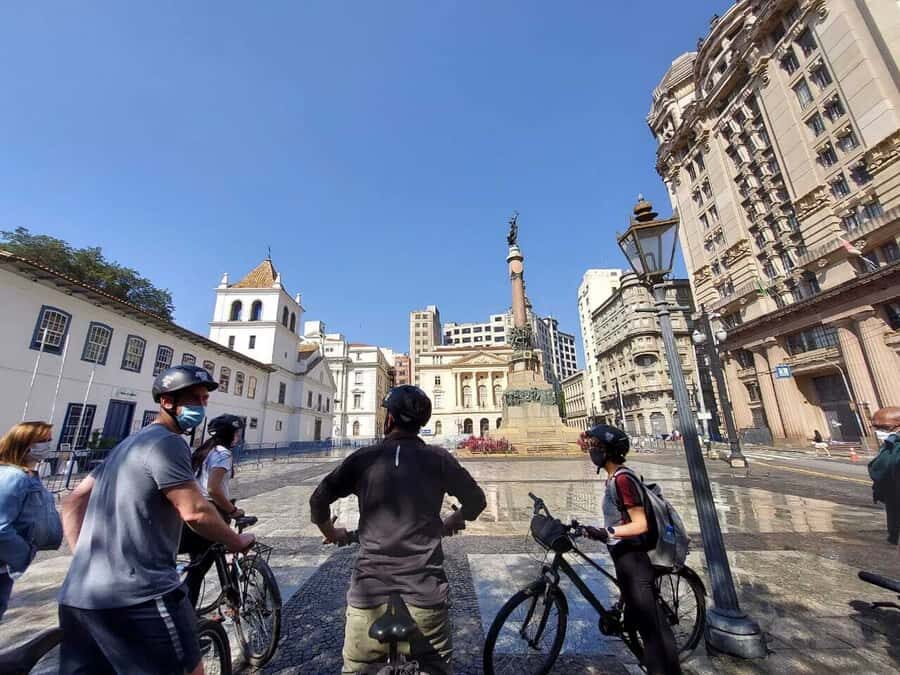
After Paulista, the tour turns downtown via the Consolação Bike Lane. This is where the city starts talking in layers: historic buildings, large public squares, and grand civic architecture.
You’ll pass by or stop near key areas like Praça Roosevelt, Parque Augusta, Republic Square, and Theatro Municipal. Here’s how I’d think about it as a first-timer: downtown São Paulo is the place where the city’s “status” becomes visible—big institutions and ceremonial spaces. Paulista can feel like modern culture at full volume; downtown feels like the stage where the city organized itself.
Theatro Municipal: why it earns a slow look
Theatro Municipal is the kind of building you recognize from the outside even if you’ve never visited. On this ride, you’re not just getting the picture. You’re getting the meaning—how a landmark like this reflects ambition, investment in the arts, and the role of public culture in São Paulo’s growth.
If you care about architecture, treat the Theatro Municipal moment like a timeout. Let your eyes adjust. The details are part of the story.
Public spaces matter more than you think
Praça Roosevelt and Republic Square aren’t there just to break up the ride. They help you understand what São Paulo uses public space for: gathering, people-watching, and moving between neighborhoods. When you travel by bike, you see the city at human speed. That’s where these squares become useful, not just scenic.
Vale do Anhangabaú and the Historic Triangle: São Paulo’s origins, from Jesuits to metropolis
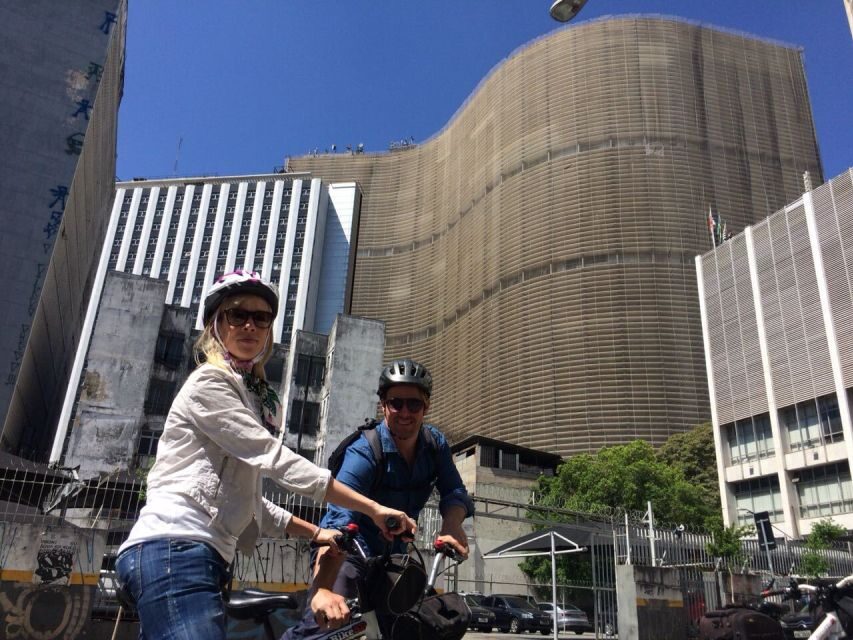
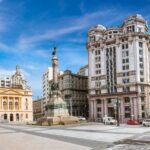
Now the tour shifts from “big-city highlights” into “how it started.” You’ll ride through Vale do Anhangabaú and into the Historic Triangle area, the zone tied to São Paulo’s origins. The route frames this as the place where São Paulo was first founded by Jesuit missionaries, before it expanded into the huge metropolis it is today.
This section is valuable because it changes how you look at everything else. Once you understand the Historic Triangle as an origin story, the rest of the city makes more sense. You stop treating landmarks like isolated points and start seeing them as part of one long timeline.
What you’ll do here (and why it works)
You’ll explore buildings and monuments that mark the city’s transformation—from village beginnings to a modern, sprawling urban center. You’ll likely get more than facts; you’ll get the way the guide connects religion, settlement, and urban growth.
One practical note: this area can feel more like walking-through-old-city space than the wide avenues. That’s not bad—it’s just good to know so you don’t expect every stop to feel like Paulista. Your pace will still be guided, but your attention will shift.
Optional extension to Luz Station, plus Pinacoteca’s art stop, then Liberdade
If you want to stretch the day, the tour can continue up to Luz. This is a smart add-on because it pairs a major transport landmark with an important arts stop.
Luz Station and the adjacent park
You’ll visit the grand Luz Station, plus its adjacent park area. Stations often get ignored on sightseeing trips, but Luz is the kind of place where you can see the city’s movement system in one glance. The nearby park gives you a breathing moment—again, useful when you’ve already been cycling through major corridors.
Pinacoteca: a major art institution stop
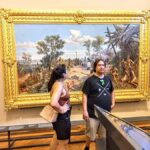
From there, the route includes the Pinacoteca Museum, described as a major art institution in the city. Even if you don’t have time for a deep museum visit, the stop matters because it places you in the São Paulo art ecosystem. You’ll understand why this city takes arts seriously in both mainstream and institutional ways.
Passing through Liberdade: a neighborhood identity, not just a photo stop
On the way back, the tour passes through Liberdade, São Paulo’s Japanese district. This is one of the most meaningful parts of the route because it shows culture as something you can walk into and see reflected in street life, not only in museums.
The tour framing is clear: Liberdade has a multicultural history, and the neighborhood’s atmosphere shows how that history still shapes what you experience today.
If you enjoy food, street scenes, or cultural neighborhoods, this portion gives you a satisfying payoff at the end of the bigger landmark circuit.
Ending at Centro Cultural São Paulo and Catedral Metropolitana Ortodoxa
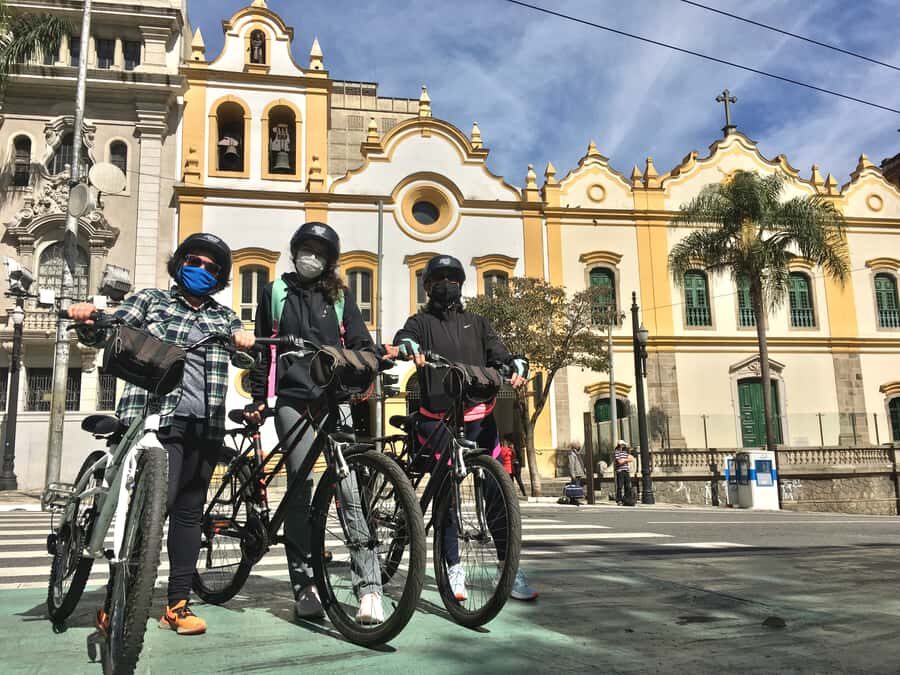
As you wrap up, you stop at Centro Cultural São Paulo and then finish at Catedral Metropolitana Ortodoxa. Ending at a church is a nice final move for a bike tour because it gives you stillness at the end of motion.
Centro Cultural São Paulo is a good closing stop because it keeps the focus on culture and public programming. Then the Catedral Metropolitana Ortodoxa lands you with a strong visual and spiritual tone—an ending that feels different from the major secular landmarks earlier in the route.
Price and value: what $120 gets you (and what it avoids)
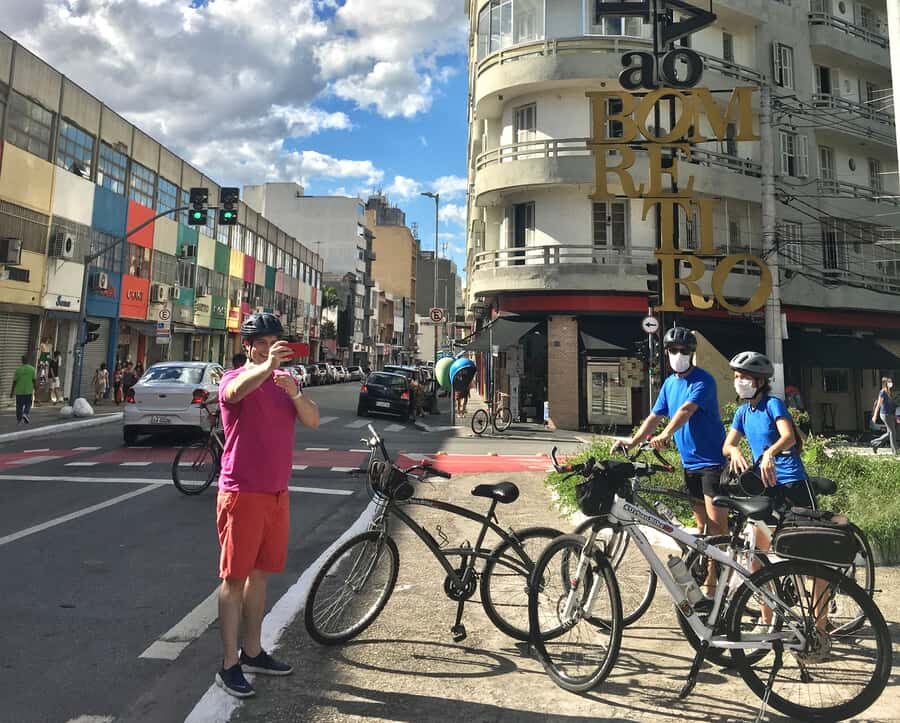
At $120 per person for about 210 minutes, this isn’t a cheap “just rent a bike” deal. But it’s also not priced like a high-end museum day. The value comes from bundling the basics you’d otherwise have to figure out yourself: helmet, use of bicycle, bottle of water, a professional licensed bilingual private guide, and a raincoat, plus a small souvenir.
You’re also paying for time. With a guide, you don’t waste your first afternoon figuring out where the best bike corridors and top sights connect. You get explanations built around the route, which is especially helpful in a city as layered as São Paulo.
A drawback to keep in mind is that you’re responsible for the pre-trip logistics: no hotel pickup. If you’re staying far from Ana Rosa or Vila Mariana, you may spend extra time getting there and back. But if you’re already reasonably close to the metro, the price feels more like a planning shortcut than a splurge.
Who should book this bike highlights tour?
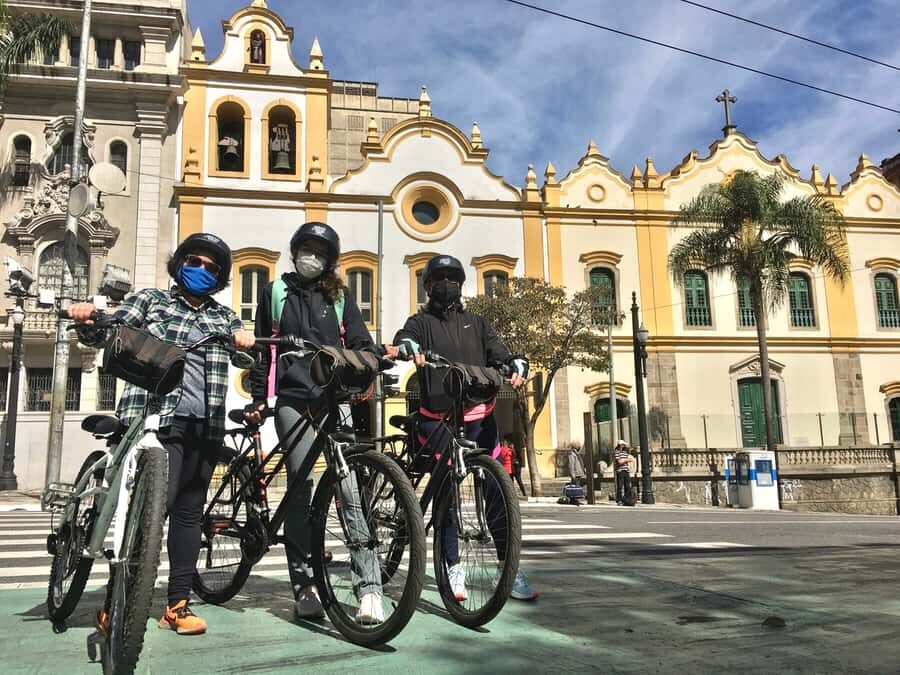
This tour is a strong fit if:
- It’s your first time in São Paulo and you want a clear, high-impact overview without crisscrossing the city all day.
- You like architecture and museums, but you also want neighborhood context.
- You’d rather learn while moving than sit with a map for hours.
- You want a private group experience with a licensed guide who can speak Portuguese, English, or Spanish.
It may be less ideal if:
- You don’t feel comfortable riding a bike for around 3.5 hours.
- You need a plan that includes door-to-door transport from your hotel.
- You prefer fully timed indoor museum visits rather than guided stops and street-level context.
What the guides are doing right (based on prior experiences)
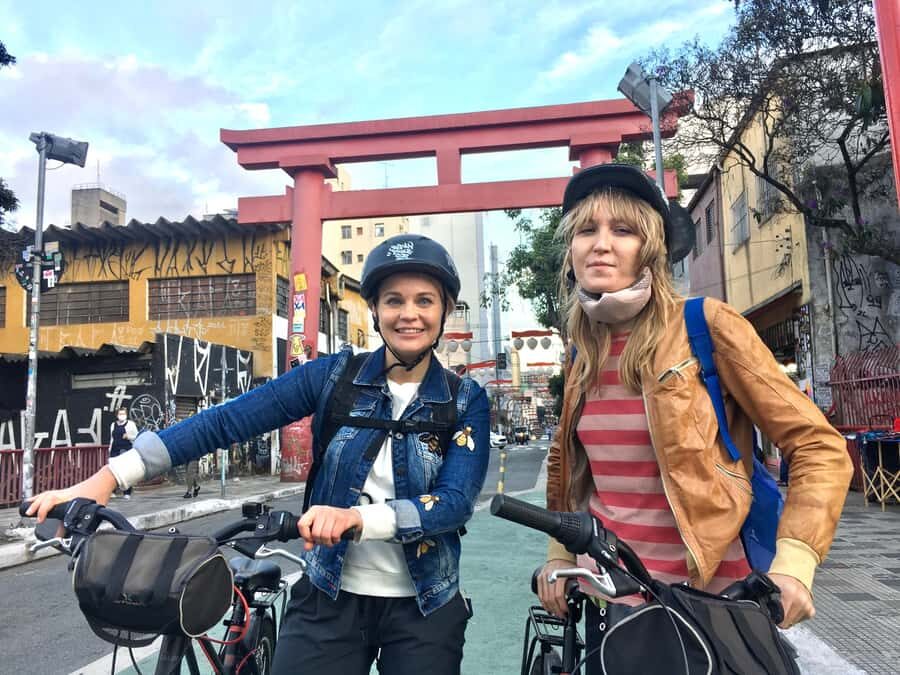
In past bookings, guides like Lucas, Renato, and Pedro have been praised for clear English and helpful explanations, plus a calm, safety-first feel during the ride. One guide, Renato, is noted for preparing for rain by providing a raincoat, along with water, and even extra bike lighting for darkening streets. That’s the kind of practical care that makes a big-city bike tour feel comfortable.
So yes, you’re seeing the big sights. But the bigger win is how the guide handles the details so you don’t have to.
Should you book São Paulo Highlights by Bike?
I think this is a smart first-book kind of tour—especially if you want the city’s major cultural spine in one afternoon. The route is built to connect Paulista, downtown monuments, and Liberdade, which helps you understand São Paulo as more than a list of attractions.
Book it if you:
- Want a guided ride with helmet, water, bicycle, and rain gear handled.
- Prefer learning on the move, with multiple stops that explain what you’re looking at.
- Like the idea of ending with Liberdade culture and a memorable church finish.
Skip it if:
- You’re hoping for a fully relaxed, minimal-sight ride (this is still an active 210-minute cycling day).
- Getting to the meeting point is hard for you.
If you show up ready to pedal and look, you’ll walk away with a real sense of how São Paulo connects art, history, and neighborhoods.
FAQ
How long is the São Paulo Highlights by Bike tour?
The tour lasts 210 minutes.
Is this a private group tour?
Yes, it’s listed as a private group experience.
Where do I meet for the tour?
You meet at Portinha 183, Rua França Pinto, 183 – Vila Mariana, São Paulo – SP.
What’s the nearest metro station?
The nearest metro station is Ana Rosa Station (Line 1 – Blue), about 600 meters away (around 8 minutes on foot).
Do I need to bring my own bike?
No. The tour includes use of a bicycle.
What’s included in the tour price?
Included items are helmet, bicycle use, bottle of water, a professional licensed bilingual private tour guide, raincoat, and a souvenir.
Is hotel pickup included?
No, hotel pickup and drop off are not included.
What languages does the tour guide speak?
The guide can speak Portuguese, English, and Spanish.
Is the tour route fixed, or can I extend it to Luz?
The information notes an optional extension up to Luz to visit Luz Station, the adjacent park, and Pinacoteca Museum.
What should I do before the tour starts?
Arrive at the meeting point 15 minutes before departure.