REVIEW · RIO DE JANEIRO
Rocinha Walking Tour: Get a Feel for the Brazil’s Largest Favela (Shared Group)
Book on Viator →Operated by Gregtur Turismo · Bookable on Viator
Favela tours can be emotional. This one also has serious viewpoints.
I like that this small-group Rocinha walking tour is capped at 10 people, which means you get real conversation time, not just a queue through tight streets. I also like the fact it’s resident-led and guided by someone who knows Rocinha from the inside, including a strong command of English (I’ve seen guides like Carlos, who grew up there and still lives there).
One thing to consider: you’ll be on uneven, steep streets for part of the time, and the tour asks for moderate physical fitness. Also, food and drinks aren’t included, so plan to grab water or a snack before you go.
In This Review
- Key Points You’ll Care About
- Starting in Copacabana, Then Trading the Usual Rio Script
- Why that timing works
- Price and What’s Actually Included in the $100 Ticket
- How to judge value without overthinking it
- Salocin Area: Learning the Rhythm of Day-to-Day Rocinha
- Stop 1: Getting close to Rocinha life (about 1 hour)
- Stop 3: Handcraft production and the shopping/fair area (about 40 minutes)
- What to do if you want to buy something
- The Moto-Taxi Ride That Gets You to the Good Views
- What you should expect
- Why it’s worth doing
- Morro do Laboriaux: The Highest Viewpoint Moment (about 30 minutes)
- The main benefit: context
- Graffiti, Leadership, and the Wark Story (about 20 minutes)
- What to do if you like art
- Meeting Mrs. Maria at Home: The View From Inside Rocinha (about 10 minutes)
- Why this is more than a photo stop
- Safety, Comfort, and How to Act on a Respect-Focused Tour
- Your part: keep it simple
- Who Should Book This Rocinha Walking Tour—and Who Might Prefer Another Style
- Should You Book the Rocinha Walking Tour?
- FAQ
- How long is the Rocinha walking tour?
- What group size is this tour?
- What does the $100 price include?
- Are food and drinks included?
- Where does the tour start and end?
- What is the cancellation policy?
Key Points You’ll Care About
- Small group (max 10) so the day feels personal, not rushed
- Resident guide (often with excellent English) for context you won’t get on a bus tour
- Moto-taxi ride inside Rocinha to reach uphill viewpoints without turning it into a full workout
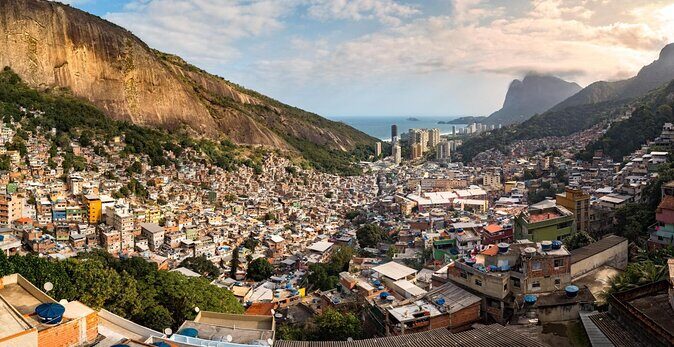
- Morro do Laboriaux viewpoint for big panoramas over beaches and the Tijuca Forest slopes
- Art stops with Wark and a look at how young people learn through the Wark Institute
- Home visit feel with a long-time resident, including a view from inside the community
Starting in Copacabana, Then Trading the Usual Rio Script
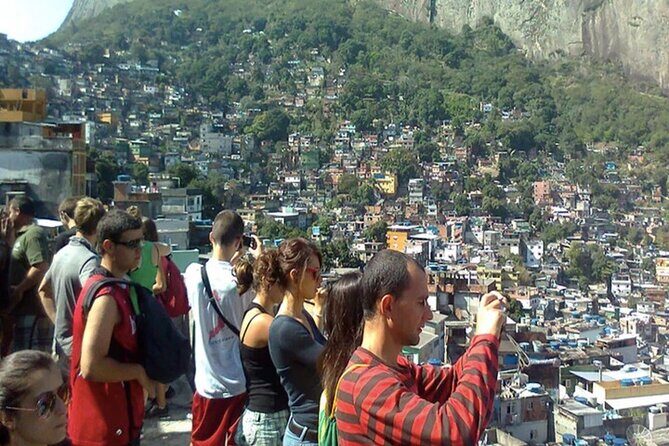
The tour begins at Praça Cardeal Arcoverde in Copacabana (Cardeal Arcoverde / R. Barata Ribeiro) and ends back near the same spot. That matters because it keeps your day simple: you’re not hunting for a random meeting point somewhere deep in town.
From there, the plan focuses on Rocinha as a living neighborhood, not a “sight.” The route is built around short, meaningful stops—walk, pause, talk, look—so you get a feel for daily life without trying to cram in a whole checklist of attractions. The duration is about 3 hours, which is the sweet spot if you want perspective without losing the rest of your Rio day.
You can also read our reviews of more walking tours in Rio de Janeiro



Why that timing works
With a half-day format, you can pair this with classic Rio highlights later—Christ the Redeemer, Sugarloaf, beaches—without feeling like you traded one world for another. It’s the kind of tour that helps your other sightseeing make more sense.
Price and What’s Actually Included in the $100 Ticket
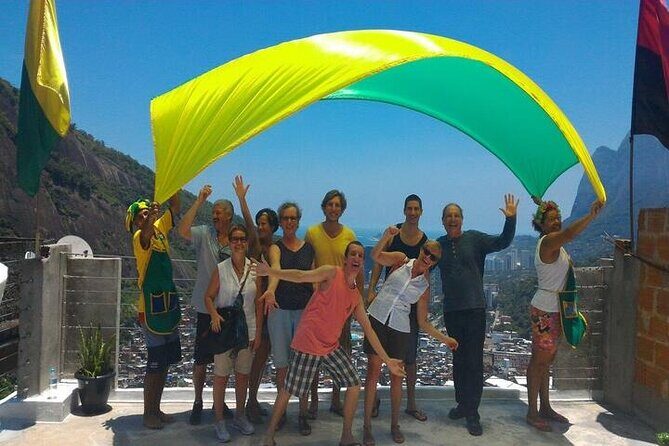
At $100 per person for roughly 3 hours, this isn’t a bargain-basement tour. But it’s also not “just a walk.” You’re paying for access, local knowledge, and the friction-reducing parts that help you move through Rocinha efficiently.
Here’s what’s included:
- Metro/subway tickets
- A licensed bilingual private tour guide
- VAT and all taxes/handling
- A moto-taxi ride up to the top of the Rocinha hill
And what’s not included:
- Food and drinks
- Tips (optional)
How to judge value without overthinking it
If a tour includes a licensed bilingual guide plus metro rides plus a moto-taxi, that usually means you’re spending money on logistics and people rather than only on “standing at places.” For many visitors, that’s exactly what turns a good experience into a safe, well-paced one—especially in areas that most outsiders can’t navigate on their own.
One practical note: because it’s a shared group capped at 10, it can still feel intimate even at this price point. In other words, you get structure without losing the human scale.
Salocin Area: Learning the Rhythm of Day-to-Day Rocinha
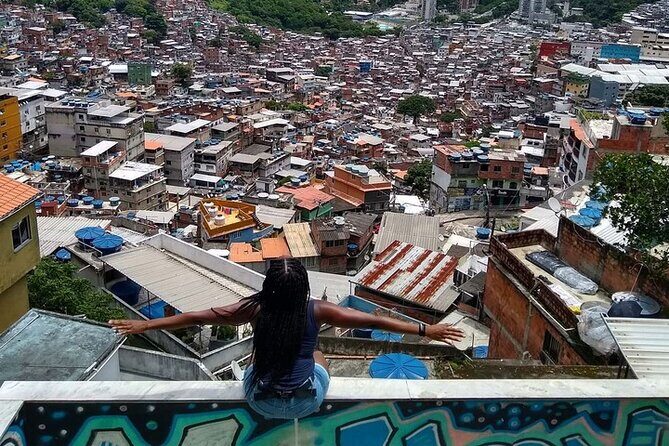
The tour’s first phase centers on Salocin, with multiple stops that build an understanding step by step. Each one is timed tightly, which keeps the day moving while still giving you time to ask questions.





Stop 1: Getting close to Rocinha life (about 1 hour)
You start with a walk down the alleys to understand day-to-day reality from up close. This is where you get your first “okay, this is how people actually live here” moment—seeing the community as a neighborhood with its own flow, not a set piece.
What I’d watch for: quiet observation. If you come in treating everything like a photo backdrop, you’ll miss what the guide is trying to translate. Ask smart questions, listen, and let the streets teach you their pace.
Possible drawback: the streets can be busy and uneven. Wear shoes that you trust.
Stop 3: Handcraft production and the shopping/fair area (about 40 minutes)
Next comes a visit to community centers tied to handicraft production, followed by time in the shopping area leading to a handcraft fair.
This part matters because it’s not only about souvenirs. It’s a look at work skills, local creativity, and the small economic ecosystem that supports daily life. If you want to support the community in a way that feels more direct than tossing money at a random stall, this is the moment.
What to do if you want to buy something
You’ll likely see jewelry, decorative objects, and souvenirs for sale. If shopping is in your plan, give yourself a little mental space here. You’re not just browsing; you’re meeting people and seeing what different artists/craftspeople make. If you’d rather not buy, that’s fine—still be respectful and stay present.
The Moto-Taxi Ride That Gets You to the Good Views
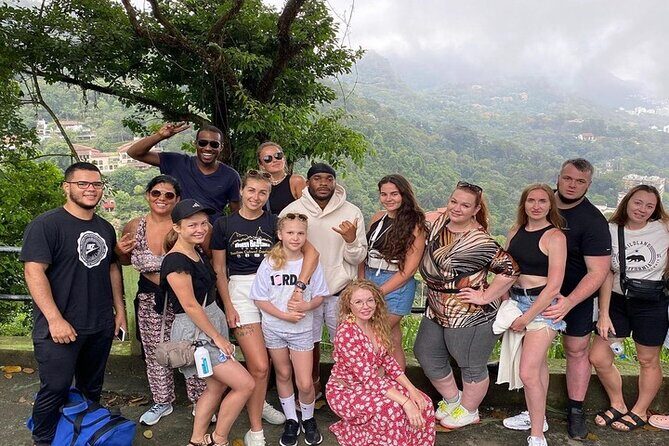
One of the most memorable parts is the uphill moto-taxi ride (about 20 minutes). The tour uses it to access amazing viewpoints without forcing you to power-walk straight up the hill for too long.
What you should expect
This ride is described as adrenaline through narrow alleys. That word choice matters: the streets are tight and the motion is quick. It’s not a roller coaster, but it is an active transport moment, not a leisurely transfer.
Practical tip: if you’re prone to motion sickness, consider bringing something for that. And if you’re traveling with someone older, reassure them that the ride is part of the plan—not an optional detour.
Why it’s worth doing
The payoff is the perspective it gives you. In many cities, you can get a skyline view from a bus stop or a cable car. Here, you get a view that also explains the geography of the community—how Rocinha sits in relation to Rio’s beaches and surrounding terrain.
Morro do Laboriaux: The Highest Viewpoint Moment (about 30 minutes)
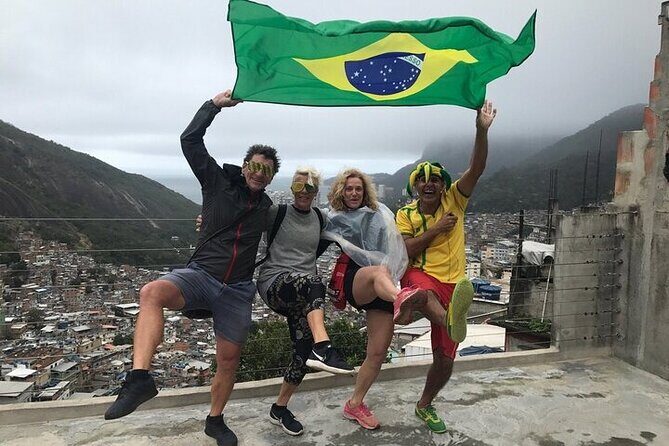
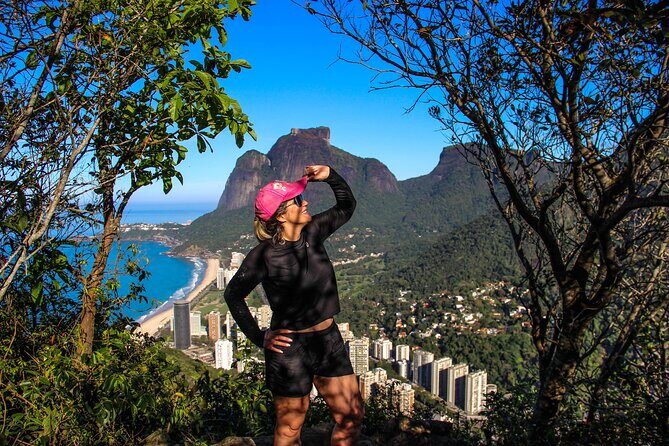
Next up is Morro do Laboriaux, described as the highest point in the favela. This stop is built for panoramas: you get privileged views over Rio de Janeiro, including beaches and the slopes of the Tijuca Forest.
This is the “stop and breathe” part of the tour. Even if you don’t care about photography, you’ll want a moment where you can visually connect what you’ve walked through with the wider city around it.
The main benefit: context
When you see Rocinha against the broader landscape, the whole day clicks into place. You stop thinking of it as a single street experience and start understanding it as part of a hillside system feeding into the rest of Rio.
Possible drawback: viewpoints mean looking around and staying upright for a bit. If you have balance issues, take it slow and ask your guide for the safest spots to pause.
Graffiti, Leadership, and the Wark Story (about 20 minutes)
One of the standout cultural stops is a visit to the studio of Wark, a graffiti artist from Rocinha and a pioneer of the graffiti movement in the largest favela in Brazil.
The tour also connects his art to national attention—his work drew interest from prominent Brazilian leaders, including Lula da Silva, and the tour notes that Wark receives hundreds of reais for his works. Even if you’re not a hardcore street-art fan, this adds an important layer: art here isn’t only decoration. It’s identity, voice, and opportunity.
Wark also founded the Wark Institute, described as a school for young people in Rocinha to learn and practice art. That education angle is crucial. It turns the story from art as a personal success into art as a pathway for the next generation.
What to do if you like art
Pay attention to how the guide frames the studio visit. You’ll likely learn how the community’s creativity is connected to visibility, pride, and real support systems—not just a single artist’s talent.
Meeting Mrs. Maria at Home: The View From Inside Rocinha (about 10 minutes)
The tour ends with a home visit experience at the residence of Mrs. Maria, who has lived in Rocinha for 32 years. From a slab of her house, you get stunning views over São Conrado beach and the favela itself.
This short stop packs a lot. In just 10 minutes, you’re offered two things:
- A long-time resident’s perspective
- A view that shows Rocinha as a place people inhabit daily, not a place people pass through
Why this is more than a photo stop
The value is the human timeline. Living somewhere for decades means you’ve watched the neighborhood change. Even without a long speech, the setting communicates continuity—and it helps you understand that Rocinha isn’t a one-day exhibit.
Possible drawback: home visits can feel intense. If you prefer “see from a distance” style tourism, this part may feel more personal than you expected. Still, it’s brief and guided with context.
Safety, Comfort, and How to Act on a Respect-Focused Tour
I can’t promise any tour is risk-free, but the design here is clearly meant to keep you supported: you’re with a licensed bilingual private tour guide, staying in a group capped at 10, and using included metro tickets plus the moto-taxi ride to reduce unpredictable wandering.
In the field, the guide’s knowledge is the difference between wandering and moving with local bearings. I’ve seen examples of guides like Carlos treating visitors like family—introducing them to his sister and friends as the day goes along—which often signals a culture of care, not “tourist control.”
Your part: keep it simple
- Dress for walking on uneven ground
- Be quiet and respectful near homes
- Ask questions with curiosity, not judgment
- Expect to put your phone away at times
Also remember: food and drinks aren’t included. In a tour like this, that can matter because you’re active and outdoors. Bring water if you can, or plan a snack before the tour so you don’t start the day hungry.
Who Should Book This Rocinha Walking Tour—and Who Might Prefer Another Style
This tour is best for you if:
- You want a resident-led view of Rocinha, not a distant “look but don’t touch” experience
- You enjoy street art and want the story behind it, including education through the Wark Institute
- You care about meaningful viewpoints—views that connect the neighborhood to the rest of Rio
- You like small groups with real conversation time
You might want a different option if:
- You can’t handle uneven streets or steep uphill sections, even with a moto-taxi included
- You need a fully planned meal during the 3 hours
- You prefer only mainstream landmarks and don’t want a community-focused day
Should You Book the Rocinha Walking Tour?
If your goal is to understand Rocinha as part of Rio—socially, creatively, and geographically—this is a strong choice. The combination of a small group, a resident guide, metro tickets, and the moto-taxi ride makes it practical. The Wark studio stop and the home visit with Mrs. Maria give you human context that many city tours skip.
Book it if you’re open to learning from someone who knows the streets, and you’re ready for a walking day with real stops and real perspectives.
And if you’re going to do it, do it with the right mindset: come curious, dress for uneven ground, and be respectful when you’re near homes and community spaces. That’s when the day turns from sightseeing into something you’ll remember long after you leave Rocinha.
FAQ
How long is the Rocinha walking tour?
It lasts about 3 hours.
What group size is this tour?
The tour has a maximum of 10 travelers.
What does the $100 price include?
It includes metro/subway tickets, a licensed bilingual private tour guide, VAT and taxes, and a moto-taxi ride up to the top of Rocinha hill.
Are food and drinks included?
No. Food and drinks are not included.
Where does the tour start and end?
It starts at Praça Cardeal Arcoverde in Copacabana and ends back at the meeting point.
What is the cancellation policy?
You can cancel for a full refund up to 24 hours before the experience starts.