REVIEW · RIO DE JANEIRO
Centro Historico and Lapa – Santa Teresa Walking, Historical and Bohemian Tour
Book on Viator →Operated by Good Guide In Rio · Bookable on Viator
Rio becomes readable on a walking day. This Centro Historico and Lapa to Santa Teresa tour links big landmarks, baroque churches, and street art into one easy route, led by Ivan from Centro Historico. I like how the day mixes “must-see” buildings with street-level details that make Rio feel like a real place, not a checklist, and the famous yellow tram adds a scenic payoff.
I also love the practical pacing: plenty of short stops (most entries are free) plus a few moments with included refreshments so you do not feel stuck in one long lecture. One consideration: this is a full 7–8 hour day with lots of walking and some steps, especially near Santa Teresa and the famous staircase area.
In This Review
- Key Things That Make This Tour Worth Your Time
- Centro + Lapa + Santa Teresa: The Best Way to Understand Rio’s Geography
- Starting Point in Copacabana and the Morning Flow
- Cinelândia Square: Opera, Libraries, and a Working Old Cinema
- St. Sebastian Cathedral: Monumental Stained Glass and Inside Details
- Largo da Carioca: Two Churches, One Terrace View Moment
- Confeitaria Colombo: Art Deco Old Rio Coffee Break
- Praça Quinze de Novembro: Republic Square and Harbor-View History
- Praça Pio X to São Bento Monastery: Major Churches and Cultural Stopovers
- Mauá Square: Views Toward the Museum of Tomorrow (Without Going In)
- Eduardo Kobra’s Etnias Mural: Street Art With Olympic-Era Context
- Santa Teresa Tram: The Yellow Bonde Ride Up the Hill
- Largo dos Guimarães: Historic Houses, Small Views, and Local Hangouts
- Parque das Ruínas: Laurinda Santos Lobo and the Arches-and-Christ View
- Selarón Steps and Arcos da Lapa: Color, Water, and Old Rio’s Backbone
- Price and Value: What $137.80 Gets You in a Day Like This
- Who This Tour Suits Best (And Who Might Want Something Else)
- Should You Book This Centro Historico and Lapa to Santa Teresa Tour?
- FAQ
- How long is the tour?
- What time does the tour start?
- Where does the tour begin?
- Does the tour include a tram ride?
- Are any admissions included?
- What drinks are included?
- Is lunch included?
- How big is the group?
- Can I cancel or change the booking?
- Where does the tour end?
Key Things That Make This Tour Worth Your Time
- Ivan’s storytelling at every stop helps you connect the dots between churches, squares, and neighborhoods
- Santa Teresa by yellow Bonde tram plus a charming hill walk gives you views without guessing the route
- Eduardo Kobra’s Etnias graffiti mural turns Olympic-era art into a quick photo moment with context
- Two baroque church stops close together at Largo da Carioca make the architecture easier to compare
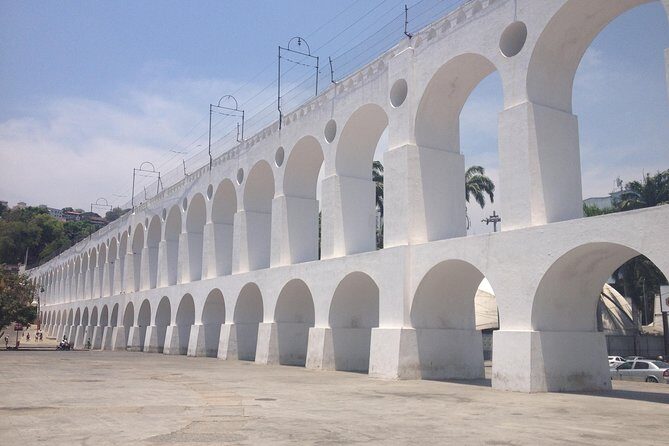
- Lapa and the Arcos aqueduct give you the “old Rio” feeling right beside modern street art
- Included drinks (caipirinha, beer, soda, fruit juice, or water) make the day feel more like a hosted outing
Centro + Lapa + Santa Teresa: The Best Way to Understand Rio’s Geography
Rio can feel split into worlds: monumental Centro buildings down by the harbor-side sights, and then the bohemian hills with their views. This tour stitches those areas together on foot, so you get a mental map fast. You start near Copacabana and work toward the historic core, then climb up to Santa Teresa before finishing around Lapa’s iconic aqueduct zone.
What makes that smart for your trip is timing. You do not just “see” places; you move through the city the way it’s actually used: squares, pedestrian lanes, church interiors, and viewpoint terraces. If you want a first-day overview that still leaves room for later wandering, this format helps you decide what you want to return to.
You can also read our reviews of more walking tours in Rio de Janeiro



Starting Point in Copacabana and the Morning Flow
The tour meets at Copacabana Palace, A Belmond Hotel at 9:00am. It also ends back at the same meeting point, which is handy when you plan dinner or other activities later the same day.
It’s set up for a small group, with a maximum of 12 travelers, so you’re less likely to feel lost in the crowd. Plus, you’re close to public transportation, which is useful if you need a quick reset during breaks or want to top up on water on your own.
Cinelândia Square: Opera, Libraries, and a Working Old Cinema
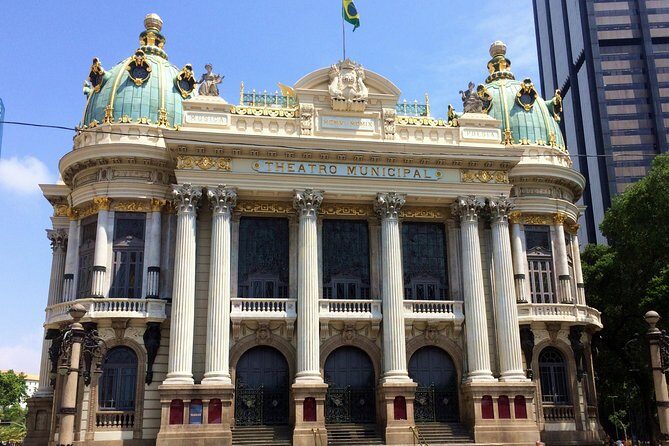
Your first stop is Cinelandia, a big, elegant square where Rio’s early “grand city” ambitions show up in one sweep. You’ll be guided through standout buildings such as the Teatro Municipal (the Rio opera house), the Museu de Belas Artes, and the Biblioteca Nacional. The area also includes Theatro Odeon, the one cinema in Cinelândia still operating.
This stop is worth it because it sets the tone for the day. You’re not yet in the bohemian hills, so the details here teach you what Centro looks like at full formal volume. If you like architecture, your eyes will lock onto façades and details that are easy to overlook without context.
St. Sebastian Cathedral: Monumental Stained Glass and Inside Details
Next up is the Metropolitan Cathedral of Saint Sebastian. You’ll enter to learn about its architecture and history, plus spend time on its monumental stained glass windows.
A cathedral interior works best when someone points out what to look for, and this stop is designed that way. Even if you’re not a “church person,” stained glass is a universal cue: the colors and scale explain the building’s ambition in minutes.
Practical note: take a second to slow down inside. It’s the kind of place where rushing makes the glass feel like just decoration instead of design.
Largo da Carioca: Two Churches, One Terrace View Moment
At Largo da Carioca, you pass by the São Antonio church and São Francisco da Penitência. The guide highlights São Francisco da Penitência as one of the most beautiful baroque churches in Brazil, and you’ll also get a panoramic viewpoint from the terrace where the two churches sit close together.
This is a nice architectural “compare and contrast” moment. Rather than bouncing between far-apart sites, you see how baroque style reads when you’re physically near it, then you top it off with the view.
If you’re planning photos, aim for this area early in the day. Light conditions often change fast as you head toward open squares later.
You can also read our reviews of more historical tours in Rio de Janeiro





Confeitaria Colombo: Art Deco Old Rio Coffee Break
You’ll walk through pedestrian streets of old Rio to reach Confeitaria Colombo, one of Rio’s oldest cafés. It’s known for its art deco style, and it’s an easy stop to reset after churches and squares.
This is not just about a snack. It’s a quick window into how Centro social life used to feel: places to linger, people-watching, and the kind of interior design that makes a coffee break feel like part of the sightseeing.
No lunch is included, but this stop is a real breathing space. If you want to avoid hunger later, consider grabbing something small here rather than waiting.
Praça Quinze de Novembro: Republic Square and Harbor-View History
Next you reach Praça Quinze de Novembro (the square tied to the proclamation of the Republic). Here you’ll see Igreja de Nossa Senhora do Carmo dos Carmelitas, the Paço Imperial, the Equestrian Statue of General Osorio, and the Tax Island area.
There’s also a practical, scenic piece: the views toward Guanabara Bay, including the ferry pier to Niterói and Paquetá Island. This is one of those stops where the city’s layout becomes obvious. You see why Rio’s water matters to its daily life and why these historic centers clustered where they did.
If you like skyline views, keep your phone handy here. It’s one of the clearer “big picture” moments of the day.
Praça Pio X to São Bento Monastery: Major Churches and Cultural Stopovers
You then move to Praça Pio X, passing through the pedestrian streets while your guide points out key landmarks. Expect to hear about the Candelária church, the Olympic boulevard, and cultural buildings like the CentrO Cultural do Banco do Brasil, plus Casa França-Brasil.
After that comes Mosteiro de São Bento, where you visit the monastery and church. This is described as one of Rio’s most beautiful churches, and it makes sense: the monastery atmosphere plus the architectural details help the story feel anchored, not random.
Why these two stops together work: Praça Pio X gives you modern institutions and iconic faith architecture in the same zone, and São Bento then gives you the quiet, focused interior experience.
Mauá Square: Views Toward the Museum of Tomorrow (Without Going In)
At Mauá Square, the tour focuses on the waterfront cultural zone. You’ll hear about the Museu de Amanhã (Museum of Tomorrow), even though it’s not visited, and the Museu de Arte do Rio, which has a panoramic terrace with a striking view over Mauá Square, the Niterói Bridge, and the broader bay area.
This part is valuable because it shifts the story from purely old Centro into modern Rio. You get the sense that the city keeps rebuilding itself, but the viewpoints still tell you the original geography didn’t change.
If you’re sensitive to sun, bring a hat or use sunscreen. Waterfront terraces can be bright, even when it feels pleasant.
Eduardo Kobra’s Etnias Mural: Street Art With Olympic-Era Context
Another standout stop is Etnias – Mural de Graffiti (Estúdio Kobra). This mural is known as the largest in the world and depicts five ethnic groups, created by Eduardo Kobra for the Olympic Games.
Street art can be hit-or-miss when you see it without context, but a guide explanation changes it quickly. You start noticing not just color and scale, but the message and why it’s placed where it is.
This is also a convenient photo moment without turning into a long detour. It fits the walking rhythm perfectly.
Santa Teresa Tram: The Yellow Bonde Ride Up the Hill
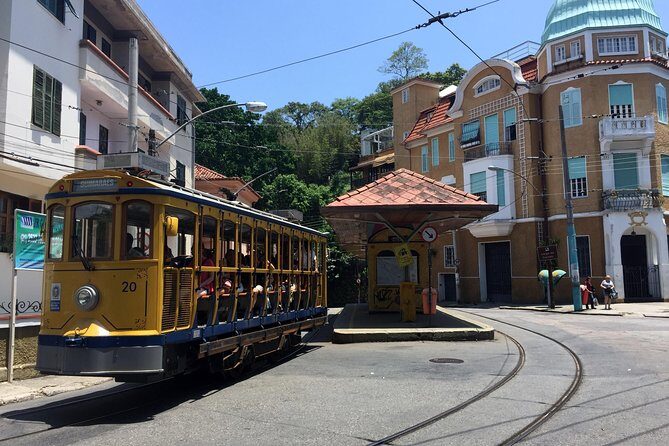
From there, you head back to the Station of Santa Teresa trams to take the classic yellow Bonde. The tram ride is described as a panoramic walk of about 30 minutes, and it’s one of those experiences that turns effort into reward. It’s included, so you’re not doing extra ticket math mid-day.
This segment also changes how you experience the city. Earlier you’re moving through flat-ish historic zones. Now you climb, and the views start appearing in layers.
If you’re prone to motion discomfort, take it as slowly as you can and try to center your gaze on the horizon during the ride.
Largo dos Guimarães: Historic Houses, Small Views, and Local Hangouts
When you arrive in Santa Teresa, you spend time around Largo dos Guimarães. You’ll walk and look around the heart of the neighborhood, focusing on houses from the late 19th to early 20th century, plus the viewpoints, restaurants, and bars that make this area famous.
This part is important because it gives Santa Teresa its personality beyond its postcard icons. You’re seeing the “everyday bohemian” side, where locals and visitors mix around streets that feel lived-in.
Take this section slowly. It’s not a sprint stop, and the best views often come after you turn a corner and stop paying attention to the route.
Parque das Ruínas: Laurinda Santos Lobo and the Arches-and-Christ View
Next is Centro Cultural Municipal Parque das Ruínas, a key Santa Teresa viewpoint. The site is based on the former home of Laurinda Santos Lobo, now transformed into a gazebo-like viewpoint with an incredible vista over the Centro, the Lapa arches, Christ the Redeemer, and Botafogo.
This is the “aha” moment for many people. From up here, you understand how the day’s earlier sights connect to the bay, the hills, and the central neighborhoods. It feels like the city finally lines up into one coherent picture.
If you like skyline views, this is one of the best stops for your photo lineup.
Selarón Steps and Arcos da Lapa: Color, Water, and Old Rio’s Backbone
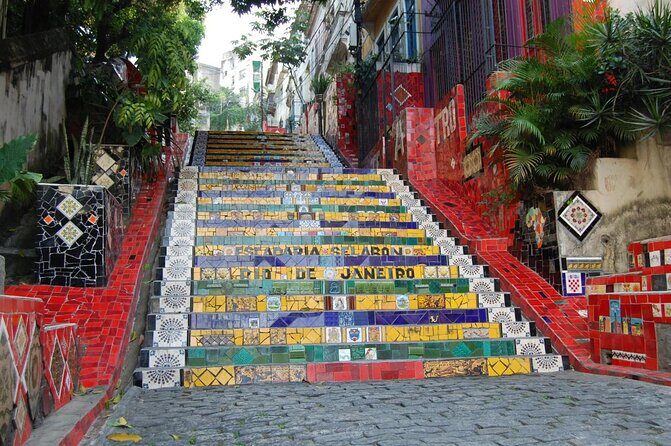
You then head down from Santa Teresa to Lapa, passing by the famous Escadaria Selarón. The staircase is a multicolored work created by George Selarón over about twenty years. It’s one of those places where people naturally slow down, because the colors are hard to understand from a fast glance.
Finally, you reach Arcos da Lapa. These are old Rio aqueduct arches dating from the 18th century, supplying water to the city until the end of the 19th century. The arches are decorated with multiple pieces of graffiti, and you’ll see the historical structure tied to modern street life. The tram passes through this area when heading to Santa Teresa, which closes the loop on the day’s “rail up the hill” story.
This ending works well because it’s both history and energy. You leave with a mental image: stone arches, street art, and movement all in one frame.
Price and Value: What $137.80 Gets You in a Day Like This
At $137.80 per person for 7–8 hours, the value depends on what you care about. If you want a guide who can connect architecture, church interiors, and neighborhood changes, this price starts to make sense fast.
A big part of the value is that many stops have free admission, so you’re paying for interpretation more than museum entry fees. You also get an included drink during the tour (options include caipirinha, beer, soda, fruit juice, or water), plus included ticket time at key moments like Largo da Carioca and the Santa Teresa tram ride.
Also, with only up to 12 people, you should expect a more personal pacing than bigger city bus tours. It’s a walking day, but it’s guided in a way that helps you make sense of what you’re seeing while you’re moving.
The only “cost” you control is comfort: shoes and stamina. Bring comfortable footwear and be ready for hills and steps near the most iconic spots.
Who This Tour Suits Best (And Who Might Want Something Else)
This is a great fit if you want:
- A guided Centro-to-Santa Teresa route without planning the geography yourself
- Strong architecture focus, including cathedral interiors and baroque churches
- A mix of classic Rio landmarks and street-level street art like Etnias
It might be less ideal if you:
- Want a mostly flat walk with minimal steps
- Prefer lots of free time with no schedule, since this is structured with many scheduled stops
If you’re a first-time visitor and you like to build context quickly, this tour is one of the smarter ways to get oriented.
Should You Book This Centro Historico and Lapa to Santa Teresa Tour?
I’d book it if your trip needs a guided “connect the dots” day. You get Centro’s grand squares, church architecture with interior time, Lapa’s aqueduct history, and Santa Teresa’s hilltop feel, all without turning the day into a logistics puzzle. The small group size plus the included tram ride and drink make it feel like a real outing rather than a bus-to-photo-shoot routine.
If you already know Rio well or you hate stairs, you might choose a shorter neighborhood-only tour. But for most people, this route gives the best mix of sightseeing, views, and story in one long day.
FAQ
How long is the tour?
It runs about 7 to 8 hours.
What time does the tour start?
The start time is 9:00am.
Where does the tour begin?
It begins at Copacabana Palace, A Belmond Hotel, Rio de Janeiro.
Does the tour include a tram ride?
Yes. You return to the Station of Santa Teresa trams and take the yellow Bonde up toward Santa Teresa (about 30 minutes). This part is included.
Are any admissions included?
Yes. Largo da Carioca includes admission, and the Santa Teresa tram segment is included. Many other stops listed are free admission.
What drinks are included?
During the tour, you’re offered a caipirinha, beer, soda, fruit juice, or water.
Is lunch included?
No. Lunch is not included.
How big is the group?
The tour has a maximum of 12 travelers.
Can I cancel or change the booking?
This experience is non-refundable and cannot be changed for any reason.
Where does the tour end?
It ends back at the meeting point.