REVIEW · RIO DE JANEIRO
Museum of Tomorrow Guided Tour, Admission & Transfer
Book on Viator →Operated by Rio Carioca Tour Ltda · Bookable on Viator
Rio gets futuristic at the Museum of Tomorrow. This guided outing pairs Museum of Tomorrow’s spaceship-like architecture with hands-on, thought-provoking exhibits about science, art, tech, culture, and the environment, plus short photo stops for real Rio views and Olympic-era street art. I love the way the tour links sustainability to human choices you can actually see and understand, and I love that your museum time is long enough to slow down, not just rush through.
One possible drawback: timing can be tight. If pickup runs late or the guide’s language isn’t strong for you, you may feel like the museum visit gets cut short.
In This Review
- Key points to know before you go
- Museum of Tomorrow: Rio’s science-arts message made physical
- Calatrava’s spaceship look: why the architecture matters here
- Your museum time: what you should expect during the 3-hour visit
- Short stops that actually add context: Mauá Square
- Olympic Boulevard and Kobra’s Mural das Etnias: street art with a “global” scale
- How the guides shape the experience (and what to look for)
- Price and value: what $58 buys you in real terms
- Logistics that affect your day (quick and practical)
- Who should book this tour, and who might prefer another option
- Should you book?
- FAQ
- How long is the Museum of Tomorrow guided tour?
- What is included in the $58 per person price?
- Are food and drinks included?
- Where is the meeting point, and where do I end the tour?
- What are the other stops besides the Museum of Tomorrow?
- Do I pay extra if I’m staying in Barra or Recreio?
- Is there a group size limit?
- What happens if the weather is bad or I cancel?
Key points to know before you go
- Guided focus inside the museum so the tech-heavy exhibits make sense fast
- Calatrava’s spacecraft-shaped building is a major Rio photo moment even from outside
- About 3 hours at the museum gives you time to try the interactive parts
- Mauá Square bay views include a statue and story tied to Rio’s development
- Olympic Boulevard graffiti takes you to street art created for 2016 Games
- Small minivan groups (up to 19) help you keep pace without feeling lost
Museum of Tomorrow: Rio’s science-arts message made physical
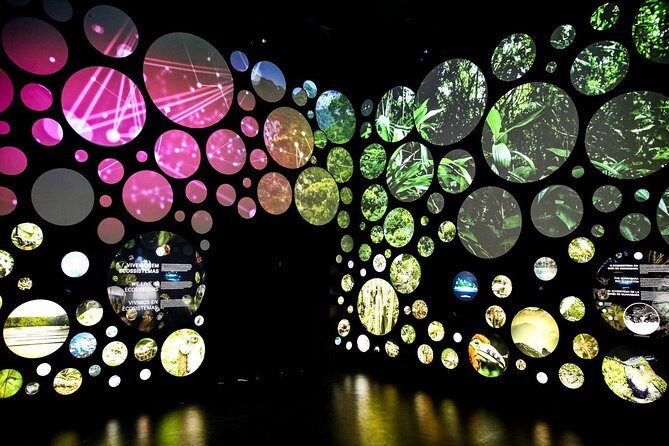
If you like museums that don’t just explain the future, this one is worth your time. The Museum of Tomorrow is built around an idea that feels simple but hits hard: the way people live and decide shapes what happens next for the planet. Instead of treating sustainability like a poster slogan, the exhibits use interactive elements to turn big topics into something you can experience with your senses.
Inside, you’ll see how disciplines connect—science doesn’t stand alone, and neither does art, technology, or culture. The museum’s approach is practical: you’re guided through themes that connect human activity to environmental impacts, and it’s structured so you keep moving between concepts rather than staring at a single display for an hour.
The museum also benefits from smart design for crowd flow. One detail I really appreciate is that the layout seems built to manage movement while you engage with hands-on areas. Translation: you’re less likely to feel jammed shoulder-to-shoulder the whole time.
You can also read our reviews of more guided tours in Rio de Janeiro



Calatrava’s spaceship look: why the architecture matters here
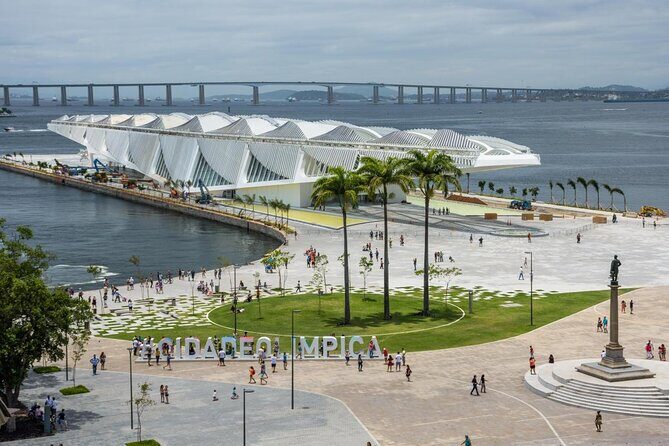
The museum building is designed by Santiago Calatrava, and it isn’t subtle. It looks like a real “from-the-future” object landing in Porto Maravilha. Even before you fully enter, the exterior gives you that wow factor—especially if you’re the kind of traveler who takes pictures early, then enjoys the visit more because you already got the big visual anchor.
This matters because the museum’s content is futuristic too. A building that looks like it belongs tomorrow reinforces the message inside. When you walk away, you remember both the structure and the themes, instead of feeling like you only visited a typical indoor gallery.
Your museum time: what you should expect during the 3-hour visit
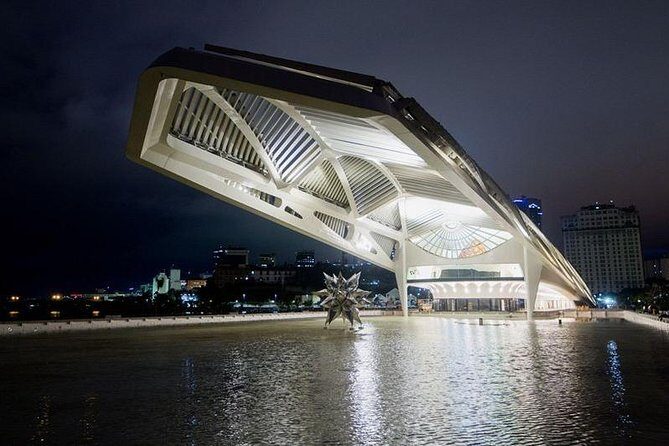
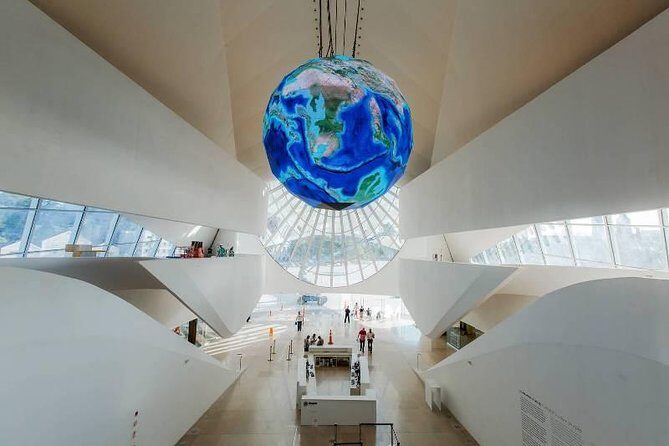
Your schedule is built around a long museum block (about 3 hours). That’s a good thing. Many museums do their best work in short bursts, but here you’ll want time to repeat, compare, and process. The exhibits include interactive activities and strong visual storytelling, including scenarios about future risks—like ocean-related impacts, political stresses, and environmental threats.
What makes the visit valuable is how it connects those risks to today’s numbers and conditions. You don’t just hear abstract warnings; you see comparisons that make the future feel measurable rather than hypothetical.
Also, you may notice signage and crowd-handling design that supports an experience where people can try things without turning the whole museum into a bottleneck. It’s one of those “small” operational choices that makes a bigger difference than you’d expect.
A practical note: some tours move faster than others. If your group rhythm is quick—or if there’s any delay outside the museum—you might end up closer to a 2-hour experience inside. If you’re the type who likes to linger with interactive exhibits, plan to arrive mentally ready to slow down once you’re in.
Short stops that actually add context: Mauá Square
After the museum, you’ll get a breather at Mauá Square. From here, you can see Guanabara Bay—classic Rio water views, and a real chance to step away from screens and rethink the museum message against the skyline.
You’ll also spend time with a statue of Barão de Mauá. This stop isn’t just about a view and a photo. The idea is to connect a name you’ll hear around Rio to the bigger story of vision and development.
For me, this type of stop is the secret sauce of a good guided tour. It gives your brain a reset and also helps you relate the futuristic themes you just learned to the city’s real past and growth.
Olympic Boulevard and Kobra’s Mural das Etnias: street art with a “global” scale
Next up is Boulevard Olímpico, created for the 2016 Olympic Games. The area has attracted graffiti artists from around the world, so you’re not just looking at one piece—you’re surrounded by street-art energy.
The highlight is the Mural das Etnias by Kobra. This is one of those large-scale murals where standing at a respectful distance still makes you feel the scale, and then stepping closer helps you catch details you’d miss in a quick photo.
This stop is short (about 30 minutes), but it’s a smart contrast to the museum. The museum asks you to think about future risks and responsibility. The boulevard shows another kind of “future-making”: public art, identity, and global voices in a space built for a major international event.
You can also read our reviews of more museum experiences in Rio de Janeiro





How the guides shape the experience (and what to look for)
The biggest difference-maker here is your guide. The tour is designed as guided storytelling, not just transportation, and the best experiences come from guides who can translate big ideas into clear, organized explanations.
In the feedback you’ll hear names like Jaqueline, Renato, Marcos, and Christian—guides described as organized, well-spoken, and genuinely enthusiastic about connecting the museum exhibits to what’s happening in Rio. That’s the sweet spot: someone who can move you through the museum without turning it into a lecture.
You may also benefit if your guide can adapt to your interests and pace. Some guides have been described as taking the time to help people with mobility issues and to make the visit more comfortable. If that matters for you, it’s worth sharing needs clearly when you coordinate pickup time.
Price and value: what $58 buys you in real terms
At $58 per person, you’re paying for more than a museum ticket. You’re also buying guided interpretation and air-conditioned transport in a small minivan. The museum admission is included, and the other stops are ticket-free, so the money mostly goes toward the ticket plus the guide’s work and the convenience factor.
Here’s the value logic I’d use: if you’d rather understand what you’re looking at instead of reading everything on your own, the guide is doing the heavy lifting. And if you’d rather not figure out how to move between Porto Maravilha viewpoints and the museum on your own schedule, the transport piece matters.
The only time this price feels less “worth it” is when you’re the type who enjoys skipping guided interpretation and going at your own pace. In that case, you could potentially do portions independently. But if your goal is clarity, context, and efficient timing, this tour format is built for that.
Logistics that affect your day (quick and practical)
This tour runs about 4 hours total, with the museum taking about 3 hours. The rest of the time is split between Mauá Square and Boulevard Olímpico, so it’s not a “stay all afternoon” plan.
You start at Hotel Rio Othon Palace in Copacabana (Av. Atlântica, 3264). The tour ends back at the meeting point, so you don’t have to worry about catching another vehicle.
Pickup time is confirmed after booking by contacting you so the timing fits your specific hotel location. For Barra and Recreio pickup, there’s an additional USD 10 per person paid directly to the guide.
Comfort matters. Wear comfortable clothes and walking shoes. You’ll be walking around viewpoints and moving between stops, and it’ll be much easier if your legs aren’t fighting you.
Who should book this tour, and who might prefer another option
This is a strong pick for:
- People who like guided museums that connect themes across science, art, and technology
- Travelers who want a smooth plan with transport plus a few smart photo stops
- First-time Rio visitors who want to see more than just the most famous neighborhoods
You might want to reconsider if:
- You hate time pressure and prefer long, self-paced museum wandering
- You want a very deep dive on one exhibit instead of a broader tour structure
- You’re highly sensitive to language differences and prefer very consistent English interpretation
Overall, it works best when you treat it like a guided “idea-and-views” outing: museum first, then two short context stops.
Should you book?
Yes, I’d book it if you’re curious about how Rio presents futuristic sustainability through real interactive design and if you want a guide to connect the dots. The included museum ticket and guided time make the $58 feel practical, and the extra stops give you a well-rounded taste of Porto Maravilha beyond the museum walls.
If you’re worried about losing time inside the museum, plan to be flexible and keep an eye on your pickup timing. A small delay can affect how long you get to enjoy the interactive parts.
If you want a Rio day that’s thoughtful without being boring—and still gives you real views and street art—this is a solid choice.
FAQ
How long is the Museum of Tomorrow guided tour?
The total tour time is about 4 hours.
What is included in the $58 per person price?
The tour includes air-conditioned vehicle transportation and entrance to the Museum of Tomorrow.
Are food and drinks included?
No. Food and drinks are not included.
Where is the meeting point, and where do I end the tour?
You meet at Hotel Rio Othon Palace in Copacabana (Av. Atlântica, 3264). The tour ends back at the same meeting point.
What are the other stops besides the Museum of Tomorrow?
After the museum, you’ll stop at Mauá Square (Guanabara Bay viewpoints) and Boulevard Olímpico (Olympic Boulevard graffiti area and the Mural das Etnias by Kobra).
Do I pay extra if I’m staying in Barra or Recreio?
Yes. Pickup in Barra/Recreio has an additional USD 10 per person, paid directly to the guide.
Is there a group size limit?
Yes. The tour has a maximum of 19 travelers per minivan.
What happens if the weather is bad or I cancel?
The tour requires good weather. If it’s canceled due to poor weather, you’ll be offered a different date or a full refund. You can cancel for a full refund up to 24 hours in advance.