REVIEW · RIO DE JANEIRO
Rio de Janeiro: Tijuca Forest Challenge Hike Full-Day Trip
Book on GetYourGuide →Operated by Jungle Me · Bookable on GetYourGuide
Rio’s jungle feels like it forgot about Rio. This full-day hike in Tijuca National Park is for prepared walkers: 10.4 km with 848m of uphill-to-downhill work, then rewards you with Taquara Hill viewpoints and rare trail stops like Cascatinha Taunay. I love how the day mixes real nature time with a clear Rio-and-Brazil story, and I love the small-group cap of 6, which keeps the pace steady and the guide close. The main drawback is simple: if you’re not ready for a hard, full-day climb, you’ll feel it in your legs for sure.
Expect a long circuit where shade helps, but effort still counts. Plan for a hike of about 4–5 hours plus breaks, and a cool-down stop at a waterfall where you can rinse off (bring a towel and bathing suit). If you like guides who explain what you’re seeing while keeping it fun, you might be paired with names like Gustavo, Ricardo, Pietro, or Roberto—people who consistently blend plant-and-animal spotting with context about how this forest came back.
In This Review
- Key Things to Know Before You Go
- South Zone Pickup: The Day Starts Easy, Then Gets Serious
- The Hike Core: 10.4 km Through Tijuca’s Big Urban Rainforest
- Cascatinha Taunay and First Forest Orientation
- Taquara Hill: The View That Makes the Climb Worth It
- The Almost-Secret Trail: Coffee Ruins, Grottos, and Cave Time
- A Second Viewpoint and Waterfall Cooling at Cascata da Baronesa
- Vista Chinesa Only on Working Days: A Bonus If You Hit the Calendar
- Small Group Max 6: Why the Pace Feels Human
- Guides Bring the Forest Story to Life (So You Notice What You Walk Past)
- Price and Value: Why $86 Can Make Sense for a Hard Day
- What to Pack: Don’t Show Up Dry, Bare, or Unprepared
- Fitness Reality: Hard Hike, No Shortcuts
- Weather and Wildlife: You Might Get Views, Or You Might Get a Different Kind of Day
- Should You Book the Tijuca Forest Challenge Hike?
- FAQ
- How long is the hike and the full trip?
- How far do we hike and how much elevation is involved?
- What’s included in the price?
- Is food or water included?
- What should I bring for the waterfall stop?
- Where does pickup happen?
- What’s the group size?
- Is Vista Chinesa included?
- Is this tour suitable for children or people with health issues?
Key Things to Know Before You Go
- 10.4 km and 848 m of elevation gain make this a true challenge, not a casual stroll
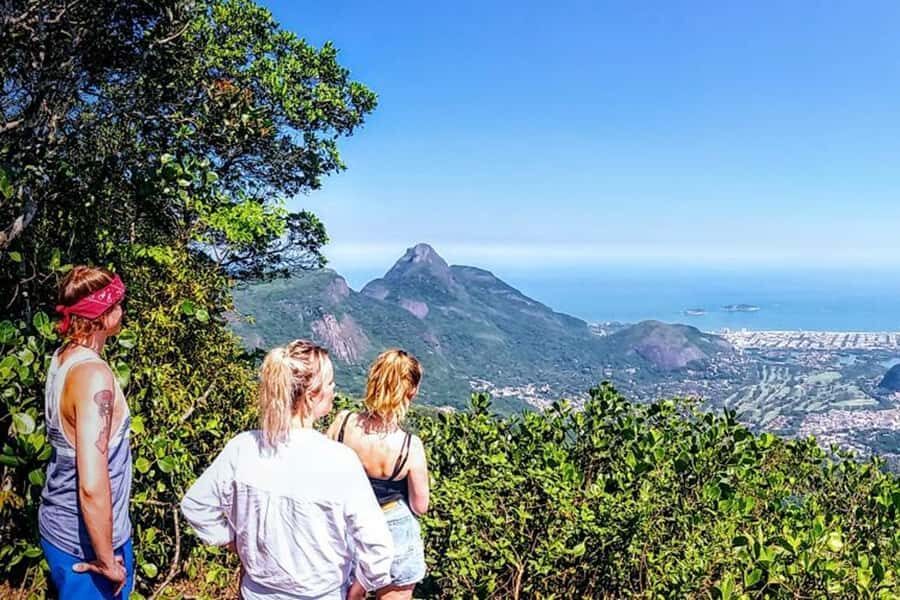
- Taquara Hill views can stretch across the forest valley and toward Rio’s west coastline
- You visit lesser-seen parts of Tijuca, including coffee-farm ruins and cave sites
- Waterfall refresh time ends the hike with a practical cool-down (rain changes flow)
- Max group size of 6 helps you move at a real hiking pace with more guide attention
South Zone Pickup: The Day Starts Easy, Then Gets Serious
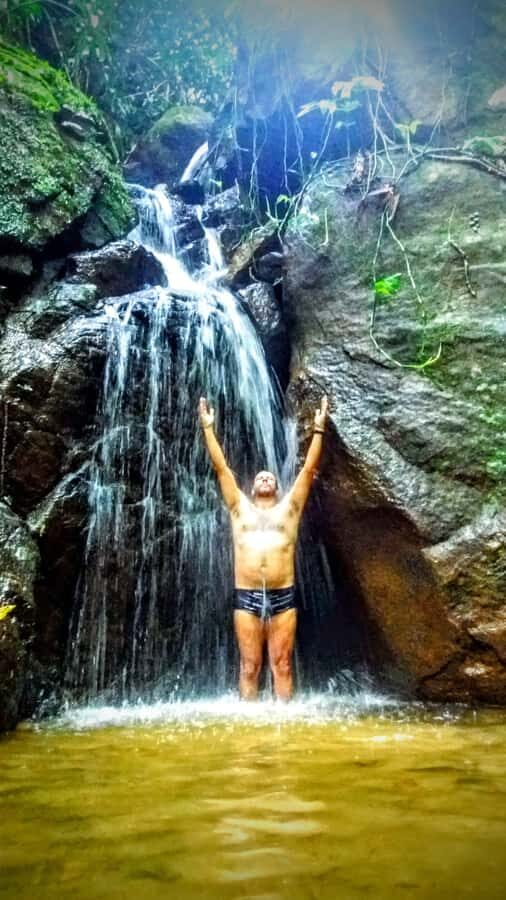
This trip is built around the idea that you want convenience first, then effort. You’re picked up from multiple South Zone neighborhoods—places like Copacabana, Ipanema, Leblon, Flamengo, Botafogo, and also Santa Teresa/Catete/Leme—so you’re not wasting the morning fighting with taxis and timing.
Once you’re in motion, the tone shifts fast: the goal is a full-day Tijuca Forest challenge hike, not just sightseeing. The hike itself is about 4–5 hours, while the total day runs around 9 hours including stops and transport. This format matters. If you plan your other Rio activities that day, keep them light.
You can also read our reviews of more hiking tours in Rio De Janeiro

The Hike Core: 10.4 km Through Tijuca’s Big Urban Rainforest
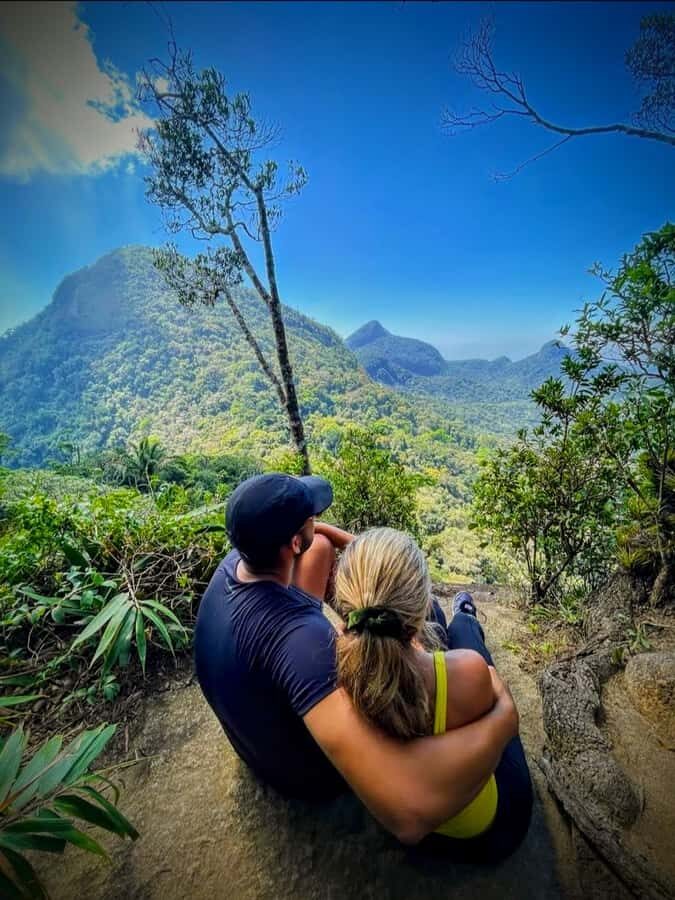
You’ll be walking a circuit inside Tijuca National Park through rainforest trails that are intentionally less frequented. The distance is 10.4 km (6.5 miles) with 848 meters (2,782 feet) of elevation gain, so you’re going uphill and downhill repeatedly. That combination is what makes it feel harder than the numbers alone.
One of the best parts of this hike is that you’re not only “walking in the forest.” You’re also learning what this place used to be and why it changed. Along the way, you’ll get the story of Brazil and Rio through the lens of the Tijuca area—especially the time when coffee farms occupied parts of this region before reforestation began in the 1800s.
Practical reality check: most of the time is likely shaded by tree cover, which helps, but it doesn’t remove sweat. If you’re the type who takes photos every two minutes, you’ll still be fine—just expect the pace to be steady, not slow.
Cascatinha Taunay and First Forest Orientation
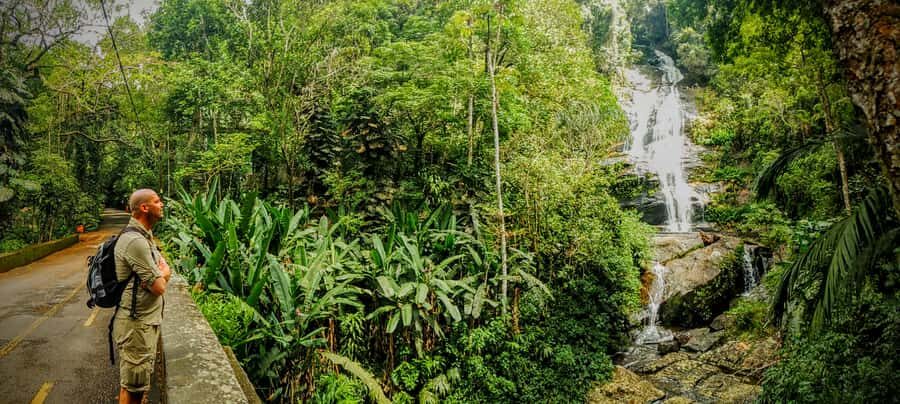
Early on, you start with guided orientation and a short stop at Cascatinha Taunay. This is not a “stand and admire” waterfall moment. It’s more like a structured warm-up: get your bearings, learn what the guide wants you to watch for, then settle into the trail rhythm.
After that, you spend time inside Tijuca National Park with guided context before you head into the main hiking stretch. This is the difference between seeing trees and actually reading the rainforest. You’ll learn why certain plants grow the way they do, what the terrain is doing, and how the coffee-farm history ties into what survived and what returned after reforestation.
If you’re hoping for a purely visual tour, this might still satisfy you—but the real value is how your guide turns “a hike” into “a day with meaning.”
Taquara Hill: The View That Makes the Climb Worth It
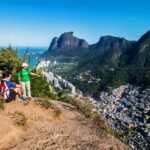
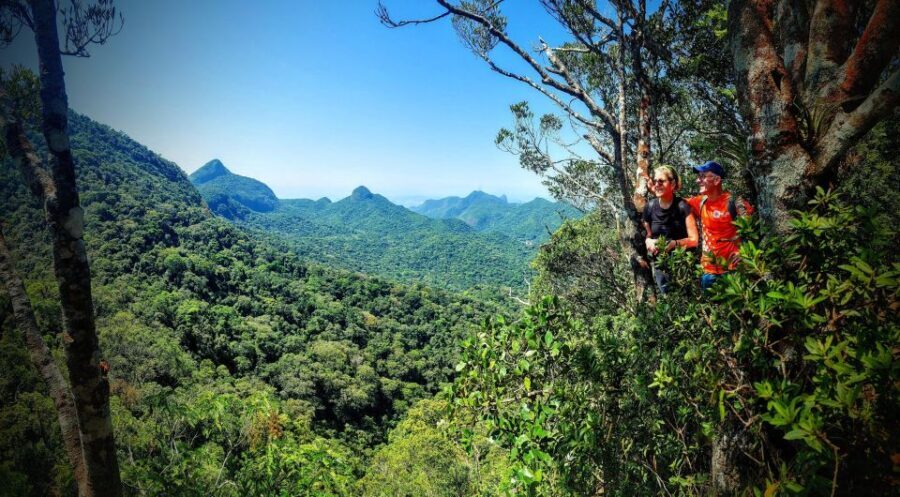
The climb is built to take you to Taquara Hill (814 m / 2,670 ft). Here’s the fun comparison you’ll hear: it’s about 100 meters higher than Christ Redeemer. On clear days, the viewpoints can be two-part—one toward the forest valley, and another toward the west side of Rio, including coastline and lagoons.
Even if the weather is cloudy, you usually still get something out of the top. Fog doesn’t ruin everything; it changes the mood. Instead of crisp coastlines, you can get a softer, misty sense of depth—less postcard, more “you are inside the rainforest.”
This is also a great moment to slow down and reset. You’ve got a photo stop and time to take it in, then you move on from the “big view” phase into the more quiet, less crowded parts of the park.
The Almost-Secret Trail: Coffee Ruins, Grottos, and Cave Time
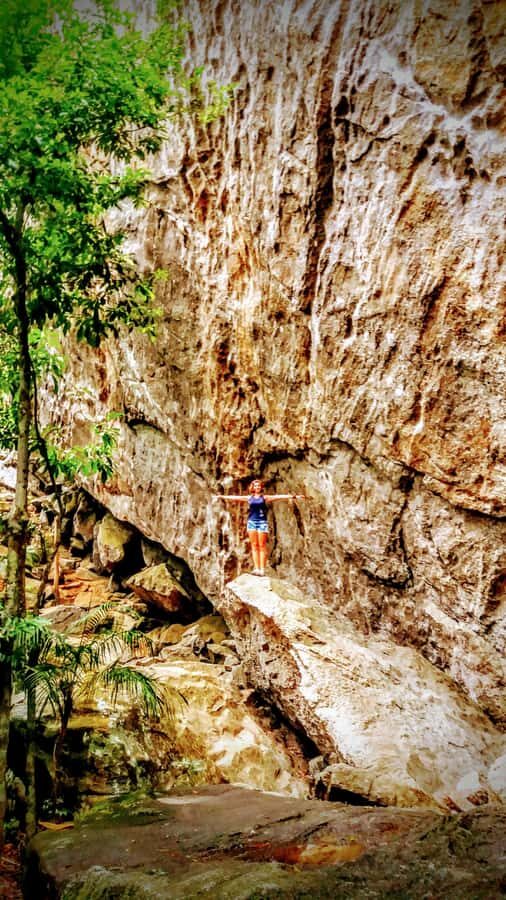
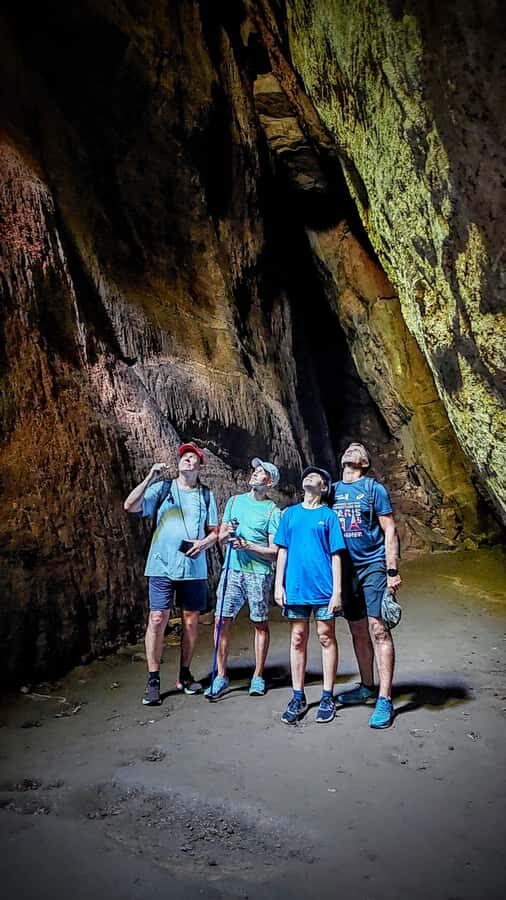
After Taquara Hill, the day turns quieter. You move deeper along trails that are described as very rare to see others on. That matters more than you might think, because rainforest time feels different when you’re not constantly weaving around other groups.
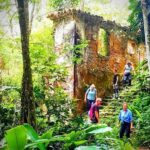
You’ll reach the ruins of an old coffee farm within about an hour of uphill-and-downhill hiking. These ruins give the hike a clear historical backbone. They’re not just scenery; they’re proof of what the land looked like before the forest returned.
Then you get into the more adventurous stops: a grotto and a cave inside the rainforest area. Expect this part to feel a little more “exploration” and a little less “guided tour museum.” You’ll follow your guide, but you’ll also feel like you’re going off the beaten path—on purpose.
And yes, there’s a specific cave stop often called the Bat Cave. This is where you’ll slow down, listen, and learn how the rainforest’s small spaces fit into the bigger ecosystem.
A few more Rio De Janeiro tours and experiences worth a look



A Second Viewpoint and Waterfall Cooling at Cascata da Baronesa
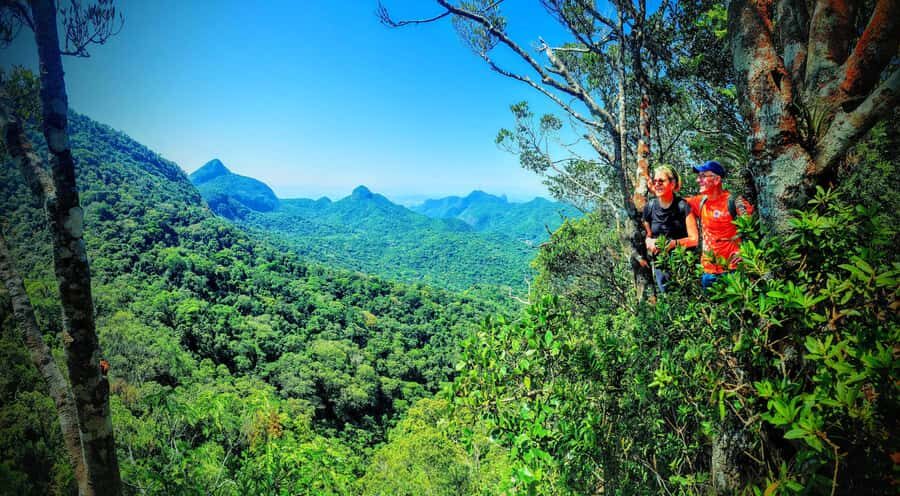
Between the cave and final refresh, you’ll hit another viewpoint and photo stops. These breaks aren’t filler. They’re checkpoints where you can catch your breath, look back at the terrain you just worked through, and understand how the trail is set up.
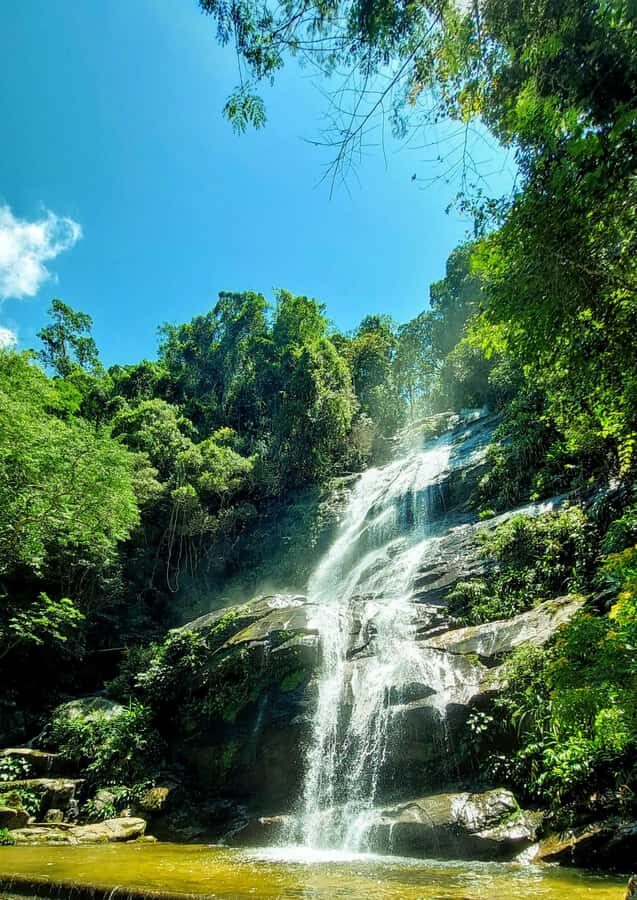
Then comes the best practical reward: Cascata da Baronesa and waterfall time. You can cool off with a waterfall shower, but you’ll need to be ready. Bring a towel and bathing suit so you can actually enjoy the rinse, not just watch others do it.
One key detail: water flow varies with rain. If it’s been wet, the waterfall can feel like a stronger reset. If not, you’ll still get the cool-down moment, just with less water force.
Vista Chinesa Only on Working Days: A Bonus If You Hit the Calendar
After the main hike, there’s a bonus stop at Vista Chinesa on working days. On weekends and holidays, vehicles aren’t allowed there, so the stop won’t happen the same way.
This is worth knowing when you plan a tight itinerary. If you’re counting on Vista Chinesa, check your day of the week when you book. If you’re flexible, don’t stress it; the main value here is the Tijuca rainforest circuit and the tougher, less crowded trail experience.
Small Group Max 6: Why the Pace Feels Human
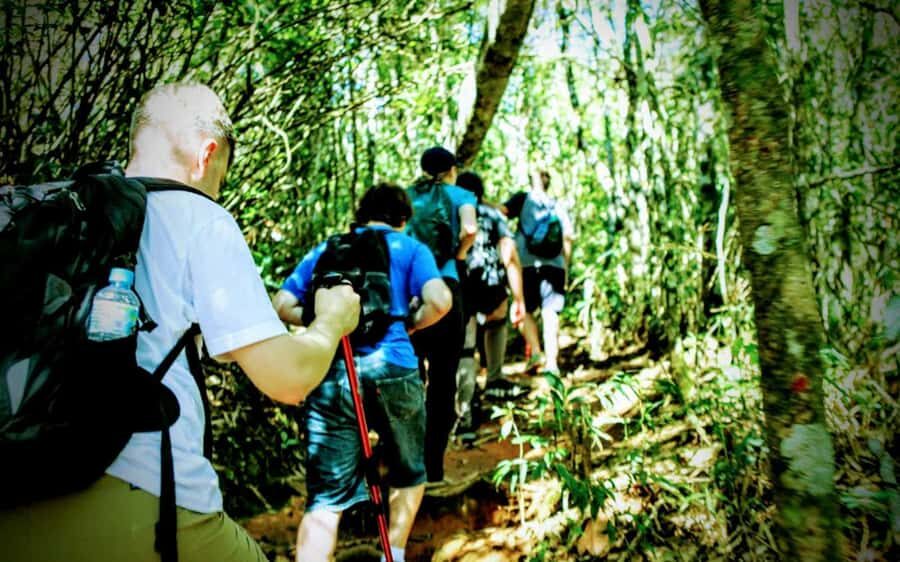
One of the most praised features of this hike is its small group size—maximum 6 people. That changes everything about your day. You don’t get stuck behind a slow pack that’s moving at “tour pace,” and you don’t feel rushed like you’re racing the schedule either.
With fewer people, the guide can:
- notice when someone is struggling
- take small detours for points of interest
- adjust the route pace without turning the day into a sprint
You’ll also get more picture moments, partly because stops are timed with the group and not a rigid herd timeline. In past groups, guides like Gustavo and Ricardo have been noted for taking lots of pictures and keeping conversation going while still managing the hike safely.
Guides Bring the Forest Story to Life (So You Notice What You Walk Past)
This is one of those tours where the guide quality makes a real difference. The guides run bilingual explanations (English and Portuguese) and they focus on both nature details and how Rio and Brazil’s history connect to Tijuca’s landscape.
You might encounter guides like Pietro, Tito, Alex, Pedro, Felipe, or Roberto depending on the day and group. The common thread is the mix: you’ll hear stories about the forest, coffee history, and Rio’s broader setting while also learning how to look at what’s around you.
If you want a hike where you leave with more than sore legs—where you can explain what you saw and why it matters—this guide-led approach is exactly the point.
Price and Value: Why $86 Can Make Sense for a Hard Day
At $86 per person for around 9 hours, this isn’t a bargain stroll. But it also isn’t overpriced for what’s included. You’re paying for:
- a bilingual guide
- transportation within the South Zone pickup/drop-off area
- insurance (they require passport details and full names)
- a full-day experience that includes transport time plus hiking time
The big value trade-off is this: you’re paying to make the hard part easier to manage. You show up ready to walk; they handle the routing, the guided stops, and the logistics that would be annoying to DIY safely in rainforest terrain.
What’s not included is just as important: food, water, and drinks. That means you should plan your own snacks and bring water. If you under-pack, the hike becomes harder than it needs to be.
What to Pack: Don’t Show Up Dry, Bare, or Unprepared
The “bring” list here is short, but it’s real. Pack for sweat, insects, and footing. I strongly recommend you treat this like a workout day.
Bring:
- hiking shoes with grip
- sunscreen and sunglasses
- sun hat
- snacks
- water (there’s no included water)
- insect repellent
Also bring the wet-day gear:
- towel and bathing suit for the waterfall shower
What’s not allowed:
- luggage or large bags. Plan for day-pack only.
If you forget water, you’ll feel it in the uphill sections. If you forget insect repellent, you’ll notice it later in the day.
Fitness Reality: Hard Hike, No Shortcuts
This hike is rated Hard for a reason. The full round trip is 10.4 km with 848 m gain and about 4 to 5 hours of walking time. You should be comfortable with steep sections and uneven footing.
This tour is not recommended for children under 14. It’s also not suitable for people with heart problems, pulmonary issues, or any condition incompatible with difficult physical activity. Wheelchair users can’t be accommodated.
That doesn’t mean you need to be an athlete. It means you should be honest about your baseline. If you’ve only been doing short walks for years, this is a step up.
A small note that makes a difference: guides can adapt the pace for older hikers when possible, but the hike operator can refuse anyone they believe can’t endure it. So aim to go in capable, not hopeful.
Weather and Wildlife: You Might Get Views, Or You Might Get a Different Kind of Day
Rainforest hikes are never “predictable postcard” days. Even in bad weather, this tour is still set up for viewing the park’s life and texture.
On some days, visibility from viewpoints can be reduced by fog or rain. On those same days, you might still see wildlife and hear lots of birdsong. In past groups, people have reported spotting animals like monkeys, raccoons, frogs, and coati, even when conditions weren’t ideal. That’s a reminder: you’re not only hiking for vistas. You’re hiking for the living forest.
Water flow at the waterfalls also changes with rain intensity. So if you’re chasing a specific look, know nature controls the final effect.
Should You Book the Tijuca Forest Challenge Hike?
Book it if you want:
- a real workout with big payoff views
- a guided rainforest day that includes caves, grottos, and waterfall time
- a small group and a history-and-nature explanation mix
Skip it if:
- you want a mostly flat, casual nature walk
- you’re not comfortable with steep uphill/downhill effort
- you’re traveling with someone who can’t handle hard full-day hiking
If you’re fit, curious, and willing to work for the views, this one is a strong value. At $86, you’re not just paying for transportation and a guide. You’re buying access to a tough, lesser-seen side of Tijuca—and a day that ends with a refreshing waterfall shower, not just a photo at a viewpoint.
FAQ
How long is the hike and the full trip?
The hike time is about 4 to 5 hours round-trip, with a total trip duration of about 9 hours including pickup, guided stops, and travel.
How far do we hike and how much elevation is involved?
You’ll cover about 10.4 km (6.5 miles) with an elevation gain of 848 m (2,782 ft).
What’s included in the price?
The tour includes a bilingual guide, insurance, and transportation with hotel pickup and drop-off in Rio’s South Zone areas.
Is food or water included?
No. Food and water and drinks are not included, so you’ll want to bring snacks and water.
What should I bring for the waterfall stop?
Bring a towel and a bathing suit if you want to cool off under the waterfall shower.
Where does pickup happen?
Pickup is available from designated hotels and hostels in South Zone neighborhoods including Copacabana, Ipanema, Leblon, Leme, Santa Teresa, Glória, Catete, Flamengo, Praia de Botafogo, plus additional listed pickup points.
What’s the group size?
It’s a small-group experience with a maximum of 6 people.
Is Vista Chinesa included?
Vista Chinesa is included only on working days. On weekends and holidays, it’s closed for vehicles.
Is this tour suitable for children or people with health issues?
It’s not recommended for children under 14, and it’s not suitable for people with heart problems, pulmonary conditions, or other issues incompatible with difficult physical activity.