REVIEW · SALVADOR BRAZIL
Salvador: Traditional Drumming and Percussion Workshop
Book on GetYourGuide →Operated by Associação de Capoeira Mestre Bimba · Bookable on GetYourGuide
This hour hits Salvador’s rhythm. I like how the Afro-Brazilian rhythms are taught hands-on, and you walk away with the satisfaction of doing the beats, not just watching. I also love that no musical experience is required, so beginners feel welcome from minute one.
One thing to plan for: language. The class runs in Portuguese and English, but I’d still be ready for a situation where English support isn’t as strong as you hoped, based on at least one reported experience. If that would stress you out, go in expecting more demonstration than lecture, and you’ll likely do fine.
In This Review
- Key highlights worth your time
- A Hands-On Hour at Associação de Capoeira Mestre Bimba
- Why a Quilombo of Resistance Is Part of the Lesson
- How the Drumming Workshop Actually Plays Out
- Beats, Movements, and the Moment It Clicks
- Instruments and Musical Challenge (Without the Exam Stress)
- Language and Group Dynamics: Portuguese, English, and Your Best Strategy
- Price and Value: What $43 Buys You (and What It Doesn’t)
- Where You Fit In: Who This Workshop Suits Best
- Practical Tips for Showing Up Ready
- Should You Book This Drumming Workshop?
- FAQ
- Where is the meeting point?
- Do I need prior musical experience?
- How long is the workshop?
- How much does it cost?
- Is hotel pickup included?
- What’s included in the price?
- What languages are offered?
- What group size should I expect?
- Is free cancellation available?
Key highlights worth your time
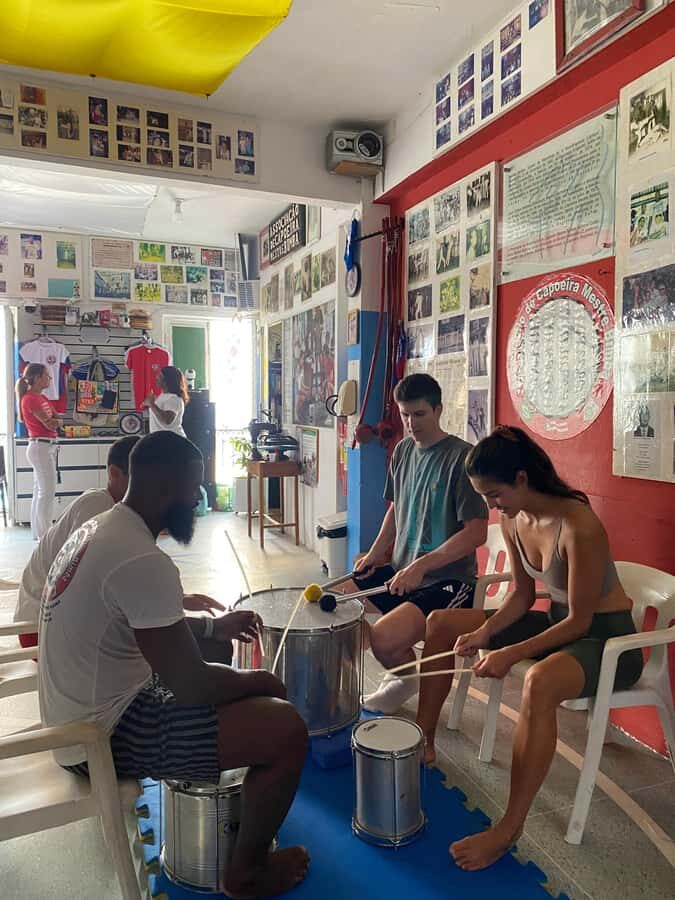
- Mestre Bimba’s First Ever School: training tied to an important Quilombo of resistance
- Afro-Brazilian percussion basics: you’ll practice beats and movements, not just listen
- Beginners welcome: no prior music experience needed
- Small group size: limited to 10 participants, so you’re not lost in a crowd
- Culture with the rhythm: the teaching includes historical context about persecution and survival
- Portuguese or English: instruction happens in both languages, depending on the session
A Hands-On Hour at Associação de Capoeira Mestre Bimba
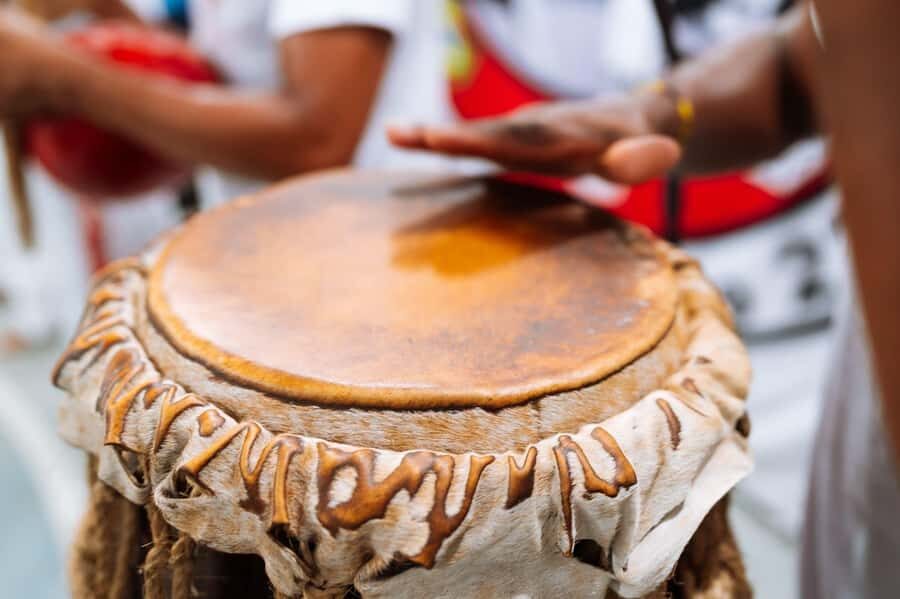
You’ll meet at Associação de Capoeira Mestre Bimba, close to the historic-center area around Largo do Terreiro de Jesus. Two easy landmarks to orient yourself: Ó Paí Ó Restaurante and São Domingos Gusmão Church. Since the workshop does not offer hotel pickup or drop-off, you’ll want to build a little buffer for walking in the neighborhood.
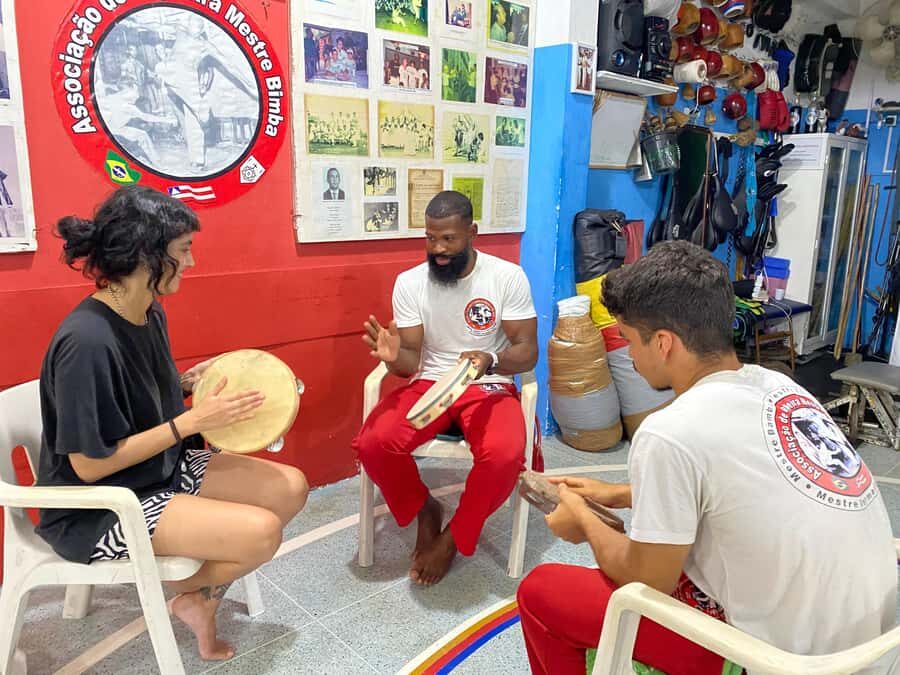
The format is refreshingly simple: 1 hour with an instructor, for a small group (max 10). That group size matters. When people are learning rhythm and timing, a large crowd can turn into noise and confusion. Here, the “teacher-to-student” feel is built in. You’re more likely to get corrections on posture, hand position, and when to come in.
What should you expect from the room? The activity is built around doing: clapping, tapping, coordinating movements, and following cues. Wear clothes you can move in. You’re not signing up for a formal concert etiquette moment. This is workshop energy: practical, interactive, and focused on technique you can repeat.
A few more Salvador Brazil tours and experiences worth a look
Why a Quilombo of Resistance Is Part of the Lesson
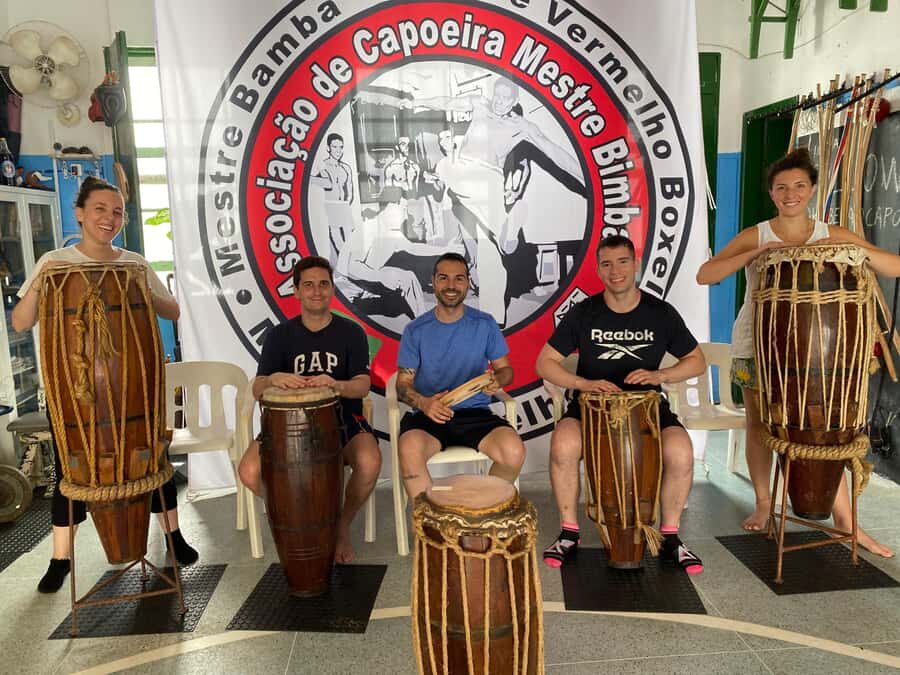
This isn’t a generic “try a drum” class. It’s connected to Mestre Bimba’s First Ever School, described as a Quilombo of resistance. That wording isn’t just a dramatic flourish. It signals why these arts survived and why they were so carefully defended.
You’re taught within a story that includes late 19th-century pressure on African-descended culture in Brazil. Practices like capoeira, samba, and drumming were met with suspicion and often criminalized. The key shift here is meaning: the workshop frames the rhythms as something people used to endure hardship and protect community identity.
That context changes how you listen to the beats. When a rhythm is tied to resistance and survival, it stops being background music. It becomes communication. It’s the kind of lesson where the instructor’s passion matters, because the point isn’t only sound—it’s why the sound mattered.
How the Drumming Workshop Actually Plays Out
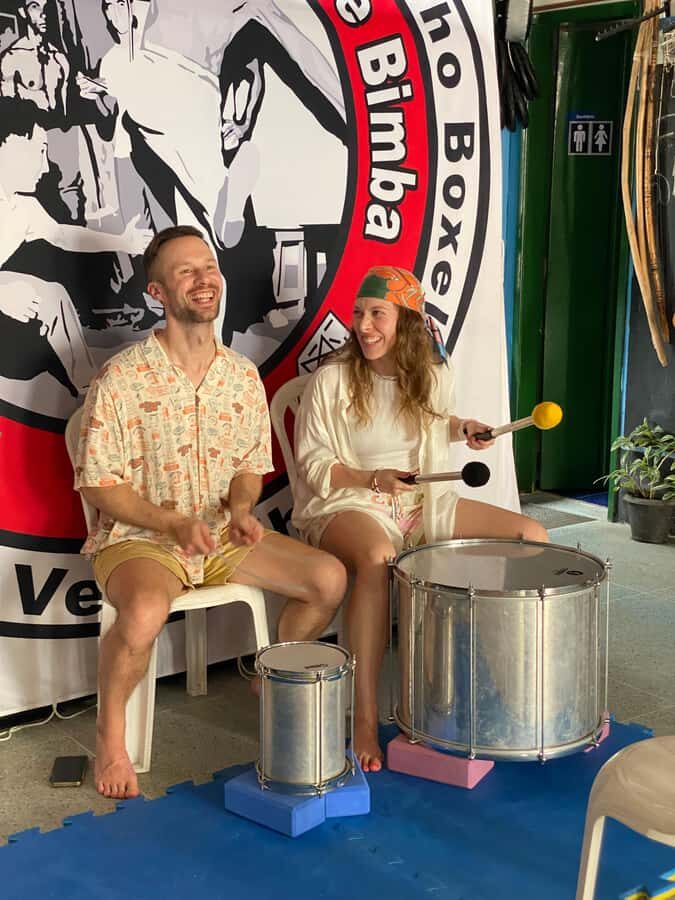
The class is built to be interactive. You’ll learn through demonstration, repetition, and guided participation. One theme that shows up strongly is instruction on correct gestures and postures. In other words, you’re not expected to guess your way through.
Here’s a realistic way to think about the hour:
- You start with an intro to what you’ll be practicing and how to hold your body and hands.
- Then you move into learning patterns and timing, with the instructor breaking down what to do and when.
- As you get more comfortable, you’ll likely try different rhythms or variations, so you’re not stuck doing one repetitive beat for the full hour.
- By the end, you should be able to reproduce the main pattern(s) with more confidence than when you walked in.
There’s also a “you can do this” vibe in the teaching. A participant described a session where the instructor (named Yasmin) was patient and kind, gave time to teach proper technique, and even supported learning in a way that felt almost 1:1. You can’t assume every session will feel identical, but the emphasis on supportive coaching is consistent with how the workshop is described.
And yes, the time length is a feature. One hour is long enough to learn something real, but short enough that you won’t feel drained before you finish. You’ll leave with a clear sense of accomplishment.
Beats, Movements, and the Moment It Clicks
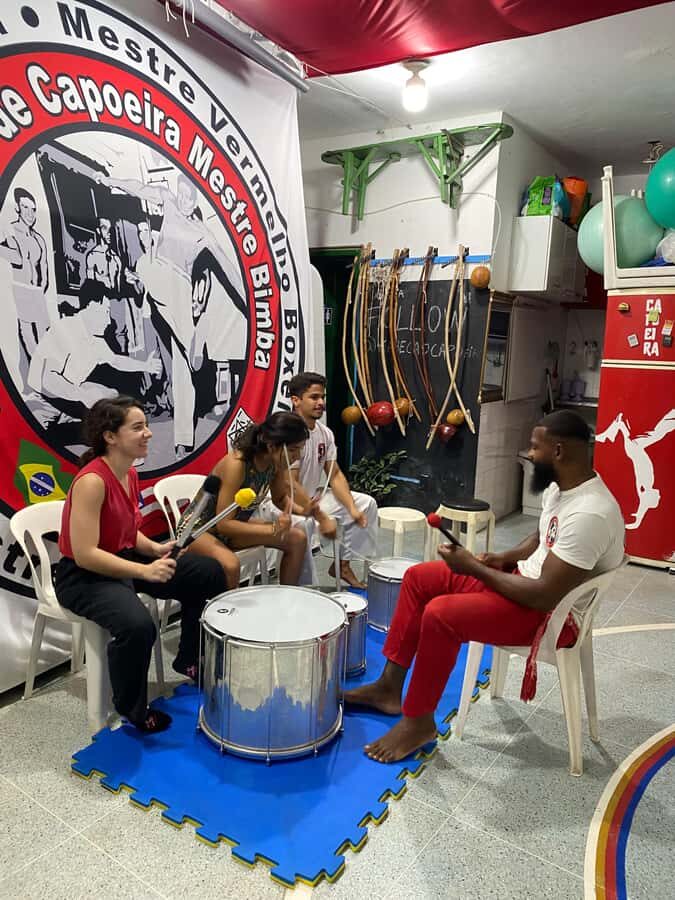
Drumming sounds simple until you try it with timing, coordination, and the pressure of a group setting. This is where the workshop design earns its keep: you’re learning rhythm while physically participating.
Expect to work on:
- timing (when to strike and when to pause),
- coordination (matching beats to body movement),
- and technique (how you hit so the rhythm stays consistent).
A big advantage here is that you don’t need to read music. The learning is beat-based and cue-based. You watch, copy, adjust, and repeat.
You’ll also get exposure to different ways of playing and different rhythms during the session. That variety is important for two reasons. First, it keeps the hour from getting monotonous. Second, it helps you understand that Afro-Brazilian percussion isn’t one universal “default.” Different patterns exist, and the instructor can show how those patterns feel in your hands and body.
If you come in thinking you’ll fail, try not to. In at least one reported experience, someone expected the worst and ended up surprised at how quickly they could manage the percussion instruments. The lesson here is not that you’ll become a master in an hour. It’s that the workshop is structured to let beginners succeed fast.
Instruments and Musical Challenge (Without the Exam Stress)
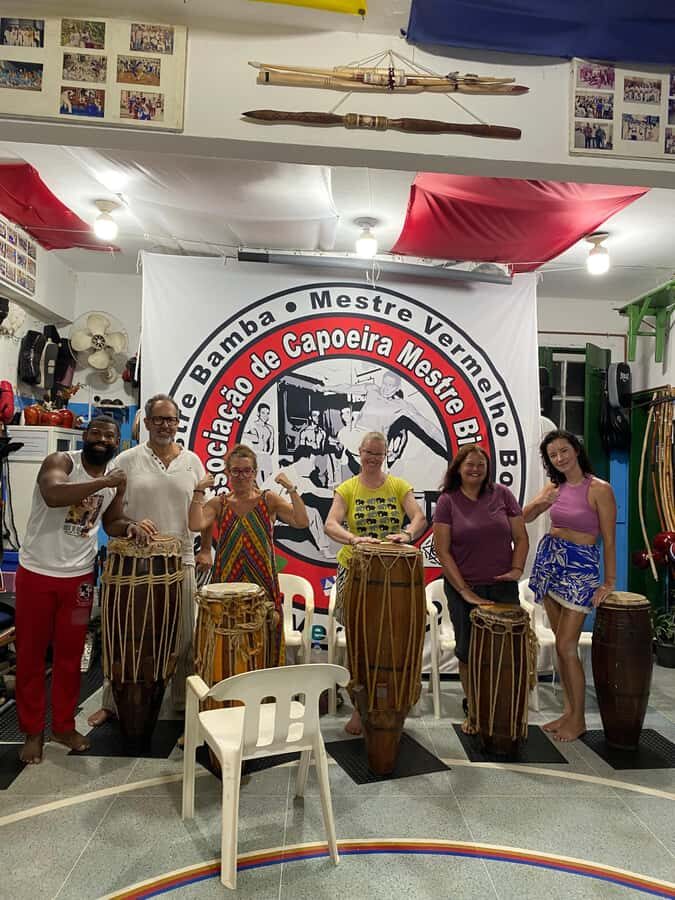
The activity is described as a drumming workshop focused on Afro-Brazilian culture through percussion. You’ll work with Brazilian capoeira percussion instruments as part of the lesson, and you’ll practice playing them as you learn the rhythms.
You should plan for a gentle challenge. Not because the workshop is overly difficult, but because learning rhythm is physical. Your hands may feel awkward at first. Your timing might be inconsistent. That’s normal.
What helps is the instructor’s role. The teaching approach includes cultural and historical insights alongside technique. In a report that specifically praised Yasmin, the instructor was said to provide history and tradition of the instruments, plus patient instruction when teaching a variety of percussion instruments. Even if your instructor’s style differs, you can reasonably expect the session to connect sound to meaning.
The takeaway for you: you’ll come away knowing more than one beat. You’ll also understand what you were doing, at least in part. That’s why this feels more valuable than an audio-only or sit-and-watch experience.



Language and Group Dynamics: Portuguese, English, and Your Best Strategy
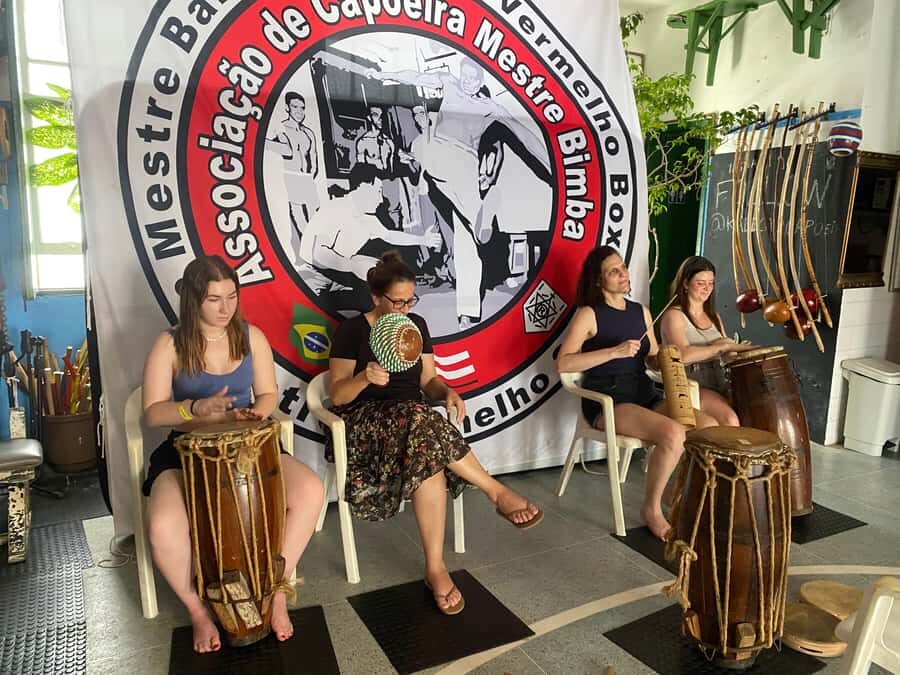
The workshop lists Portuguese and English instruction, which is great for planning. Still, I’d take language expectations seriously. One reported issue described a mismatch: the class was booked in English, but the teacher reportedly struggled with English. That’s the only real warning sign in the information you have.
So how do you protect your experience?
- Go in expecting demonstration and repetition to do most of the work.
- If you’re English-speaking and Portuguese isn’t your strong suit, keep your questions short and practical. Pointing and requesting clarification is often faster than long explanations.
- If you’re Portuguese-speaking, you’ll probably feel even more “in flow” with the cultural storytelling.
Because the group is capped at 10 participants, you’re not just a face in the back row. That small size can help the instructor adjust in real time, even when language is limited.
The bottom line: if you need perfect English every minute to feel comfortable, you may want to message the provider before you book. If you can handle a hands-on learning environment with some language friction, you’ll likely enjoy it.
Price and Value: What $43 Buys You (and What It Doesn’t)
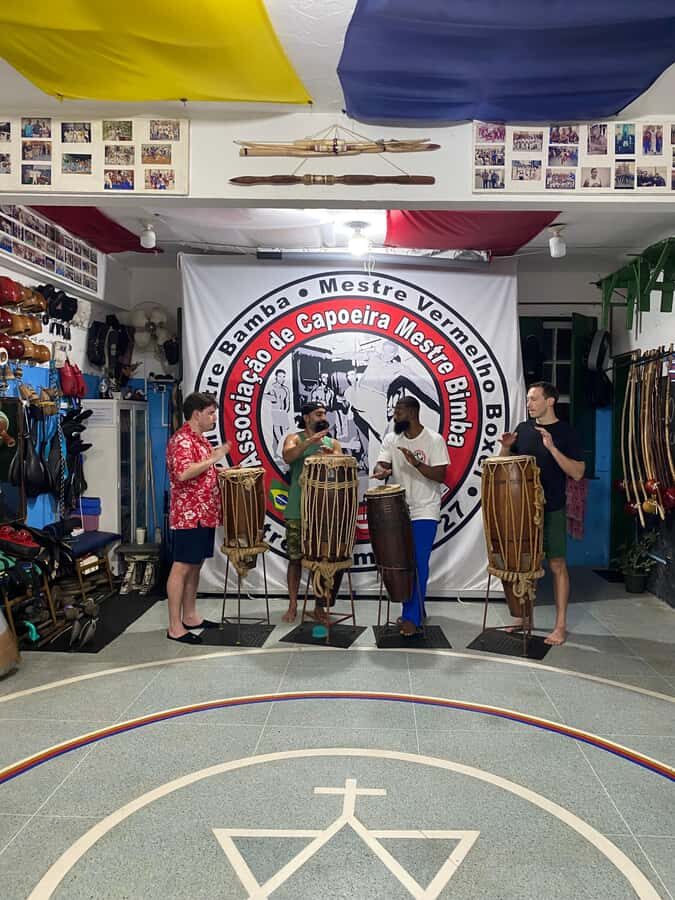
At $43 per person for 1 hour, this workshop competes well with typical Salvador cultural activities—especially because you’re getting active instruction and not just a guided talk. The included items are straightforward: a drumming workshop plus an instructor.
What you should know you’re not paying for: hotel pickup and drop-off, plus meals and beverages. That’s normal for this kind of class, but it affects your planning. If you want to avoid getting hungry during the lesson or right after, eat before or plan to grab something nearby after.
The location also adds value. The meeting area is in the central historic zone around Largo do Terreiro de Jesus. One person described the workshop as convenient for pairing with sightseeing in the same afternoon window. Even outside Carnaval, that same logic holds: an hour of learning plus time to explore nearby streets is a strong use of limited trip time.
And the big value unlock is the beginner-friendly design. You’re paying for coaching that gives you structure to make sense of rhythm quickly. If you’ve ever watched people try drums and felt like you were watching from behind a glass wall, this format is meant to put you inside the action.
Where You Fit In: Who This Workshop Suits Best
This is a strong fit if you:
- want a hands-on way to connect with Salvador culture,
- enjoy learning through movement and repetition,
- are curious about Afro-Brazilian traditions tied to capoeira and percussion,
- and you’re traveling on a schedule where one hour is the sweet spot.
It’s also a smart option if you’re a complete beginner. The workshop explicitly says you don’t need prior musical experience, and the teaching is built around that reality.
It may be less ideal if:
- you need a long, deep lecture and minimal participation,
- you require instruction fully in English with no chance of language variation,
- or you want a full-day experience with lots of different locations.
But if your goal is learning real patterns in a short, focused session, this hits the mark.
Practical Tips for Showing Up Ready
Here are the practical things I’d do if I were planning your day:
- Arrive a bit early so you’re not scrambling for the meeting point in a busy historic area.
- Bring or plan for water. Drinks aren’t listed as included.
- Wear comfortable, move-friendly clothing. You’ll be practicing gestures and timing.
- If you’re unsure about language, keep your expectations flexible. The workshop is built on doing.
Also, since the class is limited to 10 participants, booking early for the time you want is worth it. Starting times depend on availability, so check what works with your other plans.
Should You Book This Drumming Workshop?
If you want a real, active taste of Salvador’s Afro-Brazilian percussion traditions, I’d book it. The price is reasonable for a small-group, instructor-led session, and the workshop doesn’t treat beginners like a problem. You’ll learn beats and body coordination, plus the historical context that explains why these rhythms carry more than entertainment value.
The only reason to hesitate is language expectation. If English is a must-have and you’re worried about comprehension, consider reaching out in advance or being ready to learn mostly through demonstration.
If that sounds manageable, this is the kind of short experience that pays off immediately and makes your later sightseeing feel more connected to what you’re seeing.
FAQ
Where is the meeting point?
You’ll meet at Associação de Capoeira Mestre Bimba. Helpful nearby landmarks include Ó Paí Ó Restaurante and São Domingos Gusmão Church in Largo do Terreiro de Jesus.
Do I need prior musical experience?
No. The workshop states that you don’t need any prior musical experience.
How long is the workshop?
The class lasts 1 hour.
How much does it cost?
The price is $43 per person.
Is hotel pickup included?
No. Hotel pickup and drop-off are not included, and there is no pickup service.
What’s included in the price?
The price includes the drumming workshop and an instructor.
What languages are offered?
Instruction is listed in Portuguese and English.
What group size should I expect?
It’s a small group, limited to 10 participants.
Is free cancellation available?
Yes. You can cancel up to 24 hours in advance for a full refund.