REVIEW · SALVADOR BRAZIL
Salvador: 3-Hour Percussion Class
Book on GetYourGuide →Operated by Your Tour Brazil · Bookable on GetYourGuide
If you want Salvador with your hands and ears, do this drumming class. You go beyond listening to Bahia rhythms—you learn how they’re built, then play along in a tight small group setup. The focus is on how percussion fits daily life in Bahia, from festive samba circles to spiritual music patterns.
Two things I really like: the class is taught by top percussionists and it stays interactive, so you’re not just watching. I also like that the session is designed for real rhythm variety, with samba reggae (even linked to Michael Jackson in the workshop story) alongside the most famous samba patterns and even references that stretch toward jazz.
One watch-out: the advertised 3 hours can feel longer or shorter depending on pickup and timing. In practice, some people report closer to about 1.5 hours of hands-on instruction, so go in expecting a focused workshop rather than an all-out, multi-hour drumming festival.
In This Review
- Key takeaways before you bring the earplugs
- Why percussion in Bahia isn’t a side quest
- The class format: what 3 hours usually turns into
- Enter the groove with samba reggae and samba
- Maestro Macambira and the translation setup
- How the small group changes everything
- It’s not just drumming: it’s Bahia’s musical logic
- Price and value: is $90 worth your time?
- What to do before and after class
- Who this percussion class is best for
- Should you book this Salvador percussion class?
- FAQ
- How long is the Salvador percussion class?
- What’s included in the price?
- Is food or drinks included?
- What musical styles will I learn?
- Is the group kept small?
- Do I need to speak Portuguese, Spanish, or English?
- Will I get to play instruments, or only watch?
- Does the tour support wheelchair access?
- Where does pickup happen?
- What’s the cancellation policy?
Key takeaways before you bring the earplugs
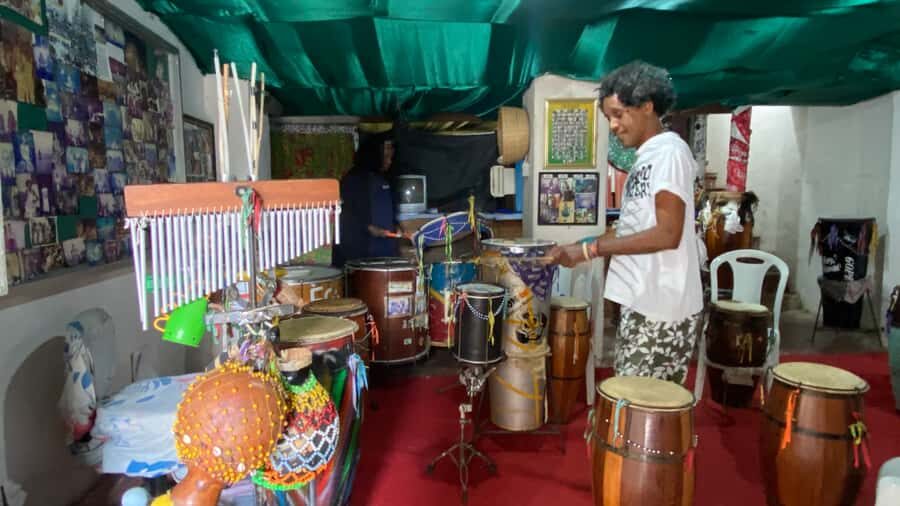
- Maestro Macambira energy: patient, attentive teaching style makes the class feel doable even if you’re not a musician
- Samba reggae, explained and played: you learn the feel, then jam it with your own drum hands
- Small group up to 6: you get more coaching and more chances to play
- Translation support included: the instructor teaching happens with guide support in Spanish, English, or Portuguese
- You’ll test multiple drums: several percussion instruments get time in the circle, not just one drum
- No food included: you’ll want to plan around meals so you don’t end up hungry while you’re in rhythm mode
Why percussion in Bahia isn’t a side quest
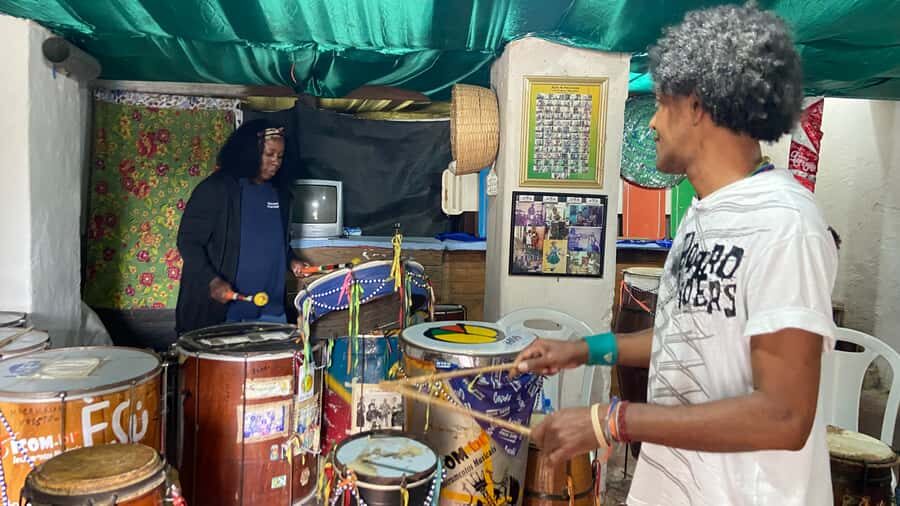
In Bahia, percussion isn’t something that lives only on stage. It’s part of how people mark moments—celebrations, gatherings, and ceremonies. That matters because this class is built around the idea that rhythm is communication, not just noise.
You’ll hear how percussion does a few jobs at once: it drives the groove, supports melody, and helps the whole ensemble lock together. The workshop also frames this as more than entertainment. Rhythm is shown as a way to bring joy and good spirit—part of how music shapes the mood in the room.
And that’s why this experience feels practical. You’re not studying samba like it’s a museum exhibit. You’re learning how the patterns move, where the accents land, and how the group stays in sync.
A few more Salvador Brazil tours and experiences worth a look
The class format: what 3 hours usually turns into
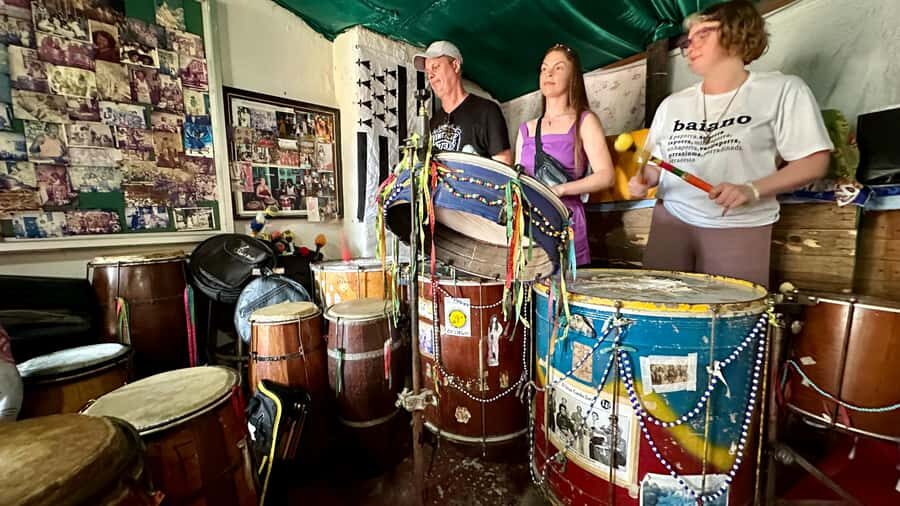
The tour is scheduled as a 3-hour experience with hotel pickup and drop-off, plus entrance fees and a professional guide included. The group is capped at six people, which is a big deal for drumming. With fewer people, the instructor can correct your timing without turning it into a lecture.
Here’s the reality check: while the total time is 3 hours, some visitors note the actual instruction time can be closer to about 1.5 hours once transportation is included. So think of it as a compact workshop + jam.
What you’ll likely experience during that window:
- A guided introduction to how rhythms are counted and felt
- Demonstration of patterns on different percussion instruments
- A hands-on portion where you repeat, adjust, and then play together
- Time to jam as a group, not just individual practice
That’s still worth it if your goal is to come away knowing what samba reggae and samba rhythms feel like in your body, not just hearing them once.
Enter the groove with samba reggae and samba
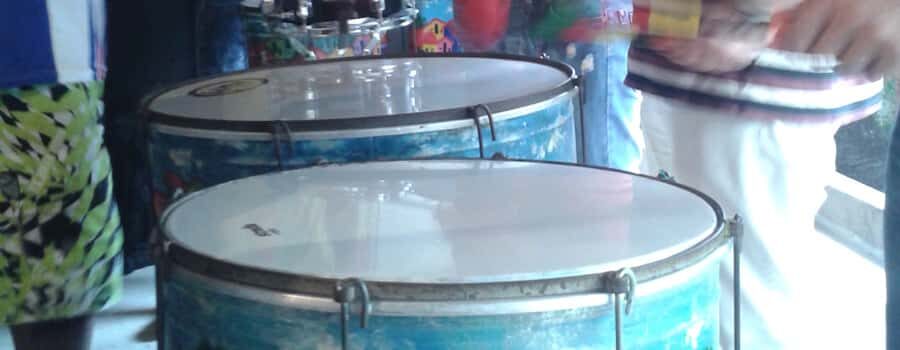
The main musical focus centers on samba and samba reggae—with the workshop story connecting samba reggae to Michael Jackson as part of why it became globally interesting. You’ll also encounter how samba patterns are treated as one of Brazil’s best-known rhythm styles, and you may hear how the percussion approach can connect to other genres, including jazz.
What I like about teaching this way is that you’re learning rhythm as a system. Instead of memorizing random hits, you work with a repeating structure:
- where the beat sits
- how the accents create motion
- how different drum roles support each other
In a drum class, that difference matters. If you only learn a single part, you’ll feel lost the second you join the group. But if the instructor walks you through how the pattern works, you’ll have something to grab onto even as others play their parts.
Also, you’re not limited to one instrument role. Reviews mention that people played different drums and jammed with them, and that’s what turns the class from theory into a real experience.
Maestro Macambira and the translation setup
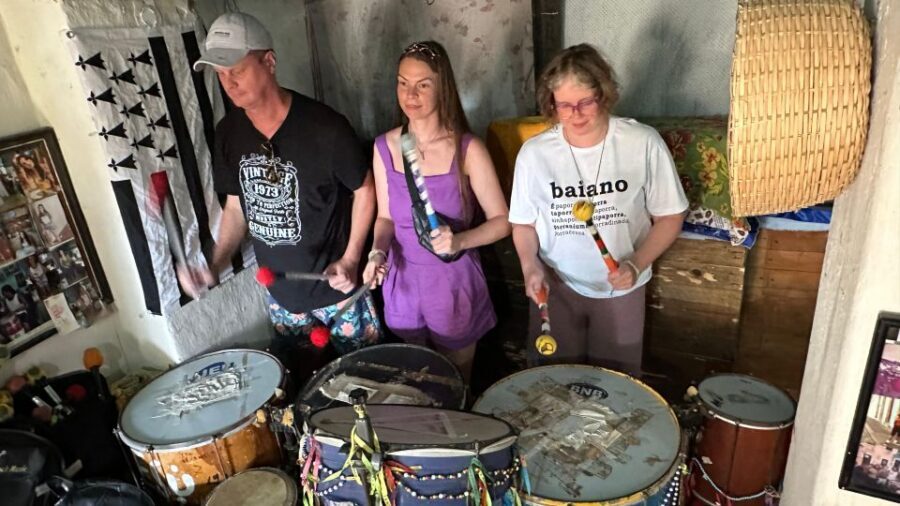
This tour is taught by experienced percussionists, and one of the names you may hear during the class is Maestro Macambira. One review describes him as patient and attentive no matter the level, which is exactly what you want in a short session. You don’t need intimidation. You need timing and permission to make mistakes fast.
The guide’s role is also important: instruction is supported with translation. The tour guide covers Spanish, English, and Portuguese, and at least one person reports that a translator joined in the class too. In practice, that means the instructor can demonstrate while you still understand the rhythm cues clearly.
For you, this matters because the hardest part of learning percussion is usually the counting and the instruction details—what to do on each beat, when to hit harder, and when to stay light. If translation is handled well, you can focus on keeping time instead of guessing.
How the small group changes everything
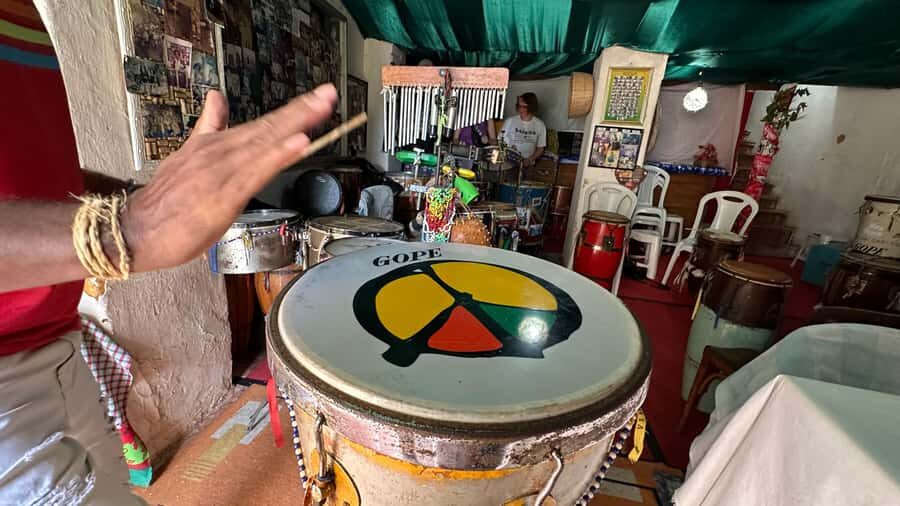
A max group size of six participants turns this from a show into coaching.
With a larger group, you might get one quick try and then wait while others go. In a small setup, you can:
- play more rounds
- get corrected on timing sooner
- hear feedback without it being lost in crowd noise
One review specifically calls out a one-on-one feel within the small-group format, which makes sense: the instructor can watch your hands and your body position and adjust how you’re playing.
And because you jam together, you’ll quickly notice something fun: percussion learning becomes social. You’ll be listening to the group while you play, not just focusing on yourself. That shared rhythm is a big part of why people leave with strong memories of the sound they made together.



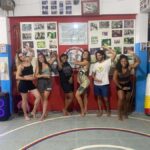
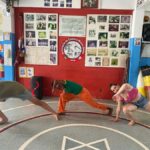
It’s not just drumming: it’s Bahia’s musical logic
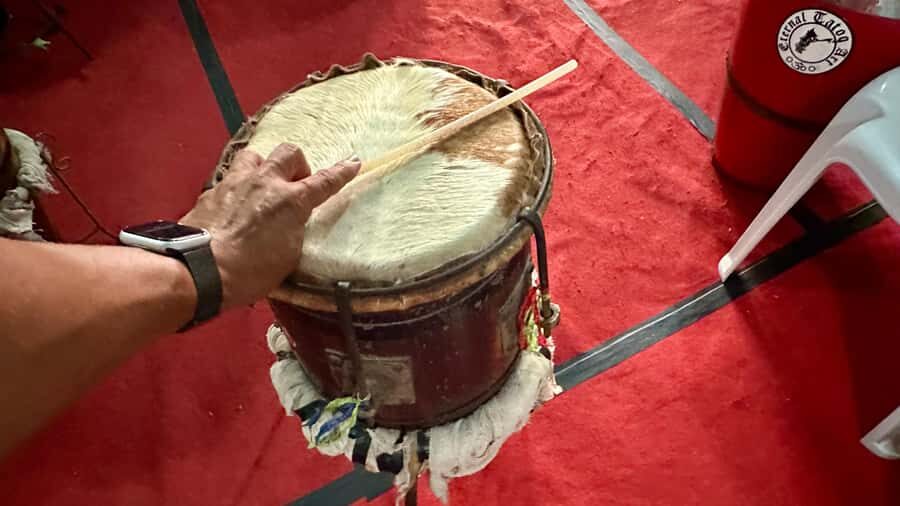
Even though this is a percussion class, the way it’s framed helps you understand Bahia’s musical production as a process. You’re learning how sounds and rhythms inspired by the African continent became part of Brazilian musical traditions.
That context matters for two reasons:
- It gives the rhythms meaning beyond the beat.
- It helps you understand why different drum parts exist in the first place.
Some visitors also noticed the beats staying fairly simple. That’s not necessarily a flaw—it can actually be smart for a short class. Easy-to-grasp patterns can be taught quickly, and then the jam section becomes more satisfying because everyone can participate without falling behind.
Still, if you’re expecting super complex, long-form instruction where you master multiple advanced patterns, you might find the session shorter on depth than you want. The best mindset is: learn the core feel, play together, and leave with rhythm confidence.
Price and value: is $90 worth your time?
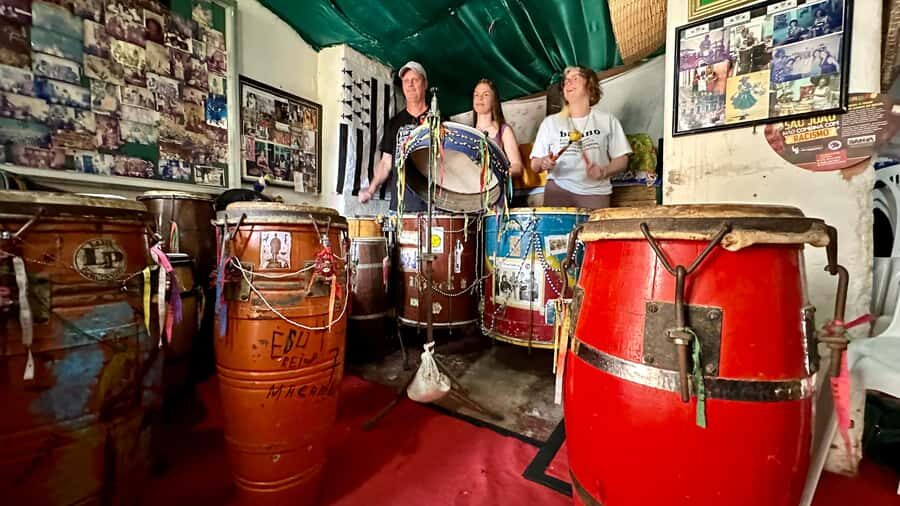
At $90 per person for a 3-hour tour, the value hinges on what you want from the experience.
Here’s the upside that supports the price:
- Hotel pickup and drop-off save effort (you’re not figuring out transport)
- Professional guidance is included
- A small-group limit of six improves teaching quality
- You’re actively playing multiple drums and jamming, not just watching
- You get cultural framing for why these rhythms matter in Bahia
But I won’t pretend there aren’t concerns. A couple of reviews point out that the class felt short compared to the schedule and that not every instrument got much time. One person also felt it was overpriced for the length and simplicity of the beats.
So how should you decide?
- If your goal is hands-on drumming with real instruction and a group jam, you’ll probably feel this was worth it.
- If you want a long workshop where you spend hours mastering technique, you might feel the time is tight.
For most people, $90 is reasonable when you factor in guided playing time plus the small-group advantage. Just don’t assume it’s a full-day music course.
What to do before and after class
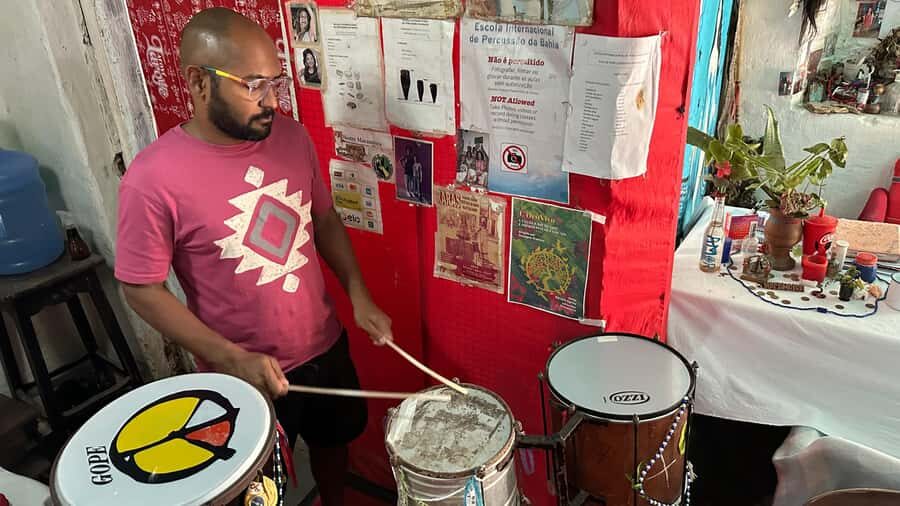
Since food and drinks are not included, plan smart. If you come hungry, you’ll focus less on rhythm and more on your stomach’s opinion of the situation. I’d aim to eat before pickup or bring something light if that fits your schedule.
Also, dress for movement. Percussion is physical. You’ll likely be leaning, tapping, and adjusting your grip. Comfortable shoes and breathable clothes make it easier to stay loose instead of stiff.
After class, if you want to extend the experience, look for places where you can listen to samba and related grooves without needing to learn the theory again. You’ll recognize the rhythm structure faster now—and that makes the music feel personal.
Who this percussion class is best for
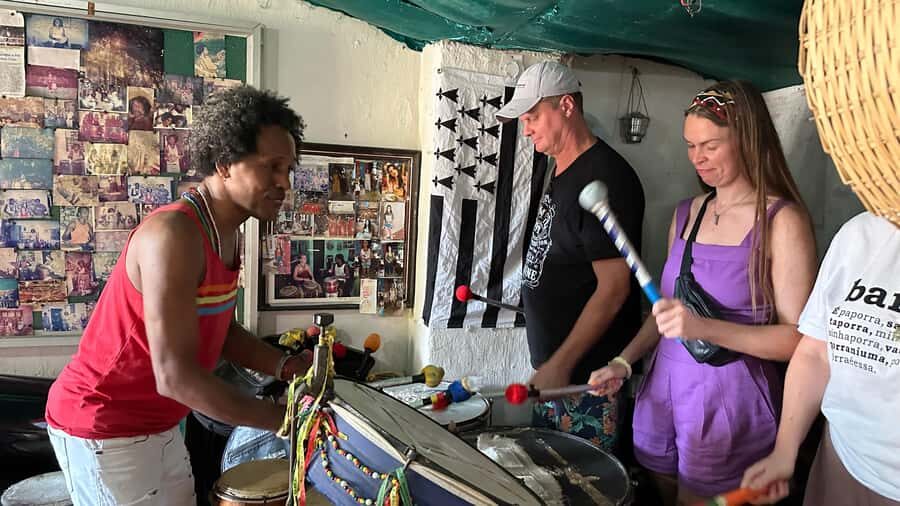
This is a strong fit if you:
- love music that has a clear beat and community energy
- want to play percussion during a Salvador trip (not just hear it)
- enjoy short, focused classes rather than long multi-session courses
- appreciate African-Brazilian rhythm connections and want a guided explanation
It’s also a great choice if you’re traveling with others who might not share the same tastes. One reason this works as a group experience is that playing is interactive. Even if your rhythm skills are rusty, you still get included in the jam.
Two limits to note:
- This tour cannot accommodate wheelchairs, so it’s not the right choice if mobility access is a priority.
- If you’re looking for a multi-hour, advanced percussion mastery program, the short workshop format may feel brief.
Should you book this Salvador percussion class?
My take: book it if you want a hands-on taste of Bahia rhythm with coaching, a small group, and a real jam session. The combination of multiple drum experiences, a guided explanation of samba reggae and samba rhythms, and the teaching approach from Maestro Macambira (with translation support) makes this feel like the right kind of active sightseeing.
Don’t book it expecting a long, detailed conservatory-style course. It’s compact. Some time is spent on pickup and logistics, and the instruction time may feel closer to about 1.5 hours in practice.
If you’re comfortable with that trade-off, you’ll likely leave with the sound of your own rhythm in your head—and that’s exactly what good drumming tourism should do.
FAQ
How long is the Salvador percussion class?
The duration is listed as 3 hours.
What’s included in the price?
The price includes hotel pickup and drop-off, entrance fees, and a professional guide.
Is food or drinks included?
No. Food and drinks are not included.
What musical styles will I learn?
The class focuses on samba reggae and samba, and may also reference other musical styles like jazz.
Is the group kept small?
Yes. It is limited to a maximum of 6 participants.
Do I need to speak Portuguese, Spanish, or English?
You’ll be supported by a live tour guide in Spanish, English, or Portuguese.
Will I get to play instruments, or only watch?
You’ll participate in the class and jam, and reviews mention playing different drums.
Does the tour support wheelchair access?
No. This tour cannot accommodate wheelchairs.
Where does pickup happen?
Pickup is included from your hotel’s lobby.
What’s the cancellation policy?
Free cancellation is available up to 24 hours in advance for a full refund.