REVIEW · SALVADOR BRAZIL
Salvador: Cultural Night of Capoeira, Samba, and Drumming
Book on GetYourGuide →Operated by Associação de Capoeira Mestre Bimba · Bookable on GetYourGuide
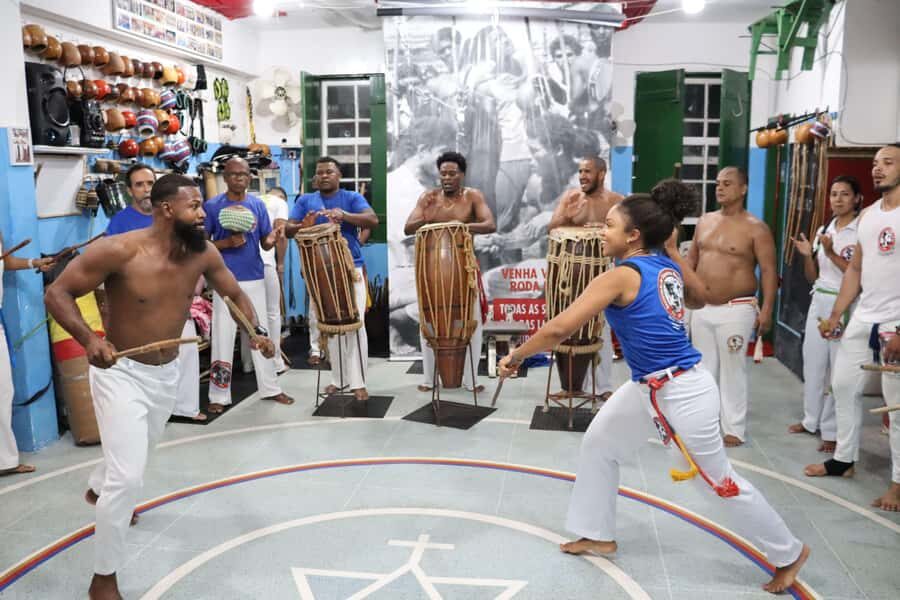
Capoeira can look like a fight or a dance. Here it’s both, framed inside the historic home of Mestre Bimba and followed by Samba, Maculelê, and live drumming. You get a lot in just about an hour. And you’re not stuck watching only from the sidelines either.
What I like most is the mix of Capoeira roda energy with traditional rhythm work, so the whole room feels connected to the music. I also like that this is set up as real association training and cultural practice, not a reheated tourist script, which makes the vibe feel more human and less staged.
One thing to plan for: the space can get hot, and the show includes fast, intense movement plus acrobatics. If you’re sensitive to heat or you have back issues, you’ll want to think twice.
In This Review
- Key things worth knowing
- Where the night starts: Associação de Capoeira Mestre Bimba near Largo do Terreiro de Jesus
- Capoeira at the first school in Brazil: what to watch in the roda
- Samba and Maculelê: rhythm that turns into dance and fire
- Traditional drumming and live music: the sound that holds everything together
- Timing, pacing, and the full program flow (about an hour, sometimes longer)
- Price and value: why a $30 ticket can be a fair deal here
- Comfort rules you’ll be glad you followed: shoes, heat, and what not to do
- Who should book this cultural night in Salvador (and who should pass)
- Should you book this Salvador Capoeira, Samba, and Drumming night?
- FAQ
- FAQ
- Where is the meeting point?
- Are there nearby landmarks to help me find it?
- How long does the experience last?
- How much does it cost?
- What’s included in the ticket?
- Is food or drinks included?
- Will there be pickup service?
- What languages is the guide available in?
- Who is the experience not suitable for?
- Is smoking allowed?
Key things worth knowing
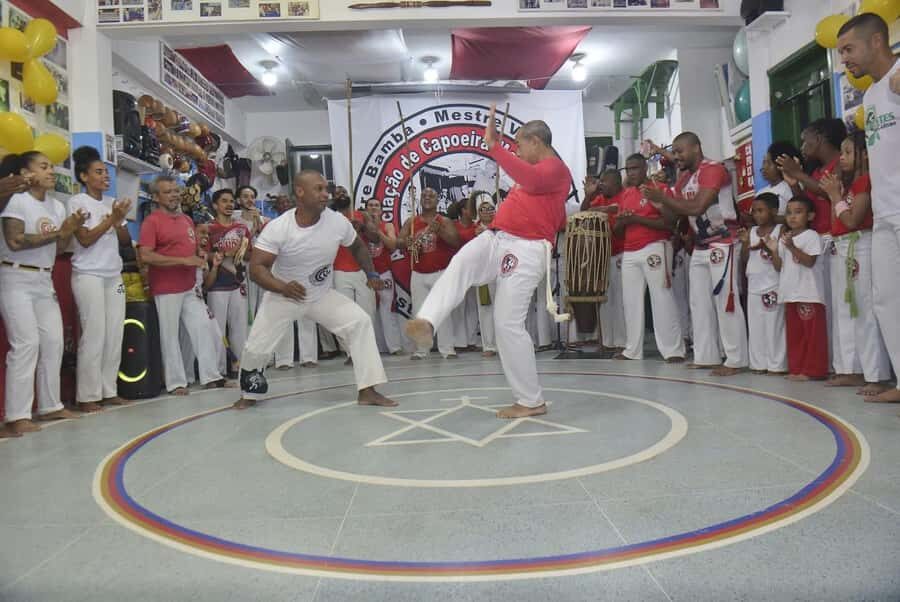
- Mestre Bimba’s legacy since 1937: you’re watching at the first Capoeira school in Brazil.
- Capoeira first, then Samba and Maculelê: you’ll see distinct styles and tempos back-to-back.
- Traditional drumming plus live singing: rhythm isn’t background here; it drives the action.
- More than one kind of performer: people of different ages and genders take part.
- Expect intensity: fast Capoeira movement and acrobatics happen in the same hour.
- Bring comfort for heat: breathable clothes and solid shoes help a lot.
Where the night starts: Associação de Capoeira Mestre Bimba near Largo do Terreiro de Jesus
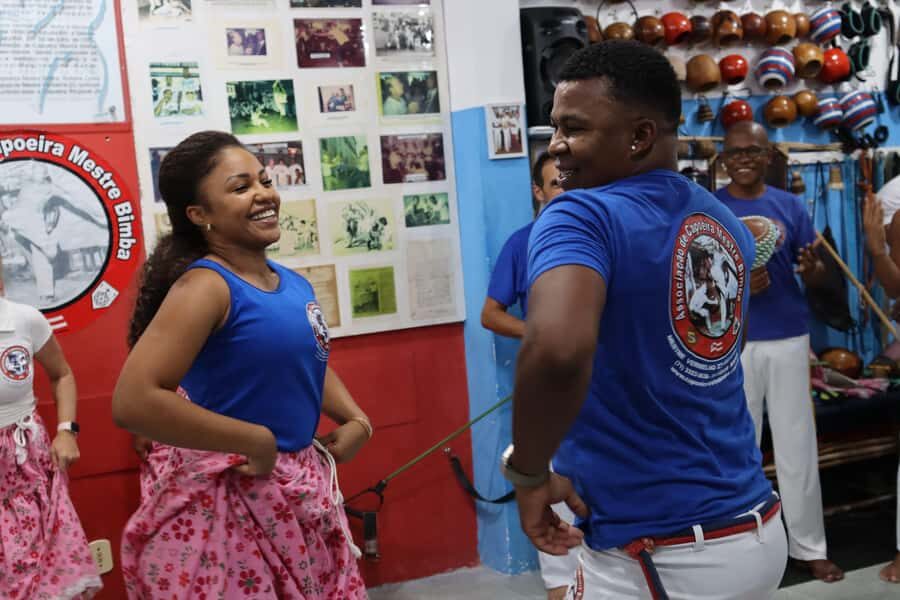
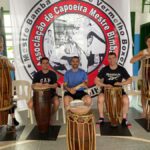
You’ll meet at Associação de Capoeira Mestre Bimba, the historic base tied to the first Capoeira school in Brazil. This matters because you’re not just attending a culture lesson elsewhere—you’re inside the kind of space where the practice has meaning. The vibe you’re looking for starts at the meeting point: people come in ready to move, not ready to sit through a show.
If you’re navigating on foot, the area around Largo do Terreiro de Jesus is a useful reference point. Two nearby landmarks you can use are Ó Paí Ó Restaurante and São Domingos Gusmão Church. No pickup service is included, so build your plan around arriving under your own steam. That also means you’re free to grab a quick bite nearby before you go, since food isn’t part of the ticket.
The session is led by a live guide in English and Portuguese, which helps if your Portuguese is still in progress and you want to understand what you’re seeing while it’s happening.
You can also read our reviews of more evening experiences in Salvador Brazil
Capoeira at the first school in Brazil: what to watch in the roda
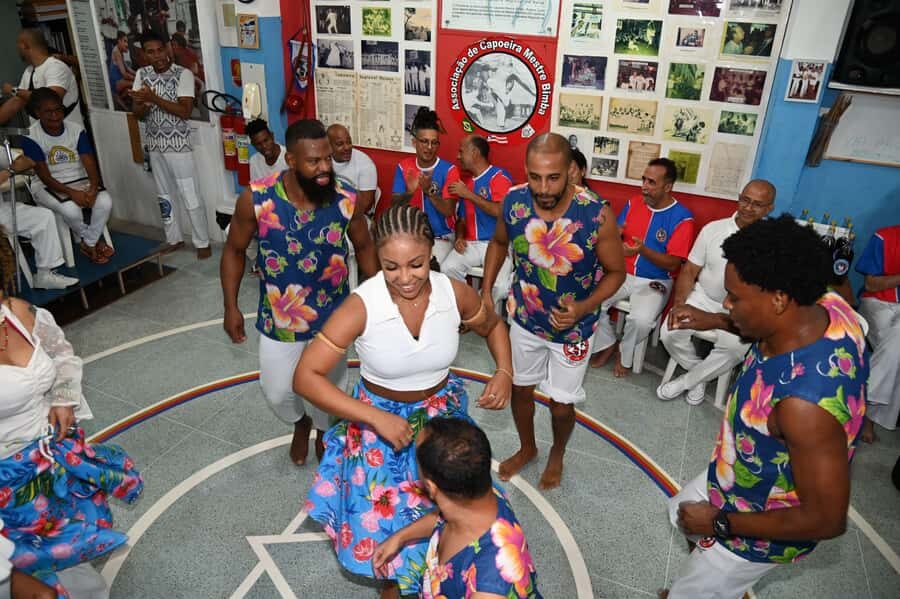
Capoeira is the opening act, and it sets the pace for the entire night. The style here is closely connected to Mestre Bimba, who founded the school and created Capoeira Regional. That lineage matters because it explains why the movements tend to feel crisp, purposeful, and fast. You’re not just watching random acrobatics; you’re seeing a martial art built around timing, rhythm, and response.
In the Capoeira roda, you’ll see spontaneous, powerful movement—more like a live exchange than a rehearsed routine. The drummers and singers help “talk” to the fighters through rhythm, and the pace can jump quickly. That’s why it’s so exciting to watch. The roda can feel like a conversation where the music and bodies set the rules.
Here’s how to watch smart:
- Look for how quickly the rhythm turns into movement. In Capoeira, the sound and the action are linked.
- Notice how the style shifts across participants. Even within the same roda, the intensity and approach can vary.
- Pay attention to control and distance. Fast movement still needs precision to stay safe, and you’ll see that discipline up close.
One more practical thought: this is not the kind of event where you can comfortably drift in and out. It’s built as a continuous evening flow, so arrive a few minutes early if you can.
Samba and Maculelê: rhythm that turns into dance and fire
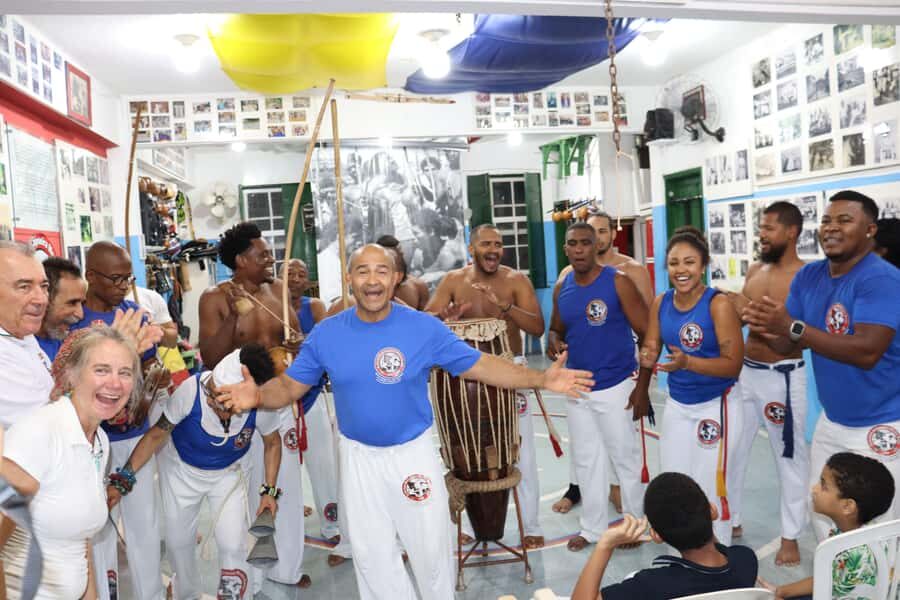
After Capoeira gets the room moving, Samba enters with a different kind of storytelling—rhythm you can feel in your shoulders and chest. The goal isn’t only to watch; it’s to understand the character of the music through what people do with their bodies. Samba in this setting isn’t treated like a separate museum exhibit. It’s part of the same cultural night, tied into the same pulse.
Then comes Maculelê, described as fiery and athletic, and it usually lands as the part many people remember. Maculelê is presented as acrobatics and high-energy movement, which means you’re likely to see quick footwork, sharp timing, and performers working with energy that builds rather than settles.
What makes this section valuable is how the three forms work together:
- Capoeira brings the martial “conversation.”
- Samba brings the communal groove.
- Maculelê adds speed and showmanship that still feels rooted in rhythm.
If you like performances where the music is essential, you’ll probably enjoy this more than a standard stage show. You’re watching styles that are meant to be used with rhythm, not just performed over it.
Traditional drumming and live music: the sound that holds everything together
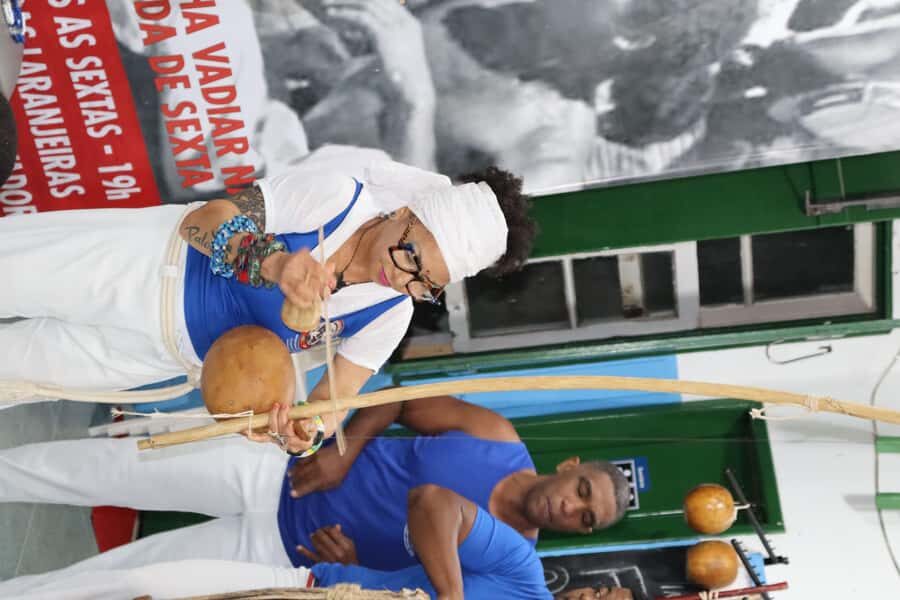
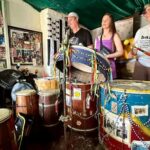
The night leans hard on traditional drumming and live music. That’s not just an add-on. The drums and singing create the atmosphere and help steer the mood, especially during Capoeira moments. You’ll likely find that the singing adds a layer of meaning: it shapes tempo and focus, and it helps you follow what’s happening even if you don’t catch every word from the guide.
One practical note: if you’re sensitive to sound, you should know this is a live, energetic room. The drumming is part of the experience at full volume, because that’s how these practices work. The upside is that it feels alive. The sound isn’t background noise—it’s the cue system.
Also, the event is described as an organic celebration rather than a tourist show with rehearsed routines. That often means you’ll see slight differences in how participants handle each moment, which is exactly why it can feel real. It’s training and cultural practice happening in public, not a scripted program designed for camera angles.
Timing, pacing, and the full program flow (about an hour, sometimes longer)
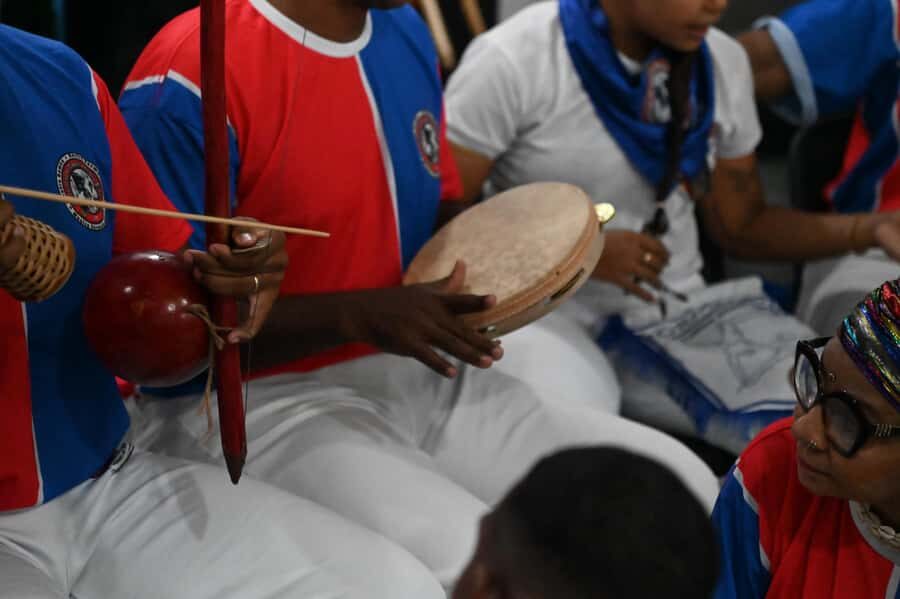
The experience is listed as 1 hour, but the concert-and-dance segment is described as about 1.5 hours in the program summary. So I’d plan as if you’ll be there for about an hour and might stay close to that longer end of the range, depending on how the night runs.
Here’s a realistic way to picture the flow:
- You arrive at Associação de Capoeira Mestre Bimba and get oriented.
- Capoeira gets things started with fast, intense movement in the roda.
- Samba follows, keeping the rhythm moving and shifting the mood from combat energy to musical dance energy.
- Maculelê brings acrobatics and high-speed showmanship.
- Traditional drumming and live music tie it all together, with the performers interacting as the night progresses.
Because it’s compact, you don’t get big breaks to reset your energy. The best prep is simple: eat beforehand if you want, drink water if you can get it nearby, and wear clothes you won’t regret once the room heats up.



Price and value: why a $30 ticket can be a fair deal here
At $30 per person, this is priced like a focused cultural evening rather than an all-inclusive attraction. Food and drinks are not included, and transportation to the venue is also not included—so you’ll add those costs if you need them.
That said, the ticket covers a lot of moving parts:
- Capoeira
- Samba
- Maculelê
- Traditional drumming
- Live music
- Acrobatics
- Entry ticket
The value angle is the integration. You’re paying for one evening where multiple Afro-Brazilian cultural practices are part of a single continuous flow, in the historic context of Mestre Bimba’s school. If you go to Salvador and spend your evenings only on generic dance shows, you’ll miss the practical truth here: this is culture that looks like it’s being practiced, not staged.
Also, one practical boost: a guide in English and Portuguese is included, so you’re not stuck decoding everything alone.
Comfort rules you’ll be glad you followed: shoes, heat, and what not to do
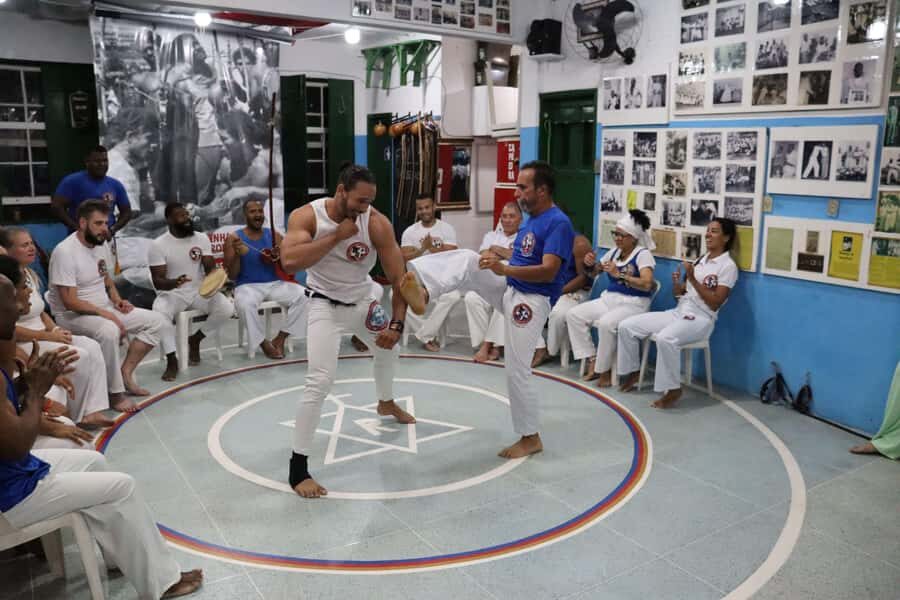
This is a night where comfort affects how much you enjoy it. Wear comfortable shoes and comfortable clothes. The reason is simple: you’ll want to move with your body at least a little, or at minimum stay ready to shift position as people perform nearby.
Plan for heat. One participant noted the room gets very hot, so don’t go in wearing stiff or synthetic clothes that trap sweat. Breathable fabric helps. If you’re the type who usually wears layers, go light here.
A couple of safety and behavior notes:
- Smoking is not allowed.
- The event includes fast movement and acrobatics, so standing and attention are part of the deal.
Not suitable for:
- Pregnant women
- People with back problems
If any of those apply to you, it’s worth skipping rather than hoping you’ll manage through the intensity. The whole point of the night is close, active performance energy, and your comfort has to match that.
Who should book this cultural night in Salvador (and who should pass)
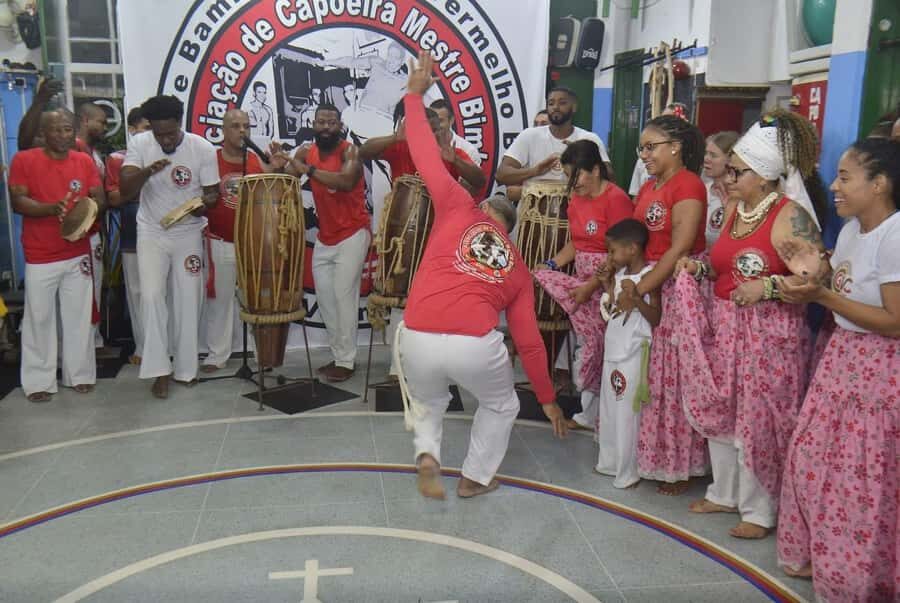
This is a great fit if you:
- Love live music and want it to drive what you watch.
- Want more than one Brazilian art form in one evening.
- Prefer culture that feels like practice happening in real community spaces.
- Like events where different ages and genders participate, not only a fixed cast.
It’s not the best fit if you:
- Need a quiet, low-intensity activity.
- Have mobility or back issues that make fast movement and sustained standing difficult.
- Want a traditional “sit and watch” tourist show that never changes pace.
If your goal is to feel the connections between Capoeira, Samba, and drumming, this ticket is built for that.
Should you book this Salvador Capoeira, Samba, and Drumming night?
I’d book it if you’re looking for an authentic-feeling cultural evening anchored to Associação de Capoeira Mestre Bimba and the legacy of Mestre Bimba. The combination of Capoeira roda energy, Maculelê acrobatics, and traditional drumming with live singing makes the experience more than a single-style show.
Skip it if heat and intensity would bother you, or if you fall into the listed non-suitable categories like pregnancy or back problems.
If you do book, my practical advice is simple: wear comfortable shoes, dress for warmth, and arrive ready to watch actively—not just passively. And if you want food, plan it before you go, since food and drinks aren’t included.
FAQ
FAQ
Where is the meeting point?
You meet at Associação de Capoeira Mestre Bimba in Salvador.
Are there nearby landmarks to help me find it?
Yes. The information suggests using Ó Paí Ó Restaurante or São Domingos Gusmão Church (Largo do Terreiro de Jesus) as reference points.
How long does the experience last?
It’s listed as 1 hour, and the program also describes the concert-and-dance show as about 1.5 hours.
How much does it cost?
The price is $30 per person.
What’s included in the ticket?
Entry plus Capoeira, Samba, Maculelê, traditional drumming, live music, and acrobatics.
Is food or drinks included?
No. Food and drinks are not included.
Will there be pickup service?
No pickup service is offered, so you should plan to reach the venue on your own.
What languages is the guide available in?
The live tour guide is available in English and Portuguese.
Who is the experience not suitable for?
It’s not suitable for pregnant women or people with back problems.
Is smoking allowed?
No, smoking is not allowed.