REVIEW · SALVADOR BRAZIL
Salvador: Walking Tour Through Pelourinho
Book on GetYourGuide →Operated by toknowsalvador · Bookable on GetYourGuide
Pelourinho hits fast, and it makes sense. I love the bay views from Praça Castro Alves and how Adriano connects the stones with real stories from Salvador. This 90-minute loop gives you a guided way to see the historic center without feeling like you’re hunting for meaning on your own.
It’s a walking tour, so the main catch is practical: you’ll cover a good chunk of ground on your feet. Come with comfortable shoes and water, and note it isn’t suitable for mobility impairments or wheelchair users.
In This Review
- Key points at a glance
- Pelourinho in 90 Minutes: a smart first look at Salvador
- Starting at Praça Castro Alves: the bay view that sets the tone
- Rua Chile and Pau da Bandeira: first-street history plus a real photo moment
- Praça Thomé de Souza and the Palácio do Primeiro Governo
- Lacerda Elevator: the practical link between Cidade Alta and Cidade Baixa
- Museu da Misericórdia and the walk toward Praça da Sé
- Praça da Sé: the Monument to the Fallen Cross and two statue stops
- Largo Terreiro de Jesus: the first Faculty of Medicine in Brazil
- Largo do Cruzeiro de São Francisco and Igreja de Ouro
- Ladeira do Pelô: Michael Jackson’s They Don’t Care About Us moment
- What makes this tour worth $80 (and where it won’t be perfect)
- Who should book this Salvador Pelourinho walking tour
- Should you book?
- FAQ
- FAQ
- How long is the walking tour in Pelourinho?
- Where do I meet the guide?
- Is the tour in English?
- How big is the group?
- What’s included, and what’s not?
- What should I bring for the tour?
- Is smoking allowed?
- Is the tour suitable for wheelchair users?
Key points at a glance
- Praça Castro Alves: one of the best starting views over Baía de Todos os Santos
- Rua Chile + Pau da Bandeira: the first street in Brazil, plus a photo pause with serious bay views
- Lacerda Elevator at Praça Thomé de Souza: a working link between Cidade Alta and Cidade Baixa
- Praça da Sé: the Monument to the Fallen Cross, plus statues tied to church power and resistance
- Largo Terreiro de Jesus + Largo do Cruzeiro de São Francisco: the first Faculty of Medicine and Igreja de Ouro
- Ladeira do Pelô: the Michael Jackson video spot for They Don’t Care About Us, tied into Pelourinho’s modern identity
Pelourinho in 90 Minutes: a smart first look at Salvador
If you only have a short window in Salvador’s historic heart, this is a strong way to get oriented. You’re not just collecting sights—you’re learning how the city is laid out, why certain buildings ended up where they are, and how the stories of slavery, resistance, and Brazilian independence show up in public spaces.
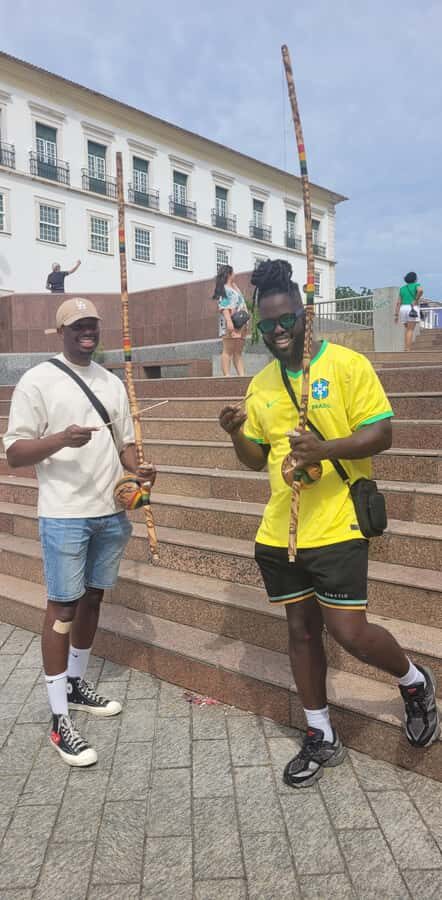
The small group matters. Limited to just 7 participants, it keeps questions from piling up and helps Adriano shape the pace. Reviews repeatedly point to his friendly, inclusive style and the way he answers questions clearly in English. It also helps if you like tours that feel like a conversation rather than a one-way lecture.
The itinerary is packed with major landmarks, but it stays focused on your “mental map.” You’ll leave knowing where Cidade Alta meets Cidade Baixa, why Praça da Sé matters, and how Pelourinho’s identity connects church, medicine, and street culture.
You can also read our reviews of more walking tours in Salvador Brazil

Starting at Praça Castro Alves: the bay view that sets the tone
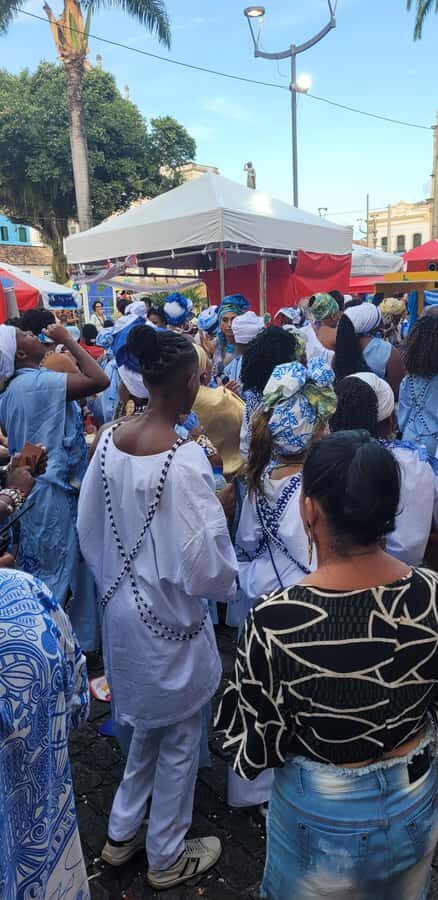
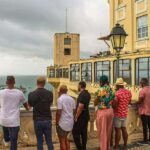
Your meeting point is Praça Castro Alves, and you’ll spot the guide credential. This is a good place to begin because you get the big geography right away.
From the square, you look out over Baía de Todos os Santos and its islands. That view isn’t a random postcard moment. It helps you understand why Salvador’s power—trade, movement, and wealth—was tied to the water. Even if you don’t memorize every island name, you’ll feel the “why” behind the city’s waterfront connections.
Then Adriano guides you forward along the historic core, using the view as a reference point. Think of it as setting a compass before you start walking narrower streets.
Practical tip: this start can be sunny. Bring a hat and sunscreen, and sip water early so you’re not playing catch-up halfway through the route.
Rua Chile and Pau da Bandeira: first-street history plus a real photo moment
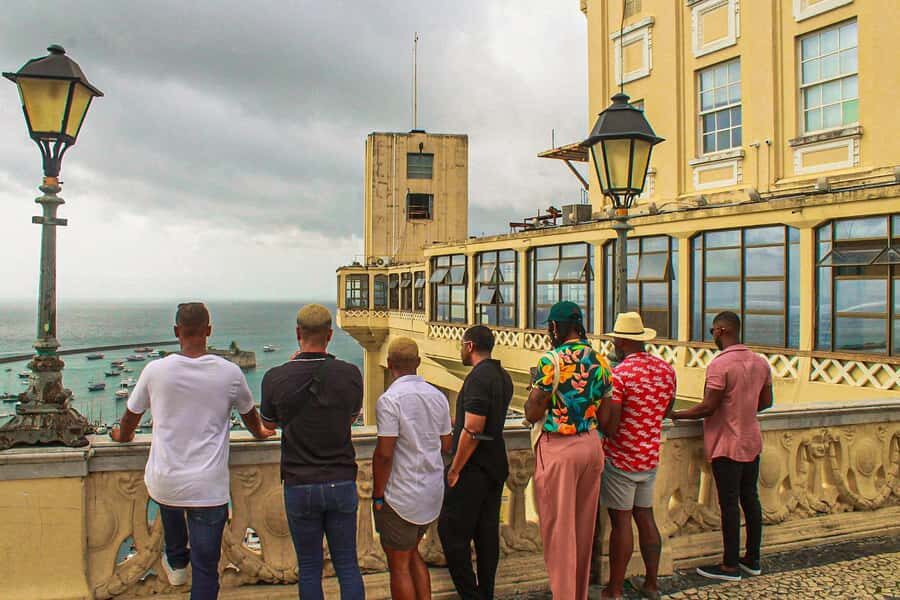
After Praça Castro Alves, you head along Rua Chile, described here as the first street in Brazil. That’s the kind of detail that sounds like trivia—until you walk it and see how street grids and building fronts shape everyday life.
Rua Chile also works as a transition. The tour moves from the open, view-heavy space of Castro Alves into the denser feel of the historic center. You start noticing how Pelourinho’s streets create viewpoints, corridors, and sudden “openings” to the bay.
There’s also a photo stop at Pau da Bandeira street. In Pelourinho, people talk about this spot for a magnificent look at the bay. Even if you’re not usually the type to pause for photos, this one is worth planning for. A quick stop here helps you connect earlier views to what you’ll see later from other squares.
Why this section is valuable: you start understanding the city as layers—streets that carry early influence, and viewpoints that reveal how Salvador’s maritime setting shaped everything.
Praça Thomé de Souza and the Palácio do Primeiro Governo
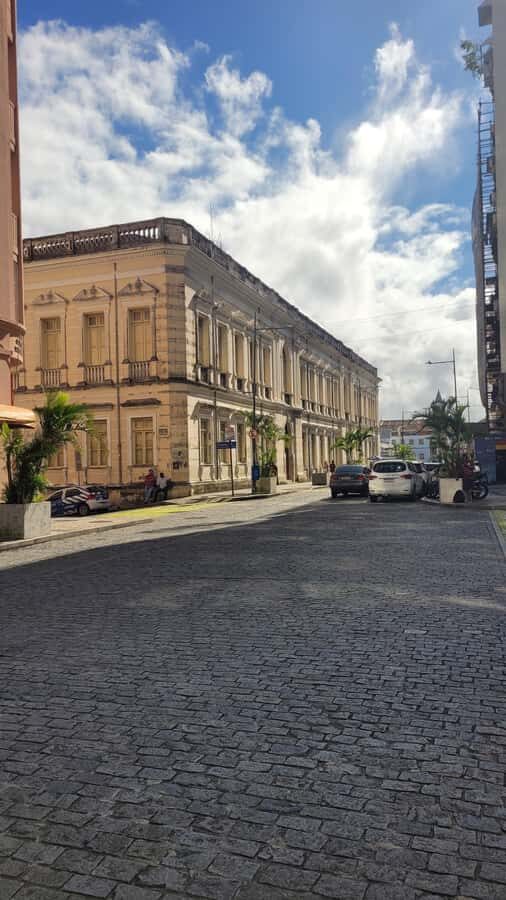
Next you reach Praça Thomé de Souza, named for Brazil’s first General Governor. Squares like this are more than open space—they’re where civic identity gets staged.
In this area, you can see Palácio do Primeiro Governo, which was used as Brazil’s first prison. That’s a heavy fact, and it changes how you read the architecture around you. Instead of treating the buildings as just old backdrops, you start placing them inside the story of power and punishment during Brazil’s formation.
This is also where the tour leads you to one of Salvador’s most distinctive “must-see” structures: the Lacerda Elevator.
Lacerda Elevator: the practical link between Cidade Alta and Cidade Baixa
The Lacerda Elevator connects Cidade Alta and Cidade Baixa, and that functional purpose makes it more than an Instagram structure. As you see it in context—where people move between levels—it becomes easy to understand how Salvador’s topography influenced daily life, commerce, and city planning.
This is one of those stops that you can appreciate even without going inside anything. You’re watching how the city solves a problem: steep terrain and the need to connect communities across different elevations.
For you, that means your sightseeing gets smarter. Once you understand that connection, the rest of Pelourinho starts to “click” as a single system, not separate landmarks.





Museu da Misericórdia and the walk toward Praça da Sé
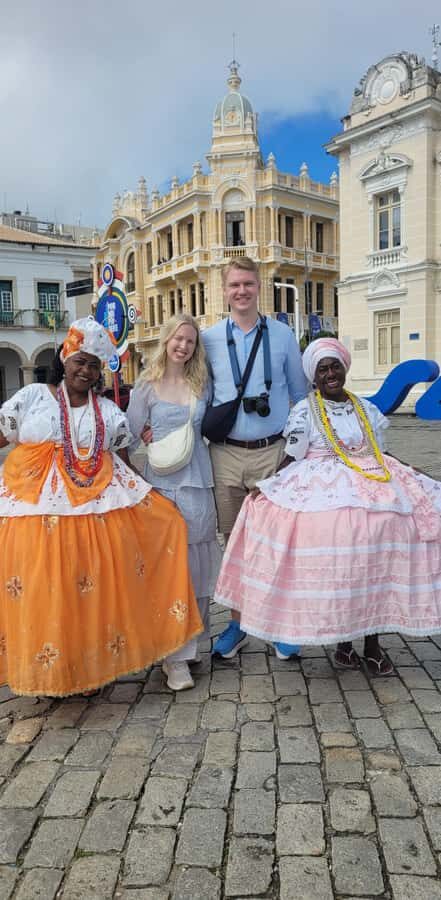
As you continue along Rua Chile, the tour passes by Museu da Misericórdia. You may not spend time inside (the tour doesn’t list specific entrance fees), but the walk-by adds context to what this neighborhood is: a mix of religious, charitable, and civic history.
Then the route heads for Praça da Sé, a key square where several major themes converge. This is where the tour shifts from orientation and views to symbolism and civic memory.
Praça da Sé: the Monument to the Fallen Cross and two statue stops
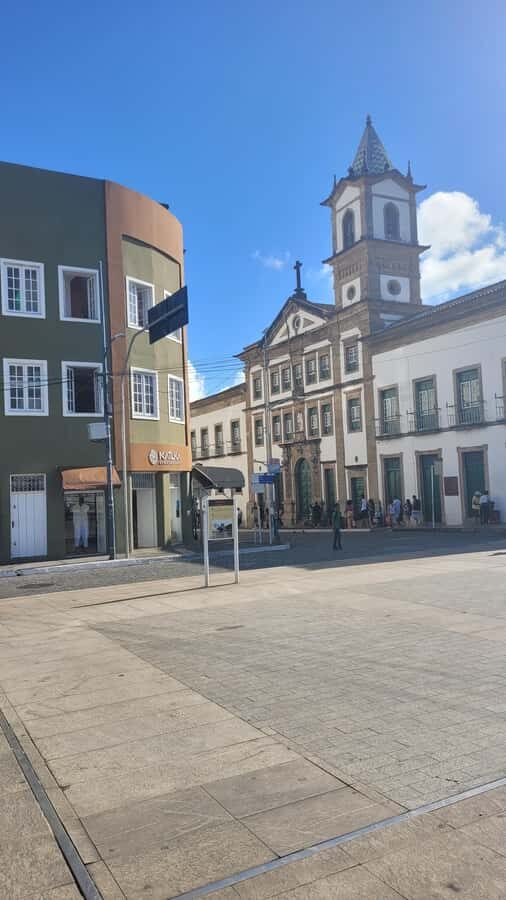
Praça da Sé is where you’ll get the most “story per square meter.” The standout is the Monument to the Fallen Cross, erected as protest against the demolition of Igreja da Sé.
That detail matters because it shows how communities defend identity. You’re seeing civic anger turned into a lasting public landmark. It’s also a reminder that historic places aren’t only about preservation—they’re about conflict, decisions, and long-term outcomes.
At Praça da Sé, there are two additional stops:
- You’ll view the statue of the first Bishop of Brazil and learn about his tragic end. This turns a statue into a narrative, so it isn’t just a name on a plaque.
- You’ll also see the statue of Zumbi dos Palmares, leader of resistance against slavery. In this square, resistance isn’t tucked away in private history—it’s placed in public space.
Why I like this part of the tour: it balances spiritual authority and human resistance in one stop area. You don’t have to connect the dots yourself—Adriano does it for you, and the pacing keeps the heavier moments from feeling random.
Largo Terreiro de Jesus: the first Faculty of Medicine in Brazil
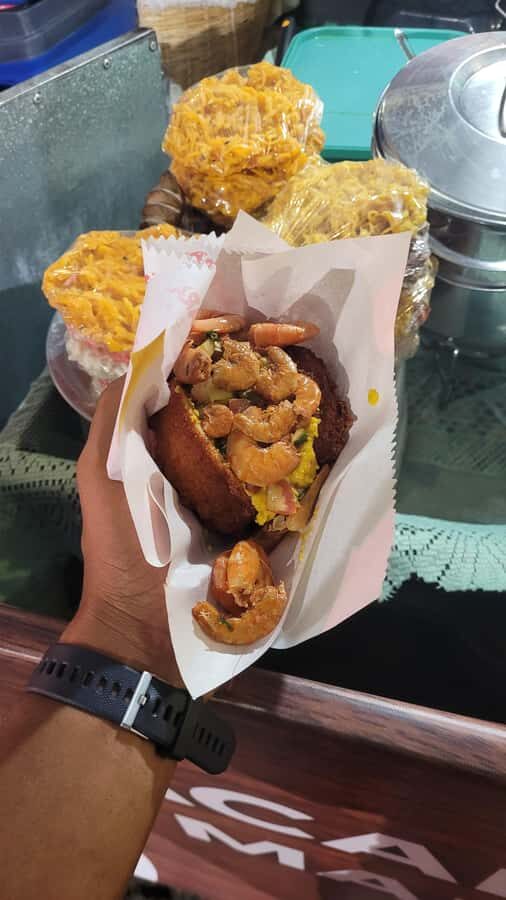
Leaving Praça da Sé, you head to Largo Terreiro de Jesus. This square is associated with a set of churches, and the tour highlights the first Faculty of Medicine in Brazil.
That’s a fascinating contrast to the earlier stops. Salvador’s story isn’t only churches and colonial power. It’s also education, institutions, and how knowledge shaped the city.
You’ll likely feel the difference in tone here: the walk becomes more architectural and spatial, with churches shaping the skyline and the square acting like a stage for multiple eras.
If you’re the type who enjoys tours that connect culture to institutions, this stop is a strong payoff. It’s history you can point to with your own eyes, not just a list of dates.
Largo do Cruzeiro de São Francisco and Igreja de Ouro
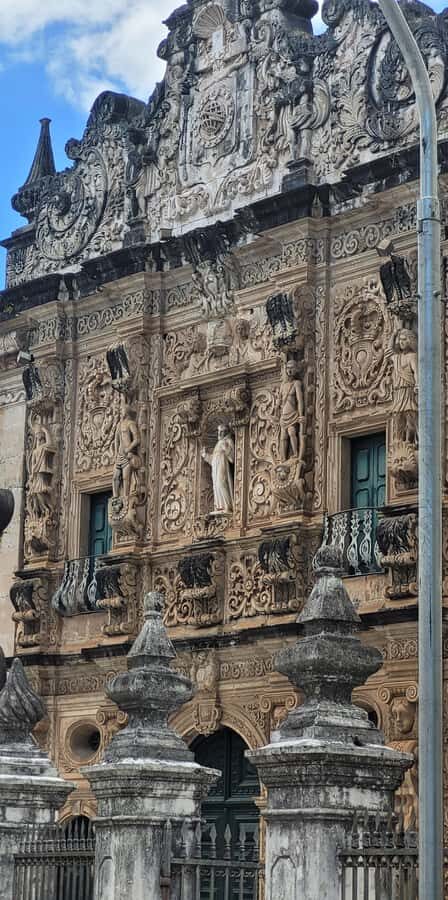
Next comes Largo do Cruzeiro de São Francisco, where the standout is the impressive Igreja de Ouro.
This is the part where the tour gives you that “wow” factor, but with context. Instead of treating the church as a single decorative stop, you experience it as a destination inside a bigger route—one that’s been shaped by the city’s social and spiritual history.
In this area, the tour also passes by Olodum’s house. Olodum is tied to Salvador’s modern cultural identity, and seeing it on the way helps you understand that Pelourinho isn’t only a museum district. It’s living culture with roots.
Ladeira do Pelô: Michael Jackson’s They Don’t Care About Us moment
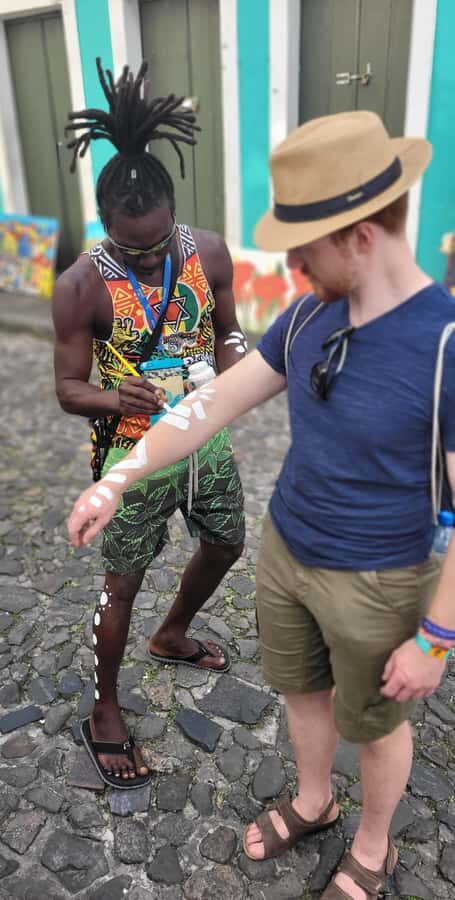
The final big cultural hit comes at Ladeira do Pelô, where pop star Michael Jackson filmed the music video for They Don’t Care About Us.
Even if you don’t care about celebrity filming trivia, this stop can be surprisingly useful. It shows how Pelourinho has been seen through global eyes—and how the neighborhood’s street energy became part of a mainstream story.
For you, this is also a good “wrap” for the tour. You started with bay views and early street history, moved through institutions and public memorials, and end at a place tied to modern performance and identity.
One last practical note: the tour is just 90 minutes, so it moves. Wear comfortable shoes, and keep your water handy. The walking is the whole point, and the route uses momentum.
What makes this tour worth $80 (and where it won’t be perfect)
At $80 per person for 90 minutes, you’re paying for three things that matter in Pelourinho:
- A focused route through high-density sights. You won’t waste time figuring out what to see first or how the squares connect.
- A small group experience. With up to 7 people, the guide can answer questions and keep the pace friendly.
- Local context in English. Multiple reviews mention Adriano’s clear English, the way he explains harder topics, and his habit of tailoring advice based on what you care about.
The price isn’t a bargain if you only want photos. But if you want meaning, and you value a guide who can connect architecture to real events, this price starts to look fair.
Where it may not be perfect: it’s not suitable for wheelchair users or people with mobility impairments. And since it’s outdoors for a good stretch, weather and sun matter. If you hate walking, you’ll feel it.
Who should book this Salvador Pelourinho walking tour
I’d book it if you:
- Want a quick, guided intro to Pelourinho and the surrounding historic core
- Like tours where the guide connects the “why,” not just the “what”
- Prefer a small group and clear, English-language explanations
- Enjoy balancing major sights with cultural context (medicine, memorials, resistance, and modern identity)
I might skip it if you:
- Need a fully accessible route
- Want a long stay at a few sites instead of a tight circuit
- Are mainly chasing beaches and skip historic-city depth
Should you book?
Yes—if you’re choosing one early “orientation” experience in Salvador, this is a smart pick. The route hits the bay viewpoints, the Lacerda Elevator connection between levels, the civic symbolism of Praça da Sé, and the big landmarks around Largo Terreiro de Jesus and Igreja de Ouro. Then it closes with Ladeira do Pelô and the Michael Jackson filming connection, which makes the neighborhood feel current, not frozen in time.
If you go, show up ready to walk, and lean into the questions. A big part of the value here is that Adriano adjusts to your interests and shares practical next-day recommendations.
FAQ
FAQ
How long is the walking tour in Pelourinho?
The tour lasts 90 minutes.
Where do I meet the guide?
Meet at Praça Castro Alves. You’ll use a credential to find the guide.
Is the tour in English?
Yes. The live guide provides the tour in English.
How big is the group?
It’s a small group, limited to 7 participants.
What’s included, and what’s not?
Included: the walking tour and guide. Not included: hotel pickup/drop-off, food and drinks, and entrance fees to attractions.
What should I bring for the tour?
Bring comfortable shoes, a sun hat, camera, sunscreen, and water.
Is smoking allowed?
No. Smoking is not allowed during the tour.
Is the tour suitable for wheelchair users?
No. It’s not suitable for people with mobility impairments and wheelchair users.